Introduction
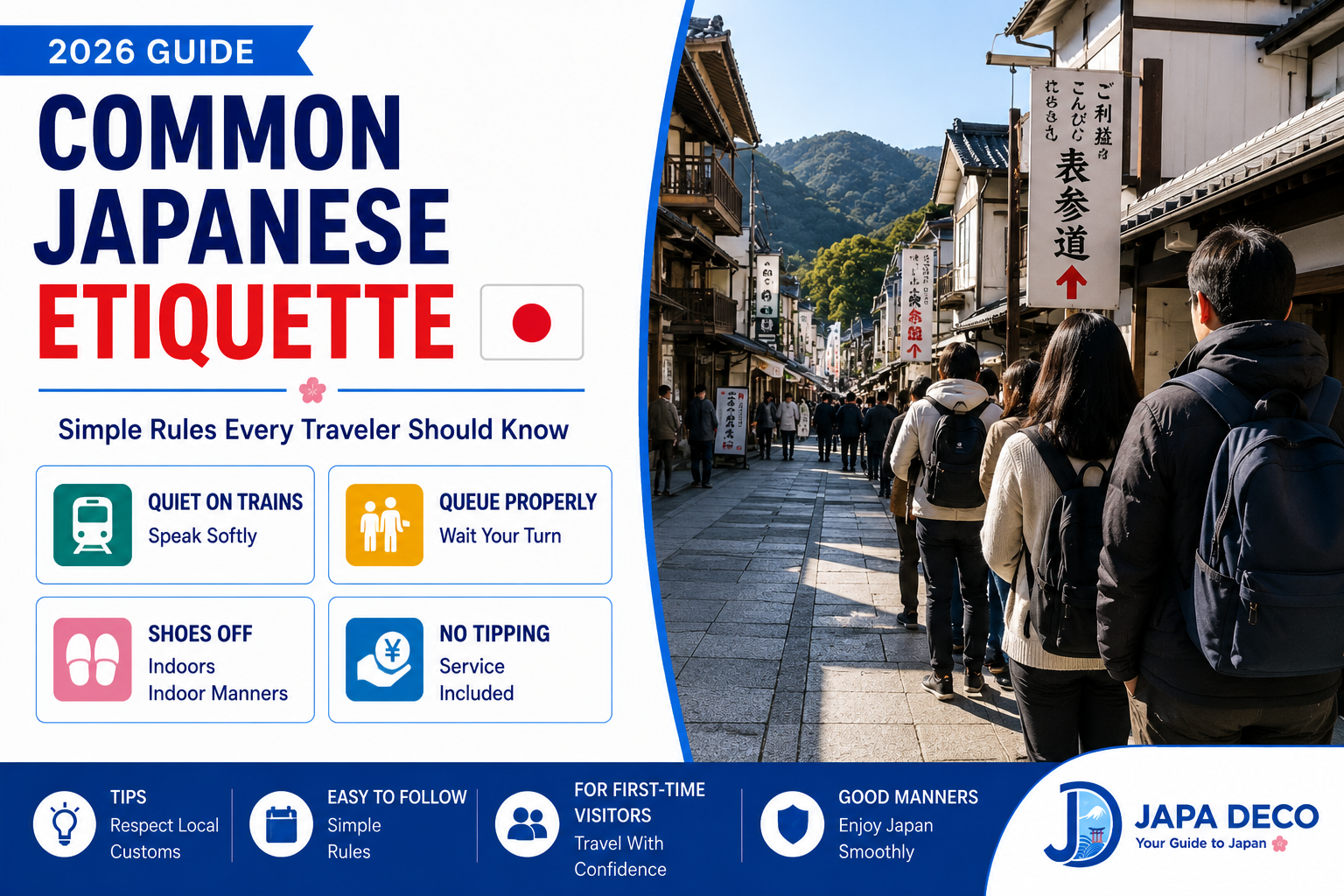
Japan is famous around the world for its politeness, cleanliness, and order. For many first-time visitors, however, Japanese customs can feel intimidating. Some travelers worry about accidentally offending someone or breaking an unspoken rule.
Fortunately, Japanese people understand that visitors come from different cultures. Nobody expects tourists to know every custom perfectly. In fact, making a sincere effort and showing consideration are usually much more important than following every rule flawlessly.
Most Japanese etiquette is based on one simple idea: respect the people around you.
This guide explains the most common customs and manners that every traveler should know before visiting Japan.
Why Etiquette Matters in Japan
Japanese society values harmony and consideration for others.
Many customs are designed to:
- Avoid disturbing other people
- Keep public spaces comfortable
- Show respect
- Maintain order
You don’t need to behave like a local, but understanding these customs will help you enjoy your trip and avoid awkward situations.
Speak Quietly on Trains
Japanese trains are surprisingly quiet, even during rush hour.
People often:
- Read books
- Sleep
- Use smartphones silently
- Listen to music with earphones
Avoid:
- Loud conversations
- Speakerphone calls
- Playing videos without headphones
- Talking on the phone
If your phone rings, simply keep the conversation short or wait until you leave the train.
【Image①】
Queue Properly
Japanese people are famous for orderly lines.
You will see queues at:
- Train stations
- Bus stops
- Elevators
- Convenience stores
- Restaurants
Cutting in line is considered rude.
Even when trains are crowded, people patiently wait for their turn. Following the queue is one of the easiest ways to show respect.
Remove Your Shoes When Required
Shoes are removed in many places in Japan.
Common examples include:
- Traditional homes
- Ryokan inns
- Some restaurants
- Temples
- Dressing rooms
- Tatami rooms
Signs that shoes should be removed include:
- Shoe shelves
- Slippers
- Raised floors
If you are unsure, simply observe what other people are doing.
Don’t Tip
Japan does not have a tipping culture.
You do not need to tip:
- Restaurants
- Hotels
- Taxis
- Bars
Excellent service is already included in the price.
Leaving money on the table may confuse staff because they might think you forgot it.
A smile and a simple “Thank you” or “Arigatou gozaimasu” are enough.
Use Cash Trays
In many shops and restaurants, there is a small tray near the register.
Instead of handing money directly to the cashier, place:
- Cash
- Coins
- Credit cards
Into the tray.
The cashier will return your change in the same way.
This custom is completely normal throughout Japan.
【Image②】
Be Careful with Trash
One thing that surprises many visitors is the lack of public trash cans.
You may need to carry your garbage until you find one.
Trash cans are commonly found at:
- Convenience stores
- Train stations
- Tourist attractions
Many travelers carry a small plastic bag to store trash during the day.
Eating While Walking
Eating while walking is generally uncommon in Japan.
People usually stop and eat in one place.
However, popular street food areas such as:
- Dotonbori in Osaka
- Nishiki Market in Kyoto
- Nakamise Street in Asakusa
Are more relaxed.
When in doubt, observe the people around you.
Respect Personal Space
Japanese people generally prefer personal space.
Avoid:
- Hugging strangers
- Speaking loudly
- Touching people unnecessarily
- Blocking walkways
Although people may seem reserved, they are usually friendly and willing to help visitors.
Escalator Etiquette
Traditionally:
- Tokyo stands on the left.
- Osaka stands on the right.
However, many stations now encourage standing on both sides for safety.
The easiest approach is simply to follow the people around you.
【Image③】
Taking Photos
Always check whether photography is allowed.
Photography may be prohibited in:
- Temples
- Shrines
- Museums
- Shops
- Private property
Avoid taking close-up photos of strangers without permission.
Respecting privacy is very important in Japan.
What If You Make a Mistake?
Don’t worry too much.
Japanese people know that tourists are unfamiliar with local customs.
Nobody expects perfection.
Showing respect, being polite, and making an effort are far more important than knowing every rule.
Most people will appreciate your kindness and patience.
Conclusion
Japanese etiquette may seem complicated at first, but it becomes easy once you understand the basic principle:
Be considerate of others.
If you:
- Speak quietly
- Queue properly
- Remove your shoes when necessary
- Avoid tipping
- Respect personal space
You will have no problem enjoying Japan.
First-time visitors often worry too much. Relax, be polite, and enjoy your trip. Japanese people are generally welcoming, and even small efforts to respect local customs will make your experience more enjoyable.

コメント