Introduction
Japan is generally one of the easiest countries for first-time travelers to feel comfortable in. Streets are clean, public transportation is organized, and many visitors are surprised by how calm daily life feels, even in large cities like Tokyo, Osaka, and Kyoto.
However, “safe” does not mean you should stop paying attention. Japan is very safe compared with many destinations, but small problems can still happen. Tourists can lose phones, miss the last train, drink too much in nightlife areas, misunderstand rules, or become confused during an emergency.
This guide explains what safety in Japan is really like for visitors. It is written for first-time travelers who want a realistic, practical answer: what is safe, what needs attention, and what to do if something goes wrong.
Is Japan Safe for First-Time Visitors?
Yes, Japan is generally safe for tourists.
Many travelers feel comfortable walking around major cities, using trains, eating alone, and staying out in the evening. Solo travelers, families, and older visitors often find Japan easier than expected.
Common reasons travelers feel safe include:
- Low violent crime in everyday tourist areas
- Reliable public transportation
- Clean and organized streets
- Helpful staff at stations, hotels, and shops
- Clear emergency services
- A culture that respects public order
You should still use normal travel sense. Keep your valuables secure, avoid risky situations, and pay attention to your surroundings, especially at night.
Japan is safe, but it is not a place where you should become careless.
Walking Around at Night
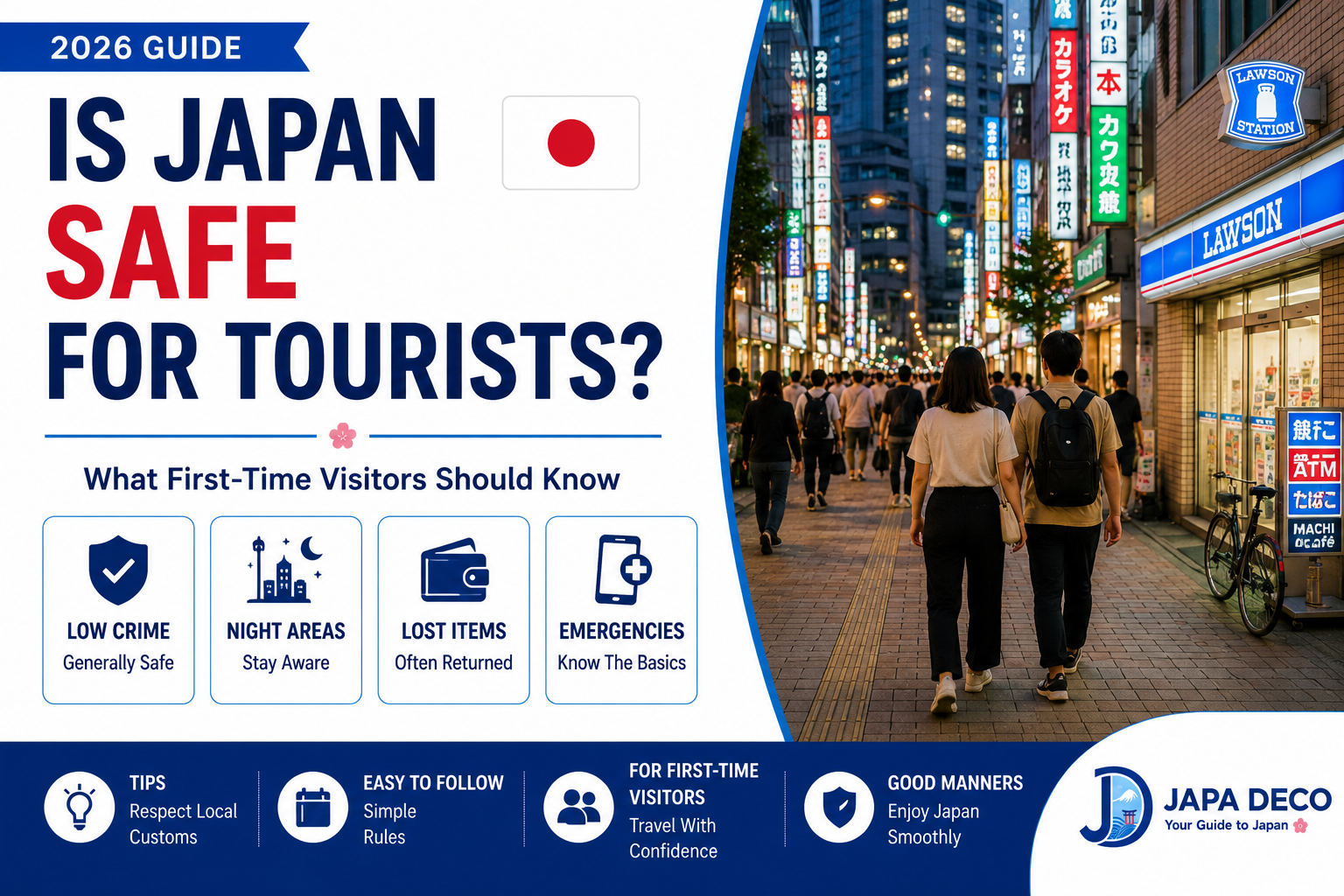
Many areas in Japan feel safe at night, especially around train stations, shopping streets, convenience stores, hotels, and residential areas.
In Tokyo, places like Shinjuku, Shibuya, Ueno, Ginza, and Ikebukuro can be busy late into the evening. In Osaka, areas like Namba and Umeda are also active at night. Kyoto is quieter, but central areas and station zones are usually comfortable.
That said, nightlife districts require more awareness.
Be careful in areas with:
- Aggressive touts
- Bars trying to pull you inside
- Adult entertainment signs
- Very drunk crowds
- Narrow backstreets late at night
Most tourists will not have problems if they stay on main streets and avoid following strangers into bars or clubs.
A simple rule is best: if someone on the street is trying too hard to bring you somewhere, politely refuse and keep walking.
【Image①】
Pickpocketing and Theft
Pickpocketing is not common in Japan compared with many countries, but it can still happen.
Tourist areas, crowded trains, festivals, and busy shopping streets are places where you should be careful.
Use common sense:
- Keep your bag closed
- Do not leave your phone on a table
- Do not leave valuables unattended
- Be careful in crowded train stations
- Keep your passport in a safe place
Japan has a strong reputation for lost items being returned, and many visitors are amazed when wallets, phones, or bags are found. However, you should not depend on luck.
If you lose something, check with:
- The nearest station office
- The shop or restaurant where you last had it
- The police box, called koban
- Your hotel front desk
Japan’s lost-and-found system is very good, especially at train stations.
Are Trains Safe?
Japanese trains are generally very safe and reliable.
Millions of people use them every day. Stations are organized, platforms are clean, and staff are usually available at major stations.
However, trains can be confusing for first-time visitors because of:
- Large stations
- Crowded rush hours
- Different train companies
- Local, rapid, and express services
- Last train times
Safety tips for trains:
- Stand behind the yellow line on platforms
- Do not rush into closing doors
- Watch your step between the train and platform
- Keep bags close in crowded trains
- Avoid peak rush hours with large luggage when possible
- Check the last train if staying out late
Women-only cars are available on some trains during certain times. These cars are clearly marked.
For most tourists, trains are one of the safest and most convenient ways to travel in Japan.
Is Japan Safe for Solo Travelers?
Japan is a very popular destination for solo travelers.
Solo visitors often enjoy:
- Eating alone without feeling uncomfortable
- Staying in business hotels or capsule hotels
- Using trains safely
- Walking around cities
- Visiting museums, temples, cafes, and shops alone
Solo female travelers also often find Japan comfortable compared with many other destinations.
Still, basic safety habits are important:
- Tell someone your hotel area
- Avoid isolated streets very late at night
- Be careful with alcohol
- Do not follow strangers into private bars
- Keep your phone charged
- Know how to get back to your hotel
Japan is safe for solo travel, but confidence should not become carelessness.
Nightlife Areas to Be Careful With
Japan’s nightlife can be fun, but some areas need extra attention.
Examples include:
- Kabukicho in Shinjuku
- Parts of Roppongi
- Some bar areas in Shibuya
- Namba nightlife streets in Osaka
Most visitors walk through these areas without problems. The main risk is not violence, but being overcharged, pressured into a bar, or confused after drinking.
Avoid:
- Following street touts
- Entering bars with unclear prices
- Drinking too much with strangers
- Leaving your card unattended
- Accepting suspicious invitations
If you want nightlife, choose places with clear reviews, visible prices, and normal entrances.
Natural Disasters in Japan
Japan is safe in daily life, but it is also a country with earthquakes, typhoons, heavy rain, and occasional volcanic activity.
This does not mean you should be afraid. Japanese buildings, transportation systems, and emergency procedures are designed with disasters in mind.
The most common concerns for travelers are:
- Earthquakes
- Typhoons
- Heavy rain
- Train delays during bad weather
If an earthquake happens:
- Stay calm
- Protect your head
- Move away from windows
- Follow staff instructions
- Do not rush outside immediately
If a typhoon is coming:
- Check train and flight updates
- Avoid beaches, rivers, and mountains
- Stay near your hotel
- Buy simple food and water early
- Follow local warnings
Most trips are not seriously affected, but it is smart to know the basics.
【Image②】
Medical Safety
Japan has good medical care, but language can be a challenge.
In large cities, some hospitals and clinics can handle English-speaking patients. Hotels may also help you find medical support.
For minor issues, pharmacies can be useful. You can buy medicine for headaches, stomach problems, colds, allergies, and small injuries.
However, some medicines that are common overseas may be restricted in Japan, so travelers should check medication rules before entering the country.
If you have a serious medical condition, bring:
- Enough medicine
- A doctor’s note if needed
- Travel insurance
- Emergency contact information
- Medicine names in generic form
Travel insurance is strongly recommended. Medical bills can be expensive if you are not covered.
Food Safety
Food in Japan is generally safe, clean, and high quality.
Restaurants, convenience stores, supermarkets, hotels, and food stalls are usually reliable.
Still, travelers can have stomach issues because of:
- New foods
- Raw seafood
- Rich ramen broth
- Too much fried food
- Alcohol
- Long travel days
If you are sensitive, start slowly.
Be careful with allergies. Japan uses many ingredients such as soy, wheat, fish-based broth, sesame, egg, and seafood.
If you have serious allergies, prepare written allergy cards in Japanese.
Food safety is usually not the problem. Ingredient understanding is the bigger challenge.
Scams and Tourist Problems
Japan has fewer tourist scams than many countries, but some problems exist.
Possible issues include:
- Overpriced bars
- Street touts
- Unclear cover charges
- Fake “special” nightlife deals
- Unexpected seating charges
- Confusing restaurant pricing
Most of these happen in nightlife areas, not normal restaurants or tourist attractions.
To avoid problems:
- Check reviews before entering bars
- Avoid places introduced by street touts
- Ask about cover charges
- Check prices before ordering
- Use well-known restaurants if unsure
Normal shops, convenience stores, taxis, trains, and hotels are usually straightforward.
Taxi Safety
Taxis in Japan are generally safe, clean, and reliable.
Drivers usually use meters, and doors often open automatically.
However, taxis can be expensive, especially late at night.
Tips:
- Use the taxi stand at stations or hotels
- Show your destination on Google Maps
- Have your hotel address in Japanese
- Check that the meter is running
- Remember that late-night surcharges may apply
If you do not speak Japanese, showing the address on your phone is usually enough.
Is Japan Safe for Families?
Japan is a good country for family travel.
Children are common on trains, in restaurants, parks, shopping centers, and tourist areas. Convenience stores, clean restrooms, vending machines, and safe streets make travel easier.
Family safety tips:
- Hold children’s hands in crowded stations
- Avoid rush hour with strollers
- Plan rest breaks
- Watch children near train platforms
- Prepare snacks and drinks
- Know your hotel address
Lost children should be reported immediately to station staff, police, or information desks.
Japanese staff are usually very helpful in these situations.
【Image③】
Emergency Numbers in Japan
The most important emergency numbers are:
- 110 for police
- 119 for fire or ambulance
If you are in a train station, hotel, department store, airport, or large attraction, staff can often help you contact emergency services.
You can also go to a koban, which is a small police box found in many neighborhoods.
Koban police can help with:
- Lost items
- Directions
- Minor trouble
- Lost wallets
- Reporting incidents
For many tourists, a koban is the easiest first stop when something goes wrong.
Practical Safety Tips for Tourists
Here are simple habits that make travel in Japan safer:
- Keep your passport secure
- Carry your hotel name and address
- Keep your phone charged
- Use a power bank
- Check the last train time
- Avoid following street touts
- Keep some cash with you
- Save emergency numbers
- Use travel insurance
- Follow weather warnings
- Ask station or hotel staff for help
Most travel problems in Japan are not dangerous. They are usually practical problems, such as getting lost, missing a train, losing something, or misunderstanding a rule.
Preparation makes these problems much easier to handle.
Common Mistakes Tourists Make
The biggest mistake is thinking that Japan is so safe that nothing can go wrong.
This can lead to problems such as:
- Leaving bags unattended
- Drinking too much
- Missing the last train
- Ignoring weather warnings
- Following strangers into bars
- Forgetting travel insurance
- Not checking medication rules
- Not knowing emergency numbers
Japan is safe, but smart travelers stay aware.
So, Is Japan Safe?
Yes.
For most tourists, Japan is very safe, comfortable, and easy to travel around.
The main risks are not usually violent crime. They are more likely to be small travel problems, nightlife overcharging, lost items, natural disasters, medical confusion, or transportation mistakes.
If you stay aware, follow local rules, and prepare the basics, Japan is one of the best countries for a first international trip.
Conclusion
Japan is safe for tourists, but the best travel experience comes from being prepared, not careless.
You can walk around cities, use trains, eat out, travel alone, and explore with confidence. At the same time, you should still protect your valuables, avoid suspicious nightlife invitations, understand basic emergency numbers, and pay attention to weather or disaster information.
The most important idea is balance.
Do not be afraid of Japan. It is generally calm, organized, and welcoming.
But do not treat safety as automatic.
Use normal travel sense, respect local customs, and prepare for small problems before they happen.
If you do that, Japan is not only safe — it is one of the most comfortable and enjoyable countries for first-time visitors.
コメント