Introduction
Tipping is one of the most common questions travelers have before visiting Japan.
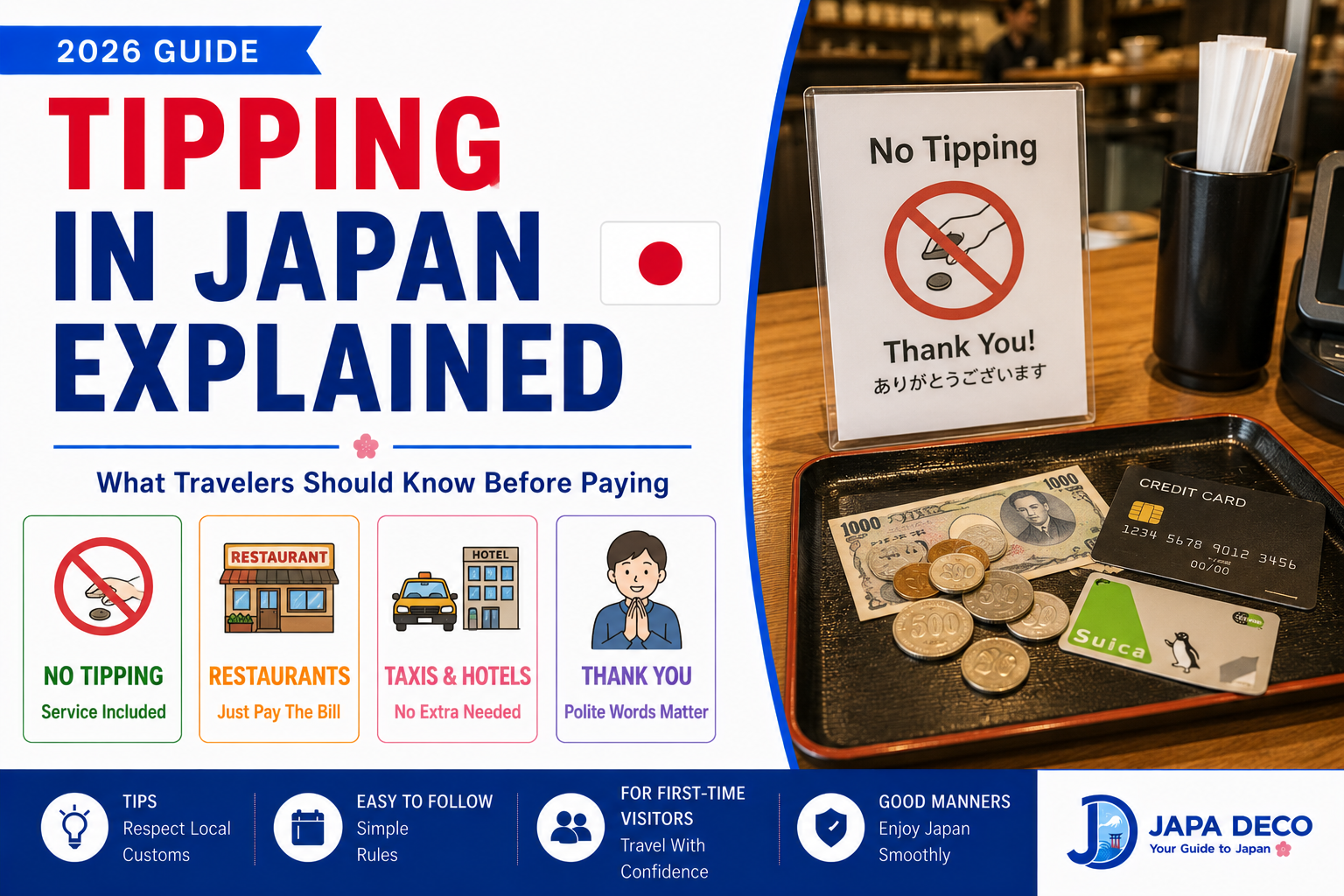
In many countries, tipping is normal at restaurants, hotels, taxis, bars, and tours. In Japan, the system is different. In most everyday situations, you do not need to tip at all.
For first-time visitors, this can feel strange. You may receive excellent service at a restaurant, hotel, taxi, or shop and feel that you should leave extra money. However, in Japan, good service is considered part of the job and is already included in the price.
This guide explains how tipping works in Japan, when not to tip, what to do instead, and the few situations where special payments may be handled differently.
Is Tipping Common in Japan?
No, tipping is not common in Japan.
In most situations, you should simply pay the amount shown on the bill.
You do not need to tip:
- Restaurant staff
- Taxi drivers
- Hotel staff
- Cafe staff
- Bar staff
- Convenience store staff
- Hair salons
- Delivery workers
- Shop staff
If you leave extra money on the table, staff may think you forgot it. They may run after you to return it.
This is not because they are offended. It is because the system is not based on tipping.
Why Japan Does Not Have a Tipping Culture
Japanese service culture is based on professionalism, hospitality, and doing the job properly.
Good service is expected without extra payment.
The price you pay already includes the service. Staff do not depend on tips in the same way workers may in some other countries.
This is why tipping can sometimes create confusion. It may make the situation feel unusual for the staff.
A polite thank you is usually better than leaving extra money.
【Image①】
Restaurants
At restaurants in Japan, do not leave a tip on the table.
When you finish your meal, you usually pay at the register near the entrance. In some restaurants, you take the bill or small payment slip to the cashier.
In casual restaurants, ramen shops, sushi chains, cafes, and family restaurants, the rule is simple:
Pay the bill exactly.
If you pay in cash and receive change, take the change.
If you pay by card or IC card, no tip screen usually appears.
Even at restaurants with excellent service, tipping is not expected.
Izakaya and Table Charges
Izakaya are Japanese casual drinking restaurants.
Some izakaya have a small table charge or appetizer charge called otoshi. This may appear on your bill even if you did not order the small appetizer.
This is not a tip.
It is a normal charge at many izakaya.
For travelers, otoshi can feel confusing because it may not be explained clearly in English. However, it is part of the restaurant system.
If you want to avoid surprise charges, check reviews or menus before entering.
Cafes and Fast Food
Cafes and fast food restaurants in Japan do not require tips.
At places like coffee chains, bakeries, burger shops, and casual cafes, you simply pay at the counter or register.
There is no need to leave coins on the tray or table.
If staff are helpful, say thank you.
That is enough.
Taxis
You do not need to tip taxi drivers in Japan.
Taxi fares are shown on the meter. Pay the fare shown.
Many taxis accept cash, credit cards, IC cards, or taxi apps, depending on the vehicle.
If you pay in cash, the driver will give you change.
Do not round up unless you clearly mean to do so, and even then it may confuse the driver.
A simple thank you when leaving the taxi is the best approach.
Hotels
Hotel staff in Japan do not expect tips.
You do not need to tip:
- Front desk staff
- Bell staff
- Housekeeping
- Concierge staff
- Restaurant staff
- Door staff
At high-end hotels, service may feel very polished, but tipping is still not required.
If you want to show appreciation, polite words are enough.
In some luxury ryokan or special private services, customs may be different, but normal tourists do not need to prepare tips for standard hotel stays.
【Image②】
Ryokan
Ryokan are traditional Japanese inns.
Most travelers do not need to tip at a ryokan.
The room rate already includes service, meals, and hospitality depending on your plan.
In the past, some guests gave money in an envelope to a room attendant at very traditional inns. However, this is not something most foreign visitors need to do today.
If you are staying at a normal ryokan, simply enjoy the service and say thank you.
If you are booking a very high-end private stay and are unsure, you can ask the property in advance.
Tour Guides
Tour guides are one of the few situations where tipping can depend on the company, guide, and tour style.
For standard Japanese tour companies, tipping is usually not required.
For private guides who mainly serve international travelers, tipping may be more familiar, especially if the guide works with overseas clients.
If the tour page says tips are not required, do not worry.
If the guide provides exceptional service and tipping feels appropriate based on the tour culture, it may be accepted. But it is still not a basic rule in Japan.
When unsure, check the tour company’s policy.
What to Do Instead of Tipping
The best way to show appreciation in Japan is through polite behavior.
You can say:
- Thank you.
- Arigatou gozaimasu.
- Gochisousama deshita.
“Gochisousama deshita” is often said after a meal. It means something like “thank you for the meal.”
You can also show appreciation by:
- Being polite
- Not making a mess
- Following the rules
- Paying properly
- Leaving on time when a restaurant is busy
- Writing a good review
- Returning to the shop again
In Japan, these actions often feel more natural than tipping.
Using the Payment Tray
At many shops and restaurants, you will see a small tray near the register.
Place your cash, coins, or card on the tray instead of handing it directly to the cashier.
The cashier may also return your change on the tray.
This is normal in Japan.
It is not rude to hand money directly, but using the tray looks natural and polite.
What If You Accidentally Leave Money?
If you leave coins or bills behind, staff may call you back.
They may think you forgot your change.
If this happens, do not be embarrassed. Just take the money and say thank you.
If you truly want to give extra money, it may still be refused because staff are not used to accepting tips.
In most cases, it is better not to try.
【Image③】
Service Charges
Some restaurants and hotels may include a service charge.
This is more common at:
- High-end restaurants
- Hotel restaurants
- Luxury hotels
- Banquet services
- Some bars or lounges
A service charge is not the same as a voluntary tip.
It is already included in the bill or added automatically.
If a service charge is added, you still do not need to tip extra.
Always check the bill if you are eating at an upscale restaurant.
Bars and Nightlife
Normal bars do not require tips.
However, nightlife areas can have other charges, such as:
- Cover charge
- Table charge
- Service charge
- Late-night charge
- Seating charge
These are not tips.
They are part of the price system.
Be careful in nightlife districts where prices are unclear. Avoid following street touts into bars, and always check prices before ordering.
This is especially important in areas such as Kabukicho, Roppongi, and some nightlife streets in Osaka.
Delivery and Takeout
You do not need to tip for takeout or delivery in Japan.
If you order food through an app, follow the app’s payment system. Some international-style apps may include optional tip features, but in everyday Japanese culture, tipping delivery workers is not expected.
For takeout at restaurants, convenience stores, bakeries, and cafes, simply pay the listed price.
Common Mistakes Tourists Make
The most common mistake is assuming that no tip means bad manners.
In Japan, not tipping is normal.
Another mistake is leaving money on the table at a restaurant. Staff may think it was forgotten.
Some travelers also try to force tips on taxi drivers or hotel staff. This can create confusion.
The safest rule is simple:
Pay the amount shown and say thank you.
Simple Rule for First-Time Visitors
For almost all travel situations in Japan, remember this:
Do not tip.
Instead:
- Pay the bill
- Take your change
- Say thank you
- Be polite
This applies to restaurants, taxis, hotels, cafes, shops, and most services.
If there is a special service charge, it will usually be shown on the bill.
Conclusion
Tipping in Japan is simple once you understand the culture.
In most situations, you do not tip. Restaurants, taxis, hotels, cafes, shops, and convenience stores do not expect extra money. Good service is already part of the price.
Leaving a tip may confuse staff because they may think you forgot your change.
Instead of tipping, show appreciation with polite words and respectful behavior. Say thank you, follow local manners, and treat staff kindly.
For first-time visitors, the easiest rule is this:
Pay exactly what the bill says.
Japan’s no-tipping culture may feel unusual at first, but it makes payments simple, clear, and stress-free.
コメント