
How to Read Japanese Menus: Kanji, Prices and Ordering
Learn a practical way to decode Japanese menus by category, ingredient, cooking method, portion and price—plus phrases for ordering and safer allergy checks.
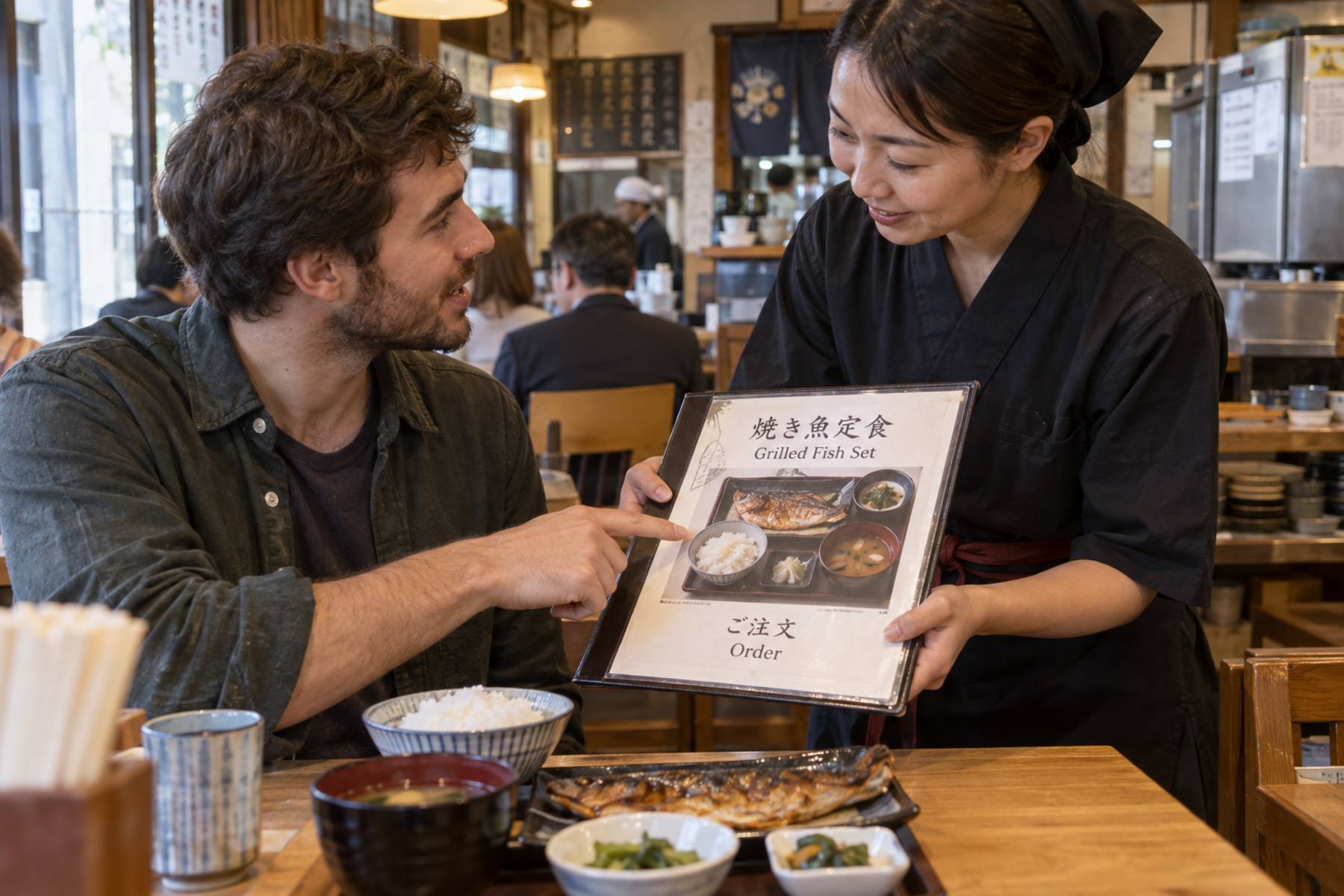
Do not translate a Japanese menu character by character. First identify the section, then the main ingredient, cooking method, portion and price. Photos and translation apps can help you narrow the choice, but confirm anything important—especially allergies, hidden stock, sauces and shared cooking equipment—with restaurant staff before ordering.
What You’ll Learn
- How to scan a menu before translating individual words
- The ingredient, cooking and portion terms that change a dish
- How to read prices, tax notes and common restaurant charges
- Simple Japanese phrases for ordering and clarification
- How to communicate allergies and dietary restrictions more safely
Read the Menu Structure First
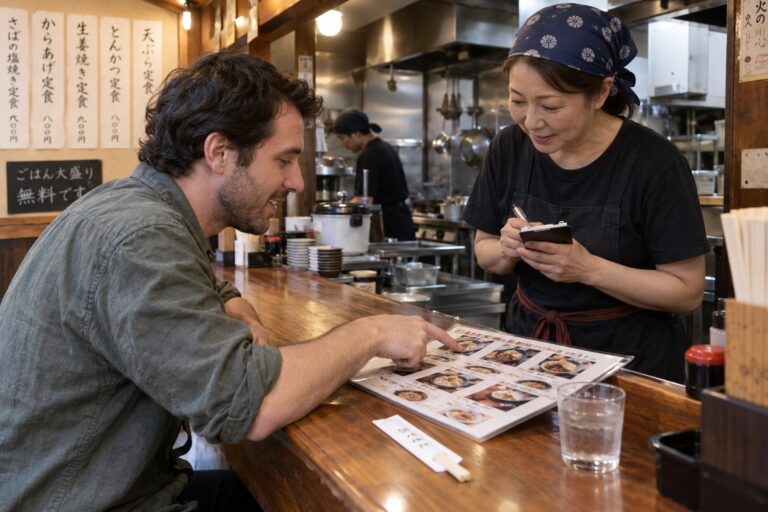
A Japanese menu becomes easier when you treat it as a set of sections rather than a wall of unfamiliar characters. Look for headings, photographs, repeated price positions and visual dividers. A restaurant may arrange items horizontally, vertically or in separate booklets for food, drinks and seasonal specials.
Start by finding the category that matches what you want. おすすめ means recommendations, 定食 means set meals, 一品料理 means individual dishes, 飲み物 means drinks and デザート means dessert. Once you are in the right section, compare only the dish names and prices there.
- Find the category heading before reading dish names.
- Use repeated price placement to see where one item ends and the next begins.
- Check separate inserts, wall boards and table cards for limited items.
Recognize the Main Ingredient
Many dish names combine an ingredient with a cooking method. Useful ingredient characters include 牛 for beef, 豚 for pork, 鶏 for chicken, 魚 for fish, えび or 海老 for shrimp, かに or 蟹 for crab, 卵 for egg, 野菜 for vegetables and 豆腐 for tofu.
The ingredient named in the title is not necessarily the complete ingredient list. Broth, sauce, garnish and seasoning can add fish, meat, dairy, wheat or soy even when the visible centerpiece is different.
- 牛: beef; 豚: pork; 鶏: chicken
- 魚: fish; 海老: shrimp; 蟹: crab
- 卵: egg; 野菜: vegetables; 豆腐: tofu
Use Cooking Words to Predict the Dish
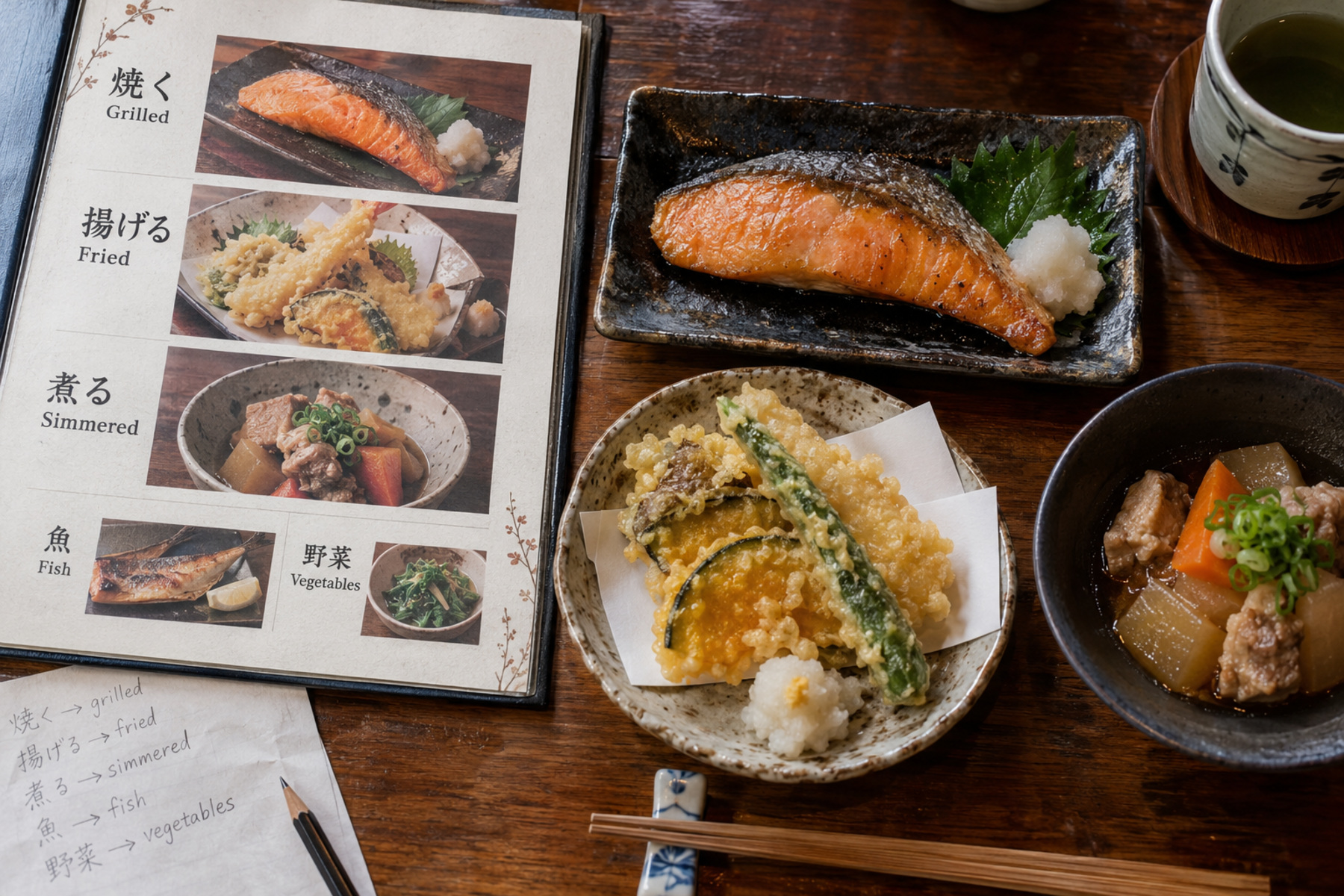
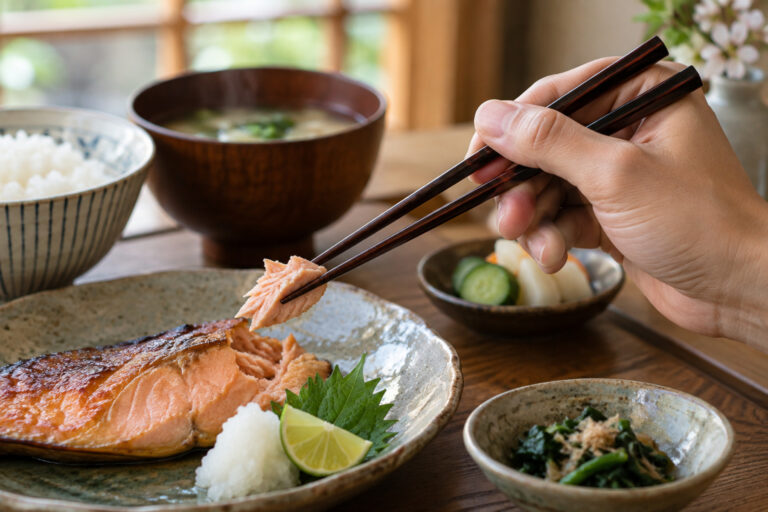
Cooking words often tell you more than a photograph. 焼き indicates grilled or pan-cooked food, 揚げ indicates fried food, 煮 indicates simmered food, 蒸し indicates steamed food, 炒め indicates stir-fried food and 生 indicates raw or uncooked food.
These characters may appear inside longer names. 焼き魚 is grilled fish, 唐揚げ is Japanese-style fried food, and 煮物 is a simmered dish. Treat the English equivalents as practical clues rather than exact recipes because preparation varies by restaurant.
- 焼き: grilled or pan-cooked
- 揚げ: fried; 煮: simmered
- 蒸し: steamed; 炒め: stir-fried; 生: raw
Understand Sets, Portions and Extras
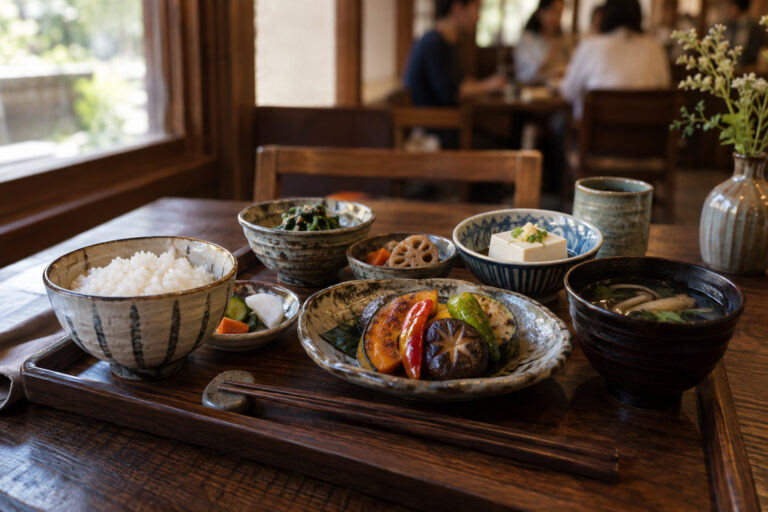
定食 usually means a set meal built around a main dish with rice, soup and small sides, although the exact contents vary. 単品 means the item is sold separately. セット also indicates a combination, often with a drink or side.
並 commonly means regular size, 大盛 means a larger serving and 小 means small. おかわり means another serving or refill, but do not assume it is free. Look for a note or ask before ordering. トッピング means an added topping, and 追加 means an extra item or additional charge.
- 定食 or セット: a combination; check what is included.
- 単品: the item alone.
- 並: regular; 大盛: large serving; 小: small.
- 追加 and トッピング: extras that may change the price.
Read Prices and Charge Notes Carefully
The character 円 means yen. 税込 means tax included, while 税抜 means tax excluded. A menu may show both, so follow the label attached to the amount rather than assuming the largest or most prominent number is the final total.
サービス料 means service charge, and 時価 means market price. Some izakaya serve a small appetizer called お通し and charge for it; this is not universal. If a price or charge is unclear, ask before ordering instead of relying on a photo or an old online menu.
- 税込: tax included; 税抜: tax excluded.
- 時価: market price—confirm the amount before ordering.
- お通し and service charges depend on the restaurant.
Handle Paper Menus, Tablets and Wall Boards
A photo menu is easiest to scan, but the photograph may not show every ingredient or the exact serving size. On a tablet, choose the language first, then check the order quantity and cart before sending. Handwritten daily-special boards are harder for camera translation, so ask staff to point out a recommendation or the price.
Plastic food samples outside a restaurant can clarify portion style and side dishes, but they are displays rather than ingredient lists. Use them to choose a category, then verify the actual menu entry.
- On tablets, verify language, quantity and final cart.
- For wall boards, ask staff to point to an item and price.
- Use food samples for appearance, not allergy decisions.
Order at a Ticket Machine
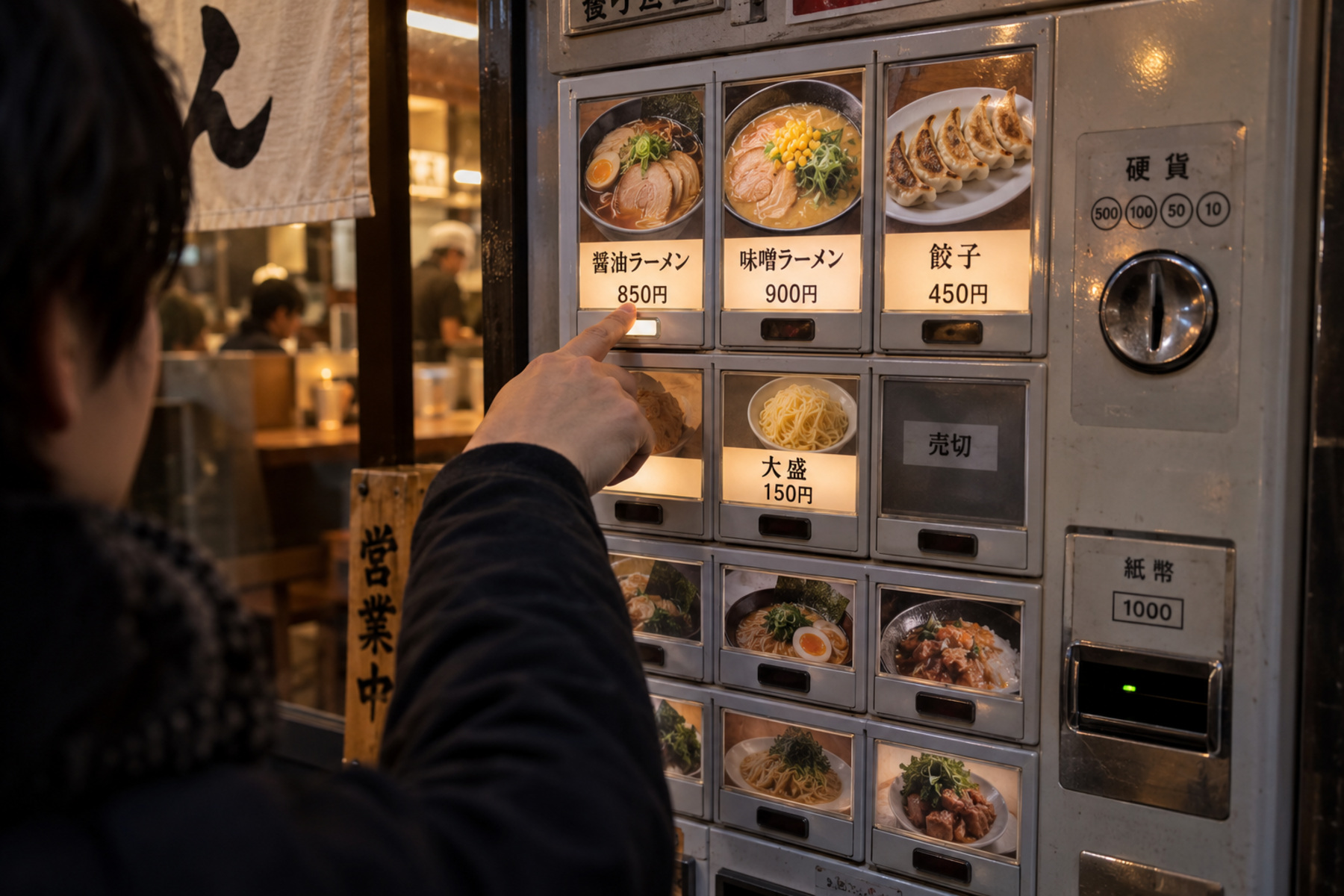
At many ramen and casual restaurants, you buy a meal ticket before sitting down. Insert cash or choose an available payment option, press the dish button, collect the ticket and change, then give the ticket to staff. A lit button is not always available; 売切 means sold out.
Match the button photo, dish name and price as a group. 大盛 is often a size upgrade rather than a complete meal. If the machine is difficult, staff can usually indicate the correct button, but do not block the queue while translating every label.
- Choose the main dish before size or topping buttons.
- 売切 means sold out.
- Keep the ticket and any change from the machine.
Use Simple Ordering Phrases
Pointing politely is normal in casual restaurants. Say これをください, kore o kudasai, for ‘This, please.’ To ask for a recommendation, use おすすめは何ですか, osusume wa nan desu ka. To confirm a price, ask これはいくらですか, kore wa ikura desu ka.
For a quantity, add 一つ, hitotsu, for one, or 二つ, futatsu, for two. Staff may repeat your order, ask about size or offer a set. Watch for gestures toward rice size, drink choices or side dishes before agreeing.
- これをください: This, please.
- おすすめは何ですか: What do you recommend?
- これはいくらですか: How much is this?
- 一つ / 二つ: one / two items.
Treat Translation Apps as a First Pass
Camera translation is useful for printed headings and short dish names, but reflections, decorative fonts, vertical writing and handwritten characters can produce confident-looking mistakes. Translate a small area at a time and compare the result with the category, photo and price.
A translation result should help you form a question, not replace staff confirmation. Save a screenshot of the original Japanese so staff can see exactly which item you mean. Check that the translated quantity and modifiers belong to the same menu entry.
- Crop to one item rather than scanning the whole page.
- Keep the original Japanese visible beside the translation.
- Verify the dish, option, quantity and price before submitting.
Communicate Food Allergies Directly
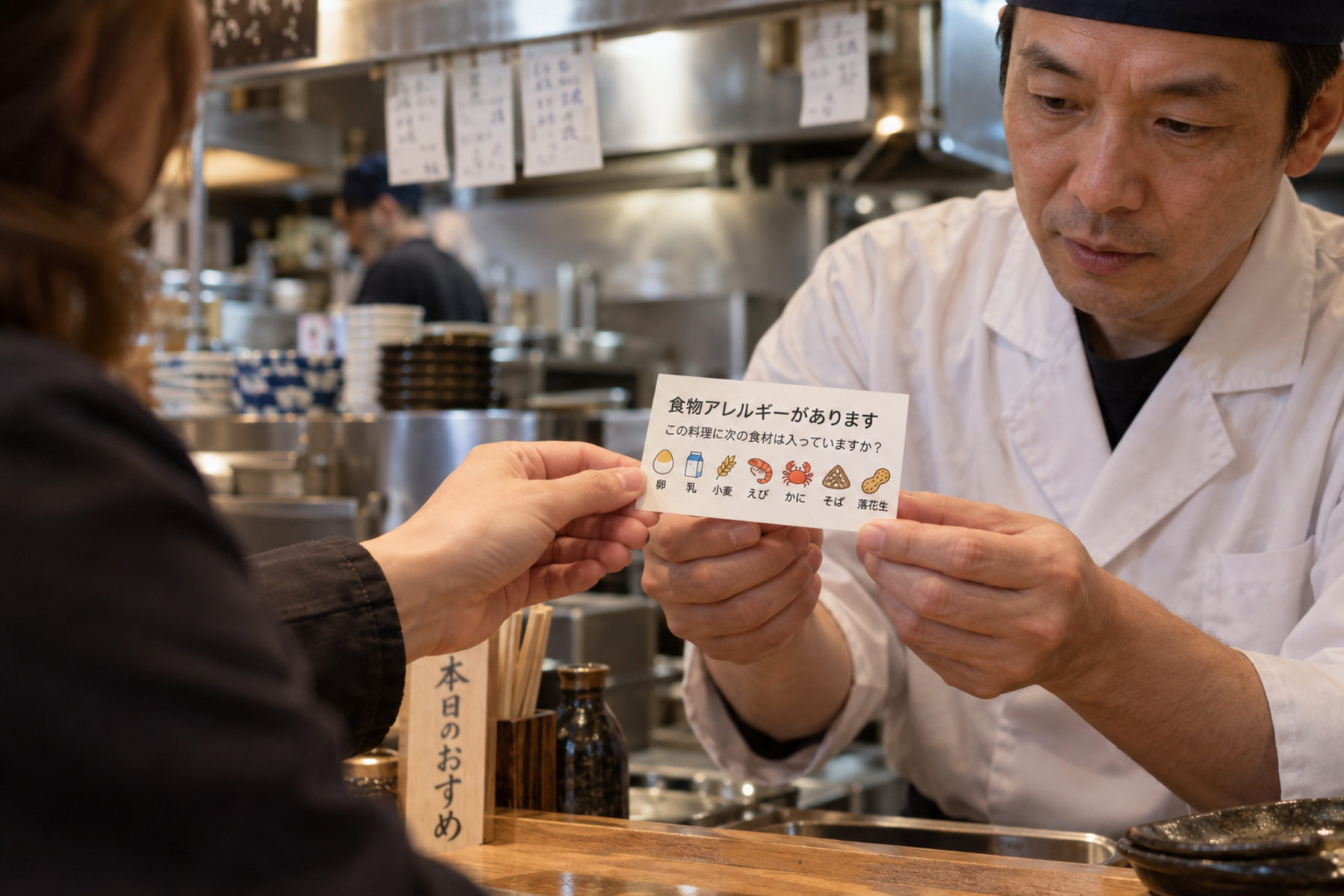
A restaurant menu is not the same as a packaged-food ingredient label. A dish name or icon may omit stock, sauce, garnish or processing details. Shared fryers, grills, knives and preparation areas can also create cross-contact.
Show staff a written allergy card before ordering and name the exact ingredients you must avoid. The Consumer Affairs Agency provides an English food-allergy communication sheet for smartphones. Ask whether the ingredient is in the dish and whether cooking oil or equipment is shared. If staff cannot confirm the information or the risk is unacceptable for your condition, choose another restaurant or food option.
- Do not rely only on a dish photo, translation app or menu icon.
- Ask about broth, sauce, seasoning, garnish and shared equipment.
- Carry prescribed emergency medication and follow your medical plan.
- Leave when the restaurant cannot give the level of certainty you need.
Check Vegetarian, Vegan and Religious Requirements
A dish labeled 野菜, vegetables, can still contain fish stock, bonito flakes, meat extract, lard or an animal-based sauce. だし, dashi, is especially important because it may be made from fish or other ingredients that are not visible.
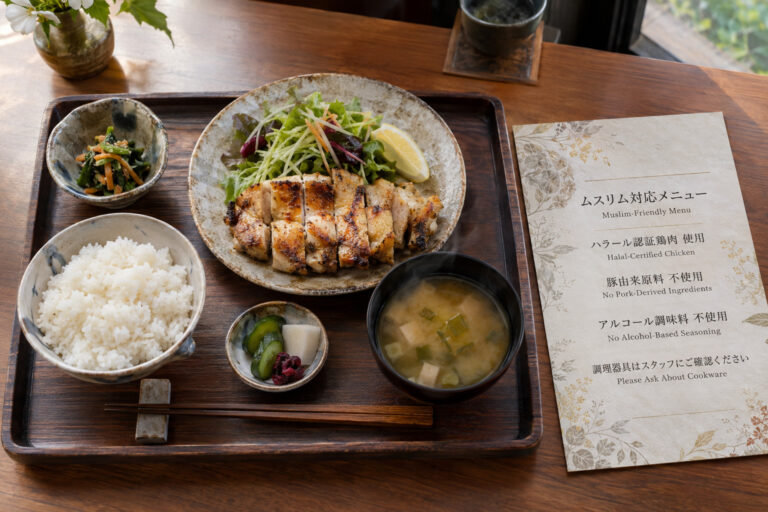
State the ingredients and preparation rules that matter to you instead of relying on a single label such as vegetarian. For strict requirements, use a written card in Japanese and ask about stock, sauce and shared cooking surfaces. Certification marks can help only when they are genuine and apply to the specific restaurant or product.
- Ask what the stock and sauce contain.
- Explain specific exclusions, not only a broad dietary label.
- Confirm whether shared preparation is acceptable for your needs.
Use a Fast Five-Step Menu Check
For most meals, use the same sequence: choose the menu section, identify the main ingredient, identify the cooking method, confirm the portion or set, then confirm the price and any important restriction. This keeps the decision focused even when the menu has many pages.
Before staff leave, compare the repeated order with what you intended. A few seconds spent checking dish, quantity, size and dietary question prevents most avoidable ordering mistakes.
- Category
- Ingredient
- Cooking method
- Portion or set contents
- Price, quantity and restrictions
FAQ
How do I read a vertically written Japanese menu?
Start at the right side and read columns downward, moving left. Use prices and spacing to identify item boundaries, then translate one short entry at a time.
What does おすすめ mean on a menu?
It means recommendation or recommended item. It may be a house specialty, seasonal item or promotion, so still check the ingredients, portion and price.
How can I tell whether tax is included?
Look for 税込 beside the price for tax included or 税抜 for tax excluded. When two amounts appear, follow the label attached to each amount.
What is an otoshi charge?
At some izakaya, お通し is a small appetizer served with a table or seating charge. Practices vary, so ask the restaurant if the charge is unclear.
Does 野菜 mean a dish is vegetarian?
No. It means vegetables, but the dish may still use fish stock, meat extract, lard or animal-based sauce. Ask about stock and seasoning.
Can I trust allergy icons on a restaurant menu?
Use them only as a starting point. Ask staff about hidden ingredients and shared equipment, and do not eat if the restaurant cannot provide the certainty your allergy requires.
What should I do when a menu says 時価?
It means market price. Ask これはいくらですか—how much is this—before ordering.
How do I use a Japanese meal-ticket machine?
Choose the main dish, insert payment, press the button, collect the ticket and change, and hand the ticket to staff. Check for size and topping buttons separately.
Related Japan Travel Guides

Official References
Final Thoughts
You do not need to read every character to make a good menu decision. Follow the same order each time—section, ingredient, cooking method, portion and price—then use a short question for anything unclear. Translation tools are useful for orientation, while staff confirmation remains essential for allergies, dietary restrictions and charges that the menu does not fully explain.