
Haneda Airport to Shinjuku: Train, Bus and Taxi Options
Compare the easiest ways to travel from Haneda Airport to Shinjuku, including Keikyu plus JR, Tokyo Monorail, direct airport buses and taxis.
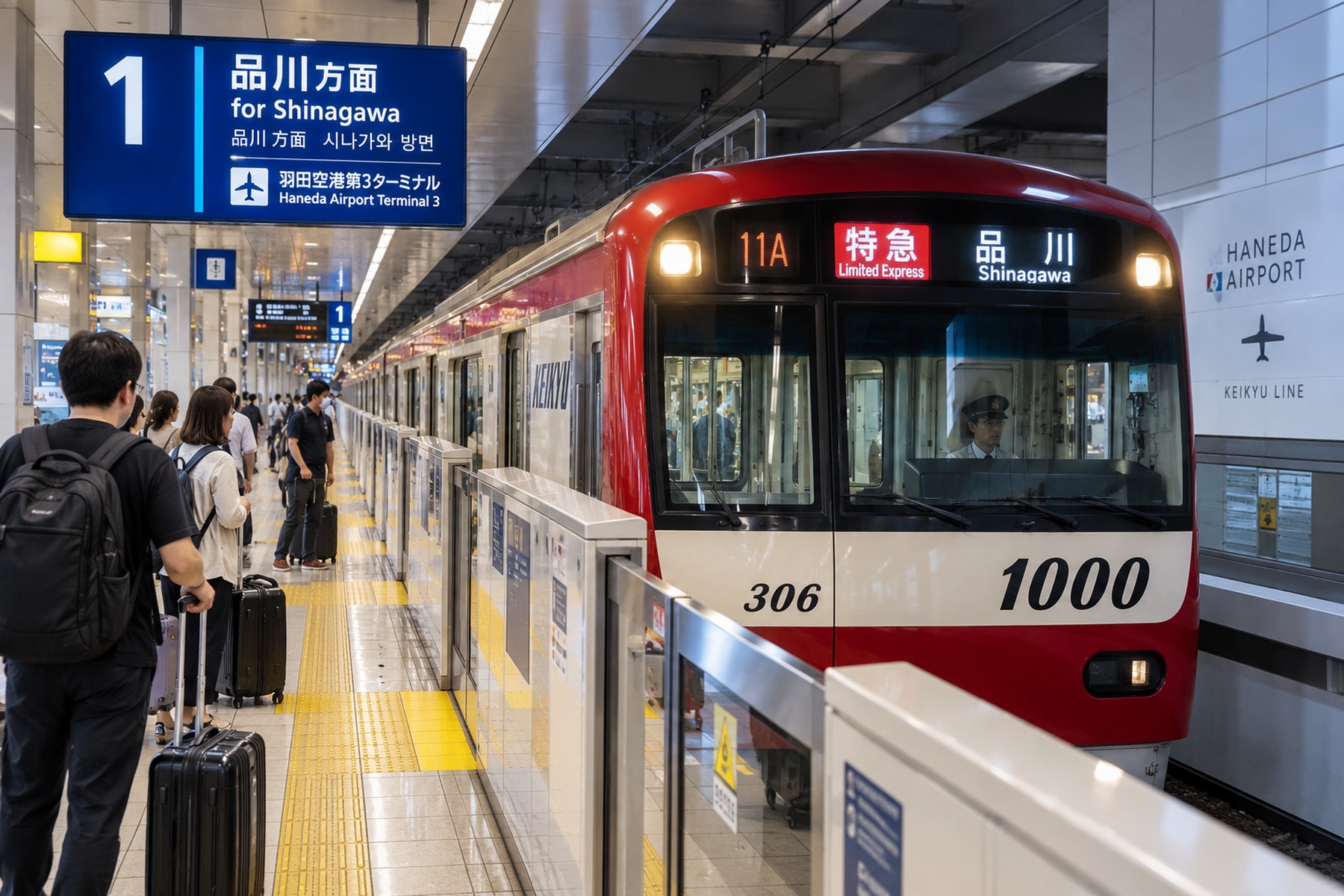
For most travelers, Keikyu to Shinagawa followed by JR to Shinjuku is the strongest balance of speed, price and reliability. Keikyu lists Shinjuku at as little as about 33 minutes and Shinagawa at about 14 minutes from Haneda, depending on the terminal and service. A direct airport bus is easier with luggage and Haneda lists Shinjuku Station West Exit at about 35 minutes under normal conditions, while traffic can make the trip longer. Tokyo Monorail via Hamamatsucho is another good rail option, and a taxi is the simplest door-to-door choice.
What You’ll Learn
- Which rail route is easiest for first-time visitors
- When the direct airport bus is worth choosing
- How luggage and arrival time change the best option
- What to expect when you reach busy Shinjuku Station
Arrival Decision: Terminal, Time and Shinjuku Destination
Haneda is close to central Tokyo, but the best route to Shinjuku depends on more than the shortest advertised travel time. Your terminal, luggage, hotel location, arrival time and willingness to transfer all matter.
For a normal daytime arrival with manageable luggage, rail is usually the most predictable choice. For large luggage, children or a hotel near a bus stop, the direct airport bus can remove a stressful transfer. A taxi costs much more but can be worth it when convenience matters most.
- Choose Keikyu plus JR for a fast, practical rail route via Shinagawa.
- Choose Tokyo Monorail plus JR if you prefer the airport rail route via Hamamatsucho.
- Choose the airport bus when avoiding a rail transfer matters more than traffic risk.
- Choose a taxi for door-to-door travel, heavy luggage or a late arrival.
Keikyu via Shinagawa: The Fast Rail Default for Shinjuku
Keikyu connects Haneda Airport with Shinagawa, where you can transfer to JR for Shinjuku. Keikyu publishes a fastest travel time of about 14 minutes to Shinagawa and about 33 minutes to Shinjuku, depending on the service and terminal.
At Shinagawa, follow JR signs and use a northbound JR service toward Shinjuku. This route is especially practical if you are comfortable with one transfer and want to avoid road traffic.
Check the destination and service type before boarding at Haneda. Keikyu trains can continue to different destinations, so do not board only because the train is red or because it is the next departure.
- Best overall rail choice for many first-time visitors.
- One transfer is normally required at Shinagawa.
- Check the front and platform display before boarding.
- Allow extra transfer time if you have large suitcases.
Tokyo Monorail via Hamamatsucho: The Alternative Rail Path
Tokyo Monorail runs from Haneda Airport to Monorail Hamamatsucho, where you can transfer to JR for Shinjuku. The fastest Haneda Express trip to Hamamatsucho is about 13 minutes from Terminal 3, about 17 minutes from Terminal 1 and about 19 minutes from Terminal 2.
From Hamamatsucho, transfer to JR and continue toward Shinjuku. This route is easy to understand, but the JR segment across central Tokyo is longer than the Shinagawa transfer used by the Keikyu option.
The monorail can still be a good choice when its platform is easier from your terminal or when you simply prefer a dedicated airport rail service.
- Dedicated airport rail service to Hamamatsucho.
- One transfer is required to continue to Shinjuku.
- Useful if the monorail route is easier from your terminal.
- Allow extra time for the transfer with luggage.
Airport Limousine Bus: Direct to Shinjuku Without a Rail Transfer
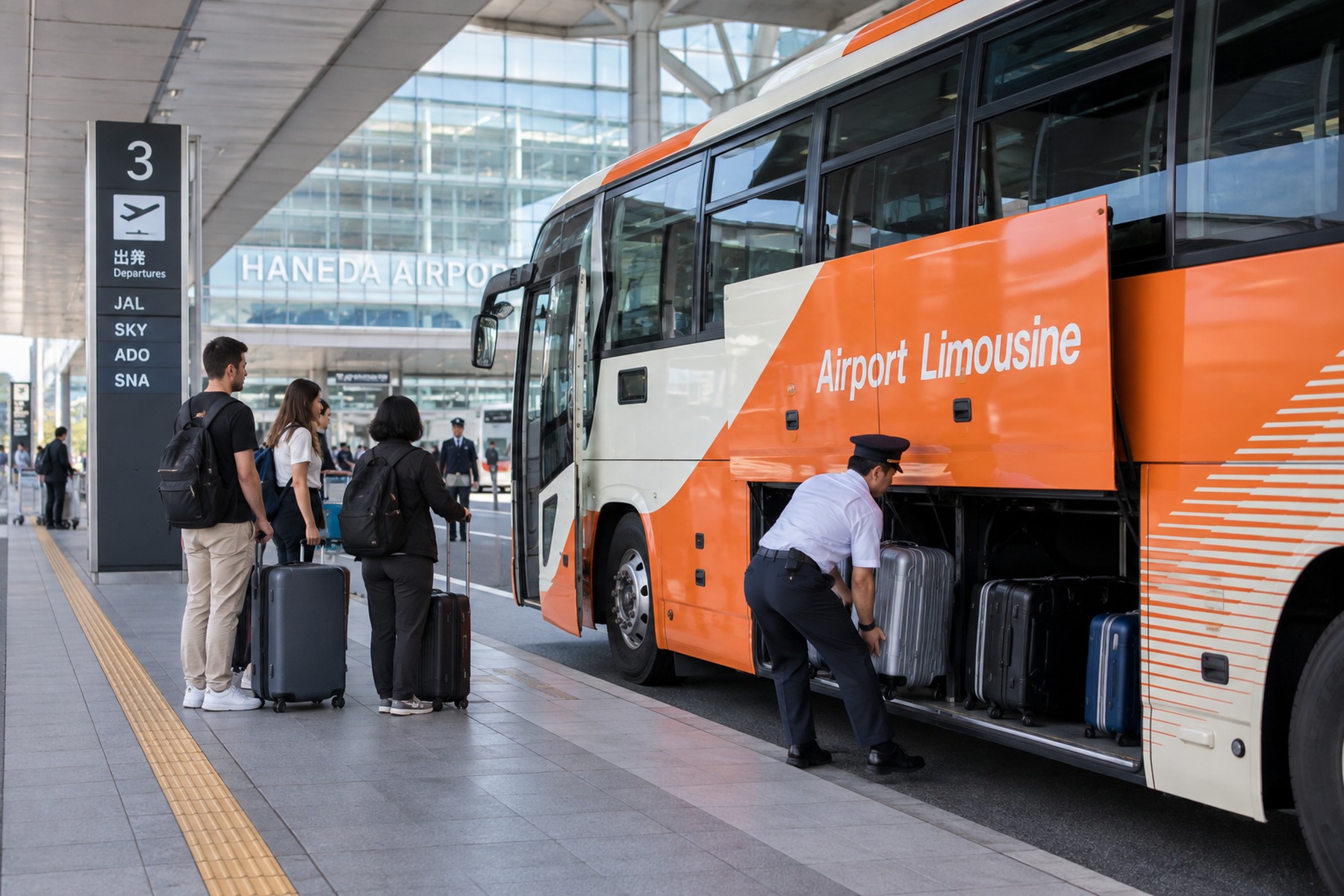
Haneda Airport currently lists direct buses to Shinjuku Station, Busta Shinjuku and Shinjuku-area hotels. The airport gives an estimated trip of about 35 minutes to Shinjuku Station West Exit, although road congestion can make the ride longer.
For the Shinjuku route, Haneda lists bus stop 4 at Terminal 1, stop 5 at Terminal 2 and stop 3 at Terminal 3. Always confirm the live timetable and boarding point on your travel day because airport bus schedules can change.
This is one of the easiest choices with bulky luggage because you can avoid carrying suitcases through Shinagawa or Hamamatsucho. It can also be attractive if your hotel is close to a bus stop.
- Direct ride with no rail transfer.
- Strong option for families and travelers with large luggage.
- Travel time is less predictable because of road traffic.
- Buy or confirm the required ticket before boarding.
Shinjuku Bus Stop Choice: Match the Stop to Your Hotel Side
Shinjuku is not a single compact destination. Airport buses may serve Shinjuku Station West Exit, Busta Shinjuku and selected hotels, so the best stop depends on where you are staying.
West Exit is useful for the western skyscraper district and many major hotels. Busta Shinjuku is above the New South Gate area and can be better for hotels or onward buses on the south side.
Before leaving Haneda, save your hotel on a map and compare the walking distance from each available bus stop. A direct bus is only convenient if the arrival stop is also convenient for your hotel.
- Check the hotel side of Shinjuku before booking a bus.
- Do not assume West Exit and Busta Shinjuku are interchangeable.
- Use the final walking distance as part of your route decision.
Taxi or Prearranged Transfer: When Door-to-Door Is Worth It
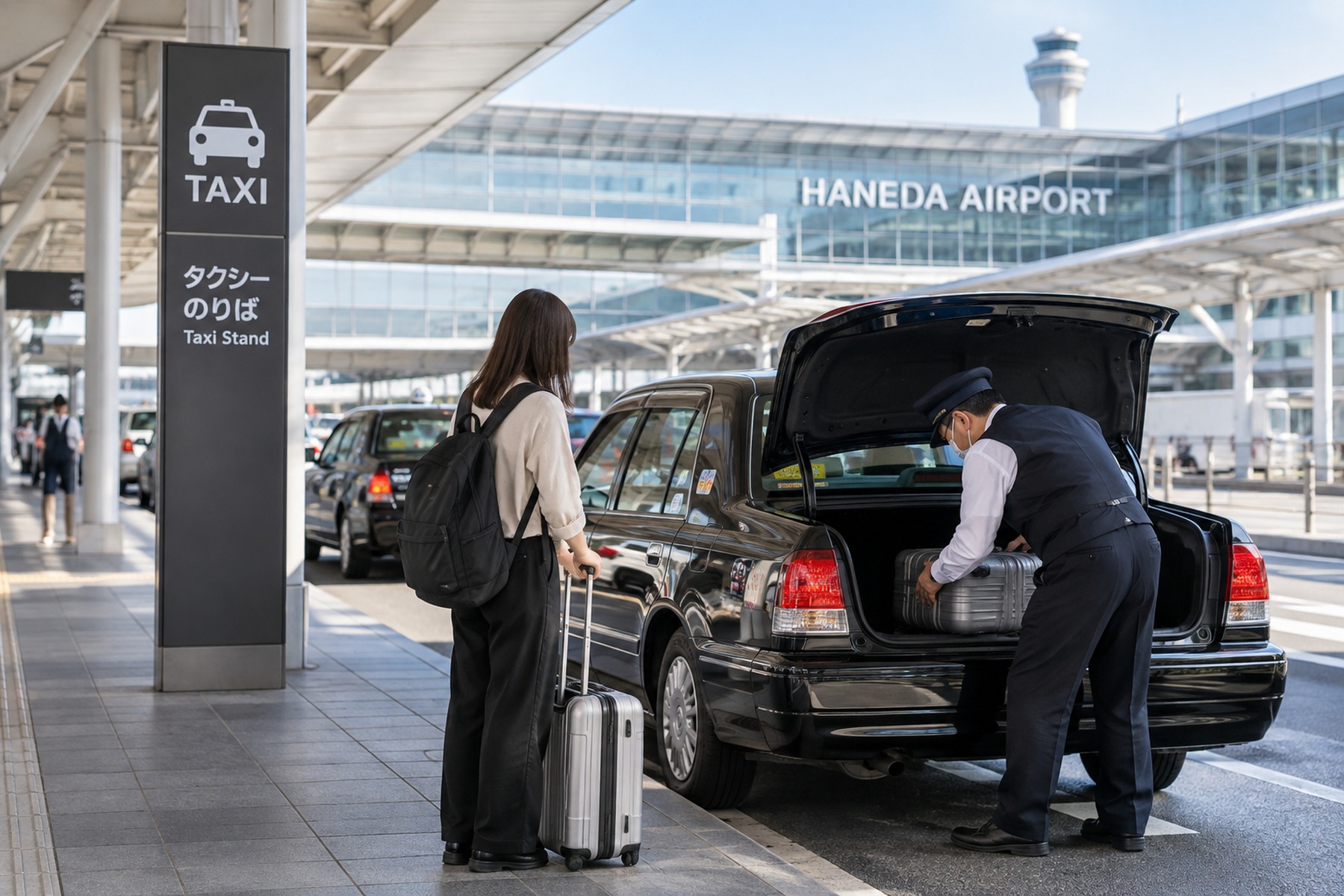
A taxi removes transfers and takes you directly to your hotel or another exact address in Shinjuku. Haneda provides general taxi stands as well as separate pickup areas for app-dispatched and reserved taxis.
Haneda fixed-fare taxi programs are available for many Tokyo areas. Toll-road charges are extra, and exact eligibility and fares depend on the destination, so check the current taxi association information before travel.
This option makes the most sense for groups sharing the fare, travelers with mobility needs, several large suitcases or arrivals when public transport is no longer convenient.
- Best for door-to-door convenience.
- Useful when luggage or mobility is the main constraint.
- Check the correct taxi pickup area for your terminal.
- Confirm fixed-fare conditions and toll charges before departure.
Tickets, IC Cards and Transfer Friction with Luggage
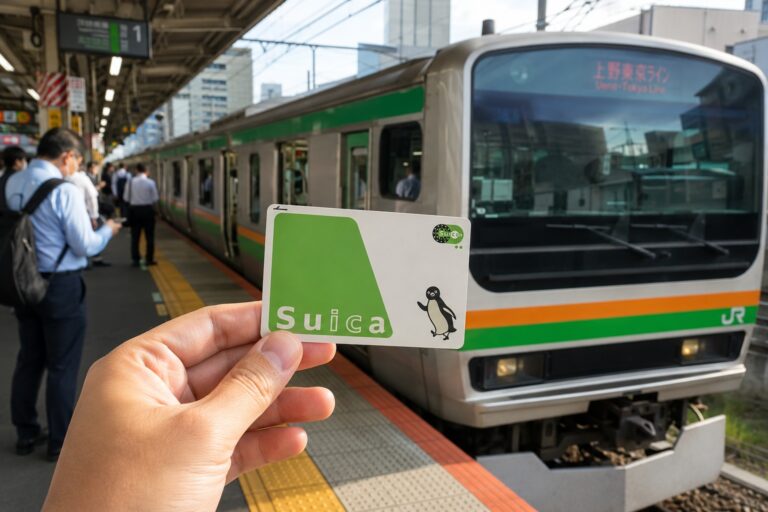
An IC card can simplify ordinary rail travel because you can tap through compatible gates rather than buy a basic-fare ticket for each segment. Keep enough balance available and remember that an IC card does not replace every reserved-seat or long-distance ticket.
Luggage changes the real travel time. Elevators may require a longer route than stairs or escalators, and crowded commuter trains can be uncomfortable with large cases.
If you have more luggage than you can handle comfortably on your own, the bus or taxi can be better value even when rail is cheaper.
- Keep your IC card or ticket ready before the gate.
- Use elevators early rather than changing direction at the last moment.
- Avoid blocking train doors with large luggage.
- Choose the route you can manage after a long flight, not just the cheapest route.
Shinjuku Station Geography: West, East and South Sides
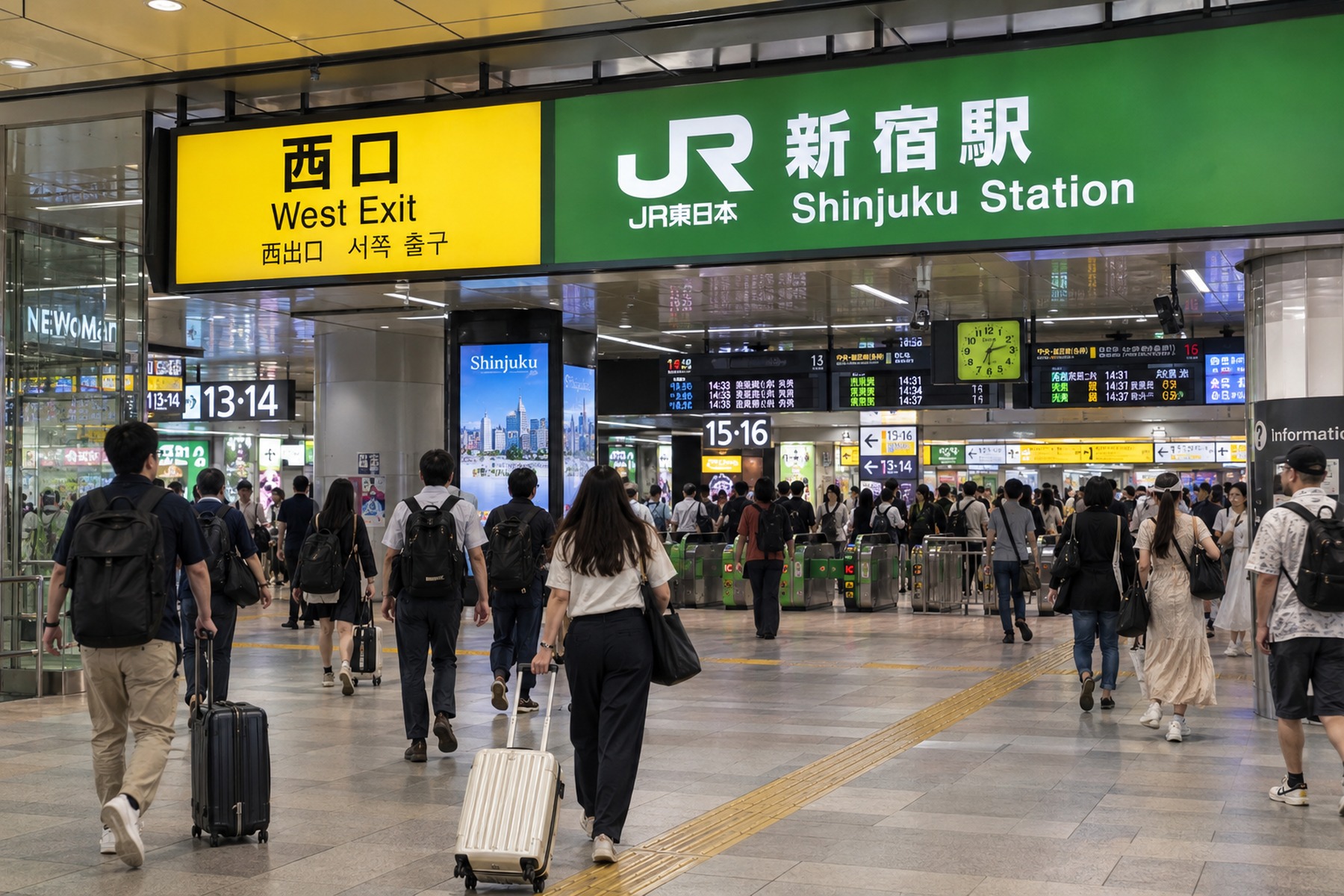
Shinjuku Station is one of the busiest transport hubs in Tokyo. Reaching the station does not mean you are close to your final hotel unless you know the correct exit.
West Exit, East Exit, South Exit and the New South Gate lead to different parts of the district. Check your hotel side before arrival and follow station signs rather than leaving through the first exit you see.
If your accommodation is in Kabukicho, Nishi-Shinjuku or near the south side, the best exit can differ significantly. Save the hotel address in both English and Japanese and use the station map together with your phone.
- Know your exit before you reach Shinjuku.
- Allow extra walking time inside the station complex.
- Use station signs first and street-level GPS second.
- Ask station staff if your hotel direction is unclear.
Late Arrival Recovery: Last Trains, Buses and Taxi Backup
Do not assume daytime train and bus frequency continues late at night. Haneda currently publishes late-night and early-morning airport bus services toward Shinjuku and Ikebukuro, but operating times can change with flight schedules.
International arrivals also need time for immigration, baggage collection and customs. Plan around the time you expect to reach the public arrivals area, not the scheduled landing time.
If the final practical public-transport option is tight, prepare a taxi or airport-hotel backup before flying.
- Check the final usable train or bus on your travel date.
- Add a realistic buffer for immigration and baggage.
- Keep a taxi backup for a missed last service.
Shinjuku Arrival Checks Before You Leave Haneda
The biggest mistake is choosing solely by the shortest advertised journey time. Walking to the platform, waiting, transferring, managing luggage and finding the correct Shinjuku exit can add significant time.
Another common mistake is treating all Haneda terminals as identical. Station entrances and bus stops differ, so use information for your actual arrival terminal.
- Do not board Keikyu without checking the destination.
- Do not underestimate a transfer with large suitcases.
- Do not assume airport-bus travel time is guaranteed in traffic.
- Do not arrive in Shinjuku without knowing the correct exit or bus stop.
FAQ
What is the fastest way from Haneda Airport to Shinjuku?
Keikyu via Shinagawa is usually the strongest rail option. Keikyu publishes a fastest travel time of about 33 minutes to Shinjuku, depending on the terminal, service and transfer.
Is there a direct bus from Haneda Airport to Shinjuku?
Yes. Haneda Airport lists direct bus service to Shinjuku Station, Busta Shinjuku and Shinjuku-area hotels. The airport estimates about 35 minutes to Shinjuku Station West Exit under normal conditions.
Can I use Suica or another IC card from Haneda to Shinjuku?
IC cards are convenient for compatible ordinary rail travel on Keikyu, Tokyo Monorail and JR. They do not replace every reserved-seat or long-distance ticket.
Which route is easiest with large luggage?
A direct airport bus or taxi is usually easier because it avoids a rail transfer. If your hotel is close to a Shinjuku bus stop, the bus can be a particularly practical choice.
What should I do if I arrive at Haneda very late?
Check the live final train and bus times before travel. Haneda also publishes late-night and early-morning bus services toward Shinjuku and Ikebukuro, but schedules can change, so keep a taxi backup.
Prefer a door-to-door transfer from Haneda?
For late arrivals, families or heavy luggage, compare a private airport transfer with the train and bus options above before booking.
Check Airport Taxi optionsRelated Japan Travel Guides

Official References
Final Thoughts
For most daytime arrivals, Keikyu via Shinagawa is the best default because it is fast, reliable and relatively simple. Tokyo Monorail via Hamamatsucho is a solid alternative, while the direct airport bus is especially useful with luggage or when its Shinjuku stop is close to your hotel. A taxi costs more but is the easiest door-to-door option. Confirm your terminal, live timetable and final Shinjuku exit before you travel.