
Narita Airport Guide: Terminals, Tokyo Transport & Arrival Tips
A practical first-time visitor guide to Narita Airport, including terminals, trains and buses to Tokyo, late-arrival planning, luggage, Wi-Fi, and airport transfers.
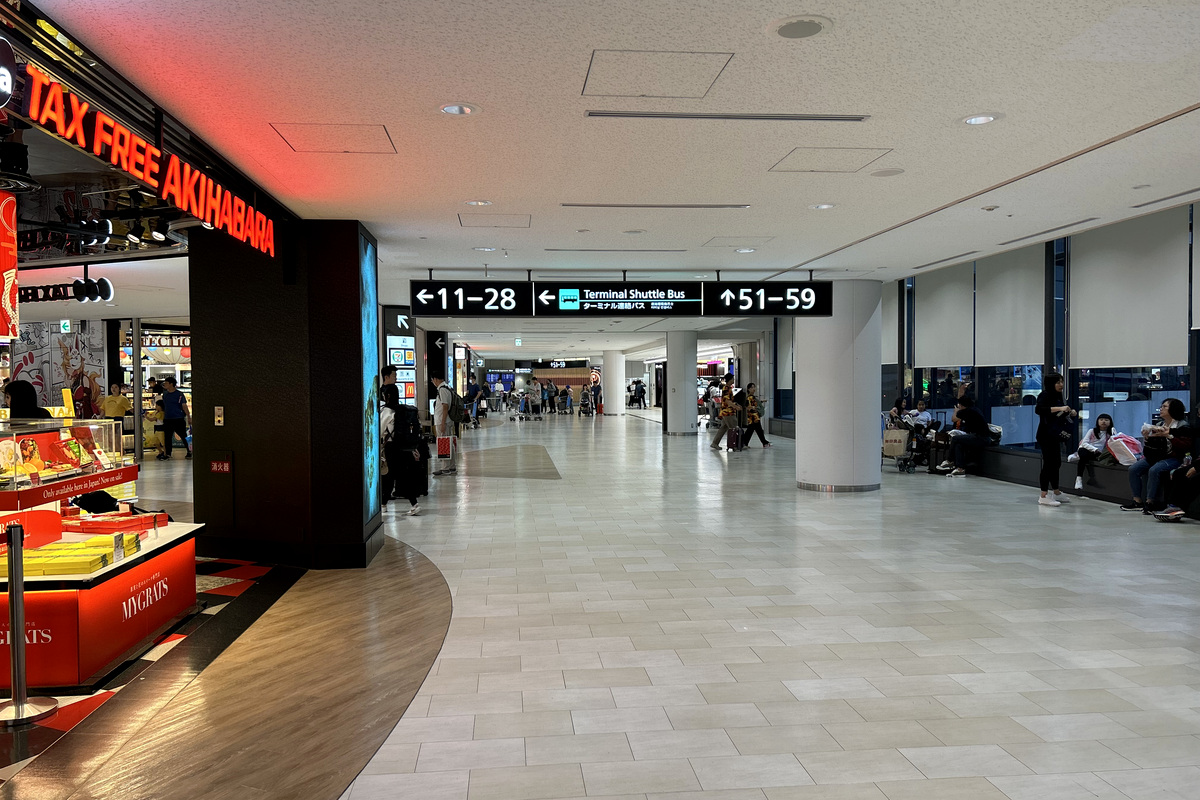
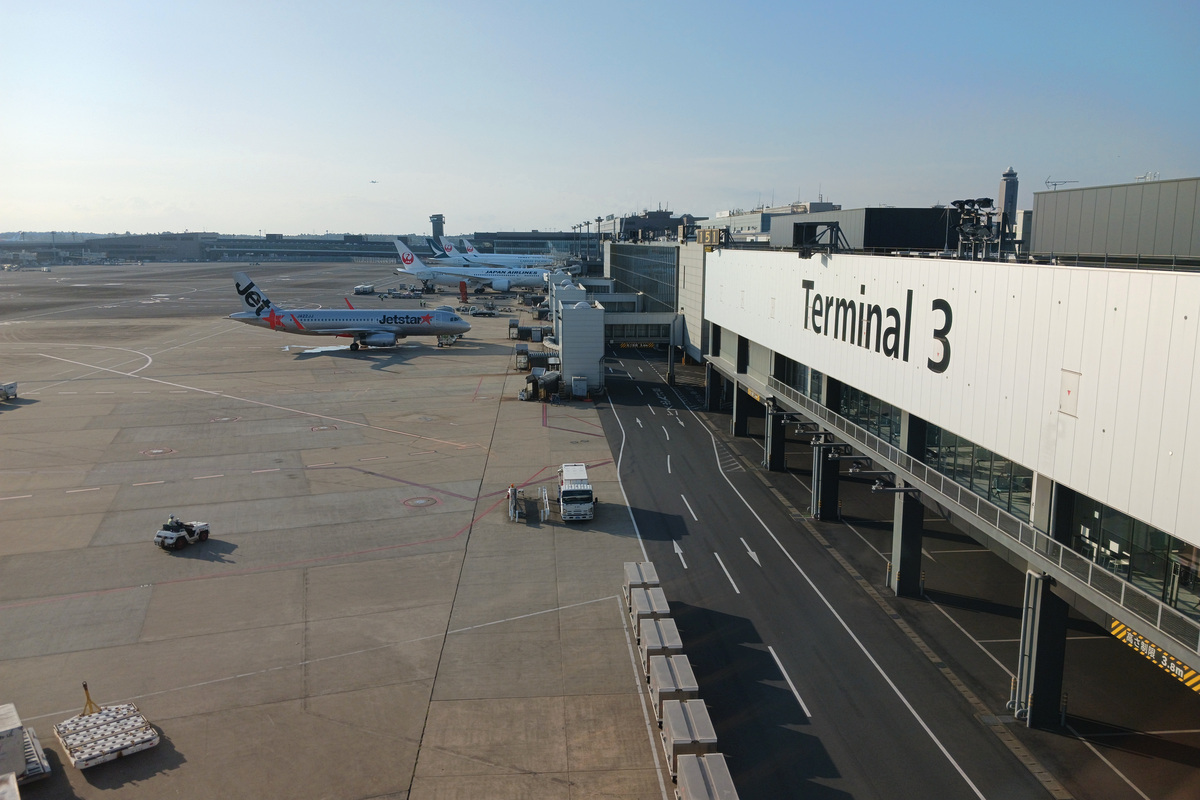
Narita Airport is easy to use once you know two things: your terminal and your final Tokyo destination. Terminal 1 has Narita Airport Station, while Terminals 2 and 3 use Airport Terminal 2・3 Station; Terminal 3 is about a 10-minute walk from that rail station. For central Tokyo, the Narita Express is convenient for Tokyo, Shinagawa, Shibuya and Shinjuku, while the Keisei Skyliner is especially useful for Nippori and Ueno. If that route fits your hotel, see our Keisei Skyliner ticket guide before booking. Airport buses can be easier with large luggage or when they stop close to your hotel. Check your exact route, final service time and terminal before travel, because schedules, fares and airline terminal assignments can change.
What You’ll Learn
- How Narita’s three terminals affect your arrival and departure plan
- When the Narita Express, Skyliner or airport bus makes the most sense
- What to do before leaving the arrivals area
- How to handle late-night arrivals, luggage and terminal transfers
- Which official sources to recheck before your travel date
Start With Your Terminal and Final Destination
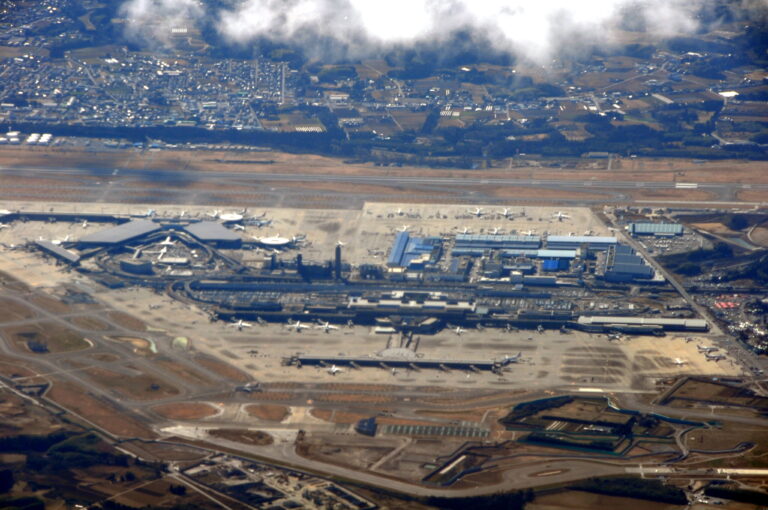
Narita International Airport has three passenger terminals, and your airline determines which one you use. Do not rely on memory from a previous trip or on a general airline list; check the airport’s flight information or your airline for the terminal assigned to your specific flight.
The second decision is your actual destination after landing. “Tokyo” is too broad for airport-transfer planning. A route that is excellent for Ueno may be inconvenient for Shinjuku, and a train that reaches Tokyo Station quickly may still leave you with a difficult subway transfer, long walk or stairs with luggage.
Before you travel, save your hotel name, nearest station, station exit and a backup route. That single step makes it much easier to choose among the Narita Express, Keisei Skyliner, airport buses, local trains, taxis and private transfers.
- Confirm your airline terminal for the exact flight date.
- Save your hotel’s nearest station and exit, not only the neighborhood name.
- Compare the complete journey, including transfers, walking and luggage.
- Check the last realistic train or bus if you arrive in the evening.
Narita Airport Terminals: What Changes for You
Terminal 1 and Terminal 2 each connect directly to an airport railway station. Terminal 1 uses Narita Airport Station. Terminal 2 and Terminal 3 use Airport Terminal 2・3 Station; Narita Airport states that Terminal 3 is about a 10-minute walk from that station.
The terminals are connected by free shuttle buses, and Terminal 2 and Terminal 3 can also be reached on foot through the access corridor. The airport publishes separate shuttle routes because travel time varies by direction and terminal pair.
For most visitors, the important point is simple: follow the terminal signs and do not assume that “Narita Airport Station” serves every terminal in the same way. If you are using Terminal 3, allow extra walking or shuttle time between the terminal and the railway station.
- Terminal 1: use Narita Airport Station for JR and Keisei rail services.
- Terminal 2: use Airport Terminal 2・3 Station.
- Terminal 3: use Airport Terminal 2・3 Station, then walk or use the terminal shuttle as appropriate.
- Free terminal shuttle buses operate between terminals before security.
The Best Way to Tokyo Depends on Where You Stay
There is no single best airport transfer for every traveler. The right choice depends on your hotel location, arrival time, luggage, budget, group size and willingness to transfer.
The Narita Express is strong when you want a direct JR ride toward Tokyo, Shinagawa, Shibuya or Shinjuku. The Keisei Skyliner is strong for Nippori and Ueno, especially when you can connect easily from there. Airport buses are often the least stressful option when a bus stop is close to your hotel or when you are carrying large suitcases.
Do not compare only the advertised train time. A fast airport train followed by two transfers can be less convenient than a slightly slower direct route. For first-time visitors, fewer transfers often matter more than saving a small amount of time.
- Tokyo, Shinagawa, Shibuya or Shinjuku: check the Narita Express first.
- Nippori or Ueno: check the Keisei Skyliner first.
- Hotel or district with a convenient airport-bus stop: compare the bus before choosing rail.
- Large group, very heavy luggage or difficult late arrival: compare taxi or private transfer costs.
Narita Express vs Keisei Skyliner
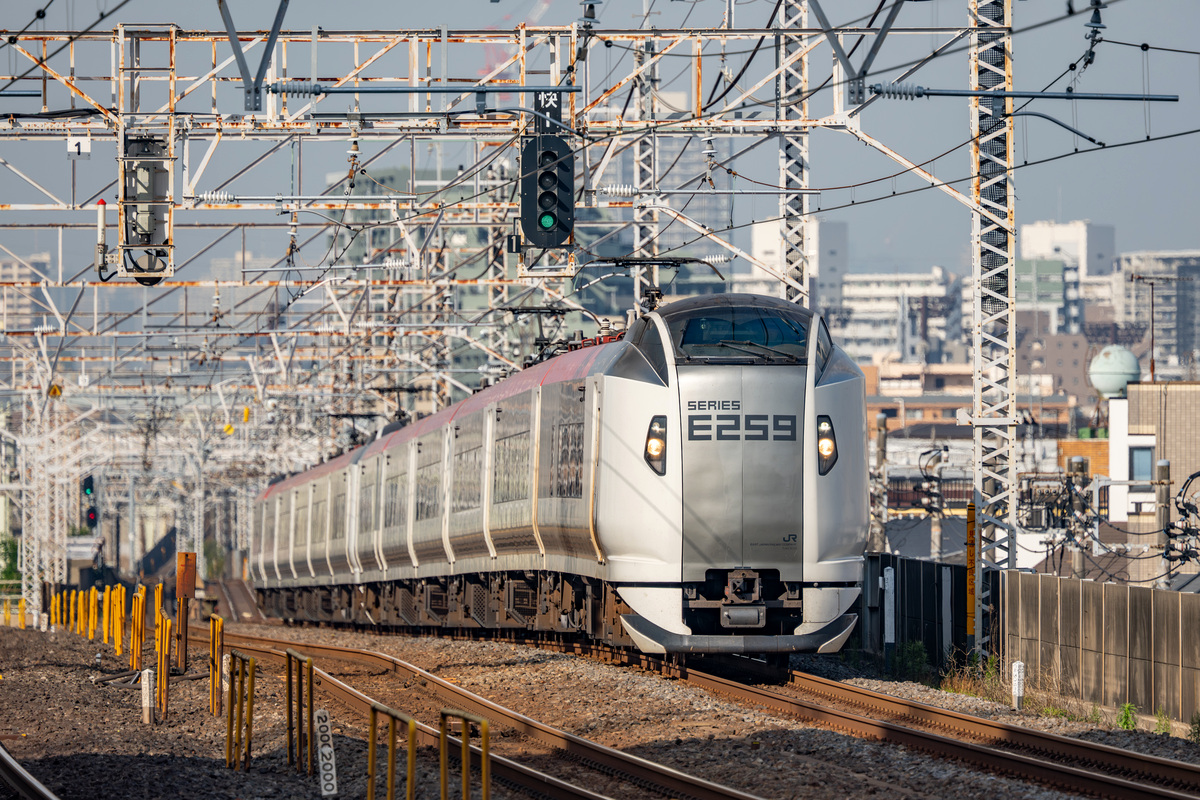
JR East’s Narita Express, usually shown as N’EX, connects Narita Airport with major JR stations including Tokyo, Shinagawa, Shibuya and Shinjuku on applicable services. JR East currently advertises a fastest journey of 53 minutes from Narita Airport to Tokyo Station. Its published ordinary-car one-way fare is ¥3,140 to Tokyo and ¥3,330 to Shinagawa, Shibuya or Shinjuku.
The Keisei Skyliner connects Narita Airport with Nippori and Keisei-Ueno. Keisei states that the fastest Skyliner journey between Airport Terminal 2・3 Station and Nippori is 36 minutes. All Skyliner seats are reserved, and dedicated luggage space is provided.
Choose by destination rather than by brand. If your hotel is near Ueno, the Skyliner can be extremely convenient. If your hotel is near a major JR station served directly by the Narita Express, avoiding a transfer may be worth more than the difference in headline travel time.
Fares, discount products and timetables can change, so use the official JR East and Keisei pages for your travel date instead of relying on an old screenshot or blog price.
- Narita Express: direct JR access to several major Tokyo and Yokohama-area stations depending on the train.
- Skyliner: fast reserved-seat service to Nippori and Keisei-Ueno.
- Both require you to confirm the correct ticket or reserved-seat product before boarding.
- A direct route is usually easier with luggage than a faster route that requires multiple transfers.
Airport Buses, Taxis and Private Transfers
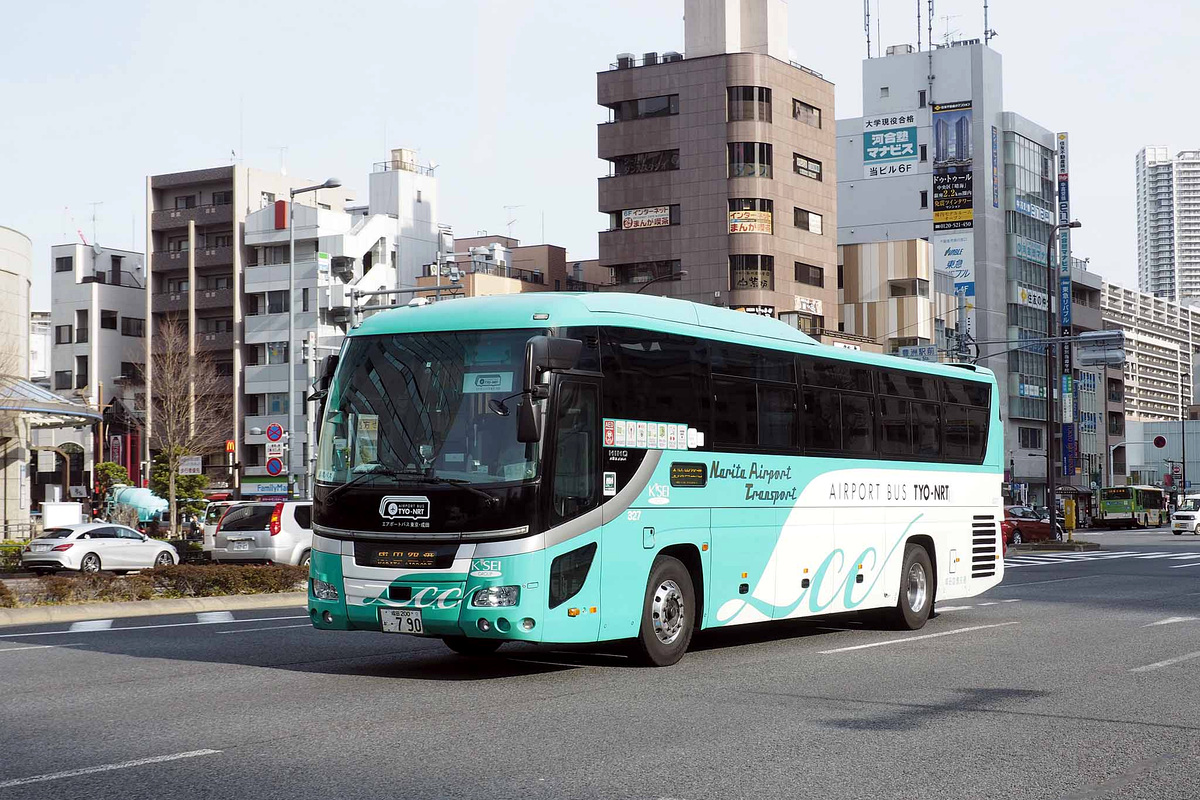
Narita Airport has direct bus services to many parts of Tokyo and the surrounding region. The airport lists routes for Tokyo Station, Nihombashi, Shinjuku, Ikebukuro, Shibuya, Ginza, Odaiba, Roppongi, Tokyo Disney Resort and other destinations. Some hotel areas are also served.
Low-cost buses are useful when your destination matches the route. Narita Airport currently lists the Tokyo/Ginza low-cost bus at ¥1,500 for the standard daytime fare, excluding certain late-night and early-morning services. Always confirm the operator, stop and current timetable before travel.
A taxi or private transfer costs much more than rail or bus for most solo travelers, but it can make sense for a group, travelers with mobility needs, several large bags, a very late arrival or a destination that would otherwise require multiple transfers.
Road travel times are less predictable than rail because traffic can affect buses, taxis and private cars. Leave extra time when heading back to the airport.
- Buy the correct bus ticket before boarding when the route requires it.
- Check the exact bus stop number for your terminal.
- Compare the total group cost before dismissing a taxi or private transfer.
- Allow traffic buffer time for any road-based airport transfer.
What to Do Before Leaving the Arrivals Area
After immigration, baggage claim and customs, resist the urge to leave the terminal immediately. Spend a few minutes confirming the essentials you will need for the first part of your trip.
Narita Airport provides free Wi-Fi throughout all terminals and on terminal shuttle buses. The airport also lists mobile-phone, Wi-Fi rental and SIM-card counters or vending machines in Terminals 1, 2 and 3. If you already arranged an eSIM, connect it before you leave while airport Wi-Fi is available as a backup.
ATMs, currency exchange, rail and bus ticket counters, baggage services and information counters are available in the terminals. Availability and operating hours vary, so do not assume every counter is open for a late arrival.
Before walking away from the airport, confirm your first train or bus, platform or stop, hotel address, mobile connection and a payment method that will work after you reach the city.
- Connect your phone and save your hotel route offline if possible.
- Confirm the exact train, seat reservation or bus ticket you need.
- Withdraw or exchange a modest amount of cash if your payment setup is uncertain.
- Check whether luggage delivery would simplify your first day.
Late-Night and Early-Morning Arrivals
A late scheduled landing is not the same as the time you will reach the train or bus. Immigration, baggage claim, customs, walking and ticket purchase can add significant time, especially after a delayed flight.
Narita Airport publishes separate night and early-morning access information. Some terminal floors are available 24 hours, while others have restricted access hours. For example, parts of Terminal 1 are open 24 hours on the arrivals level and basement, while other floors list 05:00–24:00 access. Terminal 3’s main arrival and departure floors are listed as available 24 hours.
The airport also lists 24-hour convenience stores in each terminal and certain 24-hour food or accommodation options. That does not mean trains and buses run all night. Check the final realistic public-transport departure for your terminal and allow time for arrival procedures.
If the last practical service is too tight, an airport-area hotel, taxi or prearranged transfer can be a safer plan than gambling on a connection you may miss.
- Check the final train or bus using your expected exit-from-customs time, not landing time.
- Have a backup hotel or transfer plan for delayed evening arrivals.
- Do not assume that 24-hour terminal access means 24-hour transport.
- Recheck operating hours close to your travel date.
Luggage, Delivery and Lockers
Narita Airport lists baggage delivery, temporary storage, coin-operated lockers, baggage wrapping and other luggage services across Terminals 1, 2 and 3. These can be valuable if you have oversized bags, an early hotel check-in problem or a complicated city transfer.
For a first-time visitor with heavy luggage, the easiest airport route is often the one with the fewest stairs and transfers rather than the one with the lowest fare. An airport bus to a nearby hotel stop or baggage delivery to your hotel can be worth considering.
If you plan to use luggage delivery, check the current counter hours and delivery timing before relying on same-day service. Service availability can differ by terminal and provider.
- Use elevators and direct routes when traveling with large suitcases.
- Consider baggage delivery if your first day includes sightseeing before hotel check-in.
- Use lockers or storage only after confirming size limits and operating conditions.
- Keep valuables, medicine, documents and one change of clothes with you rather than in forwarded luggage.
Connections and Moving Between Terminals
If you are connecting to another flight, confirm both the arrival and departure terminals. Narita’s official connection guides explain when you must complete immigration, customs or security procedures and when a terminal transfer is required.
Before security, free terminal shuttle buses connect the terminals. Narita Airport currently lists about 10 minutes between Terminals 1 and 2 on the direct shuttle route, while Terminal 2 and Terminal 3 are much closer and can also be connected on foot through the access corridor.
Connection rules differ for international-to-international, international-to-domestic and domestic-to-international itineraries. Follow your airline’s instructions and the airport’s connection guide rather than treating the transfer like a normal landside terminal change.
- Check the departure terminal of the connecting flight before leaving your arrival area.
- Allow extra time for immigration, customs or another security screening when required.
- Use the official shuttle-bus or access-corridor route rather than walking outside without a plan.
- Ask airline staff when a through-ticket or baggage transfer rule is unclear.
Departing from Narita: Avoid the Wrong-Terminal Mistake
The most expensive Narita mistake is arriving at the wrong terminal too close to departure. Airline terminal assignments can change, and some airlines use different terminals for different services. Check your terminal again on the day of travel.
If you travel by train, remember that Terminal 1 uses Narita Airport Station and Terminals 2 and 3 use Airport Terminal 2・3 Station. Terminal 3 passengers need additional time from the station to the terminal.
International check-in counters are on different floors by terminal, and the airport recommends checking your airline’s instructions for check-in timing. Build in more time than you would for a city railway station: the airport journey still includes terminal access, check-in, baggage drop, security and immigration.
- Reconfirm the terminal on your flight date.
- Choose the correct airport railway station for that terminal.
- Add walking time for Terminal 3.
- Follow your airline’s recommended check-in time rather than a generic airport rule.
A Simple First-Time Arrival Plan
For most first-time visitors, Narita becomes straightforward when the arrival plan is decided before the flight. You do not need to memorize every train or bus; you need one preferred route and one backup.
Start with the hotel’s exact location. Choose the airport transfer that minimizes difficult transfers. Save the ticket-purchase method or reservation details. Then confirm your mobile connection, payment method and the final walk from the Tokyo arrival point to your hotel.
After landing, use airport signs and official information to verify that nothing has changed. If a train is delayed, a bus is full or your flight arrives late, switch to the backup route rather than improvising from scratch.
- 1. Confirm terminal and hotel location before departure.
- 2. Choose a preferred route and one backup.
- 3. Connect mobile data before leaving the airport.
- 4. Buy the correct reserved-seat or bus ticket when required.
- 5. Keep the hotel address and final walking route available offline.
- 6. Recheck live transport information after landing.
FAQ
Is Narita Airport easy for first-time visitors?
Yes. The airport is well signed and has extensive transport and traveler services. The main challenge is that Narita is far from central Tokyo, so first-time visitors should decide their terminal, Tokyo destination and preferred transfer before landing.
Which train station should I use for Terminal 3?
Use Airport Terminal 2・3 Station for JR and Keisei trains. Narita Airport states that Terminal 3 is about a 10-minute walk from the station; a terminal shuttle is also available.
Is the Narita Express or Skyliner better?
It depends on your destination. The Narita Express is convenient for major JR areas such as Tokyo, Shinagawa, Shibuya and Shinjuku on applicable services. The Skyliner is especially convenient for Nippori and Ueno. Compare the complete hotel journey, not only the airport-train time.
Can I use Suica or another IC card from Narita Airport?
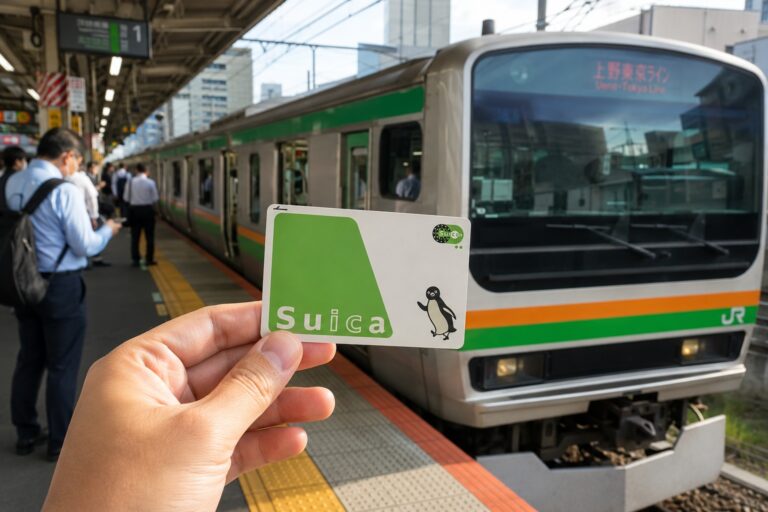
IC cards can be used for basic rail fares on supported JR and Keisei routes, but limited-express or reserved-seat services require the appropriate additional ticket. JR East explains that N’EX can be used with Suica plus a limited-express ticket, and Keisei states that the Skyliner is reserved seating.
Does Narita Airport have free Wi-Fi?
Yes. Narita Airport provides free Wi-Fi throughout all passenger terminals and on terminal shuttle buses. The airport network is listed as FreeWiFi-NARITA.
What should I do if I arrive at Narita late at night?
Check the last realistic train or bus based on the time you expect to finish immigration, baggage claim and customs. Some terminal areas and services are available 24 hours, but public transport does not operate all night. Keep an airport-area hotel, taxi or prearranged transfer as a backup if your connection is tight.
Need a fast train from Narita Airport?
Compare the Keisei Skyliner option before choosing your route into Tokyo.
Check Skyliner tickets on KlookNeed mobile data in Japan?
Compare current eSIM data allowances, validity, device compatibility and setup requirements before choosing.
Check Saily eSIM plansRelated Japan Travel Guides


Official References
- Narita International Airport — Rail Access
- Narita International Airport — Traveling Between Terminals
- Narita International Airport — Bus from the Airport
- Narita International Airport — Low-Cost Bus
- Narita International Airport — Terminal Use at Night and Early Mornings
- Narita International Airport — Wi-Fi / Power Outlets
- Narita International Airport — Baggage / Delivery Services
- JR East — N’EX Tickets and Fares
- Keisei Electric Railway — Skyliner Overview
Final Thoughts
Narita Airport is not difficult; it simply rewards advance planning. Confirm your terminal, choose transport for your actual hotel location, and keep a backup for delays or late arrivals. Use the Narita Express when a direct JR route fits your destination, the Skyliner when Nippori or Ueno is convenient, and airport buses when they reduce luggage handling or station transfers. Before leaving the terminal, confirm mobile data, payment, your ticket and the final route to the hotel. Recheck official timetables, fares, terminal assignments and counter hours for your travel date.