
Narita Airport to Tokyo: Train, Bus and Transfer Guide
Choose the right Narita Airport to Tokyo transfer by hotel location, luggage and arrival time, with clear guidance on the Skyliner, Narita Express, buses and taxis.
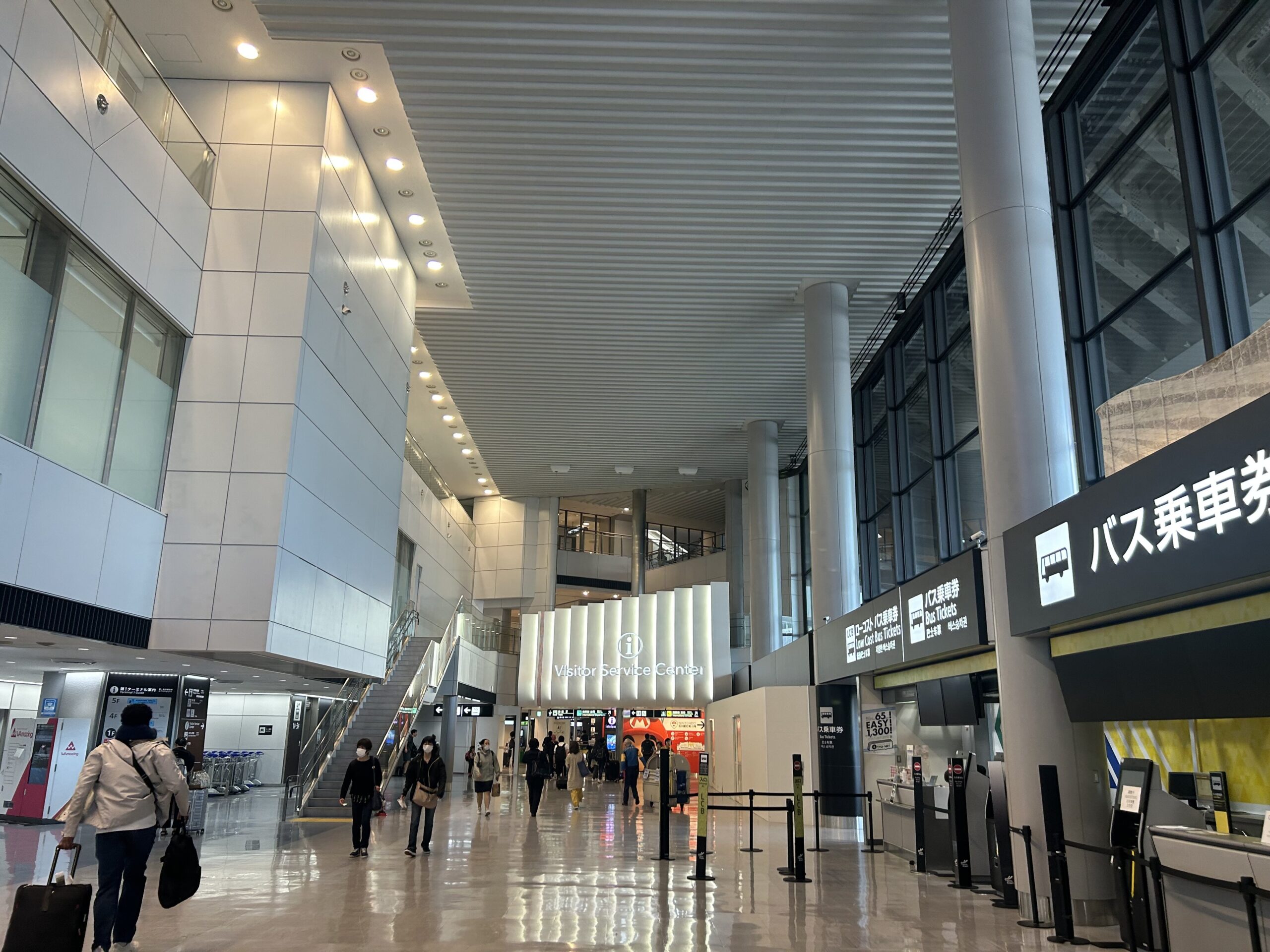
Choose the Narita Express when a served JR destination such as Tokyo, Shinagawa, Shibuya or Shinjuku gives the simplest final connection. Choose the Keisei Skyliner for Nippori, Ueno and many eastern-Tokyo routes. Compare an Access Express for destinations on or near the Asakusa Line, and choose an airport bus when it stops close to the hotel and removes difficult transfers. Taxis and private transfers are usually costly but can suit groups, late arrivals, accessibility needs or heavy luggage. Always compare the complete route from the arrival terminal to the hotel entrance.
What You’ll Learn
- Choose by the hotel’s exact station and exit.
- Distinguish Skyliner, Narita Express and regular services.
- Use buses when they remove difficult luggage transfers.
- Plan a safe backup for late arrivals.
- Avoid buying a ticket before the full route is clear.
Choose the route by your final hotel door
The best transfer from Narita Airport is the one that leaves the simplest final journey to the hotel. Compare the complete route, including the terminal, arrival station, transfer, station exit and street walk. A fast airport train can become a poor choice if it creates a difficult cross-city connection with luggage.
Start with the hotel’s nearest useful station, not a broad district name. Check whether the property is really walkable from that station, whether the correct exit has elevators and whether a short taxi from the airport train or bus stop would remove an awkward transfer.
- Check the exact hotel entrance and nearest useful station.
- Count transfers, stairs and walking with luggage.
- Choose the simplest complete route, not the fastest first leg.
Find the correct station after arrival
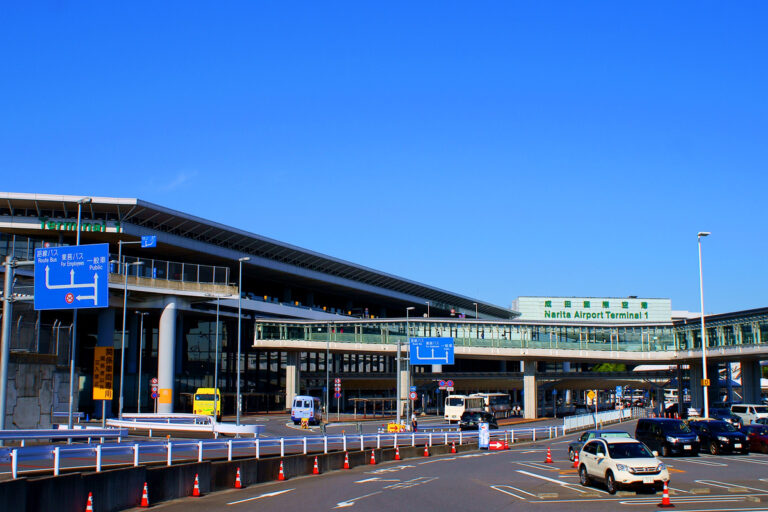
Terminal One has its own airport rail station. Terminals Two and Three share Airport Terminal Two Station, and Terminal Three requires an additional walk or free shuttle connection. Follow signs for the correct railway company because JR and Keisei use separate ticketing and services.
Do not buy a ticket until the destination and service name are clear. Show the hotel address or saved route at an official counter when uncertain, and check the departure time, platform, reserved-seat requirement and the final transfer before leaving the arrivals level.
- Match the rail station to the arrival terminal.
- Distinguish JR services from Keisei services.
- Confirm the final Tokyo connection before payment.
Use the Skyliner for Nippori, Ueno and eastern Tokyo
The Keisei Skyliner runs from Narita Airport to Nippori and Keisei Ueno with reserved seating. Nippori is often the cleaner transfer to JR lines, while Ueno works well for hotels around Ueno, Okachimachi and nearby eastern districts.
For Asakusa or Akihabara, compare the full transfer with an Access Express or other direct service before deciding. The Skyliner is fast to its own stops, but a second train, subway or taxi may determine whether it is actually the easiest route.
- Check Nippori and Ueno against the hotel location.
- Allow time to transfer with luggage.
- Buy the correct reserved-seat ticket before boarding.
Use the Narita Express for major JR destinations
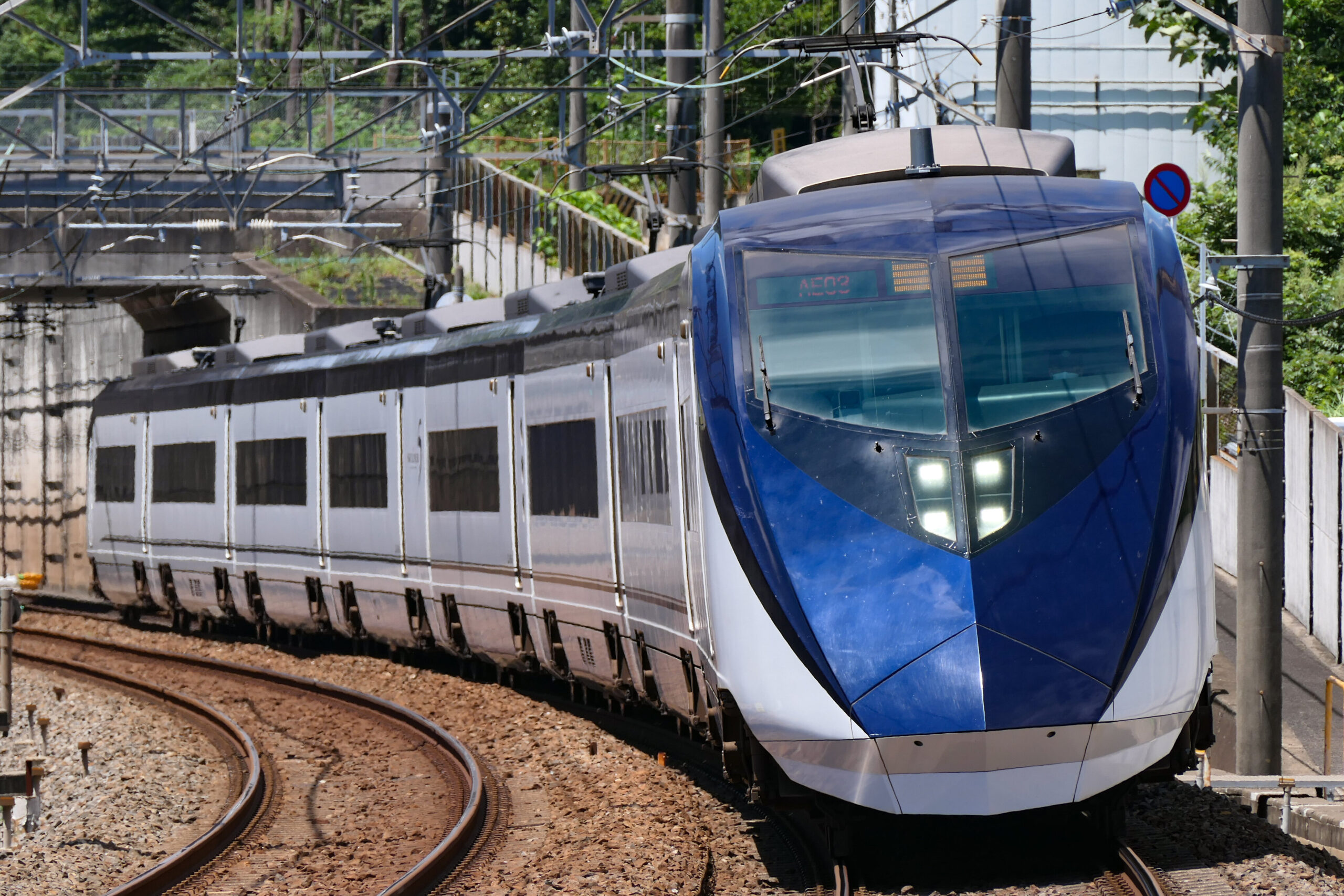
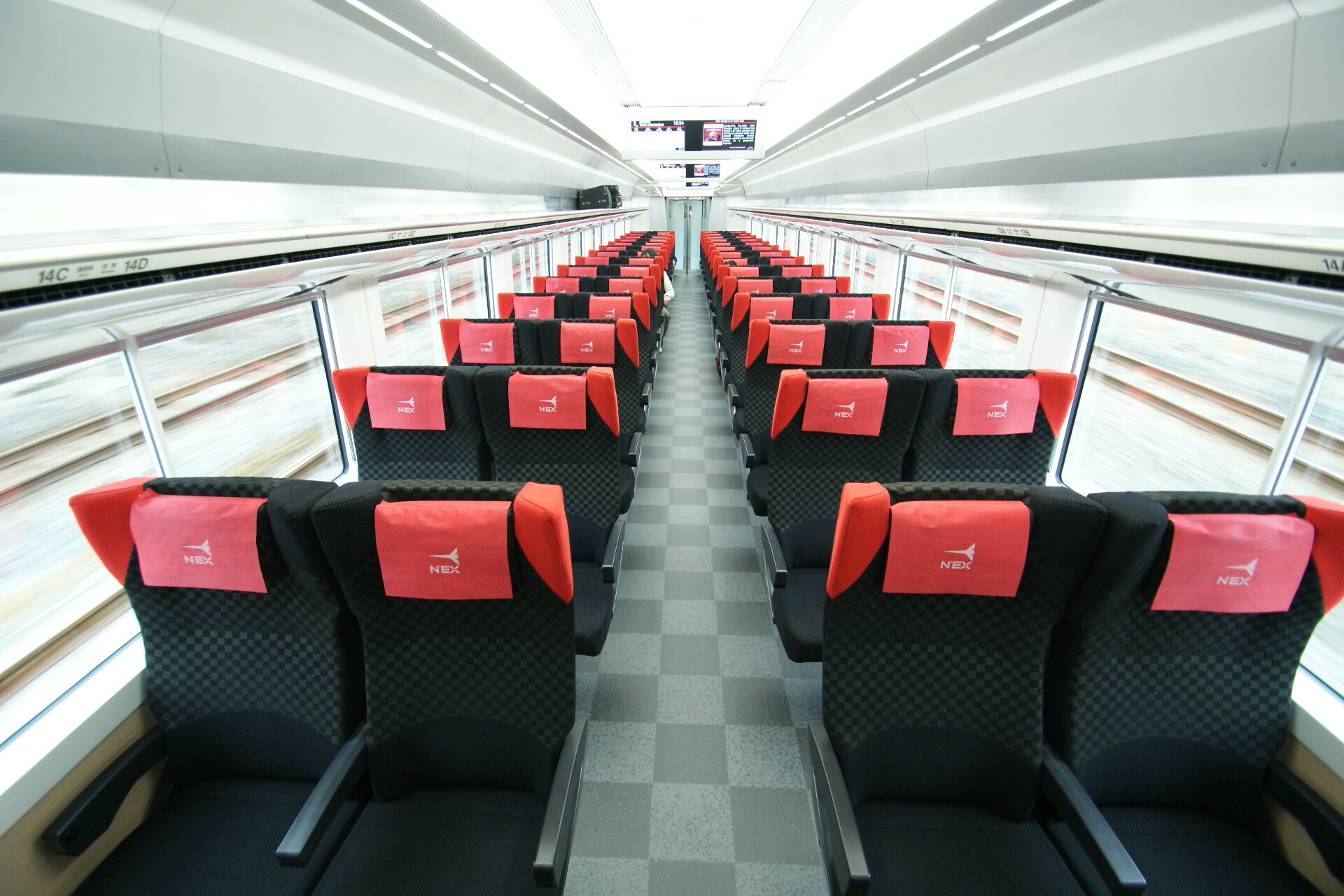
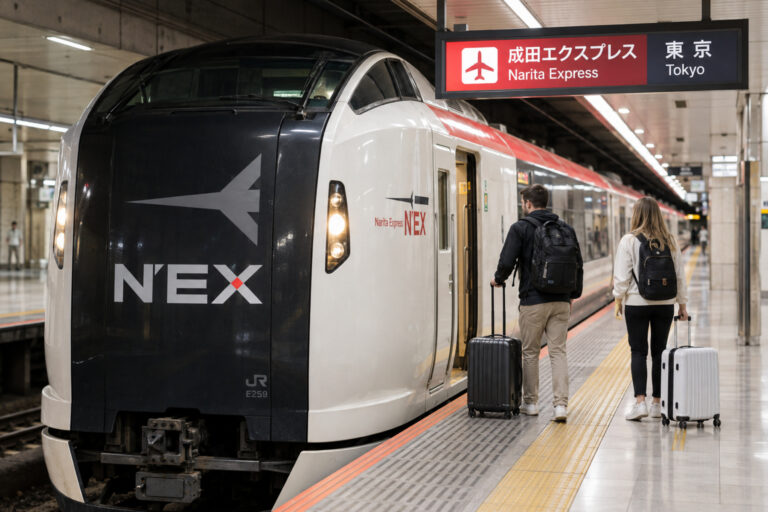
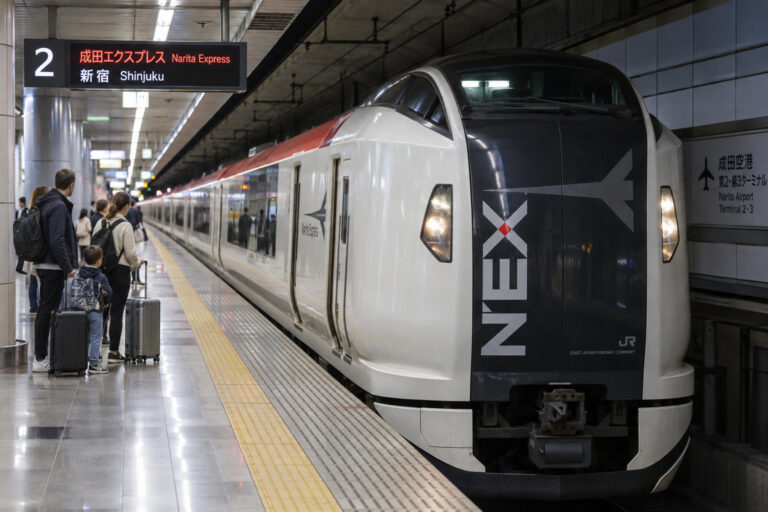
JR East’s Narita Express provides reserved-seat service from the airport to major destinations that include Tokyo, Shinagawa, Shibuya and Shinjuku, with some services continuing farther. It is especially useful when the hotel is near a served station or the next connection is on JR.
Check the current timetable for the actual arrival window because stopping patterns and through destinations vary by train. A direct ride to a large station still requires planning: save the hotel-side exit and allow time to walk through the station after an international flight.
- Match the train’s stops to the hotel station.
- Confirm the current timetable and reserved seat.
- Save the correct exit at the destination station.
Consider Access Express and regular Keisei trains carefully
Keisei Access Express and other regular services can be useful for destinations reached through the Asakusa Line or for travelers prioritizing price over reserved-seat comfort. Some trains continue beyond their initial line, so the service name and destination display matter.
These trains may make more stops, lack dedicated luggage space and become busy. Read the platform display rather than boarding the first train toward Tokyo, and compare the route again if it requires several transfers or a long walk with cases.
- Check the exact train type and destination display.
- Expect less luggage space than on reserved airport trains.
- Avoid a low fare that creates several difficult transfers.
Choose a bus when it removes train transfers
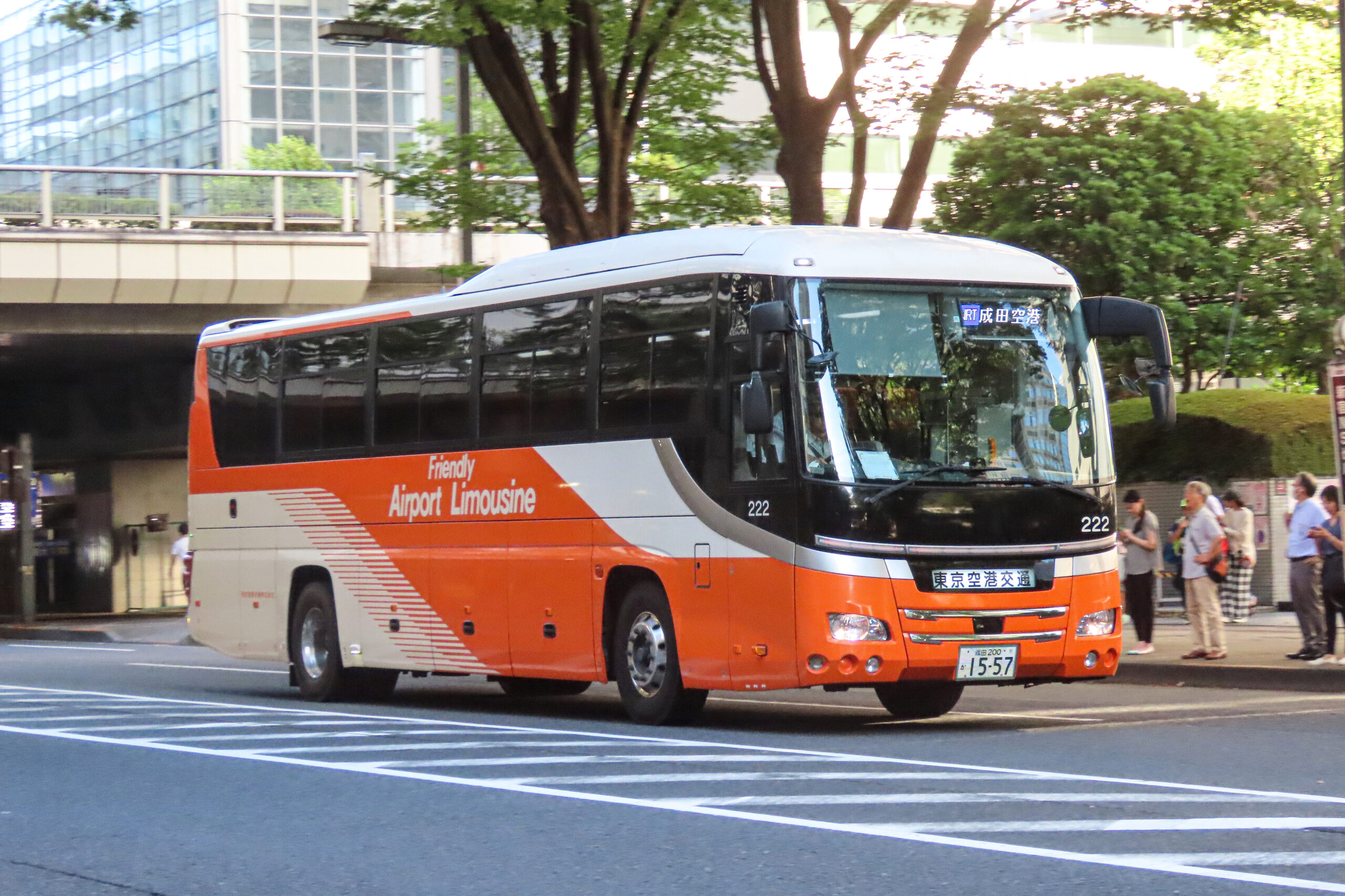
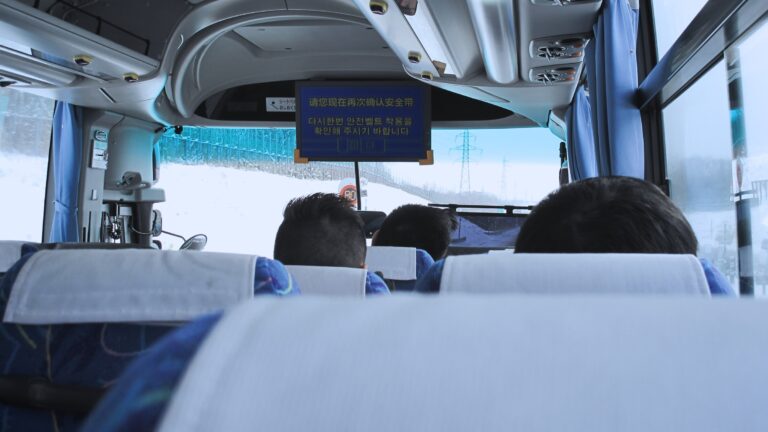
Airport buses can be the easiest option when they stop at Tokyo Station, a major district, a hotel or a nearby transport hub. Bags are stored below the coach, which can remove station stairs and crowded train transfers from the arrival journey.
Use the official airport or operator page to check the current stop, ticket method and boarding platform. Road traffic makes arrival times less predictable, so do not build a tight reservation immediately after the scheduled bus arrival.
- Choose a stop near the hotel, not only the district.
- Buy or collect the correct ticket before boarding.
- Allow for traffic and keep the next commitment flexible.
Reserve taxis and private transfers for the cases they solve
A taxi or private transfer offers door-to-door travel but is usually the costly option because Narita is well outside central Tokyo. It can still make sense for a group sharing the price, a late arrival, accessibility needs, very heavy luggage or a hotel poorly connected to an airport service.
Confirm the total price basis, tolls, waiting time, vehicle and luggage capacity before committing. Use the official taxi stand or a clearly identified booked driver, and do not follow unsolicited offers in the arrivals area.
- Use door-to-door travel when it solves a real constraint.
- Check tolls, waiting time and luggage capacity.
- Use official stands or a verified booking.
Match common Tokyo areas to the right first option
For Ueno or Nippori, check the Skyliner first. For Tokyo Station, compare the Narita Express with the direct low-cost bus. For Shinjuku or Shibuya, compare the Narita Express with a bus serving the exact area. For Asakusa, compare an Access Express route with the Skyliner plus a local connection.
For hotels away from the main airport corridors, it is often easier to take one airport service to a major hub and finish with a short taxi. Recheck the route when the hotel name says Tokyo but the actual address is in a distant suburb or another prefecture.
- Ueno or Nippori: check Skyliner first.
- Tokyo Station: compare train and direct bus.
- Shinjuku, Shibuya or Asakusa: compare the complete final connection.
Plan around luggage, mobility and late arrivals
With large suitcases, children or reduced mobility, fewer transfers usually matter more than a small time saving. Check elevators at the destination station, walking distance from the stop and whether the service has reserved seating or dedicated luggage handling.
For an evening arrival, build the plan from the last practical departure rather than the flight’s scheduled landing time. Immigration, baggage claim and customs can vary. Save a backup bus, train or airport-area hotel option instead of relying on a connection with no margin.
- Prefer fewer transfers with large luggage.
- Check elevators and the final street walk.
- Save a realistic late-arrival backup.
Complete the transfer without avoidable mistakes
Before the flight, save the terminal, hotel address, preferred service, backup service and destination-station exit. After landing, establish mobile data or open the offline route, check current operation information and buy only the ticket that matches the selected train or bus.
Keep the ticket or digital proof available until the journey is finished. At the Tokyo end, pause before following a transfer crowd: confirm the line, direction and exit first. If fatigue has made the final connection confusing, a short official taxi ride can be safer and simpler than improvising through several stations.
- Save the primary and backup route offline.
- Check live service information after landing.
- Confirm the next line and exit before moving.
FAQ
What is the easiest way from Narita Airport to Tokyo?
The easiest option is the service that reaches the hotel with the fewest difficult transfers. That may be the Narita Express, Skyliner, an airport bus or a main hub followed by a short taxi.
Should I take the Skyliner or Narita Express?
Check the final destination. The Skyliner serves Nippori and Keisei Ueno, while the Narita Express serves major JR destinations including Tokyo, Shinagawa, Shibuya and Shinjuku. Compare the connection after those stops.
Which route is best for Tokyo Station?
Compare the direct Narita Express with the direct low-cost airport bus. The better choice depends on the current departure, traffic risk, luggage and the hotel side of Tokyo Station.
Which route is best for Asakusa?
Compare a Keisei Access Express route toward the Asakusa Line with the Skyliner followed by a local connection. Check the exact service and destination display because stopping patterns vary.
Can I use an IC card from Narita Airport?
An IC card can cover basic fare on compatible services, but reserved limited-express trains require the correct additional ticket and seat reservation. Confirm the ticket for the exact train before boarding.
Is a bus easier with large luggage?
Often yes, especially when the bus stops near the hotel and stores bags below the coach. Check the stop, allowance and walking distance, and allow for road delays.
What if my flight arrives late?
Plan from the last practical train or bus after allowing for immigration, baggage and customs. Save a second transport option and an airport-area hotel option rather than depending on a tight connection.
Is a taxi from Narita Airport worth it?
It can be worthwhile for a group, very heavy luggage, reduced mobility, a late arrival or a difficult hotel location. Confirm the price basis, tolls and vehicle capacity and use an official stand or verified booking.
Prefer a private transfer into Tokyo?
If convenience matters more than the cheapest fare, compare a direct airport transfer with the Skyliner and other public-transport routes.
Check Airport Taxi optionsNeed mobile data in Japan?
Compare current eSIM data allowances, validity, device compatibility and setup requirements before choosing.
Check Saily eSIM plansRelated Japan Travel Guides

Official References
Final Thoughts
Narita Airport is far enough from central Tokyo that the final connection matters more than a headline travel time. Start with the hotel entrance, compare the complete train or bus route, and protect the plan against luggage, station walking and a late arrival. A simple route that reaches the correct side of the city is usually better than saving a few minutes on the airport leg.