Introduction
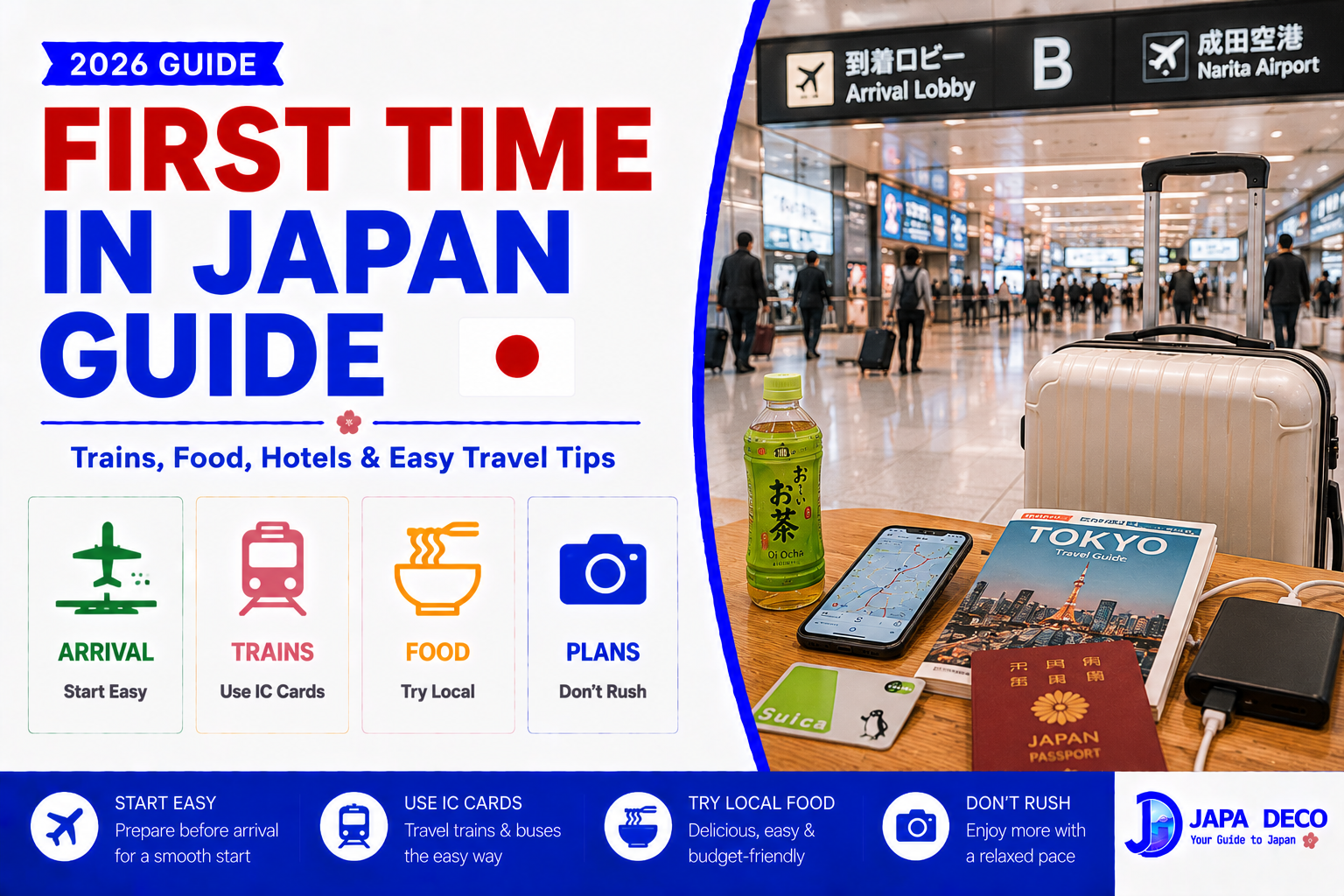
Your first time in Japan can feel exciting and confusing at the same time.
Japan is safe, clean, organized, and full of amazing food, trains, temples, cities, shops, and everyday discoveries. But first-time visitors often worry about transport, cash, language, hotels, manners, and how much to plan.
The good news is simple.
Japan is easier when you understand the basics before you arrive.
This guide explains what first-time visitors should know for a smoother Japan trip.
Quick Answer
For your first time in Japan:
- Stay near useful train stations.
- Prepare mobile data before arrival.
- Use an IC card for local transport.
- Carry some cash.
- Book hotels early.
- Do not overpack your itinerary.
- Learn basic train manners.
- Wear comfortable shoes.
- Use convenience stores often.
- Plan your first airport transfer before landing.
Japan is beginner-friendly, but preparation makes it much easier.
Start With a Simple Route
For a first Japan trip, keep the route simple.
Good first-time routes include:
- Tokyo only
- Tokyo and Kyoto
- Tokyo, Kyoto, and Osaka
- Tokyo, Kyoto, Osaka, and Nara
- Tokyo, Kyoto, Osaka, Hiroshima for longer trips
Do not try to visit every famous place.
A rushed route can make Japan feel stressful.
A simple route gives you more time to enjoy food, neighborhoods, trains, and small discoveries.
Choose Good Hotel Locations
Hotel location matters more than hotel luxury.
Choose hotels near:
- Major stations
- Useful train lines
- Convenience stores
- Restaurants
- Airport access
- Safe walking streets
A cheap hotel far from a station can waste time every day.
For first-time visitors, convenience is worth paying for.
【Image①】
Prepare Internet Before Arrival
Mobile data is essential in Japan.
You will use your phone for:
- Maps
- Train routes
- Translation
- Hotel directions
- Restaurant searches
- Tickets
- Weather
- Emergency help
Prepare an eSIM, SIM card, pocket WiFi, or roaming plan before you arrive.
Do not depend only on free Wi-Fi.
A working phone makes your first day much easier.
Use an IC Card
An IC card is one of the most useful things in Japan.
You can use it for:
- Trains
- Subways
- Buses
- Convenience stores
- Vending machines
- Some shops and restaurants
Suica, PASMO, ICOCA, and other IC cards make local travel smoother.
You do not need to buy a paper ticket for every short ride.
For first-time visitors, this reduces stress immediately.
Carry Cash and Card
Japan is more cashless than before, but cash is still useful.
Carry some yen for:
- Small restaurants
- Shrines
- Temples
- Coin lockers
- Some buses
- Local shops
- Food stalls
- Emergency backup
Use cards for hotels, major shops, larger restaurants, and online bookings.
The best approach is simple: use both.
Trains Are Easier Than They Look
Japan’s train system can look difficult at first.
But once you use it a few times, it becomes easier.
Tips:
- Use a route app.
- Check platform numbers.
- Follow signs.
- Avoid rush hour if possible.
- Keep your IC card ready.
- Stand to the side on escalators.
- Let people exit first.
- Do not block ticket gates.
Large stations can be confusing, so allow extra time.
Do not panic if you take the wrong exit.
It happens.
【Image②】
Food Is Easy
Food in Japan is one of the best parts of the trip.
First-time visitors can enjoy:
- Ramen
- Sushi
- Udon
- Soba
- Curry rice
- Convenience store food
- Supermarket bento
- Izakaya
- Cafes
- Department store food floors
You do not need expensive restaurants every day.
Japan has excellent casual food.
If one restaurant looks too crowded, move on.
There is usually another good option nearby.
Convenience Stores Are Your Friend
Convenience stores are extremely useful in Japan.
You can buy:
- Breakfast
- Snacks
- Drinks
- Coffee
- Rice balls
- Sandwiches
- Bento
- Desserts
- Umbrellas
- Toiletries
- Basic travel items
They are clean, reliable, and easy to use.
For first-time visitors, convenience stores are a daily travel tool.
Manners to Know
You do not need to be perfect, but basic manners help.
Simple rules:
- Be quiet on trains.
- Do not talk loudly on the phone in trains.
- Let people exit before entering.
- Stand aside when checking your phone.
- Do not block narrow streets.
- Sort trash when possible.
- Do not eat while walking in crowded places.
- Follow signs at temples and shrines.
Respect matters more than perfection.
Do Not Overplan
Japan has many things to see, but your trip will be better if you leave space.
Do not plan every hour.
A good first-time day has:
- One main area
- One backup area
- One food idea
- One rest option
This gives you structure without pressure.
Japan is full of unexpected good moments.
Leave room for them.
【Image③】
What to Pack
First-time visitors should pack practically.
Bring:
- Comfortable shoes
- Power adapter
- Charging cable
- Power bank
- Weather-appropriate clothes
- Medicine
- Small day bag
- Passport
- Cash and cards
- Travel insurance details
- Important screenshots
Do not overpack.
You will walk through stations, hotel rooms may be small, and luggage can become annoying.
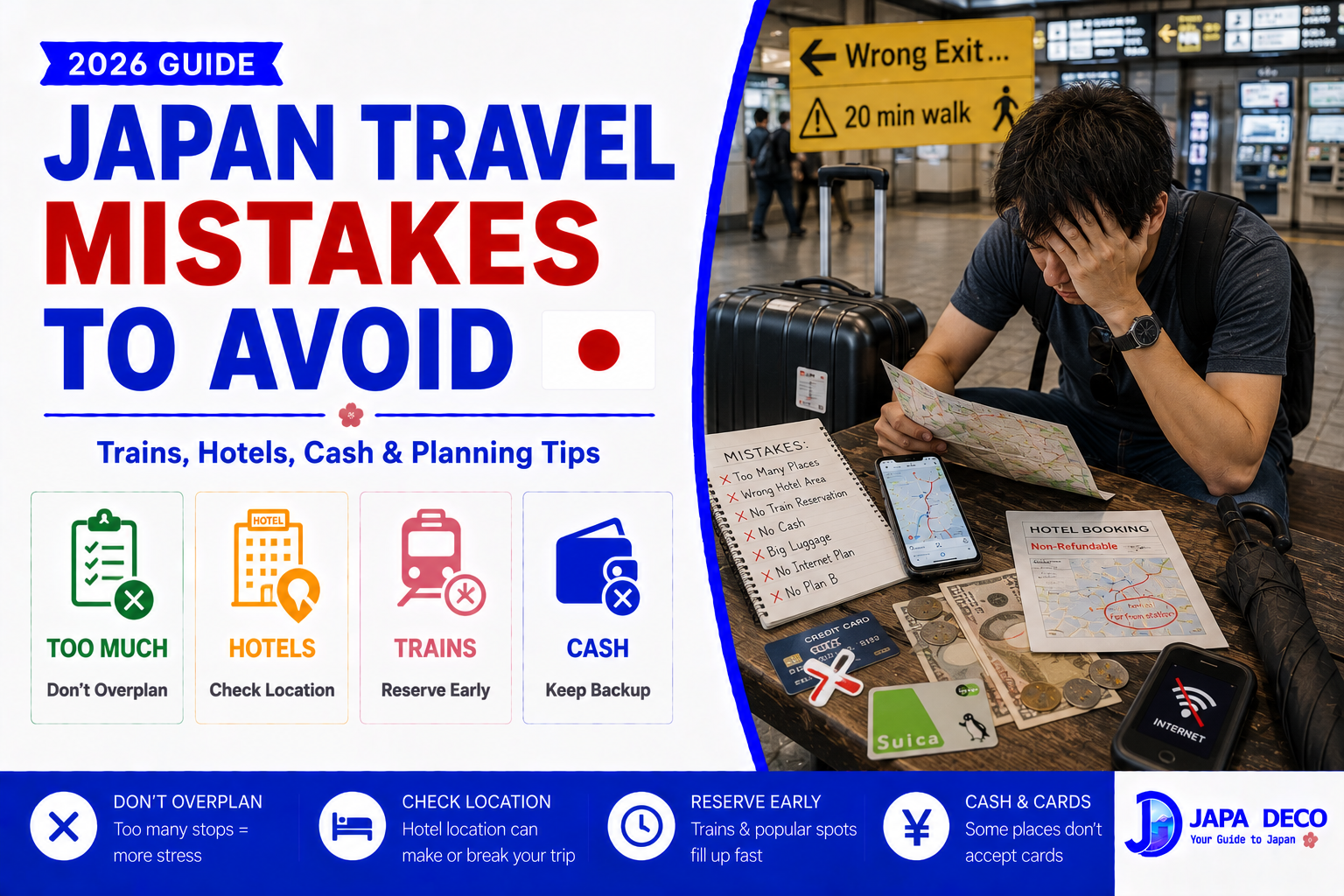
Common First-Time Mistakes
Common mistakes include:
- Booking hotels too far from stations
- Planning too many cities
- Not preparing mobile data
- Carrying too much luggage
- Forgetting cash
- Underestimating walking
- Not checking restaurant hours
- Taking buses in Kyoto without a plan
- Traveling during busy seasons without reservations
- Planning too much on arrival day
Avoid these, and your trip becomes much smoother.
Best Recommendation for First-Time Visitors
For your first Japan trip, focus on comfort.
Stay near stations.
Prepare internet.
Use IC cards.
Carry cash and card.
Wear comfortable shoes.
Choose fewer cities.
Plan one main area per day.
Eat casually.
Leave space for rest.
Japan is not only famous spots.
The best memories often come from small streets, simple meals, train rides, convenience stores, and quiet moments.
Conclusion
Your first time in Japan does not need to be complicated.
Japan is safe, clean, organized, and full of experiences that are easy to enjoy once you understand the basics.
Prepare your phone, money, hotel location, airport transfer, and simple route before arrival.
Then travel at a realistic pace.
You do not need to see everything.
You only need a smooth first trip that makes you want to come back.
With smart planning, your first time in Japan can feel exciting, comfortable, and unforgettable.
コメント