
Tokyo Subway Guide: Tickets, Transfers & Station Exits
Choose an IC card or subway ticket, understand Tokyo Metro and Toei, follow station codes, and find the right platform, transfer gate and street exit.
For most first-time visitors, a Suica or PASMO is the easiest default. It works for subway and other compatible rail journeys without committing to one network. Choose a ¥700 Metro-only 24-hour ticket if all your planned trains use Metro, or a Tokyo Subway Ticket (¥1,000/¥1,500/¥2,000 for 24/48/72 hours) only when your planned Metro-and-Toei fares exceed its price. JR rides are not included. Check the operator, train direction, signed transfer route and destination exit before entering.
What You’ll Learn
- Distinguish Tokyo Metro, Toei and JR before choosing a ticket.
- Compare IC payment, bank-card taps and subway passes using real fare examples.
- Follow line codes, platform directions and designated transfer gates.
- Choose an exit and an accessible route that fit your destination.
- Plan airport connections, busy periods and the last journey home.
Understand Tokyo Metro, Toei and JR
Tokyo has two subway operators, not one: Tokyo Metro runs nine lines and Toei Subway runs four. The official route map shows both, but the ticket rules differ. A ticket marked Tokyo Metro 24-hour does not include Toei. The visitor Tokyo Subway Ticket includes both. Neither covers JR East, including the Yamanote Line, or the private railways outside the ticket’s valid area.
For a trip, first search the route from your hotel address to the attraction’s actual entrance. Check the operator name for every rail segment—not only the first station—and compare the number of changes with the door-to-door time. A ten-minute walk to a direct subway may be easier than two long underground transfers with luggage.
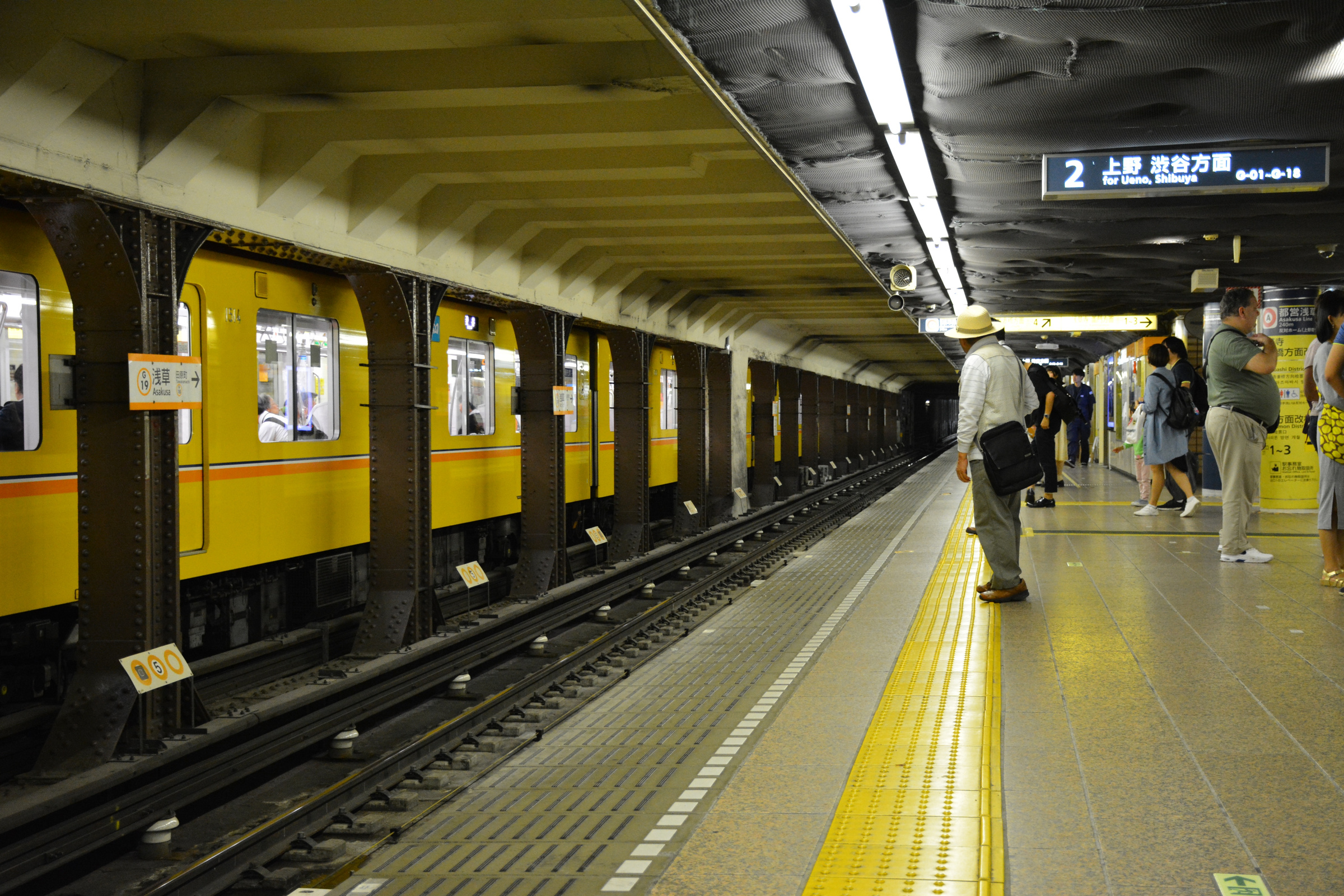
Practical operator check: For Shibuya to Asakusa, the Ginza Line is Tokyo Metro, so the entire subway portion is covered by a Metro-only 24-hour ticket. For a journey using the JR Yamanote Line, a subway pass will not pay the JR fare even if the stations also appear on the subway map. For a trip that changes between Metro and Toei, choose a ticket that covers both or use compatible pay-as-you-go payment.
- Tokyo Metro: G Ginza, M Marunouchi, H Hibiya, T Tozai, C Chiyoda, Y Yurakucho, Z Hanzomon, N Namboku, F Fukutoshin.
- Toei Subway: A Asakusa, I Mita, S Shinjuku, E Oedo.
- JR and private railways: separate operators; do not assume a subway-only pass covers through-running services after the train crosses an operator boundary.
Use an IC card for flexible travel
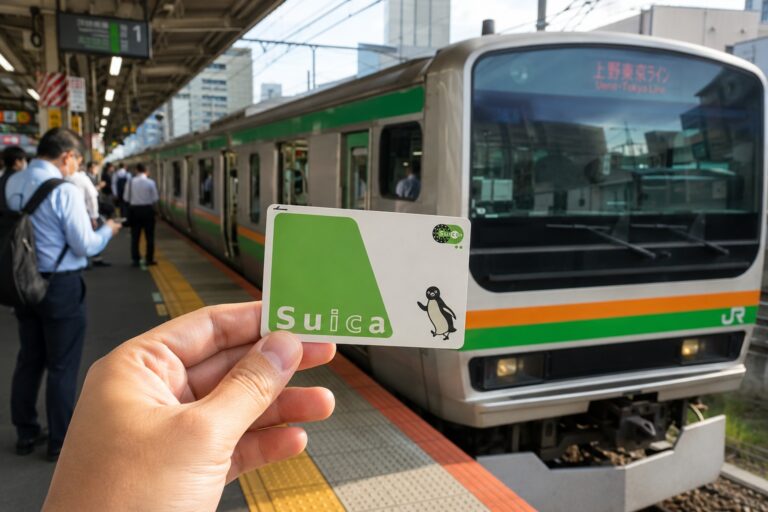
Best default for an unpredictable day: use one rechargeable Suica or PASMO per person. These IC cards work across compatible Metro, Toei, JR and private railway gates. Tap the same card on entry and exit; do not buy a new subway pass merely because a route has a transfer. Make sure your balance is enough for the next ride.
Tokyo Metro fares vary by distance, so the number of rides alone does not determine whether a pass saves money. The following adult Tokyo Metro-only fare bands come from the operator’s current published table. Toei and mixed-operator journeys have different fare calculations.
| Distance | Suica/PASMO IC | Paper ticket |
|---|---|---|
| 1–6 km | ¥178 | ¥180 |
| 7–11 km | ¥209 | ¥210 |
| 12–19 km | ¥252 | ¥260 |
| 20–27 km | ¥293 | ¥300 |
| 28–40 km | ¥324 | ¥330 |
If you use a physical PASMO, allow for a ¥500 refundable deposit on standard cards and bring yen cash for station-machine charging. A phone-based card may be convenient, but set it up while you still have an internet connection and test it before a time-sensitive journey. A payment card linked to a phone is not automatically a Suica or PASMO.
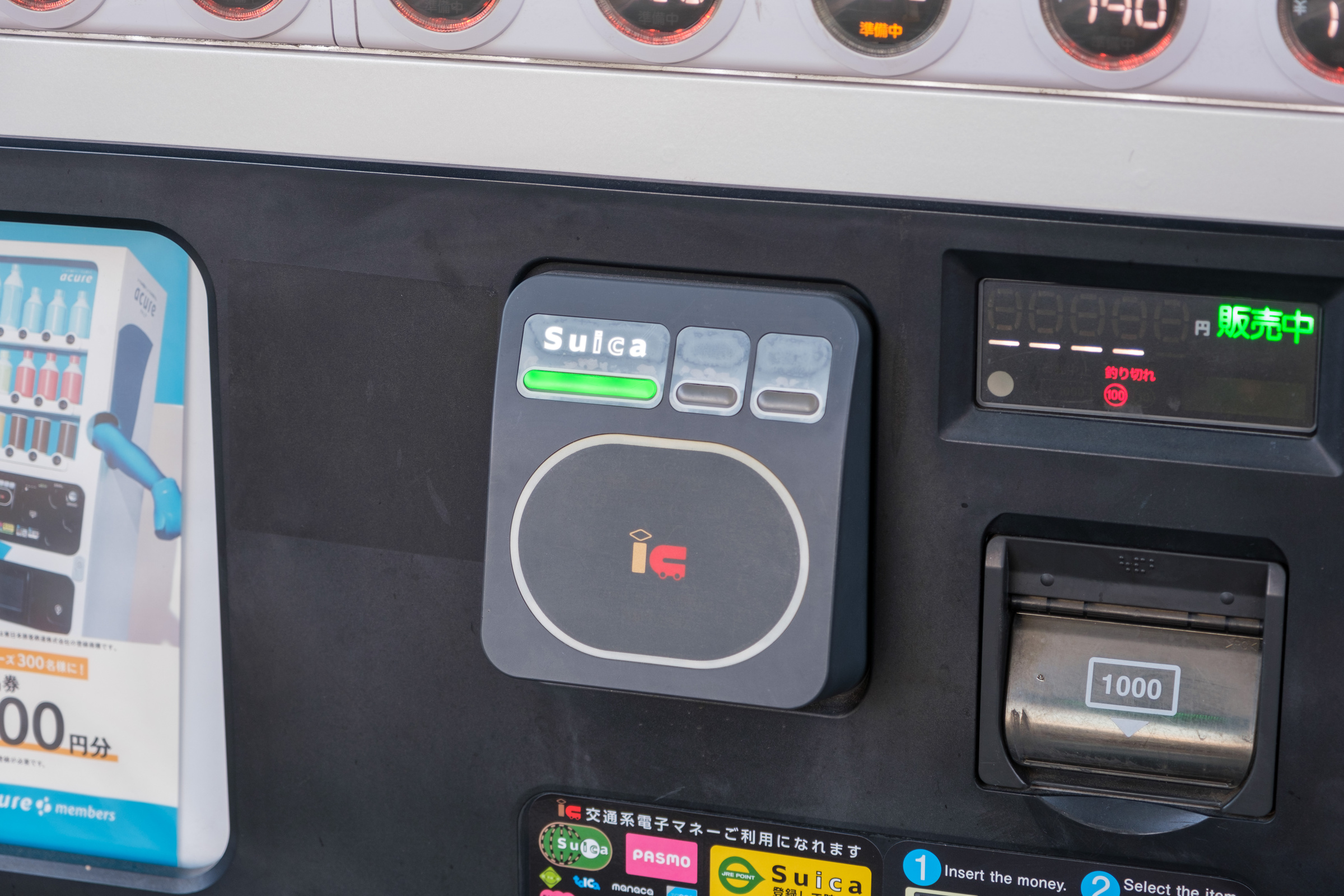
After buying a drink: the pictured vending-machine reader demonstrates IC shopping, not train entry. Check the card’s remaining value before returning to the platform. If you cannot exit, look for a fare-adjustment machine or show staff the card and starting station; do not force a second payment method through the gate.
Can you tap a bank card instead?
Tokyo Metro and Toei support Tap to Ride with eligible contactless bank cards and devices at participating gates. This is a third payment method—not Suica, and not a prepaid unlimited-travel pass. The Metro fare is the ordinary paper-ticket fare in ¥10 increments, rather than the lower IC fare for some distances. Supported cards and connecting railways should be checked on Tokyo Metro’s official Tap to Ride page.
Use one identical card or device from entrance to exit. If you enter with a plastic Visa card, you cannot tap out using Apple Pay or another phone wallet version of that card. Each named cardholder uses their own card; the system charges adult fares, with no separate child fare. When Metro and Toei form an eligible connected journey, the published combined fare receives a ¥70 connection discount.
Where it becomes awkward: Nakano does not support entering through its Metro Tap to Ride gate; exiting there after using Tap to Ride requires staff assistance. JR East is not part of this Metro service. If your route switches to JR, a different railway outside the scheme, or a child fare, an IC card or conventional ticket is the safer choice. Never mix a Tap to Ride entry with a subway-pass exit.
- Good use case: two adults each with a supported bank card making a few Metro/Toei trips and wanting to avoid buying a physical transport card.
- Less suitable: families needing child fares, passengers who change between phone and plastic card, or journeys that include JR East.
Is a Tokyo Subway Ticket worth buying?
The visitor Tokyo Subway Ticket permits unlimited rides on Tokyo Metro and Toei Subway for a continuous 24, 48 or 72 hours from first use, subject to the form of ticket purchased. It excludes JR East, buses, most private railways and the airport railway portions outside Metro/Toei. Buy it only when the covered rides—not every journey in Tokyo—justify the price.
| Payment or pass | Adult cost | Covers | Useful when |
|---|---|---|---|
| Suica / PASMO | Fare for each ride | Participating rail operators | Your plans include JR, walking or few train journeys |
| Tokyo Metro 24-hour Ticket | ¥700 | Metro only; rolling 24 hours | All planned train journeys use Metro, not Toei |
| Tokyo Subway Ticket, 24 hours | ¥1,000 | Metro + Toei; rolling 24 hours | Many paid Metro/Toei trips in one period |
| Tokyo Subway Ticket, 48 hours | ¥1,500 | Metro + Toei; rolling 48 hours | Two days with substantial covered travel |
| Tokyo Subway Ticket, 72 hours | ¥2,000 | Metro + Toei; rolling 72 hours | Several sightseeing days on the subway network |
| Metro + Toei common one-day ticket | ¥1,100 | Metro + Toei; designated service day | Eligible non-tourist purchase situations or day-specific plans |
Worked comparison A — stay with IC: Four separate short Metro fares at ¥178 are ¥712. A ¥1,000 24-hour Tokyo Subway Ticket costs ¥288 more; even the ¥700 Metro-only pass saves just ¥12, and only if the whole day stays on Metro.
Worked comparison B — a busy covered day: Six separately paid Metro rides at the ¥209 fare band cost ¥1,254, making the ¥1,000 Tokyo Subway Ticket ¥254 cheaper. Five rides at ¥209 cost ¥1,045, so the saving is only ¥45; this small difference may not justify restrictions or purchase effort.
Worked comparison C — stay two or three days: Eight eligible Metro rides spread across two days at ¥209 total ¥1,672; the ¥1,500 48-hour ticket saves ¥172. Eleven similar fares within three days total ¥2,299; the ¥2,000 72-hour ticket saves ¥299. These are illustrative fare-band calculations, not promised prices for any named route: calculate each actual journey in the official fare search.
Decision rule: add only the separate fares for Metro and Toei journeys within the pass’s valid hours; then compare that sum with the ticket price. Do not count changes within a single paid journey as new trips. If a JR train is quicker, choose your route first instead of forcing a longer subway journey to recover the pass price. Prices are subject to change; verify them at the official ticket page before purchasing.
Check the official subway-ticket purchase options
Before paying, open Tokyo Metro’s official Tokyo Subway Ticket information and purchase guide. Confirm the full product name, duration, eligibility, delivery method and which operator’s lines are included. The Metro-only ¥700 ticket and the combined Metro/Toei visitor ticket are different products.
Choose the form you can actually use: a paper ticket collected or bought through an eligible channel, a voucher requiring exchange, or the supported QR ticket. QR tickets are read by the designated QR-capable gate reader; they are not the same as a screenshot of a paper voucher or a bank card. If the provider sells a combined attraction-plus-subway package, compare its total against buying each component separately.
Quick pre-purchase check: Will your journey include JR? Can the visitor purchase condition be met? Is a ticket exchange counter open when you arrive? Can every traveler present an individual valid ticket or QR? If any answer is uncertain, an IC card is usually the simpler fallback.
Check eligibility, collection and activation
Visitor eligibility matters. Tokyo Metro markets the Tokyo Subway Ticket to overseas visitors and domestic visitors from outside its specified Greater Tokyo-area prefectures. In-person overseas-visitor purchases can require the original passport and evidence of Short-Term Stay status, not just a photograph. Requirements vary by channel and visitor status; check the official sales instructions before travel. Do not assume an ordinary station ticket machine sells the tourist product to everybody.
Paper/voucher: distinguish a ticket that works immediately at a gate from a booking confirmation that must be exchanged at a counter. Confirm the pickup location, opening hours, accepted ID and the last practical collection time. A voucher is not a fare-gate ticket unless its terms explicitly say it is.
QR format: the official digital ticket requires its own activation process and a QR-compatible gate reader. Open your ticket and complete any ‘Start use’ step as instructed before tapping the QR reader; do not scan a purchase email at an IC card reader. Ensure your phone has power, usable screen brightness and each passenger’s correct ticket. The official rules tie the rolling validity to first entry after starting use; follow the particular ticket’s instructions.
Time the activation: a paper 24-hour ticket first used at 10:00 is generally valid until 10:00 the next day, not merely until midnight. A 48-hour or 72-hour ticket counts consecutive hours, including time spent asleep. The separate Tokyo Metro IC-loaded 24-hour product has different start rules; confirm whether validity begins at purchase rather than first gate use.
If you intend only one late-night subway journey after arriving, pay that ride separately and activate the pass the following morning if its conditions allow. Keep an IC card or other valid fare option for JR and other uncovered journeys, and never double-tap both methods for the same gate passage.
Plan a simple route before entering
Route planning in Tokyo starts with the correct entrance and final exit, not merely the nearest station name. In the navigation app, enter your hotel address and attraction entrance, compare total walking distance and transfer count, and note the operator for each segment. A route that appears five minutes faster can be slower in practice if you need a long underground transfer or an elevator detour.
Three realistic route decisions:
- Ueno (G16) → Asakusa (G19): board the Ginza Line toward Asakusa; both ends are Metro. Keep the G line code and station number visible. A Tokyo Subway Ticket or Metro-only pass can cover this rail leg; an IC card pays the normal fare.
- Shibuya (G01) → Ginza (G09): the Ginza Line offers a direct Metro ride. Avoid choosing a route via JR simply because the overall map shows JR in the same area; a subway pass does not cover the JR part.
- Tokyo Station → an attraction near Shibuya: compare the actual door-to-door alternatives. A JR route may be easier than a Metro route depending on your hotel and the exit; choose based on time and walking, not on a desire to use a pass.
Save this four-part route note: starting operator/line + train direction or terminal + station/exit number for a transfer + final destination exit. Also save your accommodation’s address in Japanese. You can use that note even when your phone signal drops below ground.
Read entrance signs and platform directions
At street level, identify the operator logo (Tokyo Metro or Toei), the line letter and the station number. These matter more than the color alone: for example, G means Ginza Line and G19 identifies Asakusa on that line. The Waseda T04 marker shown in the cover image identifies a Tozai Line station, not a promise that every nearby gate leads to your train.
Inside the station, follow the signs for the line and the train’s direction / terminus, then verify the platform display before boarding. Station numbers may increase or decrease along your route. On a through-running train, the display can name a destination on another operator’s railway; make sure the service actually stops at the station you need.
Wrong platform? Do not cross the tracks, rush through a closing door or exit the paid area unnecessarily. Follow signs to the opposite platform or ask staff. If you have already boarded, get off at the next safe station and recheck the route. A minute spent confirming the line is often quicker than paying an extra fare after an accidental exit.
For a child or companion, confirm that everyone passes through the same eligible gate using their own ticket/card. An IC gate, contactless-bank-card reader and QR reader can have distinct symbols and hardware; choose the reader that matches your payment product.
Transfer without accidentally ending your journey
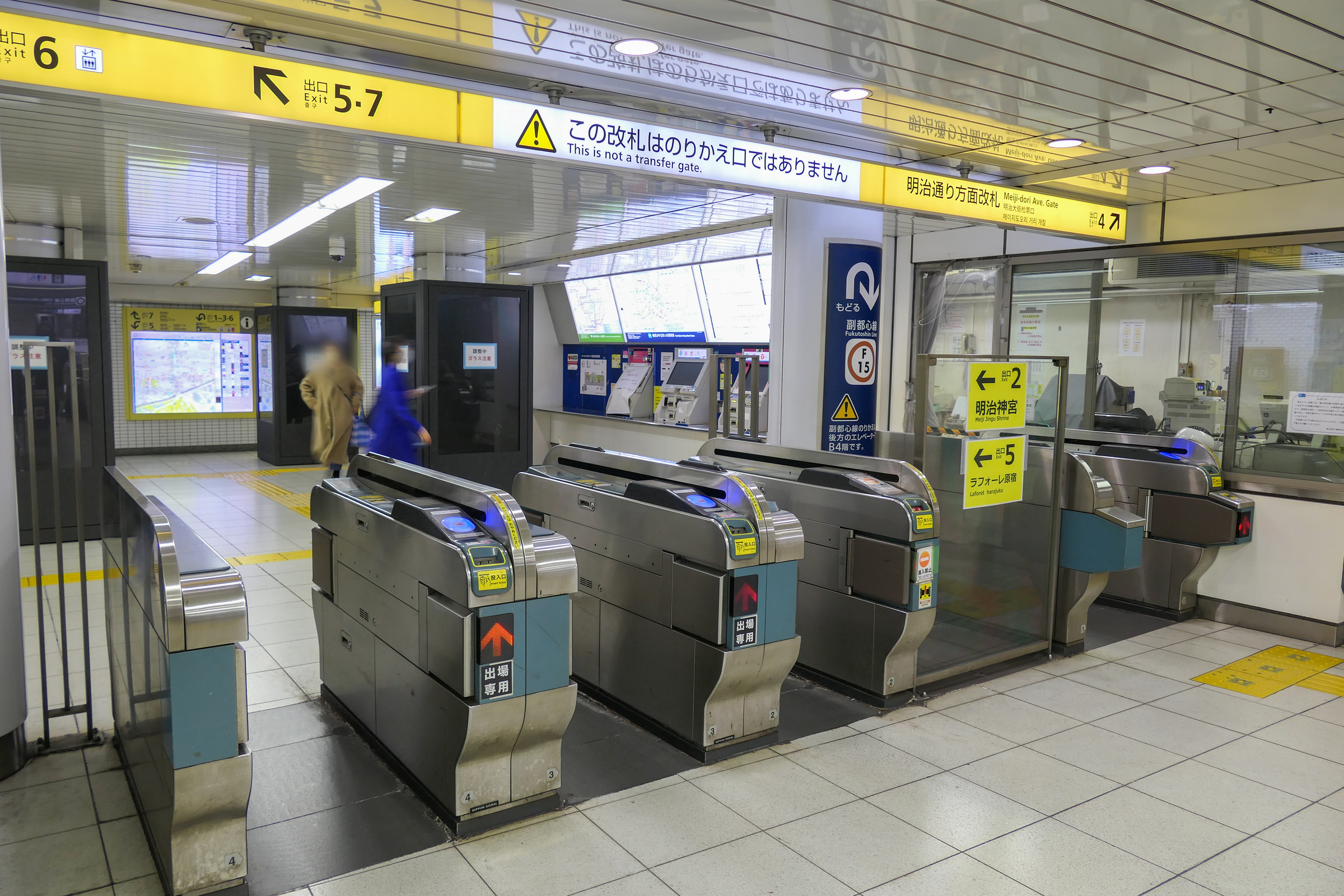
Not every change of trains means leaving through the fare gates. Follow the next line’s signs first; many transfers remain inside the paid area. Others require a designated out-of-gate transfer along a signed walking route, even between two Tokyo Metro lines.
For the specified eligible Tokyo Metro out-of-gate connections, the current Japanese rules and regular-ticket guide use a 60-minute transfer limit. A transfer taking longer can end the original fare and trigger a new one. If using a paper ticket, pass through the designated orange transfer gate when instructed and collect the ticket it returns. With an IC card, use the proper signed route and time window. Some legacy English guidance still displays an older time limit; follow current station notices or ask staff.
Example: at an interchange such as Otemachi, the line you need may have several signposted corridors. Follow the named line and platform, not the nearest ‘Exit’. If you unintentionally cross an ordinary exit gate, you might start another journey and pay again. In the Meiji-jingumae photo here, the overhead sign specifically says those pictured gates are not transfer gates.
The transfer rule is not an unlimited stopover privilege. It does not permit a sightseeing break anywhere within an hour, and mixed-operator itineraries may have their own gate/fare conditions. If you are carrying a suitcase or have a reservation, favor fewer interchanges and allow extra time for corridors, stairs and crowds.
Choose your street exit before going upstairs
A station name gets you to the neighborhood; the exit number gets you to the correct street. At large stations such as Shinjuku, Ginza, Otemachi or Shibuya, choosing the wrong exit can send you to a different block or the opposite side of a busy road. Before you leave the paid area, read your destination’s own access directions and locate the exit number on the station map.
Example: for a meeting at a building marked ‘Exit A7, 3 minutes’, keep following the A7 signs, even if an unlabeled staircase looks closer. Exit labels differ across stations; do not assume ‘A7’ means the same kind of entrance everywhere. On the surface, recheck street signs before walking.
If you need step-free access, the nearest stair exit may be unusable. Switch to the operator’s lift map and choose an accessible exit, then add the extra street walk to your route calculation. This is particularly important with a stroller, wheelchair or large suitcase.
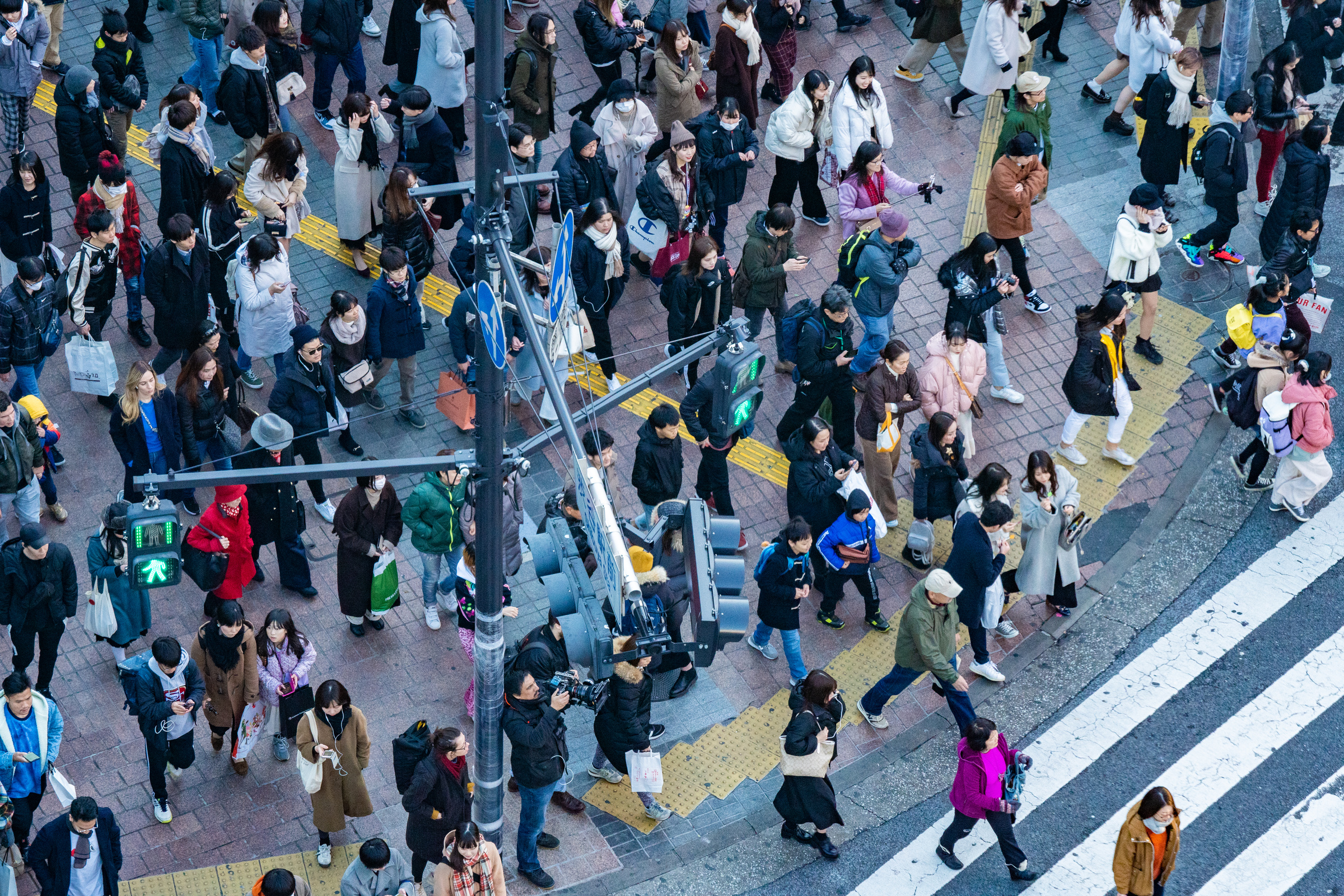
Before tapping out: write down the exit number, nearby landmark and whether the elevator is on the station’s paid or unpaid side. When photographing signs, stand aside from the passenger flow. The Shibuya crossing image illustrates street-level crowding, not a specific station exit.
Keep airport and through-service fares separate
An airport train can share tracks or continue directly onto a subway line. The same carriage does not mean the same ticket validity. The Tokyo Subway Ticket covers Tokyo Metro and Toei Subway only; the relevant Keikyu, Keisei or other airport rail portion requires its own valid fare or an explicitly bundled airport-access product. JR airport services are also outside the subway-only pass.
Haneda example: some Keikyu trains continue onto the Toei Asakusa Line. You may not change trains, but you still crossed an operator boundary. Do not assume a Metro/Toei subway ticket covers the Keikyu airport section. Confirm the payment method or separate ticket before boarding.
Narita example: Keisei and JR services have different stations and fare products. A trip to Ueno or Nippori on the Skyliner is not a Tokyo Subway Ticket ride. Search from your actual terminal and compare a reserved-seat airport train, ordinary rail and bus by total travel time, luggage handling and final walk, not just ticket price.
If you use a pass plus a separate ticket, ask staff which gate and ticket combination to use at the boundary. Avoid feeding multiple unrelated tickets into a machine without confirming the procedure. If you are tired after a flight, a direct airport service to the hotel area can be the better choice even at a higher fare.
Avoid the busiest periods and travel considerately
The heaviest weekday commuting periods are generally around 7:30–9:30 and 17:30–19:30, depending on the line and direction. For a sightseeing day, moving your first stop by half an hour can make boarding easier; if you have a large suitcase, consider changing hotels outside peak times.
Platform and carriage etiquette: wait behind the safety line, let riders leave first, move fully into the carriage and keep bags away from doorways. Hold your backpack in front of you or at your feet rather than on your back in a dense carriage. Do not stop at the top of an escalator to read directions. Offer priority seats to people who need them, including those whose needs are not visible.
Keep phone calls, loud audio and messy meals off crowded trains. Women-only carriage rules apply only on the signed services and hours, so check the signs rather than guessing. If the next train is already packed, let it go rather than trying to squeeze yourself and your luggage into the door area.
Group tip: select one meeting point outside the exit bottleneck—such as the named corner or convenience store across the street—and agree on that landmark before traveling. This reduces confusion when companions leave through different gates.
Plan elevators, strollers and luggage before departure
When using a wheelchair, stroller or heavy luggage, verify a continuous step-free path from street level to the platform, through each transfer and back to street level at the destination. One elevator icon at the starting station is not enough. Tokyo Metro publishes barrier-free facility information and One-route details, but a route may still require a ramp, stairlift or assistance.
Five checks before leaving: (1) the entrance elevator, (2) the correct platform and direction, (3) every transfer’s lift or step-free corridor, (4) the destination’s accessible exit, and (5) any service outage that affects the chosen elevator. If a step-free interchange would be long or uncertain, compare a different station or a direct taxi for that portion.
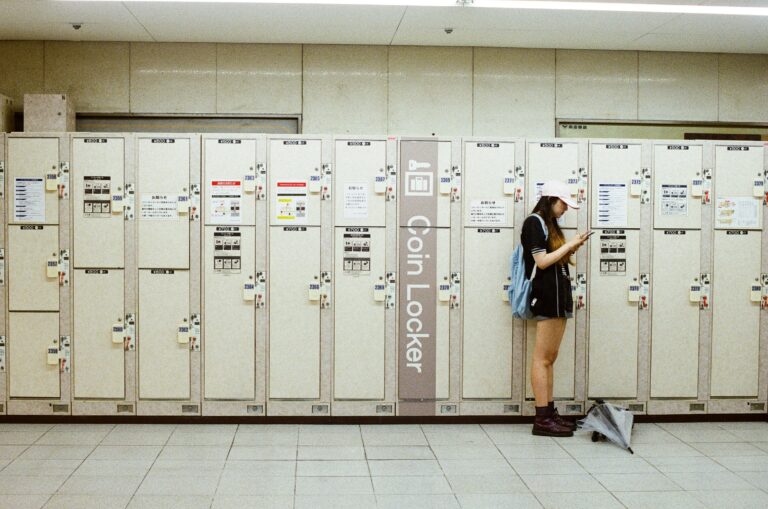
Use station maps to avoid carrying a stroller up unexpected stairs. On trains, keep wheels and bags clear of the doorway and give wheelchair users priority in designated spaces. When using coin lockers, save the station name, operator, exit, locker bank and number; a picture of only the locker key or number may not help you find it again.
Check the last complete journey and ask for help early
Tokyo subways are not an overnight service. Many lines begin around early morning and finish around midnight, but the first/last train depends on station, direction, date and connections. Search the complete journey home—including your transfer and final walk—rather than relying on a ‘last train’ time for the first line only.
Return-trip safety check: before dinner or a late event, save the last usable departure from your actual destination and the last connection you need. Add walking time from the venue to the right entrance. If you miss the final connecting service, compare official taxi options or nearby accommodation rather than waiting at a closed platform.
Three common fixes: if a gate rejects your ticket, show staff the ticket and where you entered; if you boarded in the wrong direction, get off safely and replan without an unnecessary exit; if your chosen exit is closed, follow station notices to another marked exit. For disruptions, use the operator’s live notices and verify that your ticket is accepted on any proposed alternative route.
Photography credits
The five images are licensed camera photographs from Wikimedia Commons. JapaDeco reduced them to a 2400-pixel longest edge and re-encoded the JPEGs without cropping, retouching or compositing. They illustrate the stated subjects; station fittings and displays can change. Each photograph retains its credited Creative Commons license.
- IMAGE-01: LERK — CC BY-SA 4.0. Original photograph and filename on Wikimedia Commons: https://commons.wikimedia.org/wiki/File:TokyoMetro-T04-Waseda-station-entrance-2-20200408-114813.jpg License: https://creativecommons.org/licenses/by-sa/4.0/
- IMAGE-02: Cheng-en Cheng — CC BY-SA 2.0. Original photograph and filename on Wikimedia Commons: https://commons.wikimedia.org/wiki/File:Tokyo_Metro_Ginza_Line_platform_Asakusa_Station_-10-07_(30620308646).jpg License: https://creativecommons.org/licenses/by-sa/2.0/
- IMAGE-03: Real Estate Japan — CC BY 2.0. Original photograph and filename on Wikimedia Commons: https://commons.wikimedia.org/wiki/File:Suica_payment_on_vending_machine_(50607340823).jpg License: https://creativecommons.org/licenses/by/2.0/
- IMAGE-04: MaedaAkihiko — CC BY-SA 4.0. Original photograph and filename on Wikimedia Commons: https://commons.wikimedia.org/wiki/File:Meiji-jingumae‘Harajuku’-STA_Meiji-dori-Ave-Gate.jpg License: https://creativecommons.org/licenses/by-sa/4.0/
- IMAGE-05: Dick Thomas Johnson — CC BY 2.0. Original photograph and filename on Wikimedia Commons: https://commons.wikimedia.org/wiki/File:MAGNET_by_SHIBUYA109_Shibuya_Crossing_(49997446546).jpg License: https://creativecommons.org/licenses/by/2.0/
FAQ
Does a Japan Rail Pass cover the Tokyo subway?
No. Tokyo Metro and Toei are separate from JR. Use an IC card, a subway ticket or another valid subway payment method for those journeys.
Can two people share one Suica or PASMO for a train ride?
No. Each passenger needs their own valid card or ticket. For children, arrange an age-appropriate ticket or child IC card; bank-card Tap to Ride charges adult fares.
Is the Tokyo Metro 24-hour Ticket the same as the Tokyo Subway Ticket?
No. The ¥700 adult Tokyo Metro 24-hour Ticket covers Metro only. The ¥1,000 adult Tokyo Subway 24-hour Ticket covers both Metro and Toei, subject to its purchase conditions. Check the full product name.
Can I leave the station for lunch and continue on one ordinary ticket?
An ordinary single-journey ticket does not provide unlimited stopovers. Treat leaving for lunch as the end of that journey. A designated out-of-gate transfer has specific gates, stations and timing; it is not a general stopover allowance.
What if my paper Tokyo Subway Ticket expires while I am riding?
Tokyo Metro says you can exit after expiry if you entered while the ticket was still valid. You cannot start a new journey after expiry. If a transfer or gate causes difficulty, show staff the ticket.
Do I need to reserve a seat on the subway?
Ordinary Metro and Toei subway rides do not require seat reservations. Boarding does not guarantee a seat. If a route includes a special reserved-seat service or another railway, check that product separately.
Can I rely on the subway for an early flight or a late arrival?
Check a date-specific journey from the exact airport terminal to your accommodation, or the reverse. Normal subway service has an overnight gap, and the airport railway needs its own valid fare. Plan another option if the full connection is unavailable.
Related Japan Travel Guides
Official References
- Tokyo Metro: subway map and station-number guide
- Tokyo Metro: regular fares and tickets
- Tokyo Metro: PASMO purchase and charging
- Tokyo Metro: bank-card Tap to Ride, fares and exceptions
- Tokyo Metro: Tokyo Subway Ticket prices and purchase options
- Tokyo Metro: Tokyo Subway Ticket validity and FAQs
- Toei: subway tickets and current prices
- Toei: tourist-ticket eligibility and PASMO validity rules
- Tokyo Metro: Metro-only and common one-day tickets
- Tokyo Metro: Ginza Line station order and timetables
- Tokyo Metro: Marunouchi Line station order and timetables
- Tokyo Metro: entrances, gates and boarding
- Tokyo Metro: transfer gates, fare adjustment and exits
- Tokyo Metro: current out-of-gate transfer rules (Japanese, 60-minute limit)
- Tokyo Metro: overseas-visitor ticket eligibility and in-person purchase
- Tokyo Metro: airport access and connecting railways
- Tokyo Metro: barrier-free facilities and One-route access
- Tokyo Metro: onboard consideration and safety
- GO TOKYO: subway networks, operating hours and rush periods
Final Thoughts
Start with your real route, then decide how to pay: an IC card for mixed JR/subway days; the Metro-only ¥700 ticket for repeated Metro-only trips; or a Tokyo Subway Ticket when the combined cost of your Metro/Toei journeys beats ¥1,000, ¥1,500 or ¥2,000 within its valid hours. Check visitor eligibility and activation before purchase. Save the train direction, designated transfer signs and exact exit number before entering each station. That small preparation is more valuable than choosing the cheapest-looking ticket without checking coverage.