
Uber in Japan: How It Works, Taxi Coverage, Airports and Costs
Use Uber confidently in Japan with a practical guide to taxi coverage, app pickup, airport rides, costs, payment and the best alternatives when trains or taxi stands make more sense.
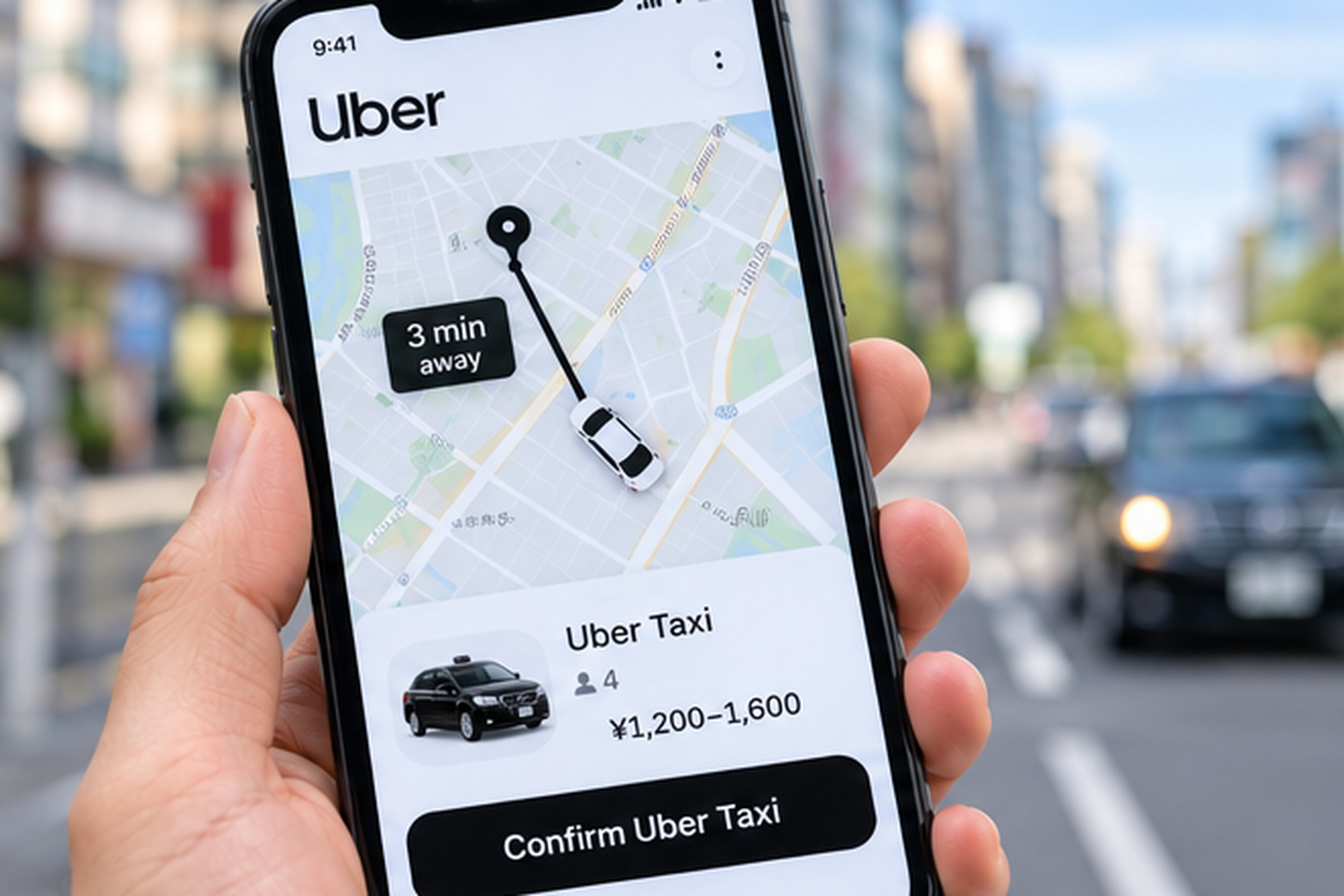
Yes. Uber works in Japan, and Uber Taxi is available through licensed taxi partners across all 47 prefectures. Coverage still varies by municipality, pickup point, time and ride type, so open the app and confirm what is actually available before relying on it. Uber is especially useful for luggage, bad weather, late travel and destinations that are easier to enter in the app; trains, buses and taxi stands can still be faster or cheaper for many trips.
What You’ll Learn
- How Uber Taxi differs from the private rideshare model many visitors know
- Where service is available and why local coverage still needs checking
- When Uber is worth using instead of trains, buses or a taxi stand
- How to handle airports, pickup points, payment and backup options
How Uber Works in Japan
For many travelers, the key difference is that Uber in Japan often works as a taxi-dispatch platform. When you choose Uber Taxi, the ride is operated by a licensed professional taxi driver rather than an informal private driver.
The app still gives you the familiar advantages of entering a destination before the ride, seeing the assigned vehicle, following the pickup on a map and using the payment method configured in your account. Depending on the area, the app may also show other ride categories such as premium vehicles.
Do not assume the same ride types appear everywhere. The options displayed in the app are the most reliable guide for your exact pickup point.
- Uber Taxi uses licensed taxi drivers.
- Destination and pickup details are handled in the app.
- Available vehicle types vary by area.
- The app should be checked again at the time you actually need the ride.
Where Uber Is Available
Uber states that Uber Taxi service is available across all 47 prefectures in Japan. That is much broader than the old idea that Uber is only useful in a handful of major cities.
Nationwide prefecture coverage does not mean every municipality, road or pickup point is covered equally. Partner taxi availability, local service areas, time of day and demand still affect what appears in the app.
For an important trip, check the exact pickup location in advance and keep another option ready rather than treating prefecture-level coverage as a guarantee.
- Major cities usually offer the easiest app-based taxi experience.
- Smaller cities and rural areas can have narrower service zones or longer waits.
- Some roads, station exits and airport areas use designated pickup points.
- Availability shown in the app matters more than a broad city or prefecture list.
When Uber Is Worth Using
Uber is most useful when the app removes a real travel problem. A direct ride can be worth the extra cost when you have heavy luggage, are traveling with children or older family members, are returning late, or need to reach a place that is awkward by rail.
It is also useful when language is a concern because the destination is entered before pickup. That can reduce confusion with hotel names, small restaurants and addresses that are difficult to pronounce.
Bad weather is another strong use case. A door-to-door taxi can be a practical upgrade when rain, heat or cold makes a transfer-heavy train route unpleasant.
- Large or multiple bags
- Late-night travel or missed last train
- Heavy rain, heat or cold
- Family or mobility-sensitive travel
- Difficult destinations or complicated station transfers
- Situations where entering the destination in the app reduces language friction

When Trains, Buses or a Taxi Stand Are Better
Japan's rail network remains the default choice for many sightseeing days. In Tokyo, Osaka and other large cities, trains and subways are often faster and much cheaper than a car for routine point-to-point travel.
A taxi stand can also beat an app when taxis are already waiting outside a station, hotel or major attraction. There is little value in requesting an app ride if a licensed taxi is immediately available beside you.
Airport buses and rail services can be especially competitive for long airport transfers. Compare door-to-door convenience against the total cost for your group instead of assuming Uber is automatically the best option.
- Use trains or subways for most routine city sightseeing.
- Use an existing taxi queue when it is clearly faster.
- Compare airport rail and limousine bus options before a long taxi ride.
- Walk short distances rather than waiting for dispatch when the route is simple.
How to Request an Uber Ride
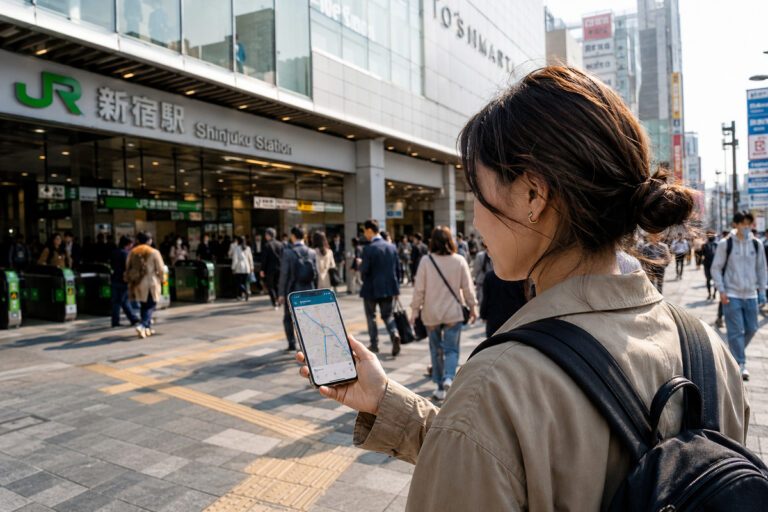
Enter both the pickup point and destination carefully before requesting the ride. Large Japanese stations often have multiple exits on different sides of a road, and choosing the wrong side can create a long detour for both you and the driver.
After matching, compare the vehicle details in the app with the taxi that arrives. Keep the app open until you are in the correct vehicle and use any pickup directions provided for stations, airports or restricted curb areas.
If the pickup point looks unsafe or impossible for a taxi to stop, move to a legal curb, taxi area or clear hotel entrance and update the pickup point before requesting.
- Check the correct station exit before requesting.
- Confirm the vehicle details before boarding.
- Keep your phone charged and connected.
- Use the app's pickup directions when they are provided.
- Choose a place where a taxi can legally and safely stop.
Uber vs GO vs a Street Taxi
Uber is convenient if you already use the same account while traveling internationally. GO is another major Japanese taxi app and its visitor-facing service also covers all 47 prefectures, with app dispatch and support for international payment methods.
A normal street or stand taxi remains a strong option because it removes app wait time when a car is already available. The ride itself may be very similar regardless of how you called it because both apps can dispatch licensed taxis.
The best choice is situational: use the app that has a nearby car, take the taxi already waiting in front of you, or switch to rail when congestion makes a car inefficient.
- Uber: familiar account and interface for many overseas visitors.
- GO: major domestic taxi-dispatch alternative with broad coverage.
- Taxi stand: often fastest when a vehicle is already waiting.
- Train or subway: usually best value for routine urban travel.
Using Uber at Haneda and Narita Airports
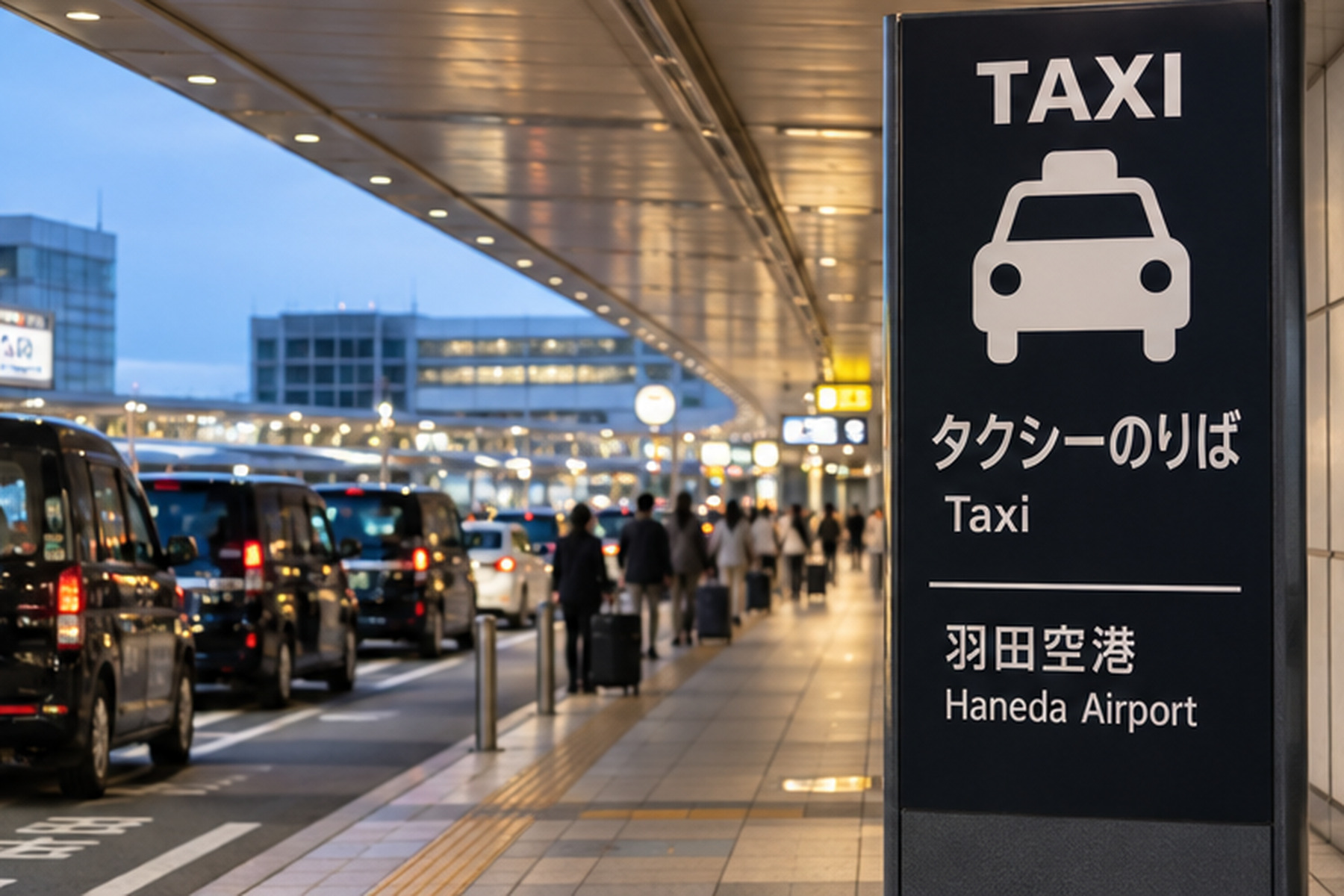
Uber provides taxi requesting for both Haneda and Narita, including around-the-clock request availability. Airport pickup is not simply a matter of dropping a pin anywhere outside the terminal: follow the pickup instructions shown in the app after requesting.
For Haneda, a taxi can be very convenient when your hotel is not near a direct rail or bus route, when your group can split the fare, or when you have substantial luggage. For Narita, the longer distance to central Tokyo makes comparison even more important.
Before paying for a long car ride, compare rail and airport bus options. A direct ride wins on convenience, while trains and buses often win on price.
- Follow the app's airport pickup directions after requesting.
- Check your terminal and meeting point before leaving arrivals.
- Compare total group cost, not just the fare per passenger.
- Keep airport rail and limousine bus options as backups.
What Affects the Price
Uber in Japan should not be treated as a cheap rideshare shortcut. Because many rides are licensed taxis or professional services, the price can be much higher than public transport.
The app provides pricing information before you confirm, but the final amount can still depend on the ride type, taxi fare rules, booking or reservation fees, traffic, toll roads, parking and other applicable charges.
For long rides, compare alternatives before confirming. A few minutes spent checking a train, airport bus or normal taxi option can make a large difference.
- Distance and travel time
- Ride type shown in the app
- Taxi or booking fees
- Traffic and toll roads
- Airport or reservation conditions
- Local supply and demand
Payment, Tipping and Safety
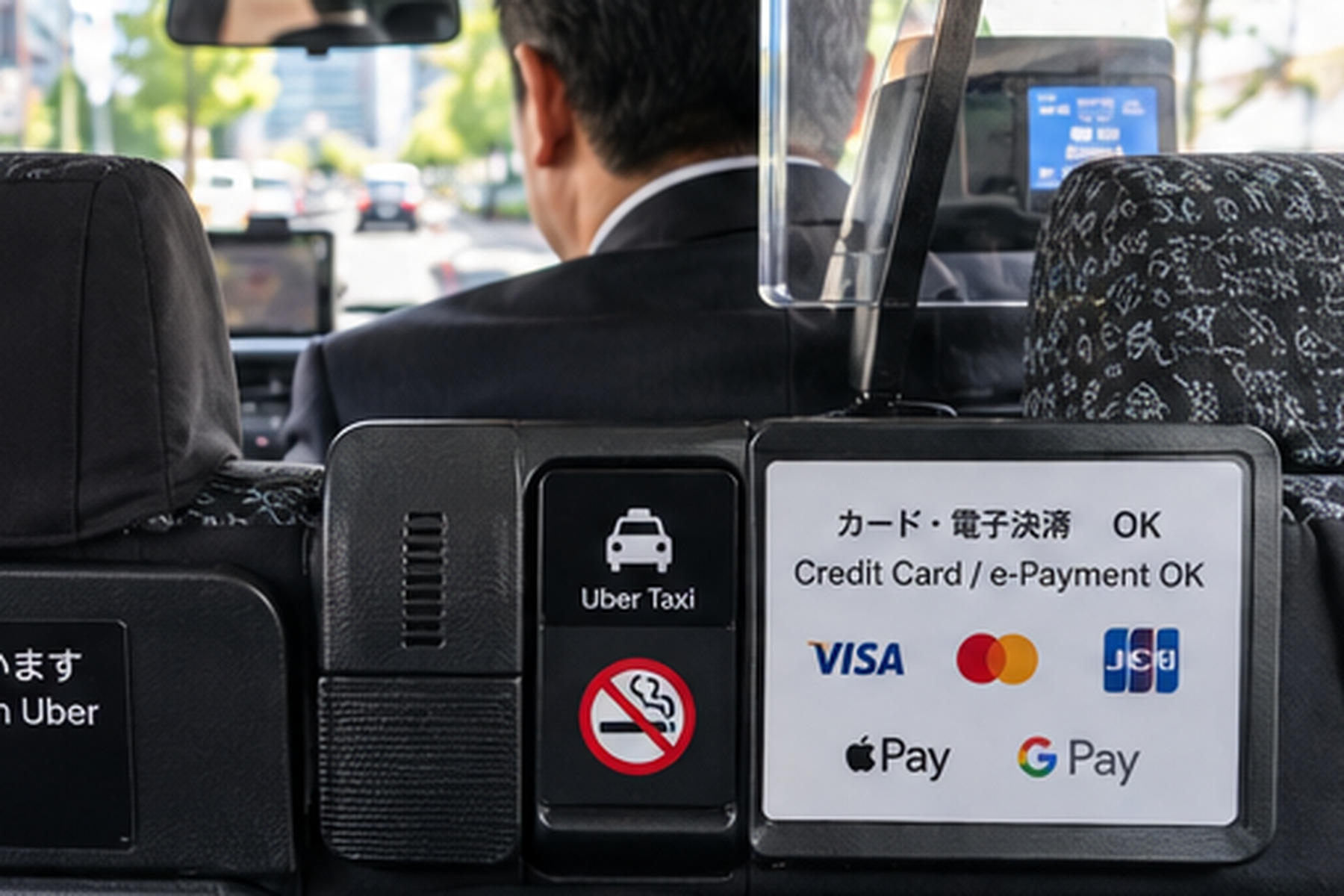
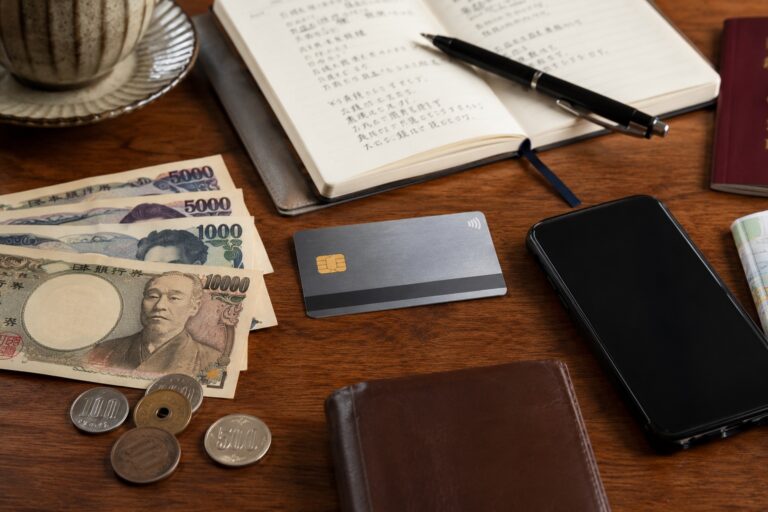
Uber Taxi can charge the payment method registered in your account, which is convenient when you do not want to handle cash. Still carry a backup card and some yen in case your account, card, phone battery or data connection fails.
Tipping is not a normal requirement for Japanese taxi rides. Uber may offer an optional in-app tip feature, but travelers do not need to hand the driver extra cash as part of normal taxi etiquette.
Before boarding, confirm the vehicle details shown in the app. During the ride, you can follow the trip in the app and use Uber's support or trip-sharing features when available.
- Keep a backup payment method.
- Do not rely on a nearly empty phone battery.
- Confirm the assigned car before boarding.
- Use trip sharing or in-app support if useful.
- An optional app tip is different from a customary cash tip.
Build a Backup Plan Before You Need One
The best way to use Uber in Japan is as one layer in a wider transport plan. Install the app before a rainy night, airport arrival or missed last train forces you to solve the problem under pressure.
Also know how to take a normal taxi, keep a second taxi app or hotel call option in mind, save your hotel address, and know the nearest useful station. That combination makes a failed dispatch an inconvenience instead of a crisis.
If a ride is unavailable or the wait is poor, switch quickly rather than repeatedly refreshing one app.
- Install and sign in before your trip.
- Save your hotel and key destinations.
- Keep mobile data available.
- Learn the nearest station and taxi stand.
- Know one backup taxi-dispatch method.
FAQ
Is Uber available throughout Japan?
Uber Taxi is available across all 47 prefectures, but service areas and vehicle availability still vary inside each prefecture. Check the exact pickup point in the app before relying on it.
Is Uber in Japan mostly normal taxis?
Often, yes. Uber Taxi requests are handled by licensed professional taxi drivers. Other ride categories may appear in some areas, so use the ride options shown in the app for your location.
Is Uber cheaper than a normal taxi?
Not necessarily. Uber may dispatch a licensed taxi and can include booking or other applicable fees. Compare the app price with trains, buses and taxis already waiting nearby.
Can I use Uber at Haneda and Narita?
Yes. Uber supports taxi requests at both airports. Follow the app's pickup directions after requesting because the approved meeting point may differ by terminal and ride type.
Should I use Uber or GO in Japan?
Both can be useful. Uber may be easier if you already use it internationally, while GO is a major Japan-focused taxi app. The practical answer is to use whichever has a suitable nearby vehicle and clear pickup.
Do I need to tip an Uber taxi driver in Japan?
No cash tip is expected for a normal taxi ride. Uber may offer an optional in-app tip feature, but tipping is not a standard requirement.
Related Japan Travel Guides


Official References
Final Thoughts
Uber is now a much more practical taxi tool across Japan than many older travel guides suggest, but it still works best as part of a mixed transport strategy. Use rail for efficient city travel, use Uber or another taxi option when door-to-door service solves a real problem, and compare airport alternatives before committing to a long ride.