
Japan Rail Pass Guide: Prices, Routes and Is It Worth It?
Compare the Japan Rail Pass with individual tickets and regional passes using real route totals, the October price change, and practical booking advice.
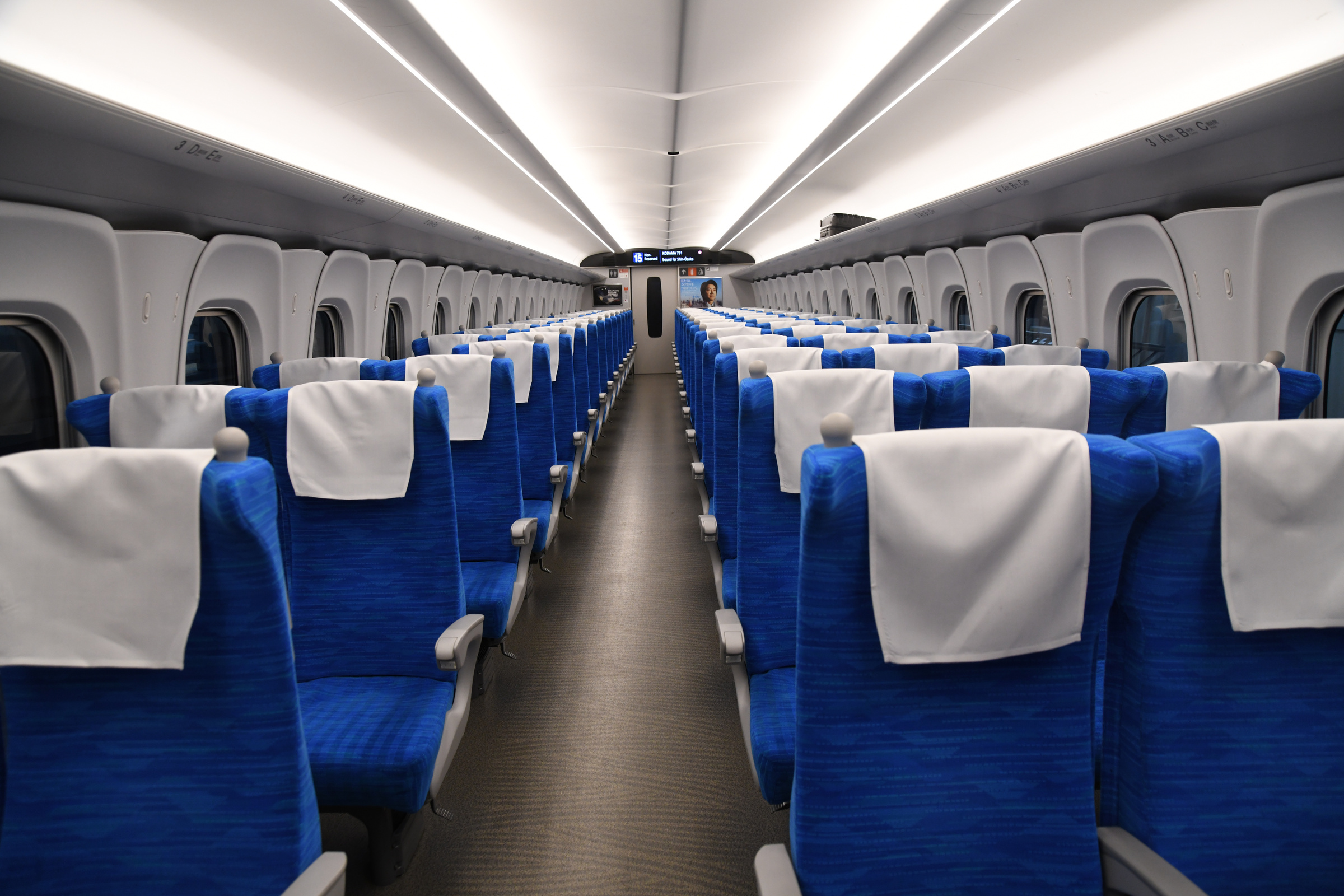
Buy a Japan Rail Pass only when the covered journeys you actually plan to take justify its total cost within 7, 14 or 21 consecutive days. A Tokyo–Kyoto return trip alone does not justify the adult 7-day Ordinary pass. As checked on September 4, that pass costs ¥50,000 through the official online service; overseas agency purchases rise to ¥53,000 from October 1. Compare the purchase channel, regional passes and individual tickets before paying.
What You’ll Learn
- Calculate whether your actual route reaches the pass price.
- Compare the October agency price change with official direct purchase.
- Check eligibility, train coverage and Nozomi supplements.
- Choose the right start date, collect the pass and reserve suitable seats.
What the nationwide Japan Rail Pass covers
The Japan Rail Pass is a time-limited travel product for eligible visitors, covering much of the JR network. It is available for 7, 14 or 21 consecutive days in Ordinary and Green versions. Ordinary is the sensible starting point for a cost comparison; choose Green because you want the accommodation, then compare equivalent Green fares.
Coverage follows the operator, route and train type. The pass is useful across several regions, but a map full of railway lines does not mean every journey is included.
- Most JR local, rapid and limited-express services, plus eligible Shinkansen services, are covered under the pass conditions.
- Nozomi and Mizuho require a separate pass-holder special ticket; Hikari, Kodama and Sakura are common alternatives on relevant routes.
- Tokyo Monorail and the JR West Miyajima Ferry are included. Miyajima visitor tax is separate.
- Most subways and private railways are excluded, apart from specific published exceptions. JR highway buses are excluded too.
prices: check where and when you buy
Prices below are adult yen prices, checked against JR’s price page on September 4,. Overseas agency prices change for purchases on or after October 1, based on local purchase time. The official JAPAN RAIL PASS Reservation website retains the lower prices for a limited period; its end date had not been announced in the cited notice. Recheck before checkout.
Do not compare only a converted headline price. Compare the same duration and class, payment currency, delivery charges, exchange requirements and cancellation terms.
- Official online Ordinary: 7 days ¥50,000; 14 days ¥80,000; 21 days ¥100,000.
- Official online Green: 7 days ¥70,000; 14 days ¥110,000; 21 days ¥140,000.
- Overseas agency Ordinary from October 1: 7 days ¥53,000; 14 days ¥84,000; 21 days ¥105,000.
- Overseas agency Green from October 1: 7 days ¥74,000; 14 days ¥116,000; 21 days ¥147,000.
- Through September 30, published overseas agency yen prices match the lower prices above.
- Child passes cover ages 6–11 under JR’s purchase/Exchange Order age rules. Check the child column: revised agency child prices are not always exactly half the adult price.
Is it worth it? Calculate the route, not the number of cities
List every journey you would take without a pass. Price the complete trip, including the basic fare and any limited-express or seat charge. Compare that with the pass price plus supplements and uncovered transport. Count only travel inside the pass period, and use the same class and reservation type on both sides.
These adult Ordinary reserved-seat benchmarks use the published SmartEX regular-season Hikari/Kodama/Sakura/Tsubame fare chart. They are planning examples, not live quotes; travel dates, products and connections can change your total.
- Tokyo–Kyoto return: ¥13,650 × 2 = ¥27,300. That is ¥22,700 below a ¥50,000 pass before other journeys.
- Tokyo → Kyoto → Hiroshima → Tokyo: ¥13,650 + ¥11,100 + ¥18,710 = ¥43,460. Even this three-city loop needs another ¥6,540 of covered travel to reach ¥50,000, or ¥9,540 to reach ¥53,000.
- A one-way trip ending in Kansai has no Tokyo return fare to offset. Price the route you will take rather than an imaginary round trip.
When a regional pass or individual tickets work better
Start with individual tickets for one or two intercity journeys. They let you choose a service without fitting the trip into a nationwide pass window. A stay centered on Tokyo or Kyoto is usually driven more by local transport than by expensive JR journeys.
For western Japan, the JR West Kansai–Hiroshima Area Pass is a useful comparison: the published adult price is ¥17,000 for five days. Its coverage includes the Sanyo Shinkansen between Shin-Osaka and Hiroshima and the JR West Miyajima Ferry, subject to its own terms. It does not cover the Tokaido Shinkansen between Kyoto and Shin-Osaka, or travel onward to Tokyo.
A separate Tokyo–Kyoto ticket plus a regional pass may suit a trip that continues west. Check the boundary station, train class, ferry operator and every excluded segment. Regional passes have their own train and eligibility rules; do not apply the nationwide pass’s Nozomi rule automatically.
Choose a nationwide pass when your real covered route, timing and flexibility justify it. If the calculation is close, decide how much its convenience is worth to you without adding detours just to make the pass appear economical.
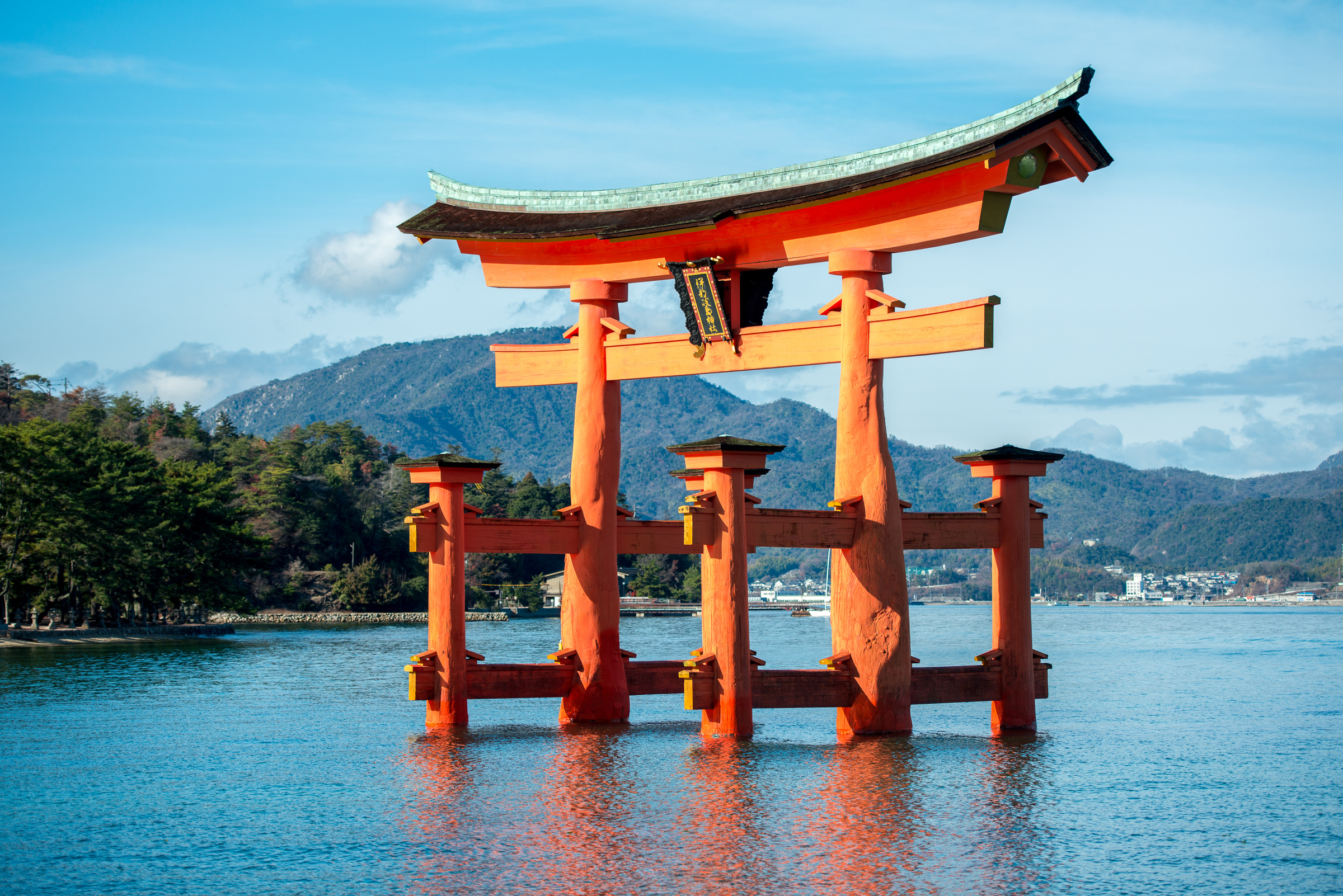
Check your eligibility before paying
For foreign nationals, the usual requirement is entry to Japan with Temporary Visitor status. A foreign passport by itself is not enough. People entering under work, student or other residence statuses generally do not qualify through this route.
JR normally checks the Temporary Visitor stamp or sticker in the original passport. If using an automated immigration gate, follow JR’s guidance on obtaining the required entry evidence from immigration staff. Registered users of Japan’s Trusted Traveler Program should check JR’s specific card-and-passport instructions.
Japanese nationals living overseas have a separate eligibility route with specified evidence of long-term residence abroad and purchase restrictions. Check that route with an authorized agency before purchasing; the official online purchase route is not available to them. Eligibility is checked at collection even when payment has already been made.
Nozomi, Mizuho and class upgrades: the extra-cost traps
A nationwide pass alone does not let you board Nozomi or Mizuho. Buy the dedicated NOZOMI MIZUHO Ticket before boarding, for the covered pass-holder journey. This is an additional ticket for each applicable trip, not an unlimited upgrade to the pass.
For an adult, the published supplement is ¥4,960 each way between Tokyo and Kyoto or Shin-Osaka. Two Tokyo–Kyoto Nozomi trips therefore add ¥9,920 to the pass cost. A faster train may be worthwhile for your schedule, but include that extra amount in the comparison.
An Ordinary pass does not become a Green pass by paying only a simple seat difference. JR requires the applicable additional charges for accommodation outside the pass class. A Green pass also does not include every premium service, such as GranClass.
- Check the actual service name in the timetable, not just the Shinkansen line.
- If avoiding supplements, search specifically for pass-covered services and allow for their journey times and connections.
- Check whether your chosen train is all-reserved; a pass does not guarantee an available seat.
Choose the start date around your expensive journeys
Pass days are consecutive calendar days, not a collection of separate travel days or rolling 24-hour blocks. A 7-day pass starting October 10 covers October 10 through October 16. Starting it late on the first day still uses that calendar day.
A two-week holiday does not automatically need a 14-day pass. If all your expensive covered journeys fit into seven consecutive days, compare a 7-day pass plus separate tickets for the remaining days. Conversely, a cheaper 7-day pass will not help with a return journey outside its validity.
You can arrange collection before a future start date within JR’s permitted window. Keep collection, activation and first reserved departure separate in your plan. Check the printed start date carefully: JR does not allow the starting date to be changed after the pass is issued.
Buy, collect and leave time before the first train
Direct purchase through JAPAN RAIL PASS Reservation allows seat reservations online before you collect the physical pass. You still need to collect the pass and the required reserved-seat tickets before boarding.
Overseas agency purchase normally provides an Exchange Order. That order is not a travel pass: bring the required original documents and exchange it at a designated location in Japan. JR specifies exchange within three months of issue, with exchange possible from one month before the start date.
Use JR’s current pickup/exchange office list and opening hours. An airport or station being served by JR does not mean every counter handles your purchase channel. Allow room for immigration, queues and collection before booking an arrival-day departure.
- Confirm your eligibility and match passenger details to the passport.
- Compare the official site with any agency’s final checkout price and collection process.
- For direct purchase, keep the booking reference and follow the stated collection requirements.
- For an agency order, check delivery time and bring the original Exchange Order where required.
- Check the pass name, class and dates before leaving the collection counter.
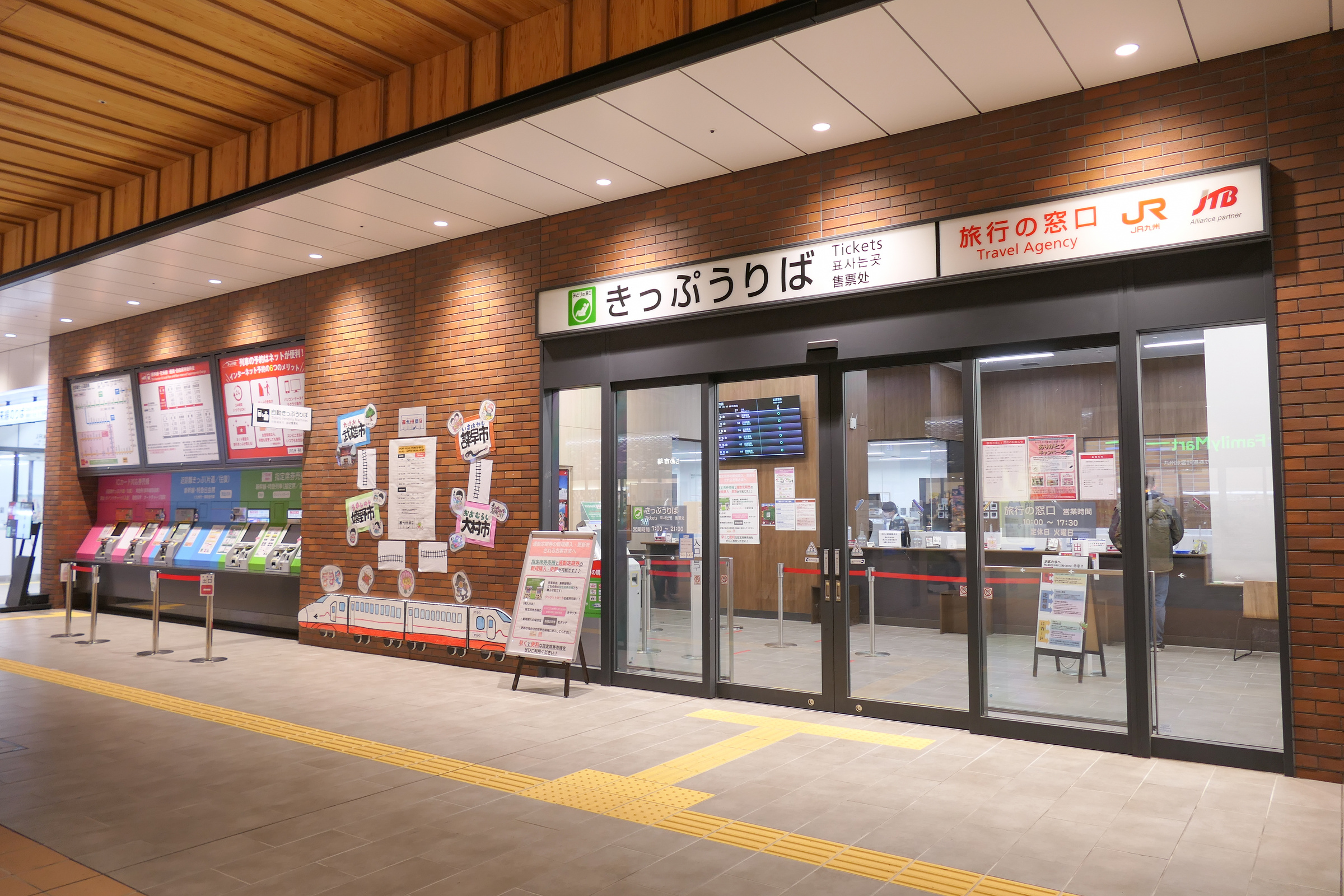
Reserve seats and use the ticket gates correctly
Covered reserved seats in the appropriate pass class do not require an extra reservation fee, but seats can sell out. Book important journeys early, especially if you need adjacent seats, a particular departure or suitable baggage space.
After collection, reservations can be made at supported reserved-seat machines or JR ticket counters. Follow the machine’s pass and passport-number instructions. Official online purchasers also have the reservation service associated with that purchase; do not assume an agency pass includes the same pre-collection online access.
For compatible automatic gates, insert the paper pass into the ticket slot and retrieve it. Do not head for an IC-only gate. Keep reserved-seat tickets with you as well; a reservation printout alone is not your nationwide pass.
- Carry the original passport for eligibility checks while using the pass.
- Check departure station, date, service, car and seat on the reservation.
- Cancel a seat reservation you will not use so another traveler can book it.
Measure large luggage before reserving your seat
On the Tokaido, Sanyo and Kyushu Shinkansen, baggage whose three dimensions total more than 160 cm and no more than 250 cm requires a seat with an oversized-baggage area. Book that seat with the journey; there is no additional reservation charge for the baggage-area seat.
Arriving with qualifying oversized baggage without the required reservation can incur a ¥1,000 handling charge, with staff deciding where it is stored. Do not assume an empty deck rack or the separate oversized-baggage compartment removes the reservation requirement.
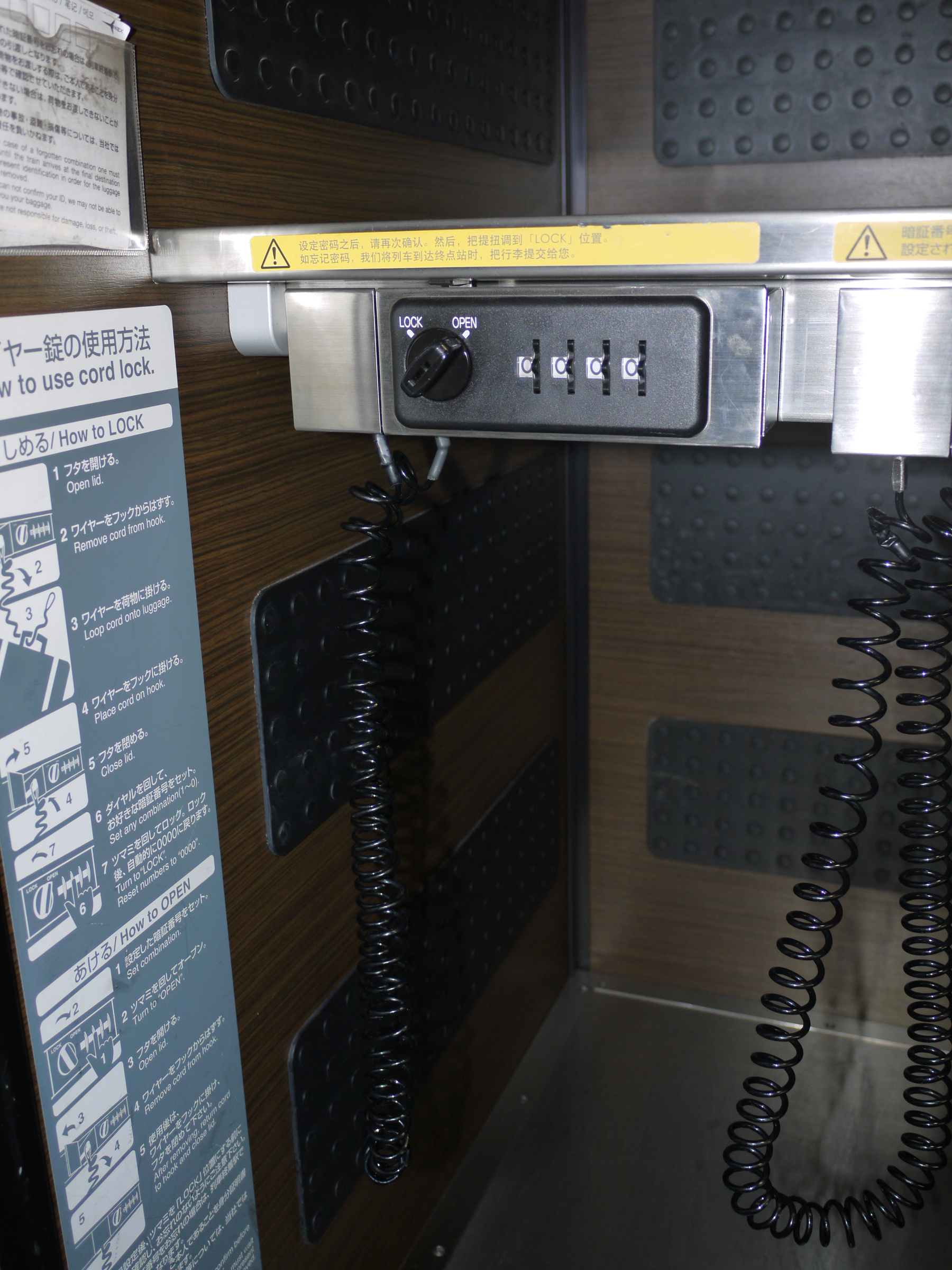
Facilities differ on other trains. The pictured cable lock is on a Narita Express luggage rack, not in a Shinkansen oversized-baggage area. Read the instructions at the actual rack, keep valuables with you and check the operator’s limits for your train. The pass covers eligible transport, not luggage delivery.
- Measure the suitcase’s length, width and height, including protruding parts, before choosing a seat.
- Confirm suitable space before committing to a tight connection or a busy departure.
- If the bag is difficult to manage, compare luggage forwarding and carry a small overnight bag.
Keep an IC card for the journeys the pass misses
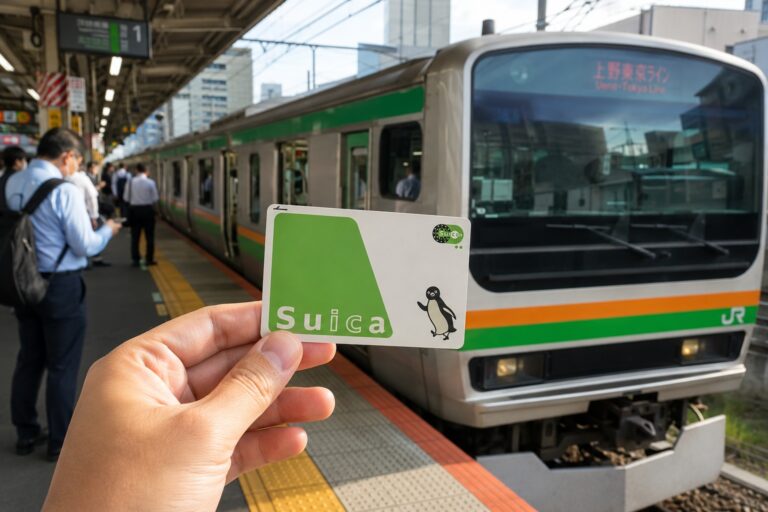
A Suica, PASMO or other compatible IC card is a payment tool for supported local journeys; it is not a substitute for the nationwide pass or an unlimited travel product. Keeping an IC card alongside a pass often makes city travel easier.
Check the operator on each leg. A route to a famous destination may leave JR tracks partway through, and a JR train name does not always make the whole through service free. For example, the non-JR Otsuki–Kawaguchiko segment needs separate payment when using the nationwide pass.
- Budget separately for excluded subways, private railways and local buses.
- Check airport access by operator and service rather than assuming every airport train is covered.
- Do not count an excluded trip as savings in your pass calculation.
Your final check before booking
Save the route comparison with the dates you plan to travel. Recheck prices and conditions at the operator’s booking page before paying, especially around the October agency price change.
- Eligibility: you have the passport and entry evidence required for your purchase route.
- Value: actual covered fares justify the price, or you consciously accept a convenience premium.
- Timing: every journey being counted fits inside the chosen consecutive-day period.
- Coverage: train names, private-line segments and any Nozomi/Mizuho supplements are included in the budget.
- Reservations: suitable seats, large-luggage arrangements and realistic connections are available.
- Collection: the office, documents and opening hours work with your arrival plan.
- Care: keep the pass safe. JR does not reissue a lost or stolen pass.
Photography credits
These are photographs of real trains, stations and destinations. They show the scene at the time of photography; follow current operator information for facilities and rules. Each image has been resized for web use without cropping or other edits. Credits and source licenses follow.
- IMAGE-01: Shinkansen N700 with Mount Fuji — tansaisuketti, CC BY-SA 3.0. Source: https://commons.wikimedia.org/wiki/File:Shinkansen_N700_with_Mount_Fuji.jpg License: https://creativecommons.org/licenses/by-sa/3.0/
- IMAGE-02: Interior 747-3503 H3 N700S JRW Kodama731 20250106 — Olegushka, CC0 1.0. Source: https://commons.wikimedia.org/wiki/File:Interior_747-3503_H3_N700S_JRW_Kodama731_20250106.jpg License: https://creativecommons.org/publicdomain/zero/1.0/
- IMAGE-03: Itsukushima Gate — JordyMeow, CC BY-SA 3.0. Source: https://commons.wikimedia.org/wiki/File:Itsukushima_Gate.jpg License: https://creativecommons.org/licenses/by-sa/3.0/
- IMAGE-04: JRK Nagasaki-STA JR-ticket-office — MaedaAkihiko, CC BY-SA 4.0. Source: https://commons.wikimedia.org/wiki/File:JRK_Nagasaki-STA_JR-ticket-office.jpg License: https://creativecommons.org/licenses/by-sa/4.0/
- IMAGE-05: JR East E259 luggage rack — Hahifuheho, CC0 1.0. Source: https://commons.wikimedia.org/wiki/File:JR_East_E259_luggage_rack.jpg License: https://creativecommons.org/publicdomain/zero/1.0/
FAQ
Is the Japan Rail Pass worth it for Tokyo and Kyoto only?
Usually not for one return trip. The published regular-season SmartEX Hikari/Kodama Ordinary reserved-seat benchmark is ¥27,300 return, well below the adult 7-day nationwide pass. Add only the covered journeys you actually intend to take before making the comparison.
Are all Japan Rail Pass prices increasing in October?
The announced October 1 increase applies to purchases through overseas agencies. As checked on September 4, the official reservation website retains the lower prices for a limited period with no stated end date in the cited notice. Check the current purchase-channel price before paying.
Can I use Nozomi with the nationwide pass?
Yes, when you also buy the required NOZOMI MIZUHO Ticket before boarding for that journey. The pass alone is insufficient. Compare the supplement with individual-ticket options or choose a suitable covered service.
Do the seven days have to be consecutive?
Yes. The 7-day pass covers seven consecutive calendar days, including its starting date. You cannot pause it while staying in one city.
Can I reserve seats before arriving in Japan?
Official JAPAN RAIL PASS Reservation purchasers can use its online reservation service before collecting the pass. You must collect the necessary physical documents before boarding. An agency purchase does not automatically provide the same pre-collection online reservation access.
Do I still need a Suica or PASMO?
An IC card can be useful for supported journeys on subways, private railways and other transport excluded from the pass. Those fares remain separate. Use the paper pass correctly for covered journeys rather than accidentally paying with the IC card.
Does the pass reserve space for my suitcase?
No. On the Tokaido, Sanyo and Kyushu Shinkansen, luggage totaling more than 160 cm and up to 250 cm across three dimensions requires the appropriate baggage-area seat reservation. Other trains have their own storage arrangements.
Not sure the Japan Rail Pass is worth it?
Compare the pass with direct Shinkansen tickets for your actual long-distance routes before buying.
Check direct Shinkansen ticketsRelated Japan Travel Guides
Official References
- JNTO: Japan Rail Pass travel overview
- JR: nationwide pass prices and the October agency price change
- JNTO: official online prices retained for a limited period
- SmartEX: regular-season reserved-seat fare chart (published April; checked September )
- SmartEX: product conditions and fare comparisons
- JR: pass eligibility and passport evidence
- JR: covered routes and excluded services
- JR: accommodation and additional charges
- JR: NOZOMI MIZUHO Ticket and supplements
- JR: official online purchase and collection
- JR: overseas agency purchase and Exchange Orders
- JR: designated pickup and exchange offices
- JR: reserved-seat arrangements
- JR: automatic ticket gates
- JR: pass conditions, start dates and lost passes
- JR Central: oversized-baggage rules
- JR West: Kansai–Hiroshima Area Pass price and coverage
Final Thoughts
Build the journey first, then choose the ticket. A nationwide Japan Rail Pass can be convenient for a concentrated route across several regions, but a familiar Tokyo–Kyoto itinerary may cost much less with individual tickets. Use the actual purchase-channel price, count only covered travel and arrange collection, seats and luggage before departure.