
Green Car in Japan: Seats, Tickets, Prices and When It’s Worth It
Understand Japan’s Green Car before you pay for the upgrade. Compare Shinkansen and local-train Green Cars, current local Green fees, Suica use, JR Pass rules, luggage and when ordinary seating is the smarter choice.
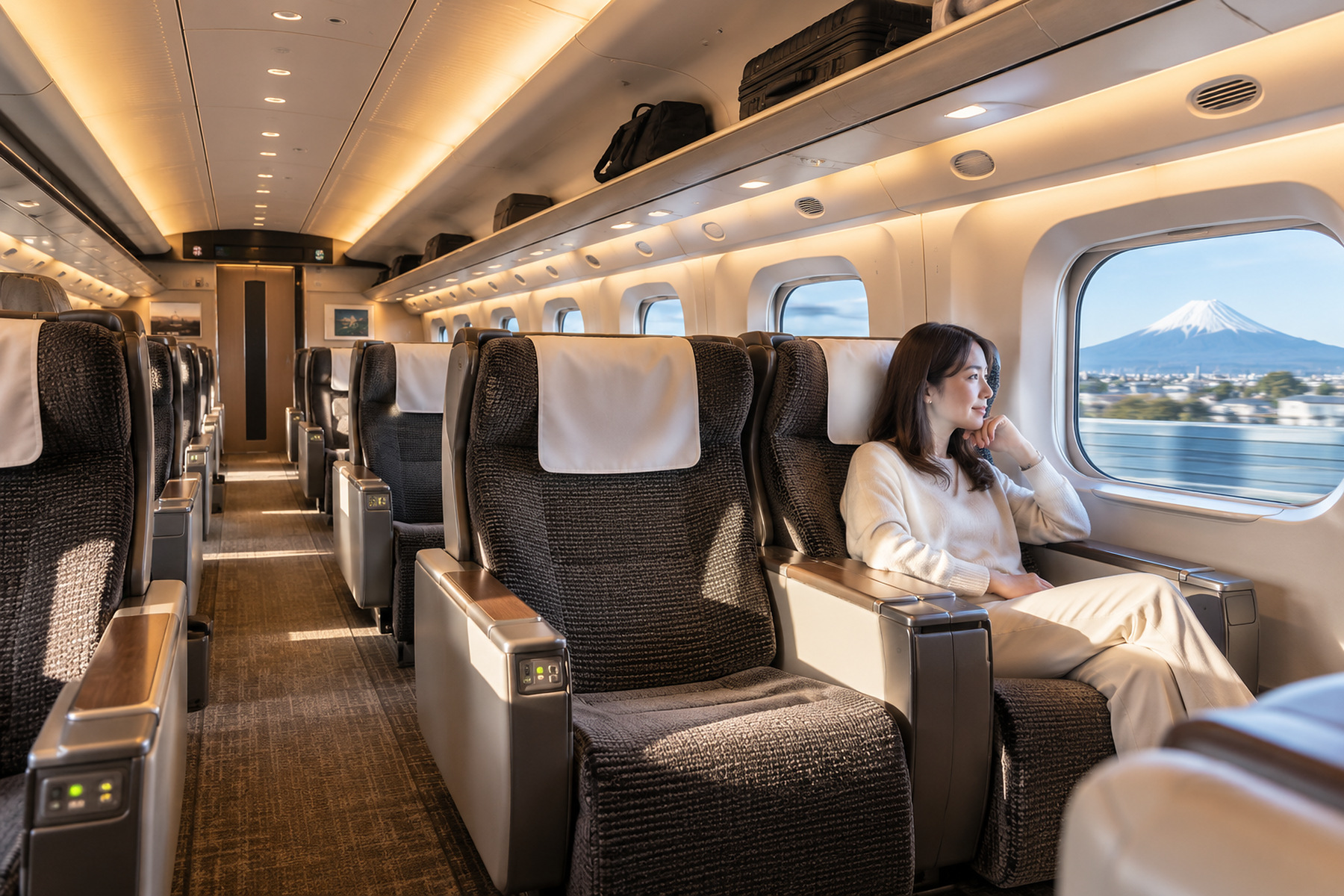
Green Car is JR’s premium seating class, but the system depends on the train. On Shinkansen and many limited express trains, Green Car is normally a reserved premium seat. JR East local and rapid Green Cars are different: they are non-reserved, require a separate Green Car ticket, and can be used with a Suica Green Car ticket. Green Car is most valuable on longer rides, busy travel days or when extra space and a quieter cabin matter; ordinary reserved seats are usually enough when price matters more than comfort.
What You’ll Learn
- The difference between Shinkansen Green Car and JR East local Green Car
- How Green Car tickets and reservations work
- Current JR East local Green Car prices and Suica savings
- How JR Pass, luggage and seat rules affect your choice
- When paying extra for Green Car is actually worth it
What Green Car Actually Means
Green Car is a premium rail class used by JR companies. The basic idea is extra comfort: wider seating, more personal space and a calmer cabin than ordinary seating. It is often compared with first class, although the experience is usually focused on space and comfort rather than luxury service.
The important point is that Green Car is not one universal product. A Shinkansen Green Car, a limited express Green Car and a JR East local-train Green Car can use different tickets, reservation rules and boarding methods.
Treat the words Green Car as a seat class, then check the specific train before buying.
- Shinkansen Green Car: premium reserved seating on bullet trains.
- Limited express Green Car: premium seating with train-specific reservation rules.
- JR East local and rapid Green Car: premium non-reserved seating on selected lines.
Green Car vs Ordinary Seats on the Shinkansen
For most visitors, the first Green Car decision happens on the Shinkansen. Ordinary reserved seats are already comfortable, so Green Car should be treated as a comfort upgrade rather than a necessity.
On the Tokaido Shinkansen, JR Central lists Green Car seat width at 480 mm, compared with 440 mm or 460 mm for ordinary seating depending on seat position. Green seats also add comfort features such as larger armrests, footrests, reading lights and a more spacious layout.
That extra room matters most on multi-hour rides, during crowded travel periods, on work trips or when you simply want a quieter journey. For a short ride or a budget-focused itinerary, an ordinary reserved seat usually offers better value.
- Choose Green Car for comfort, quiet and personal space.
- Choose ordinary reserved seats when value is the priority.
- Do not expect the fare difference to buy airline-style first-class service.
How Shinkansen Green Car Tickets Work
A Shinkansen Green Car seat is normally reserved. The ticketing structure includes the basic fare, the Shinkansen limited express component and the Green Car component. Booking systems often bundle these together so you select Green Car during the reservation process rather than building each ticket manually.
Your reservation identifies the train, date, car and seat. Check those details before boarding because Green Car is not a free-upgrade area for passengers holding only an ordinary ticket.
On the Tokaido Shinkansen, Nozomi, Hikari and Kodama all have Green Car seating, but train and service rules can differ on other Shinkansen networks.
- Select Green Car when you book the Shinkansen.
- Confirm the train, car number and seat number.
- Keep the ticket, QR ticket or linked IC setup required by your booking method.
JR East Local Green Cars Are a Different System
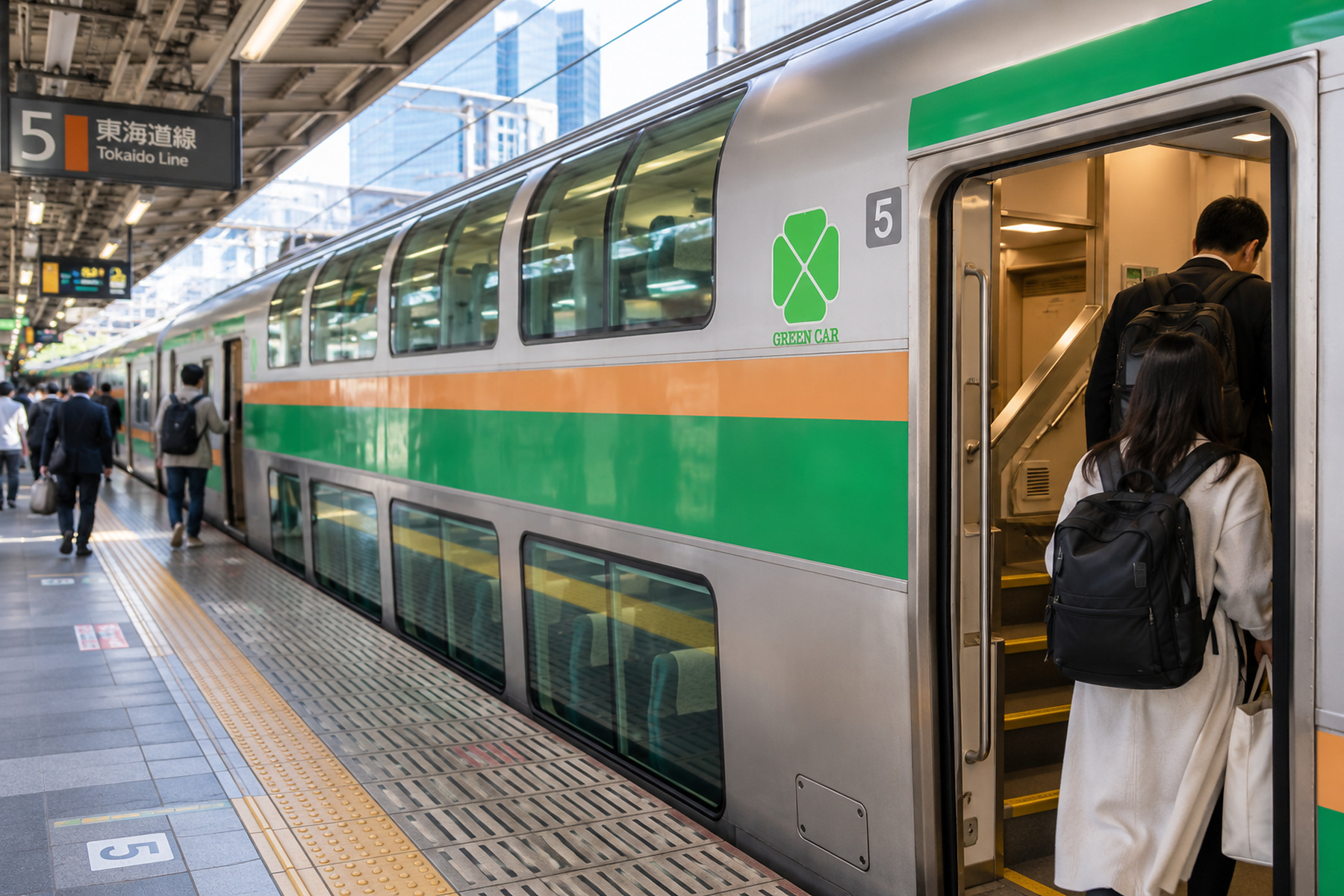
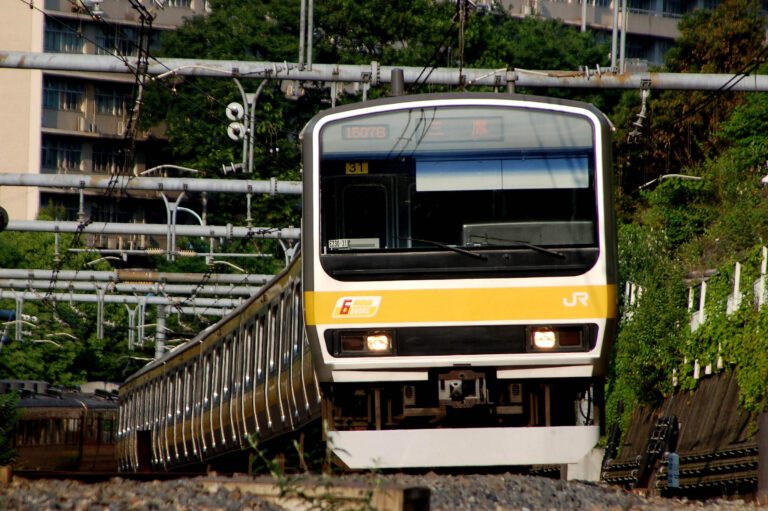
Around the Tokyo metropolitan region, selected JR East local and rapid trains also have Green Cars. These are not the same system as Shinkansen Green Cars.
JR East currently provides local-train Green Cars on services including the Tokaido, Yokosuka, Chuo Rapid, Ome, Takasaki, Utsunomiya, Joban, Sobu Rapid, Shonan-Shinjuku and Ueno-Tokyo lines. Some trains on these routes may still operate without Green Cars.
These local Green Cars use non-reserved seating. You buy access to the Green Car, then use an available seat rather than reserving a specific seat in advance.
- Local Green Car seats are non-reserved.
- A Green Car ticket is required in addition to your normal fare.
- Not every train on a listed route necessarily has Green Cars.
Current Local Green Car Prices
JR East local Green Car pricing is based on distance and how you buy the Green Car ticket. Buying a Suica Green Car ticket before boarding is cheaper than using the regular paper or onboard pricing.
For trips up to 50 km, the Suica Green fee is ¥750 and the regular fee is ¥1,010. For trips up to 100 km, the Suica Green fee is ¥1,000 and the regular fee is ¥1,260. For trips of 101 km or more, the Suica Green fee is ¥1,550 and the regular fee is ¥1,810.
These Green fees are separate from the normal fare for the journey. JR East currently applies the same Green fee throughout the year rather than changing it between weekdays and holidays.
- Up to 50 km: ¥750 with Suica Green ticket / ¥1,010 regular.
- Up to 100 km: ¥1,000 with Suica Green ticket / ¥1,260 regular.
- 101 km or more: ¥1,550 with Suica Green ticket / ¥1,810 regular.
How to Use a Suica Green Car Ticket
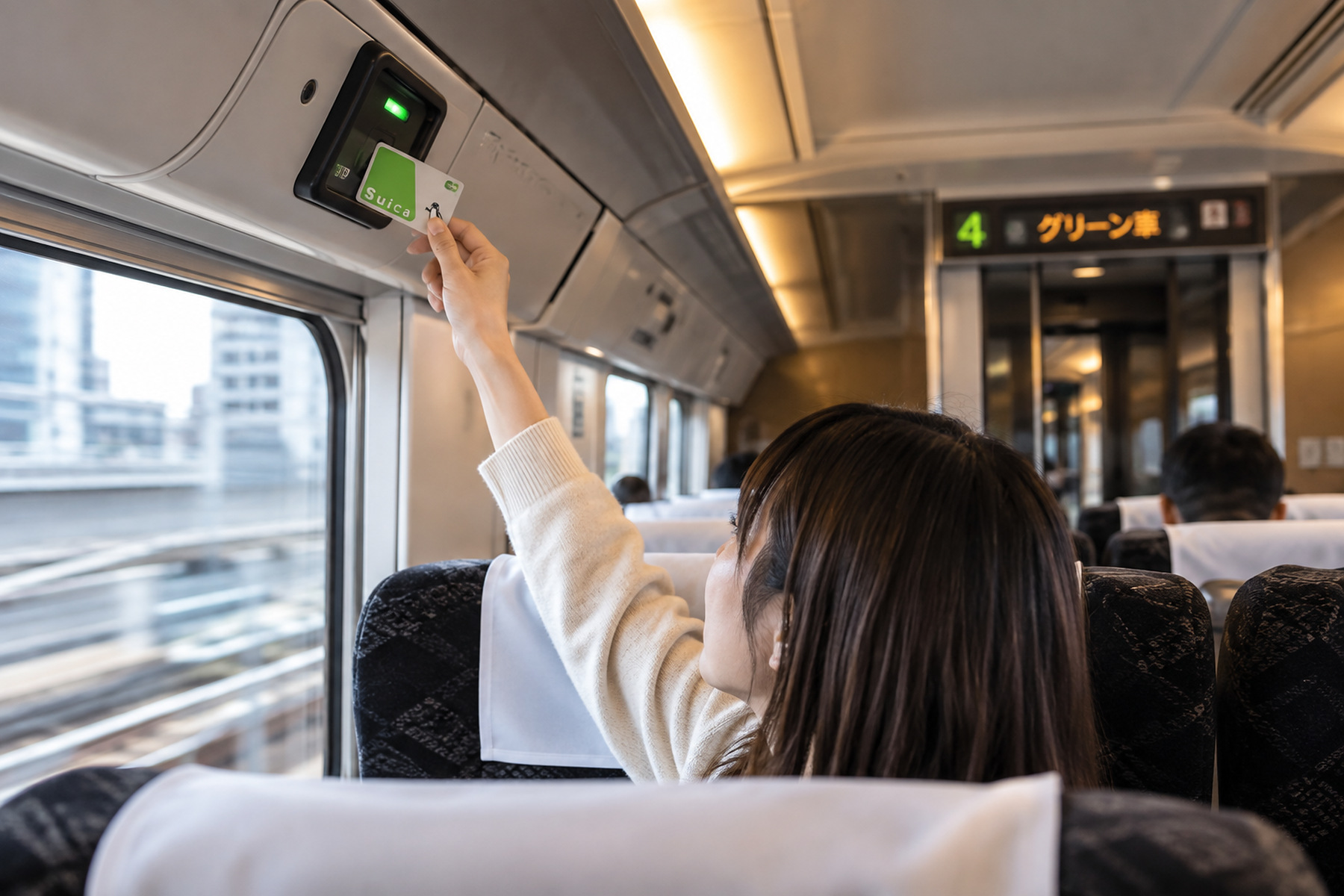
For local Green Cars, a Suica Green Car ticket is usually the simplest option. With Mobile Suica you can buy the Green Car ticket in the app. With a card-type Suica, use a compatible station ticket machine before boarding.
After you sit down, touch the Suica or supported mobile device containing the Green Car ticket information to the reader above your seat. The indicator changes to show that the seat is being used, reducing the need for a manual ticket check.
One Suica Green Car ticket covers one person for one ride. If several people are traveling together, each person needs their own compatible Suica or ticket. Buying onboard does not give the discounted Suica Green rate.
- Buy the Green Car ticket before boarding for the Suica rate.
- Tap the reader above the seat after sitting down.
- Each passenger needs their own Green Car ticket.
- If you change seats, tap the reader at the new seat again.
When Green Car Is Worth the Extra Cost
Green Car is easiest to justify when the ride is long enough for the comfort difference to matter. Tokyo to Kyoto or Tokyo to Shin-Osaka are obvious examples because you spend enough time seated to benefit from a quieter cabin and more room.
It can also be useful on a local Green Car during a long suburban ride when ordinary cars are crowded. The ability to sit in a calmer two-level Green Car can turn a tiring commute-style journey into useful rest time.
Families, older travelers, business travelers and anyone starting a busy sightseeing day may value the comfort more than a traveler making a short hop.
- Long intercity rides
- Crowded travel periods
- Business or work-focused travel
- Days with many transfers or lots of walking
- Travelers who value quiet and personal space
When Ordinary Reserved Seats Are Enough
You do not need Green Car to have a comfortable Shinkansen trip. Ordinary reserved seats are already designed for long-distance travel and are the better default for many first-time visitors.
If the ride is short, your itinerary has several paid upgrades already, or the Green fare difference would be better spent on accommodation or activities, ordinary seating is the sensible choice.
During quieter periods, an ordinary reserved car can also feel calm enough that the Green upgrade adds little practical value.
- Short or medium-distance rides
- Budget-sensitive itineraries
- Trips where you mainly need a guaranteed seat
- Travel days when ordinary reserved seats still have good availability
Using a Japan Rail Pass with Green Car
The nationwide Japan Rail Pass is sold in Green and Ordinary versions. A Green-type pass allows Green Car use on eligible JR trains, while an Ordinary-type pass does not automatically include Green Car travel.
Even with a Green pass, reserved Green seats still need a seat reservation where the train requires one. Coverage also depends on the train and route.
Nozomi and Mizuho services require a separate special ticket for Japan Rail Pass holders. A Green pass does not remove that extra requirement.
- Green-type JR Pass: Green Car is available on eligible covered services.
- Ordinary JR Pass: Green Car is not automatically included.
- Reserved Green seats still require a reservation.
- Nozomi and Mizuho require the dedicated additional ticket.
Green Car and Luggage
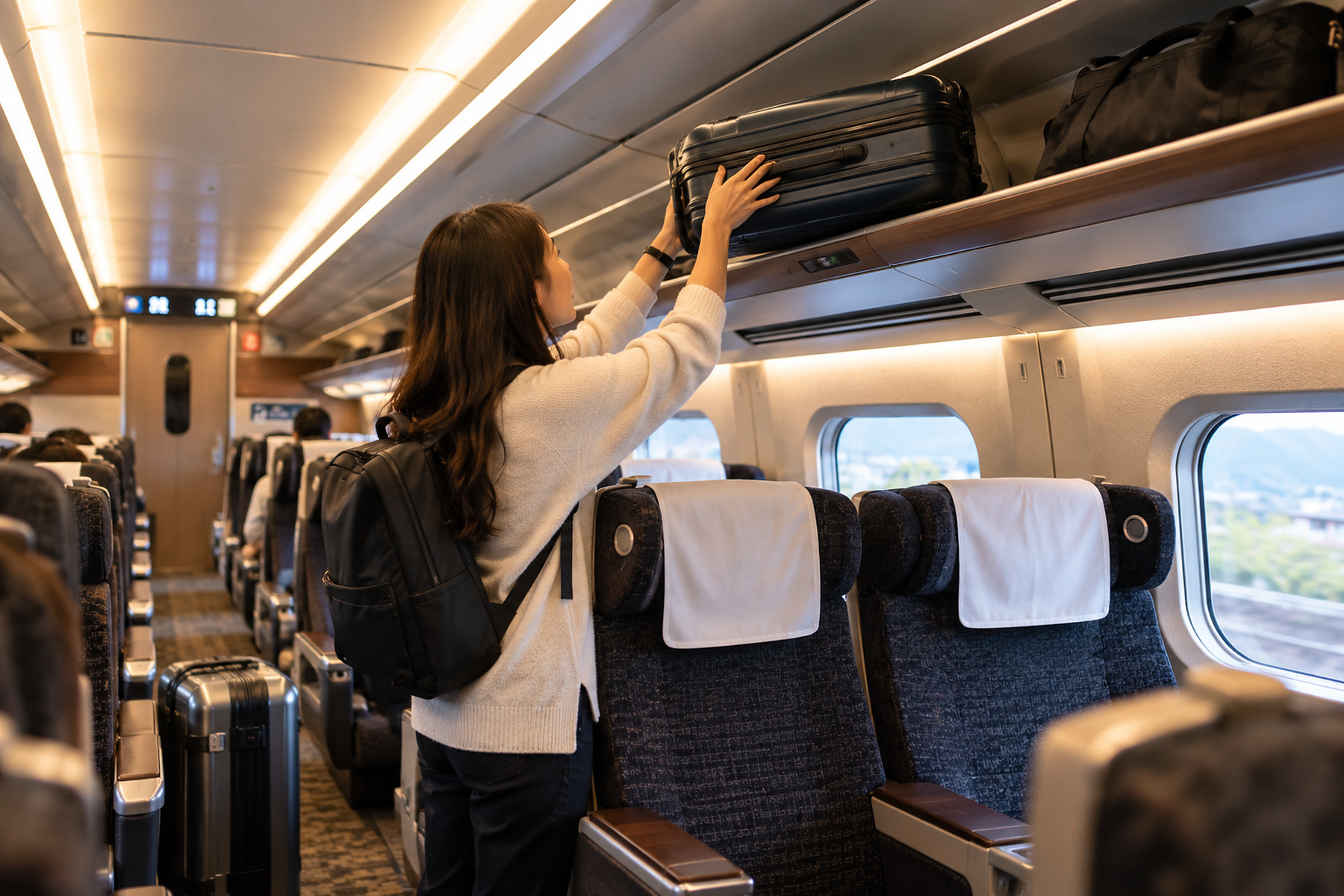
More personal space does not cancel Shinkansen luggage rules. On the Tokaido Shinkansen, Green Car seats include footrests, so JR Central recommends using the overhead rack for normal luggage rather than assuming there is extra floor space.
If your baggage is too large or heavy for the rack, reserve a seat with an oversized baggage area or, where available, an oversized baggage compartment. These options exist in both ordinary and Green Cars on applicable trains.
Choose Green Car for passenger comfort, not as a substitute for the correct baggage reservation.
- Normal luggage should use the rack when practical.
- Very large baggage may require an oversized-baggage seat reservation.
- Green Car does not exempt you from route-specific baggage rules.
Best Strategy for First-Time Visitors
Use ordinary reserved seats as your default, then upgrade to Green Car when you can name the benefit you are buying: more space, a quieter cabin, a longer rest period or easier recovery on a demanding travel day.
For JR East local Green Cars, buy the Suica Green Car ticket before boarding when possible. For Shinkansen, select Green Car at the time you make the train reservation.
If you are using a rail pass, confirm that your pass type and train are eligible before you commit to the Green Car.
- Default to ordinary reserved seats for value.
- Upgrade on longer or more tiring journeys.
- Use Suica Green tickets for JR East local Green Cars.
- Check rail-pass and luggage rules separately.
FAQ
What is Green Car in Japan?
Green Car is JR’s premium train seating class. It generally provides more space and a calmer environment than ordinary seating, but ticket and reservation rules differ between Shinkansen, limited express and local trains.
Are Green Car seats always reserved?
No. Green Car seats on Shinkansen and many limited express trains are normally reserved, while JR East local and rapid Green Cars are non-reserved.
How much is a local Green Car ticket?
JR East currently charges ¥750, ¥1,000 or ¥1,550 with a Suica Green ticket depending on distance. Regular paper or onboard rates are ¥1,010, ¥1,260 or ¥1,810 for the same distance bands.
Can I use Suica for Green Car?
Yes on supported JR East local Green Car services. Buy the Suica Green Car ticket before boarding, then touch your Suica or supported mobile device to the reader above your seat.
Does a Japan Rail Pass include Green Car?
A Green-type Japan Rail Pass covers Green Car on eligible services, while an Ordinary-type pass does not automatically include Green Car. Reservations and train-specific restrictions still apply.
Is Green Car worth it from Tokyo to Kyoto?
It can be worthwhile if you value a quieter cabin and more space for a multi-hour trip. If you are managing costs, an ordinary reserved seat is already comfortable and is usually the better-value choice.
Does Green Car give me more luggage allowance?
No. Green Car improves passenger comfort but does not remove Shinkansen baggage rules. Oversized luggage may still require the correct reserved seat or baggage space.
Compare Tokaido Shinkansen tickets
Check the route, travel date, seat choice and current booking conditions before buying.
Check Tokaido ShinkansenRelated Japan Travel Guides
Official References
Final Thoughts
Green Car is best treated as a targeted comfort upgrade, not a default requirement for train travel in Japan. Ordinary reserved seats already work well for most Shinkansen journeys, while Green Car becomes more valuable on longer rides, crowded days or itineraries where arriving rested matters. The main rule is to identify which Green Car system you are using first, then buy the correct ticket, reservation or Suica Green Car access for that train.