
How to Buy Shinkansen Tickets: Online, Machine or Counter
Buy the right Shinkansen ticket with a clear comparison of official online services, reserved-seat machines and JR counters, plus guidance for seats, luggage, IC cards and boarding.
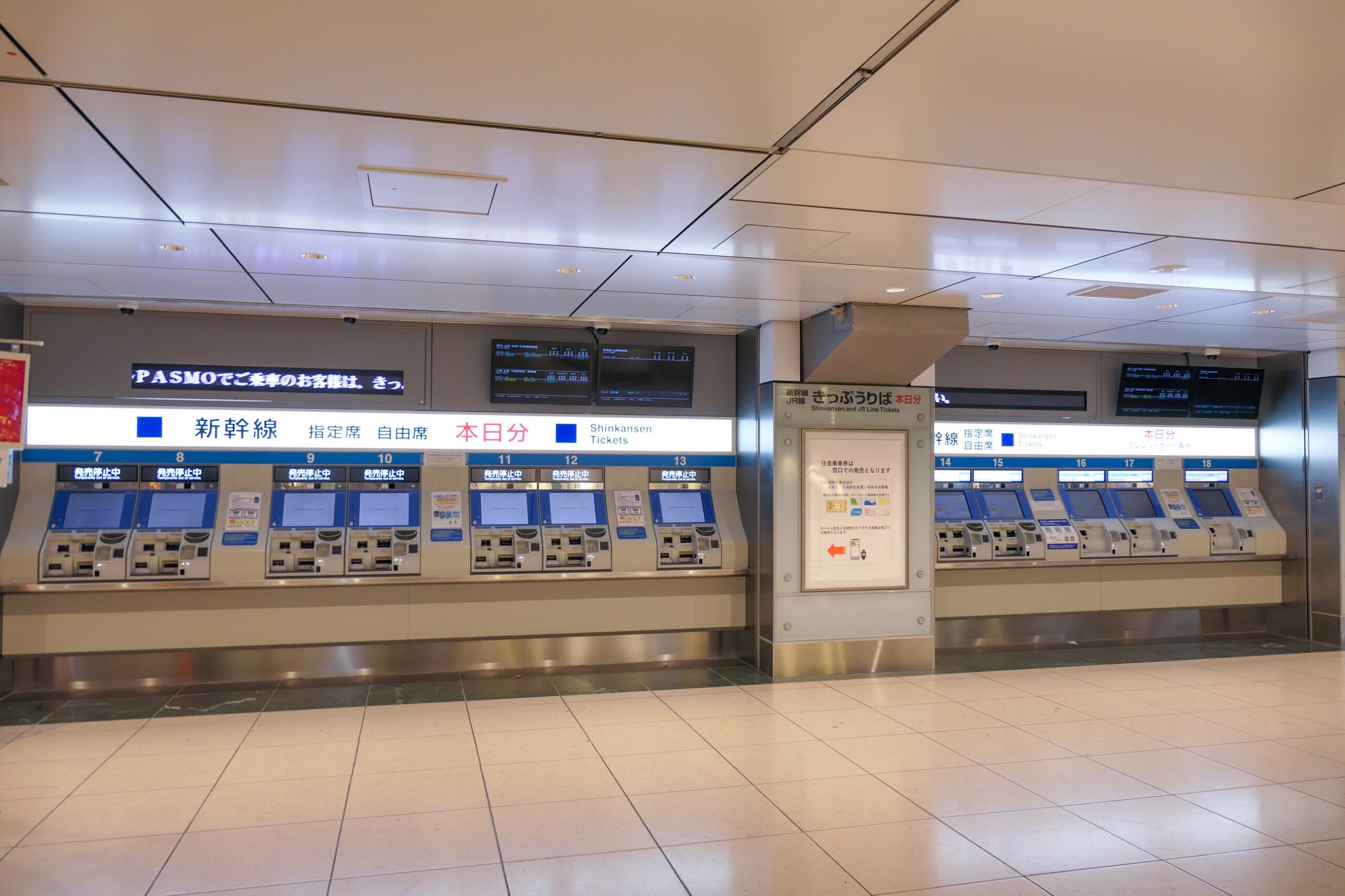
For the simplest station purchase, use a JR reserved-seat ticket vending machine with an English menu: choose Shinkansen, enter the departure and arrival stations, date, approximate time and passengers, then select the train, seat type and seat. A JR ticket office is better for complicated transfers, rail passes or questions. Online, use the official service for the route: SmartEX serves the Tokaido, Sanyo and Kyushu Shinkansen, while JR East Train Reservation and JR-WEST ONLINE TRAIN RESERVATION cover their supported areas and products. Confirm whether you will board with paper tickets, a QR ticket or a linked IC card, and reserve the correct luggage seat before payment when required.
What You’ll Learn
- Identify the Shinkansen line and operator before choosing an online booking service.
- Understand why a basic fare and Shinkansen limited-express charge may appear separately.
- Buy at an English-language machine or ask efficiently at a JR ticket office.
- Choose reserved, non-reserved or Green Car seating without paying for the wrong product.
- Board correctly with paper tickets, a QR ticket or a designated IC card.
Start with the route, not the booking app
Shinkansen is a network, not one train or one booking system. First write down the exact departure station, arrival station and travel date. Tokyo to Kyoto or Shin-Osaka uses the Tokaido Shinkansen. Travel farther west can continue on the Sanyo and Kyushu Shinkansen. Routes from Tokyo toward Sendai, Aomori, Niigata, Nagano or Kanazawa use JR East services and, on some journeys, connecting operators.
This matters because official online services have different coverage, pickup locations and boarding methods. SmartEX is designed for the Tokaido, Sanyo and Kyushu Shinkansen. JR East Train Reservation handles supported eastern Japan tickets and passes. JR-WEST ONLINE TRAIN RESERVATION covers supported western Japan products and routes beyond. A site that sells one corridor may not sell the train you actually need.
Also confirm the station name. Osaka Station and Shin-Osaka Station are different; the Shinkansen uses Shin-Osaka. Tokyo and Shinagawa both serve the Tokaido Shinkansen, but the easier station depends on your accommodation and local connection. Search the complete door-to-door trip before buying.
- Write down: departure station, arrival station, date and preferred time.
- Identify the Shinkansen line before selecting an online service.
- Check for station-name traps such as Osaka versus Shin-Osaka.
Understand what the fare includes
A conventional Shinkansen purchase combines the basic fare for traveling between stations with a Shinkansen limited-express charge. A reserved ordinary seat adds the reservation component; a Green Car uses the corresponding premium charge. The machine or website may display these parts separately even when it sells them in one transaction.
Paper delivery can produce more than one ticket. Do not discard a ticket because another one shows the train and seat. Check the printed departure, destination, travel date, train name and number, departure time, car and seat. Formats vary, and not every ticket prints all information in English.
Online products may package the fare differently from conventional tickets. Some are valid only for the booked train, passengers and boarding method. Compare the final total and conditions, not only the first price shown. Do not buy a separate basic fare again unless the product instructions or JR staff say it is missing.
- Basic fare: transportation between the ticketed stations.
- Shinkansen limited-express charge: use of the high-speed service.
- Reserved seat or Green Car: the selected seating facility and reservation.
Choose online, machine or counter
Buy online when your route is supported, you can complete card authentication and you understand the boarding method. Online booking is useful for choosing seats before arrival, managing a fixed itinerary and avoiding a ticket-office queue. It is not automatically simpler if the card fails, pickup is restricted or the route crosses systems you do not understand.
Use a reserved-seat vending machine when the trip is straightforward and you are already at a suitable JR station. Major machines offer English menus and can sell Shinkansen tickets and reserved seats. This is often the fastest same-day method when seats remain.
Use a JR ticket office or travel service center for a complex connection, unusual route, accessibility request, rail-pass question, child-fare uncertainty or failed machine transaction. Bring the journey details in writing. The best method is the one that leaves you with a valid boarding method you can explain before reaching the gate.
- Online: best for advance seat choice on a supported route.
- Machine: best for a clear itinerary and direct station purchase.
- Counter: best for complex journeys, passes or special assistance.
Buy at a reserved-seat vending machine
Look for a JR reserved-seat ticket vending machine rather than a simple local-fare machine. Select English, then choose the Shinkansen or reserved-seat option. Enter the departure and arrival stations, travel date, approximate departure time, one-way or return journey if offered, and the number of adults and children.
Review the proposed trains by both departure and arrival time. A faster train may cost differently or may not be covered by a pass. Select ordinary reserved, ordinary non-reserved where available, or Green Car, then choose a specific seat when the seat map is offered. If traveling with large baggage on the Tokaido, Sanyo or Kyushu lines, select the designated seat option before payment when the suitcase requires it.
Pay using an accepted method, collect every ticket and receipt, and move away from the machine before reviewing them. Confirm station names, date, train number, time, car and seat immediately. If anything is wrong, speak to staff before using the tickets; a change is easier while they remain unused and before the train departs.
- Choose the reserved-seat machine and switch to English.
- Enter route, date, time and passenger count.
- Choose train, facility, baggage option and seat.
- Collect and check every issued ticket before leaving.
Make a counter request easy to understand
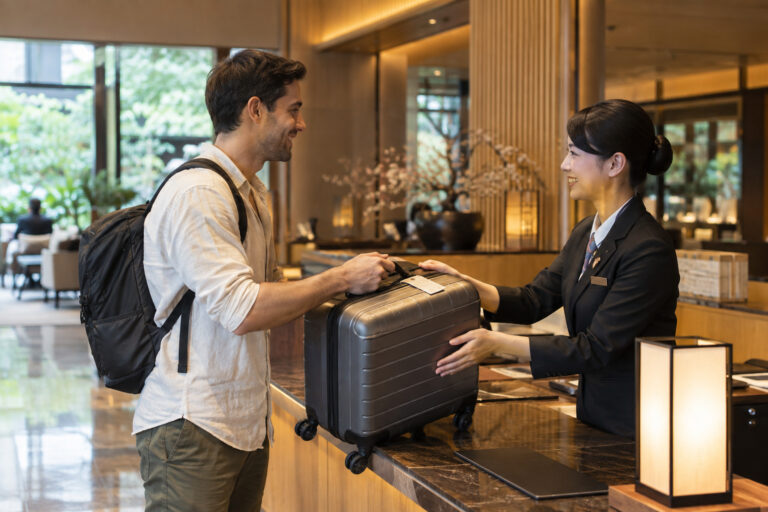
At the counter, show one compact request rather than explaining the entire holiday. Provide the departure station, destination, date, preferred departure range, passenger count, ordinary or Green Car, reserved or non-reserved preference and any large-baggage requirement. Add the next connection only when it affects the ticket.
A useful request is: “Tokyo to Kyoto, tomorrow, around 9:00 a.m., two adults, ordinary reserved seats together, with one oversized suitcase.” Staff can then search the relevant options. If the first train is full, decide in advance whether an earlier train, later train, different stopping pattern or separate seats is acceptable.
Keep passports and any rail passes available when relevant, but do not hand over unrelated documents. Review the tickets while still at the window. A polite two-minute check prevents a wrong station or date from becoming a gate problem.
- Route and date.
- Preferred time range and number of passengers.
- Seat class, reservation preference and seating together.
- Oversized baggage, accessibility or pass requirements.
Use SmartEX for the main southern corridor
SmartEX is the official online reservation service for the Tokaido, Sanyo and Kyushu Shinkansen corridor linking cities including Tokyo, Nagoya, Kyoto, Shin-Osaka, Hiroshima, Hakata and Kagoshima-Chuo. Membership registration and an accepted credit card are required. Card authentication can fail, so register and test the account before the day of travel rather than at the station gate.
The service offers three boarding methods depending on the reservation and setup: scan a QR ticket at a compatible Shinkansen gate, designate a supported transportation IC card for each passenger, or collect paper tickets before boarding. The Shinkansen fare is charged to the registered credit card; linking an IC card does not deduct the Shinkansen fare from the card’s stored-value balance.
Each reserved seat needs its own QR ticket or designated IC card. When traveling with companions, distribute the correct QR ticket or assign each person’s IC card and update them after relevant reservation changes. If using QR for the Shinkansen while transferring from a conventional line paid by IC card, follow the official gate sequence and collect the Seat Information slip.
- Coverage: Tokaido, Sanyo and Kyushu Shinkansen services supported by SmartEX.
- Board with a compatible QR gate, designated IC card or collected paper ticket.
- The registered credit card pays the Shinkansen fare.
Use the reservation service that covers the region
For eastern Japan, JR East Train Reservation sells supported tickets and regional passes and provides instructions for collection or ticketless use where the product allows it. It covers a different network from SmartEX. Read the individual product’s pickup and boarding requirements before payment, especially when the journey continues onto another operator.
For western Japan, JR-WEST ONLINE TRAIN RESERVATION sells supported basic fares, limited-express tickets, reserved seats and passes. Reserved-seat sales normally open at 10:00 a.m. Japan time one month before the boarding date. Online services may accept some requests earlier under their own rules, but seat assignment and product conditions still depend on the service.
Never assume that one login, QR code or pickup number works at every JR company’s machine. Save the confirmation, note the official pickup locations, carry the payment card if required and collect paper tickets before entering the gate when the product says to do so.
- Eastern routes: check JR East Train Reservation.
- Western routes: check JR-WEST ONLINE TRAIN RESERVATION.
- Through journeys: confirm every segment, pickup point and boarding method.
Choose reserved, non-reserved or Green Car
An ordinary reserved seat gives a specific train, car and seat. It is the simplest choice for first-time visitors, groups who want to sit together, travelers with a fixed connection and busy periods. Ordinary non-reserved tickets allow use of eligible non-reserved cars and can offer flexibility, but finding adjacent seats is not guaranteed and some trains or periods have no usable non-reserved seating for your plan.
All Nozomi services on the Tokaido and Sanyo Shinkansen operate with reserved seating only during designated peak periods. A non-reserved ticket does not provide a seat on those Nozomi trains. Check the official peak-period page for the exact travel date rather than relying on a general holiday list.
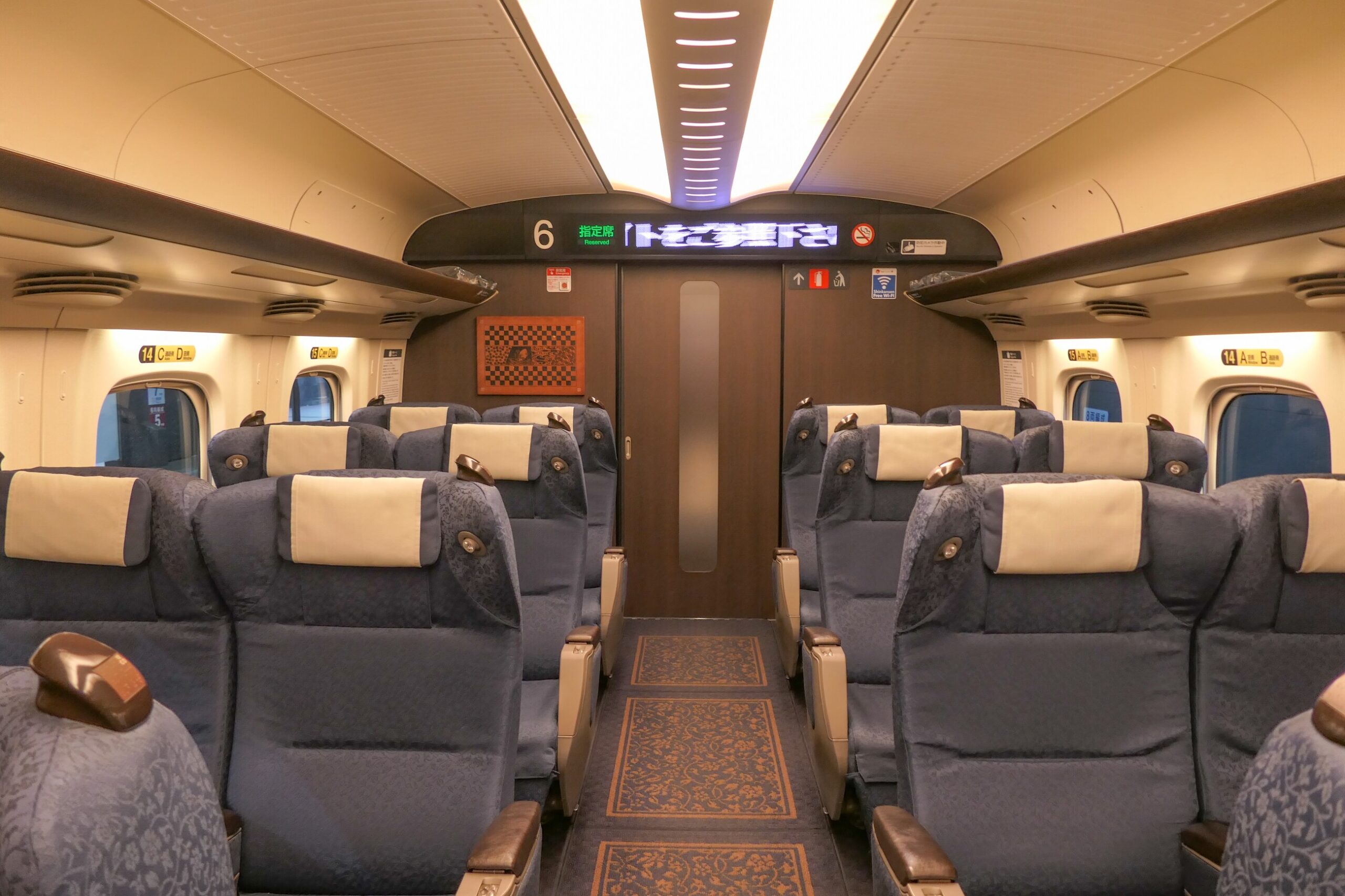
Green Car provides a wider, quieter premium seat, but it does not shorten the journey. Compare the total fare with the ordinary reserved option. On trains with different layouts, the seat arrangement and luggage access can vary, so choose the actual train and car rather than assuming every Shinkansen interior is identical.
- Ordinary reserved: fixed train and seat; best default for many visitors.
- Ordinary non-reserved: flexible within the ticket conditions, but no seat guarantee.
- Green Car: premium space and comfort at a higher price.
Reserve at the right time
Standard reserved-seat sales normally begin at 10:00 a.m. Japan time one month before travel. Popular trains can fill around weekends, major events and peak travel periods. Book earlier when the exact train, adjacent seats, a window side or baggage space matters; same-day purchase is often possible on less constrained journeys but is never guaranteed.
Do not buy early before the itinerary is real. Confirm the hotel cities, check-in times, airport connection and station access first. A ticket from Tokyo does not help if Shinagawa is substantially easier from the accommodation, and a very early departure can fail when local trains or checkout timing are ignored.
When a preferred train is full, compare adjacent departures and stopping patterns. Search by arrival time as well as departure time. A slightly later fast train can arrive before an earlier service that stops more often.
- Book early for fixed trains, groups and baggage seats.
- Confirm the actual departure station before paying.
- Compare arrival time, not only the next departure.
Reserve the correct space for large baggage
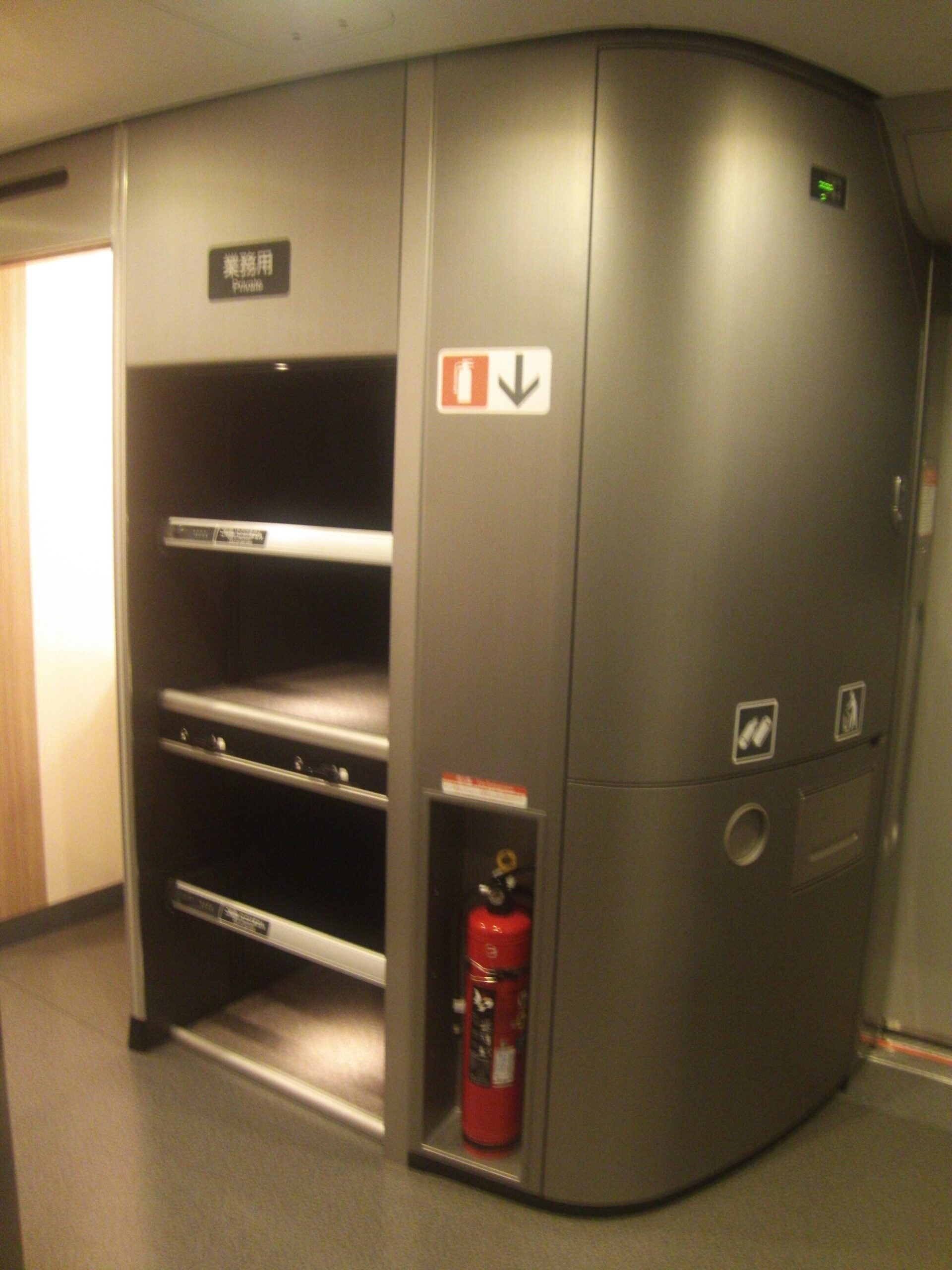
On the Tokaido, Sanyo and Kyushu Shinkansen, baggage whose three dimensions total more than 160 cm and no more than 250 cm requires a seat with an oversized baggage area or another designated option. The reservation itself has no extra charge, but space is limited and must be selected with the seat. Baggage over 250 cm in total dimensions cannot be brought aboard under these rules.
A passenger who brings oversized baggage without the required reservation may be charged ¥1,000 and directed by the crew to an appropriate location. Non-reserved cars and some reserved seats do not provide access to an oversized baggage area. Measure the suitcase before booking and do not assume the space behind any last-row seat is free for general use.
Baggage of 160 cm or less can normally use the overhead rack, foot space where safe, or designated onboard storage subject to size and safety. Strollers, sports equipment and musical instruments have specific treatment. For a simpler station transfer, consider luggage delivery instead of carrying the largest case onto the train.
- Up to 160 cm total dimensions: ordinary onboard storage rules apply.
- Over 160 cm and up to 250 cm: reserve an eligible baggage seat or space.
- Over 250 cm: not accepted under the Shinkansen baggage limit.
Know what to present at the gate
With paper tickets, insert all tickets required for that gate together and retrieve everything that comes out. At a transfer gate, the correct combination can include a conventional-line fare and Shinkansen ticket. Follow the gate illustration or ask staff when uncertain; forcing one ticket at a time can create an avoidable error.
With SmartEX QR boarding, use a gate carrying the QR mark, scan the correct passenger’s QR ticket and collect the Seat Information slip. When transferring from a conventional line paid by IC card, the official SmartEX guide instructs users to scan the QR ticket and then touch the IC card. Keep the QR available for exit.
With designated-IC-card boarding, touch the exact card assigned to that reservation. The card acts as the boarding identifier; the Shinkansen purchase was already charged through the reservation service. An ordinary charged Suica, PASMO or other IC card by itself is not a universal substitute for buying a Shinkansen ticket.
- Paper: insert the required ticket set and retrieve every returned ticket.
- QR: use a marked gate, scan the correct code and collect Seat Information.
- IC: touch the card specifically designated to the online reservation.
Handle a Japan Rail Pass separately
A Japan Rail Pass is not the same as an ordinary Shinkansen ticket. Pass holders can reserve eligible seats online or at supported reserved-seat machines and counters, following the pass’s issue and collection rules. Carry the physical pass when required and keep any seat reservation information with it.
The pass does not cover Nozomi or Mizuho in the ordinary way. A pass holder may use those trains only by purchasing the separate official Nozomi Mizuho Ticket for the relevant section and facility before boarding. The supplement works only together with a valid Japan Rail Pass; it is not a standalone ticket.
Do not buy a national pass merely because one Shinkansen journey is expensive. Compare the actual long-distance trips, eligible trains and regional pass alternatives against ordinary point-to-point fares. Convenience and route coverage matter more than a headline number of train rides.
- Reserve only trains and facilities covered by the pass.
- Nozomi and Mizuho require the separate pass-holder ticket before boarding.
- Compare the full itinerary with point-to-point fares before buying a pass.
Check changes, refunds and missed-train rules before payment
Change and refund conditions depend on the ticket type, sales channel, discount and whether paper tickets have been collected. Conventional reserved-seat tickets and online products do not always follow the same workflow or fee. Read the final conditions before paying and keep the reservation inside the account that made the purchase.
Make any allowed change before the scheduled departure. Do not assume that missing a reserved train guarantees a seat on the next one. Some conventional tickets may retain limited same-day validity, while discounted or all-reserved products can be more restrictive. Ask staff or follow the product’s official instructions instead of boarding on an assumption.
If the train is delayed or suspended, keep the ticket, QR information, Seat Information and receipts until the journey is resolved. Official disruption procedures depend on the service and the length or nature of the disruption.
- Read the exact product conditions before purchase.
- Change or cancel before departure when the product allows it.
- Keep all ticket evidence during a delay or suspension.
Board without a last-minute mistake
Arrive with enough time to locate the correct Shinkansen concourse, collect tickets if required and buy food before entering the platform. Tokyo, Kyoto and Shin-Osaka are large stations. The time shown in a route app does not include getting lost, waiting at a machine or walking from a subway platform.
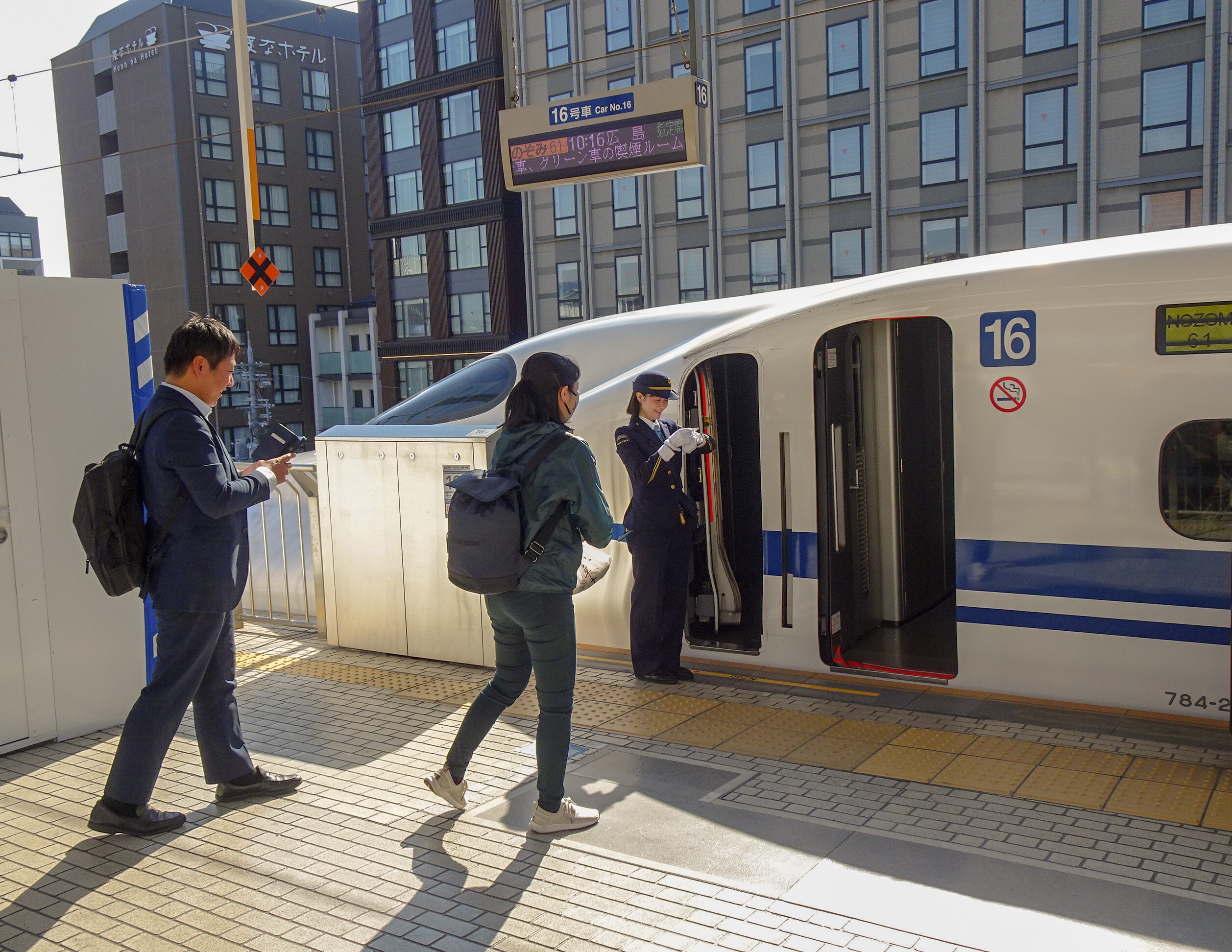
Match the departure board to the train name, number, time and destination, then find the car-number marker on the platform. Queue behind the correct door position. When the train arrives, let passengers leave first, board promptly and place baggage only in an allowed location. Keep the ticket or boarding code accessible until after the destination gate.
The most common failures are buying for the wrong station, using an online service outside its coverage, assuming a stored-value IC card alone is enough, forgetting ticket pickup, choosing a train not covered by a pass, and arriving with unreserved oversized baggage. A two-minute check of route, date, train, seat, baggage and gate method prevents most of them.
- Confirm station, date, train number, time, car and seat.
- Know whether you are using paper, QR or a designated IC card.
- Measure baggage and reserve the correct space before travel.
- Reach the platform before boarding begins.
FAQ
Can I buy Shinkansen tickets on the day?
Yes, if the required train or facility still has availability. Use a reserved-seat machine or JR ticket office. Reserve earlier when traveling in a group, during a busy period or with oversized baggage.
Is SmartEX the official booking service?
Yes. SmartEX is the official online reservation service for supported Tokaido, Sanyo and Kyushu Shinkansen journeys. It does not replace the official services used for every other Shinkansen line.
Can I ride the Shinkansen with Suica or PASMO?
Not with stored value alone in the general case. A supported IC card can be designated to an eligible online reservation, after which it acts as the boarding identifier. The Shinkansen fare is paid through the reservation service.
Should a first-time visitor reserve a seat?
Usually yes. A reserved seat removes uncertainty about where to sit and helps groups stay together. It is especially useful for fixed connections, busy trains and journeys that require a designated baggage area.
When do reserved Shinkansen seats go on sale?
Standard reserved-seat sales normally open at 10:00 a.m. Japan time one month before the boarding date. Individual online services may offer advance-request products with separate conditions.
Do I need a reservation for a large suitcase?
On the Tokaido, Sanyo and Kyushu Shinkansen, baggage over 160 cm and up to 250 cm in total three-side dimensions requires an eligible seat or designated oversized-baggage arrangement. Measure before booking.
Can a Japan Rail Pass holder take Nozomi?
Only after purchasing the separate official Nozomi Mizuho Ticket for the relevant section and using it together with a valid Japan Rail Pass. The pass by itself does not cover Nozomi or Mizuho.
Compare Tokaido Shinkansen tickets
Check the route, travel date, seat choice and current booking conditions before buying.
Check Tokaido ShinkansenRelated Japan Travel Guides
Official References
- JR Central: how to buy tickets
- JR Central: types of tickets
- JR Central: ticket combinations
- JR Central: how to read tickets
- SmartEX official site
- SmartEX beginner guide
- SmartEX boarding guide
- SmartEX QR boarding
- JR East Train Reservation
- JR-WEST ONLINE TRAIN RESERVATION
- JR Central: oversized baggage
- JR Central: reserved-only Nozomi peak periods
- Japan Rail Pass: Nozomi and Mizuho ticket
Final Thoughts
Choose the route first, then the sales channel. A reserved-seat machine is efficient for a straightforward station purchase, a JR counter is best for complex journeys, and official online services are valuable when their coverage and boarding method match the trip. Before payment, confirm the station names, date, train, seat, baggage requirement and whether you will use paper tickets, QR or a designated IC card. That short check prevents most Shinkansen ticket mistakes.