
Best eSIM for Japan: Data Plans, Setup & Travel Tips
Choose an eSIM for Japan with confidence. Compare practical data needs, check phone compatibility, install before departure, avoid roaming mistakes, and get connected when you land.
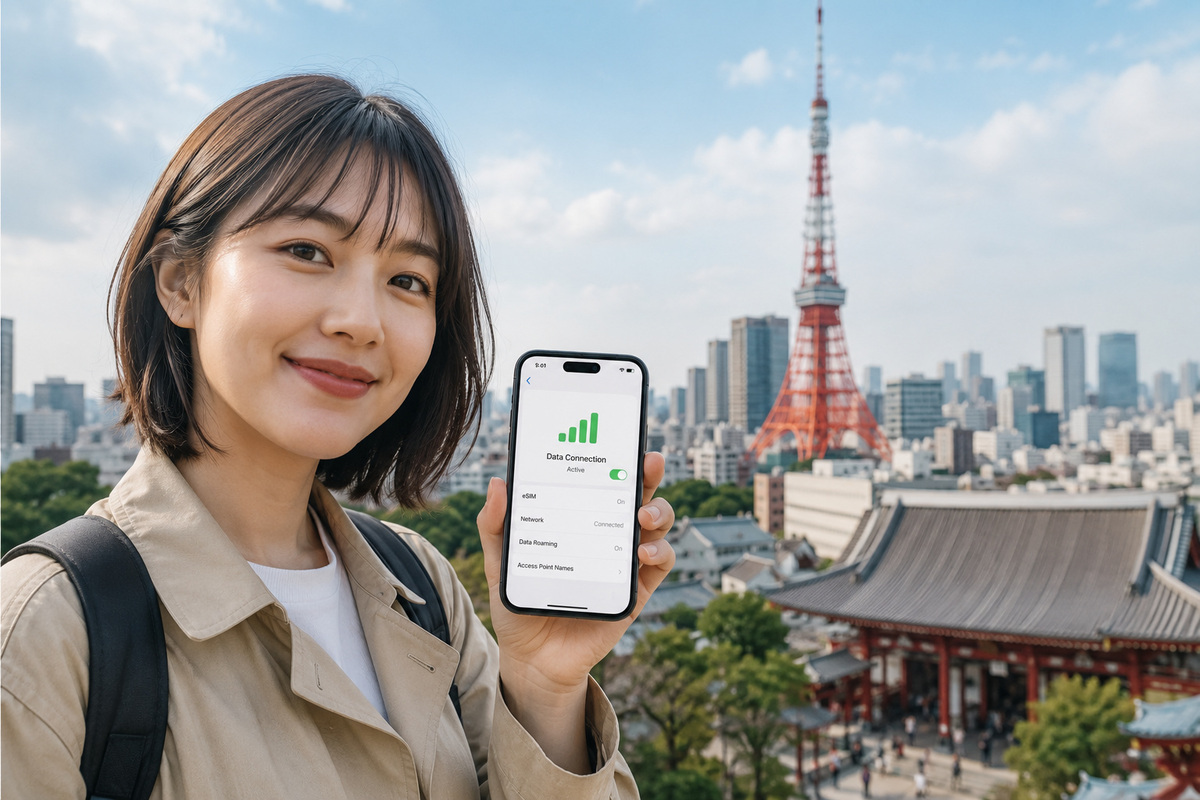
For most visitors, the best eSIM for Japan is the one that matches your phone, trip length and real data use—not simply the cheapest headline price. Your phone must support eSIM and be carrier-unlocked. JapaDeco’s current approved recommendation is Saily: as checked on August 21, its Japan page lists plans from 1 GB for 7 days at US$3.99 through 30-day fixed-data options and an unlimited plan. Saily says you can install before travel, enable data roaming on the Saily line, and have the plan activate when you reach Japan. Prices, plan sizes and network conditions can change, so confirm the live plan page before checkout.
What You’ll Learn
- How to choose an eSIM based on trip length, data use and device compatibility
- What Saily currently offers for Japan and where its limits matter
- How much mobile data different types of travelers may need
- How to install before departure and avoid accidental home-carrier roaming
- When pocket Wi-Fi or a physical SIM may be a better choice
Choose the eSIM Around Your Trip, Not the Brand Name
Japan is easy to navigate when you have dependable mobile data. Maps, train apps, translation, hotel messages, digital tickets and ride information all become more useful when your phone can connect away from hotel Wi-Fi.
There is no universal best eSIM for every traveler. A five-day city break has different needs from a three-week rail trip, and one person using maps and messaging will consume far less data than a traveler uploading video or tethering a laptop.
Start with four checks: your phone supports eSIM, the phone is carrier-unlocked, the plan lasts for your whole trip, and the data allowance fits the way you actually travel. Then compare hotspot support, activation rules, customer support and the cost of topping up.
- Short city trip: prioritize simple setup and enough data for maps, messaging and bookings.
- Longer multi-city trip: prioritize validity, easy top-ups and reliable access outside one neighborhood.
- Heavy user or remote worker: check hotspot support and whether an unlimited or larger fixed-data plan makes sense.
- Family or group: compare the cost of several eSIMs with one pocket Wi-Fi device.
Saily Japan Plans: Current Snapshot
Saily is the approved eSIM offer currently available to JapaDeco for this article. On its official Japan page checked August 21, Saily lists a 1 GB plan valid for 7 days at US$3.99, 3 GB for 30 days at US$7.99, 5 GB for 30 days at US$10.99, 10 GB for 30 days at US$17.99, and an unlimited option at US$48.99. Saily also states that Japan plans can include larger fixed-data options, so the live plan selector should be treated as the final source at checkout.
The practical advantage is flexibility: a light user can buy a small plan, while a traveler who streams, uploads or uses hotspot sharing can choose more data. Saily’s help center also documents hotspot setup on both iOS and Android.
Do not buy solely from a cached price in a blog. eSIM prices, plan sizes, validity and promotional offers change frequently. Use the provider’s live Japan page immediately before purchase.
- 1 GB / 7 days: useful only for light use and disciplined Wi-Fi use.
- 3–5 GB / 30 days: a practical range for many light-to-moderate travelers.
- 10 GB / 30 days: better for frequent maps, social media, browsing and some media use.
- Unlimited: consider it when you value convenience more than minimizing cost; always review any current fair-use terms.
Check eSIM Compatibility and Carrier Lock Before You Pay
An eSIM purchase is useful only if your exact device can install it. Apple describes eSIM as a digital SIM that can activate a mobile plan without a physical nano-SIM, and notes that an unlocked iPhone can use eSIMs from other providers. Google likewise documents eSIM setup on supported Pixel devices.
Model support varies by country, carrier and device generation, especially on Android. Do not rely on the marketing name alone. Check the exact model number in your phone settings and compare it with the provider’s compatible-device list.
Carrier lock is the second common failure point. A phone bought through a home carrier may support eSIM technically but still be locked to that carrier. Resolve the lock before departure, because this can be much harder once you are abroad.
- Confirm eSIM support for the exact device model and sales region.
- Confirm the device is carrier-unlocked.
- Update the operating system before travel if the manufacturer recommends it.
- Keep access to stable Wi-Fi during installation.
How Much Data Do You Need in Japan?
Data use varies more by behavior than by trip length. Navigation, messaging and occasional web searches are relatively light; cloud photo backup, short-form video, video calls and hotspot use can consume data quickly.
As a practical editorial estimate, a light traveler who uses hotel Wi-Fi aggressively may manage with roughly 1–3 GB for a week. A moderate traveler using maps throughout the day, social media, browser searches and app-based tickets may prefer around 5–10 GB for one to two weeks. Heavy streaming, remote work or frequent hotspot use can justify a much larger or unlimited plan.
If you are unsure, choose a provider that makes topping up simple. Buying slightly less and adding data can be cheaper than paying for a large plan you never use—unless the convenience of unlimited data is worth the premium to you.
- Light: maps, messaging, occasional searches, most media on Wi-Fi.
- Moderate: daily maps, social media, booking apps, photo sharing and regular browsing.
- Heavy: video, cloud backup, video calls, laptop tethering or multiple hours online each day.
- Reduce usage by downloading offline maps, playlists and large app updates before departure.
Install Before Departure, Then Activate Carefully in Japan
The safest time to install a travel eSIM is before you leave home, while you still have reliable Wi-Fi and can contact support without pressure. Saily’s current setup guidance requires an internet connection for the initial installation and says the device must be eSIM-compatible and unlocked.
Saily instructs travelers to install the eSIM before departure, enable data roaming for the Saily eSIM, and confirm the profile is downloaded and available. On arrival, the provider says the Japan plan can activate automatically when the phone reaches the destination network.
The exact menu names differ between iPhone and Android brands, so follow the provider’s current instructions for your device instead of copying old screenshots from another phone model.
- Install the eSIM while connected to reliable Wi-Fi.
- Label the travel line clearly so you can distinguish it from your home SIM.
- Set the travel eSIM as the mobile-data line when you arrive.
- Enable data roaming for the travel eSIM if the provider requires it.

Keep Your Home SIM Without Triggering Surprise Roaming
Many travelers keep their home SIM active because they still need their normal number for messages, account verification or incoming calls. The risk is accidental data roaming on the home line.
Saily’s activation guidance recommends disabling roaming on the main SIM and preventing automatic mobile-data switching so the phone does not silently fall back to the home carrier. On devices or plans where you do not need the home line at all, turning that line off is the simplest approach.
Before the flight, check your home carrier’s roaming rules separately. Receiving SMS may be free on some plans and chargeable or unavailable on others; voice calls can also trigger charges. A travel eSIM does not override your home carrier’s billing policy.
- Turn off data roaming on the home SIM.
- Disable automatic cellular-data switching unless you intentionally want fallback roaming.
- Use the travel eSIM as the mobile-data line.
- Check your home carrier’s rules for calls and SMS before departure.
eSIM vs Pocket Wi-Fi vs Physical SIM in Japan
An eSIM is usually the cleanest option for one traveler with a compatible unlocked phone because there is no device to collect, charge or return. You can also keep your physical home SIM in place on many dual-SIM phones.
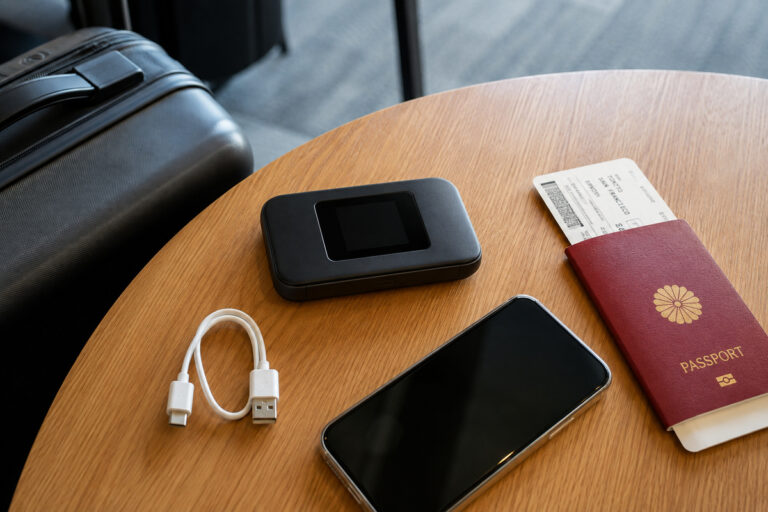
Pocket Wi-Fi can be better for a family or group that wants to share one connection across several devices. The trade-off is carrying another device, keeping it charged and following pickup or return procedures.
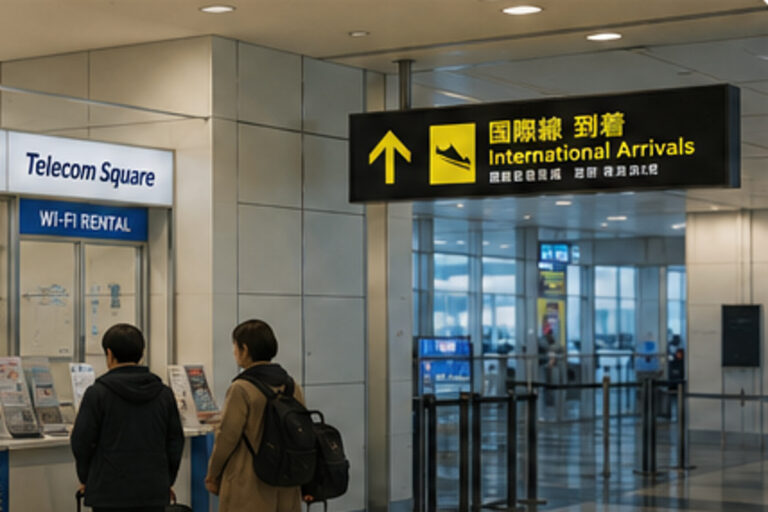
A physical travel SIM can still make sense if your phone does not support eSIM or if you prefer a conventional SIM. Japan National Tourism Organization notes that short-term visitors commonly use eSIMs, SIM cards and pocket Wi-Fi, and that connectivity products are available at major airports as well as through advance reservations.
- Choose eSIM for speed, convenience and no physical pickup.
- Choose pocket Wi-Fi when several devices need to share one connection.
- Choose a physical SIM when your phone lacks eSIM support or your preferred plan requires one.
- Compare the full trip cost, including extra devices, return logistics and hotspot needs.
What Connectivity Is Like Once You Start Traveling
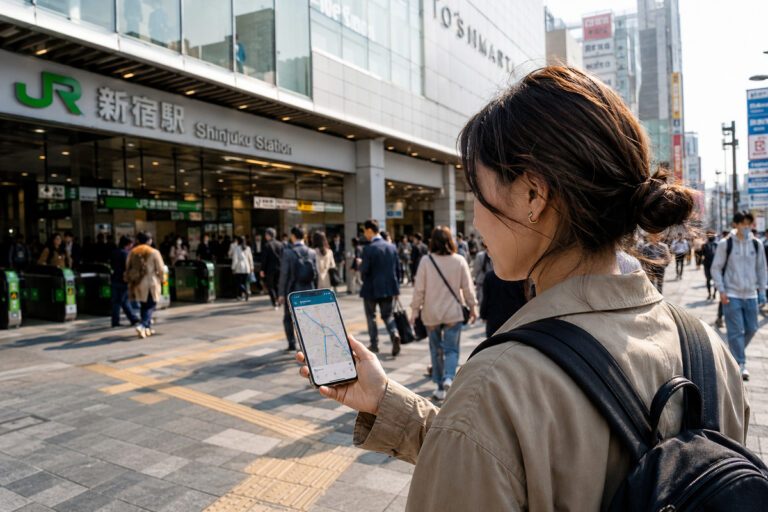
Japan’s major cities have abundant connectivity, and JNTO notes that free Wi-Fi is available at major international airports and many hotels, cafes and public locations. Free Wi-Fi is useful as a backup, but it is not a substitute for mobile data when you are moving between stations, changing trains or traveling in rural areas.
Network performance varies by location, congestion, building structure and the local carrier used by your eSIM provider. Saily states that Japan plans may connect through available local networks and that service quality depends on the local network provider.
If your itinerary includes mountain areas, remote islands or long rural rail journeys, keep essential tickets, hotel details and maps available offline. No travel eSIM can guarantee perfect signal in every tunnel, valley or building.
- Use airport or hotel Wi-Fi as backup during setup or troubleshooting.
- Download critical maps and reservations offline before remote travel.
- Expect temporary signal drops in tunnels and some rural areas.
- Do not judge an eSIM only by one speed test in central Tokyo.

Common eSIM Problems and the Fastest Checks
Most travel eSIM problems come from configuration rather than a permanently failed plan. If your phone shows the eSIM but has no data, check that the travel line is turned on, selected for mobile data and allowed to use data roaming when the provider requires it.
If that does not work, toggle airplane mode, restart the phone and check the provider app for plan status. On Android, APN settings can sometimes matter; Saily’s help center specifically tells Android users to verify the APN during troubleshooting.
Avoid deleting the eSIM as your first troubleshooting step. Some providers have restrictions around reinstalling a profile, and deleting it can turn a simple settings issue into a support case.
- Confirm the travel eSIM is enabled and selected for mobile data.
- Confirm data roaming is enabled on the travel line if required.
- Toggle airplane mode or restart the phone.
- Check provider-app status and Android APN settings before deleting the eSIM.
Who Saily Fits Best—and When to Choose Something Else
Saily is a strong fit for travelers who want to arrange mobile data before departure, use an app-based setup, choose among several Japan data sizes and have hotspot capability available. Its current Japan plan range gives both light and heavy users a straightforward starting point.
It is less suitable when your phone is locked or lacks eSIM support, when a group would be cheaper with one shared pocket Wi-Fi device, or when you require a specific voice/SMS setup that you have not verified in advance. Saily’s product features have expanded over time, including phone-number functionality in some contexts, so verify the exact Japan offer if regular carrier calls or SMS are essential to your trip.
The best purchase decision is the one that removes uncertainty before you land: confirm compatibility, choose enough data, install while you have good Wi-Fi, and know exactly which line will carry mobile data in Japan.
- Good fit: solo or couple travel, compatible unlocked phones, maps/apps throughout the day.
- Good fit: travelers who want setup completed before boarding the flight.
- Consider pocket Wi-Fi: several devices or family groups sharing one connection.
- Consider another solution: locked phone, no eSIM support, or a specialized voice/SMS requirement.

FAQ
Will my Japan eSIM work as soon as I land?
It can if you install and configure it correctly before travel. Saily currently says its Japan plan can activate automatically after arrival, provided the eSIM is installed, enabled and allowed to use data roaming as instructed. Keep airport Wi-Fi available as a backup while you confirm the connection.
Does my phone need to be unlocked for a travel eSIM?
Yes. The device must support eSIM and must not be locked to another carrier. Apple explicitly notes that an unlocked iPhone can use eSIMs from other providers; Android compatibility varies by model, region and carrier.
How much eSIM data should I buy for Japan?
Light users may manage with about 1–3 GB for a week if they use Wi-Fi heavily. Many moderate travelers will be more comfortable with roughly 5–10 GB for one to two weeks. Streaming, cloud backup, video calls and hotspot use can justify a larger or unlimited plan. These are practical estimates, not provider guarantees.
Can I use hotspot or tethering with Saily in Japan?
Saily’s current help documentation explains hotspot setup for both iOS and Android, and its Japan plan page advertises hotspot sharing. Check the live plan terms before purchase in case plan-specific limits change.
Should I turn off my normal SIM in Japan?
You do not always need to disable it completely. If you want to keep your home number active, turn off data roaming on the home line and disable automatic mobile-data switching. If you do not need the home line, turning it off removes the risk of accidental data use. Check your home carrier’s call and SMS charges separately.
What should I do if the eSIM is installed but has no internet?
First verify that the travel eSIM is enabled, selected for mobile data and has data roaming enabled if required. Then toggle airplane mode or restart the phone, check the provider app, and on Android verify APN settings. Avoid deleting the eSIM before checking the provider’s reinstall rules.
Compare another Japan eSIM option
Compare data allowance, duration, device compatibility, setup instructions and current terms with the other eSIM option on this page before choosing.
Check Japan Wireless eSIM plansCompare a Japan connectivity option
Check current plan details, pickup or delivery terms, coverage and device needs before choosing connectivity.
Check Japan WirelessRelated Japan Travel Guides


Official References
Final Thoughts
For most Japan trips, the real advantage of an eSIM is not a dramatic speed difference—it is removing one job from arrival day. Confirm that your phone is compatible and unlocked, buy a plan that fits your data habits, install it before departure, and make the travel line your mobile-data line when you land. Saily is the current JapaDeco recommendation for this article because its Japan offering covers light through heavy data needs and supports pre-trip setup and hotspot use, but the live plan page should always be checked before purchase because prices and product details can change.