
Reserved vs Non-Reserved Seats in Japan: Which Should You Choose?
Choose the right train seat in Japan with a practical guide to reserved and non-reserved seats, peak-period rules, Shinkansen luggage, rail passes and booking strategy.
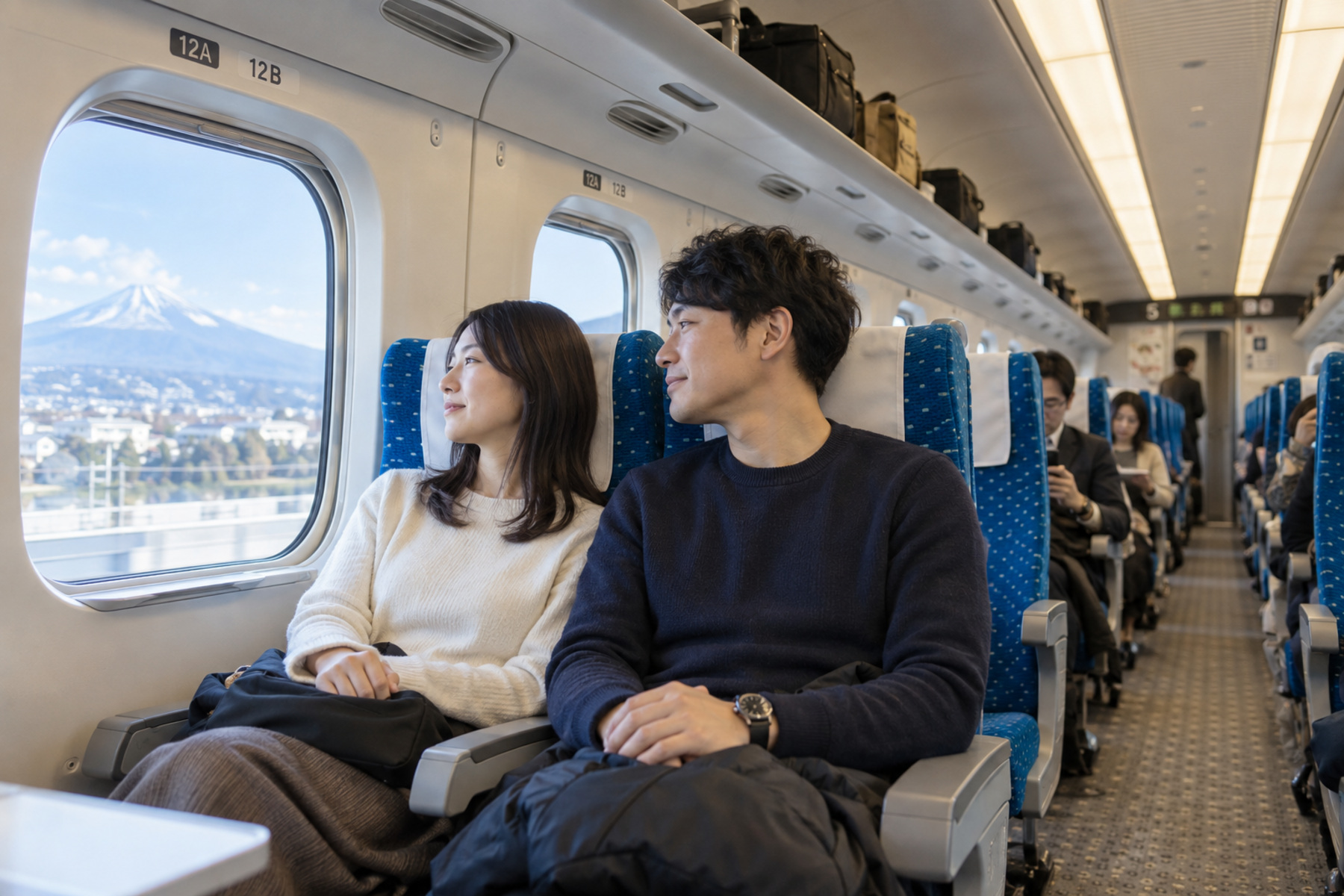
Choose a reserved seat when you want certainty: you get a specific train, car and seat, which is usually the easiest option for long Shinkansen rides, families, groups, luggage and fixed itineraries. Choose non-reserved only when your train actually offers it, your timing is flexible and you accept that a seat is not guaranteed. During designated peak periods, some services change to all-reserved operation, so always check the exact train before travel.
What You’ll Learn
- How reserved and non-reserved seating actually differ on Japanese trains
- When peak periods and all-reserved operation change your options
- How luggage, families and rail passes affect the best seat choice
- Where to reserve seats and what to check before boarding
Start with the decision that matters most
The simplest way to choose is to decide whether certainty or flexibility matters more. A reserved seat removes the biggest uncertainty from a long train day: you know the train, car and seat before boarding. That is especially useful when your hotel check-in, tour, airport connection or another train depends on arriving on time.
Non-reserved seating can be convenient when you are traveling light and can adjust your departure time. The trade-off is that you are buying access to an eligible non-reserved car, not a guaranteed place to sit. If it is crowded, you may need to stand, split from your group or wait for another departure.
- Choose reserved for fixed plans, long rides, luggage, families or groups
- Choose non-reserved only when the service offers it and your schedule is flexible
- Check the exact train rather than assuming every Shinkansen has the same seat setup
- If you are unsure, ordinary reserved seating is the safer first choice
What a reserved seat gives you
A reserved-seat ticket assigns you to a specific service and seat. On the ticket or booking confirmation, look for the train name or number, departure time, car number and seat number. That lets you line up near the correct car before the train arrives and board without searching for space.
Reserved seating is not the same as Green Car. Ordinary reserved seats are the standard choice for most travelers. Green Car is a separate premium class with its own fare and seating conditions.
- A confirmed seat on the specified train
- A specific car and seat number
- A better chance of keeping a family or group together
- Easier planning when you have connections or limited time
What non-reserved really means
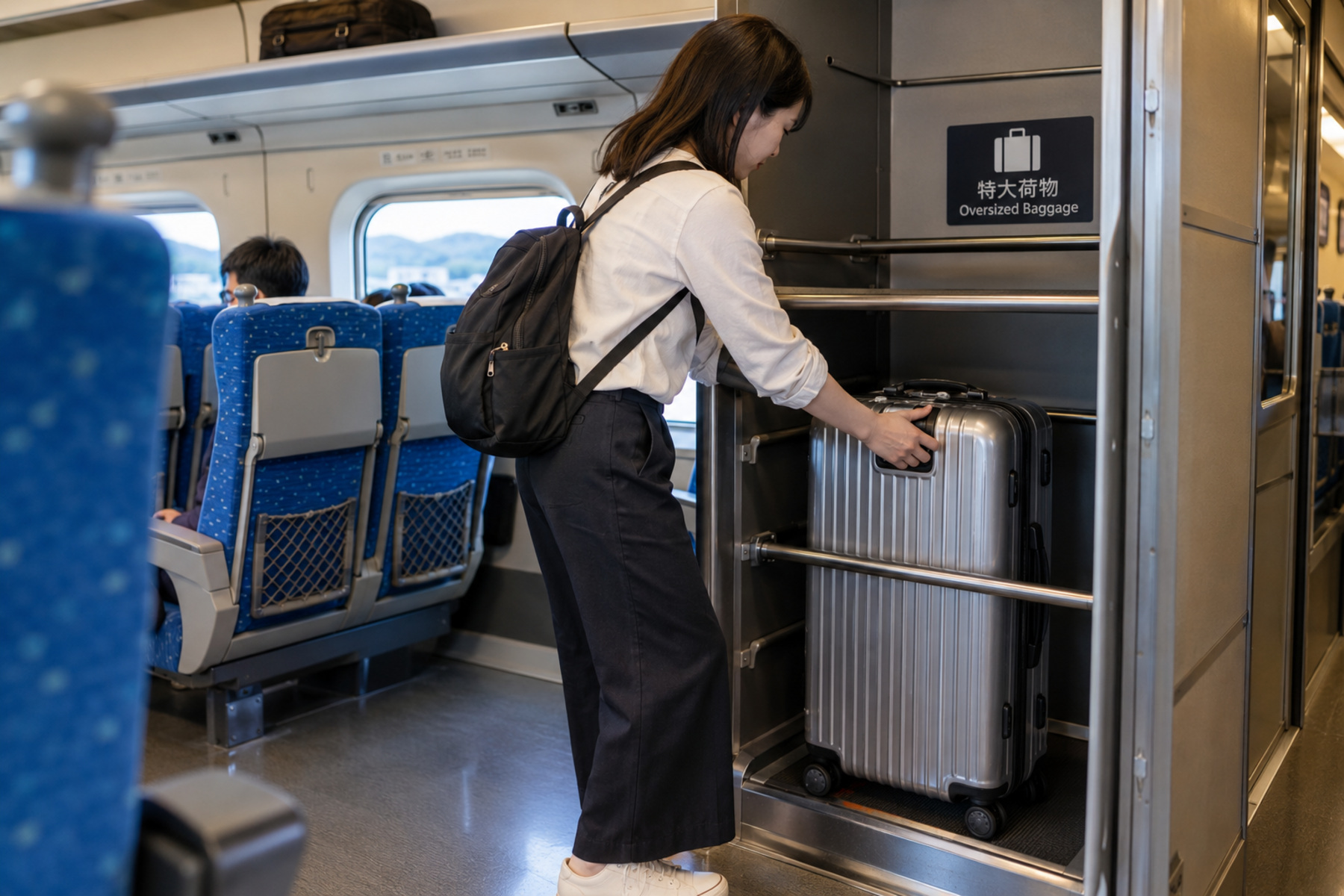
A non-reserved ticket does not let you take any empty seat on the train. You must use a car designated for non-reserved passengers and may sit only in an available seat in that area. Availability is first come, first served.
On services and routes where non-reserved tickets are offered, they can be useful when you are not sure which departure you will catch. But rules vary by operator, train and fare product, so treat the flexibility as conditional rather than universal.
- No assigned seat
- Only designated non-reserved cars may be used
- A seat is not guaranteed
- The best chance of sitting is usually when you board early at an originating station
Check whether your train offers non-reserved seating
Do not make the seat decision from the route name alone. Some trains have both reserved and non-reserved cars, while others are all reserved. The mix can also change during periods of heavy demand.
For the Tokaido and Sanyo Shinkansen, JR Central operates Nozomi with all seats reserved during designated peak periods. During those periods, a non-reserved ticket does not give you a seat on Nozomi. Other Shinkansen services may continue to offer non-reserved cars, but they can also be crowded.
- Confirm the train name before buying the fare
- Check the operator's current seat rules for your travel date
- Do not assume a rule you used on one Shinkansen service applies to another
- During peak periods, reserve early if sitting matters
Peak periods can change the normal rules
Major holiday periods create a different risk profile from an ordinary weekday. Reserved seats can sell out, non-reserved cars can develop long queues, and operators may temporarily change seat availability to manage demand.
JR Central publishes the current Nozomi peak-period schedule on its official page. Because the dates can change from one operating year to the next, the most reliable strategy is to check that page when your trip falls around Golden Week, Obon, year-end holidays or another major long weekend.
- Treat major holiday periods as reserve-in-advance travel days
- Check the official peak-period calendar instead of relying on an old blog post
- If your preferred train is full, compare nearby departures before falling back to a non-reserved plan
- Groups should avoid relying on several adjacent non-reserved seats during busy periods
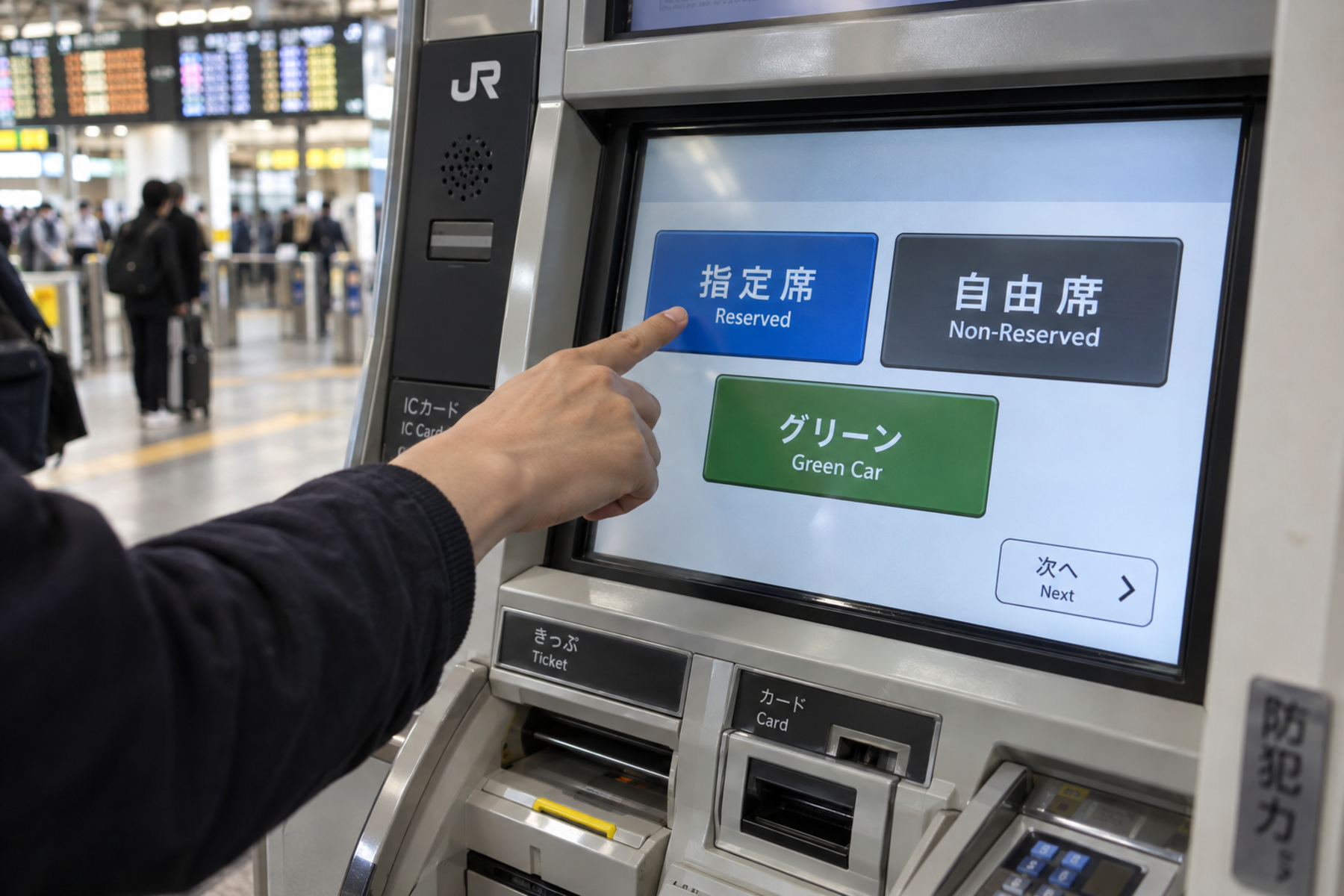
Reserve at the station or use the correct online service
You can reserve many JR seats at reserved-seat ticket machines and JR ticket offices. On the Tokaido, Sanyo and Kyushu Shinkansen, SmartEX is an official online reservation channel for eligible products and lets you choose reserved or non-reserved options where available.
Online booking is useful when you already know the route and date. Station staff are useful when your trip involves several operators, a rail pass, unusual ticket conditions, accessibility needs or a connection that you want checked before purchase.
- Confirm departure and arrival stations before searching
- Check the train name, departure time, car and seat before paying
- Use a seat map when available if window or aisle position matters
- Keep enough transfer time when a reserved train is tied to another connection
Large luggage can decide the seat for you
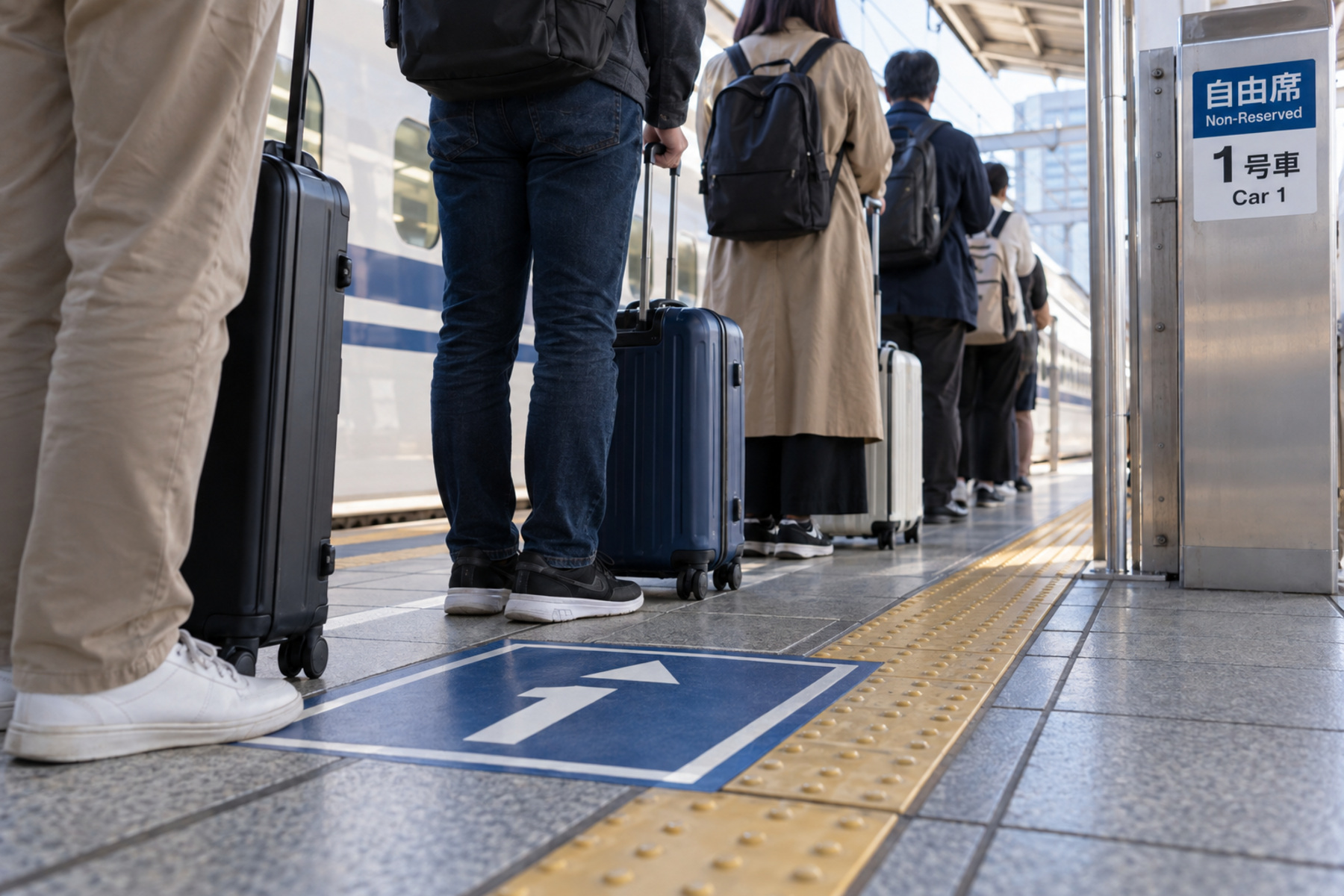
On the Tokaido, Sanyo and Kyushu Shinkansen, baggage with total outside dimensions of at least 160 cm and no more than 250 cm is treated as oversized baggage under the reservation system. If you bring baggage in that range, you need the appropriate reserved seat connected to an oversized-baggage area under the applicable rules.
SmartEX states that there are no seats with an oversized-baggage area in non-reserved seating. That means a traveler with qualifying oversized baggage should plan the seat reservation first rather than arriving with a large suitcase and hoping to find space.
- Measure large suitcases before the travel day
- Use a reserved seat with the required oversized-baggage area when the rule applies
- Do not count on non-reserved seating for qualifying oversized baggage
- Consider luggage delivery if multiple large bags would make station transfers difficult
Families and groups should value sitting together
The risk with non-reserved travel is not only standing. A family or group may find seats, but not together. That can make boarding and settling in much harder when children, older relatives or several suitcases are involved.
If sitting together matters, reserve together in one booking where possible and check the seat map before confirming. If adjacent seats are unavailable, compare another train time rather than assuming the non-reserved car will solve the problem.
- Reserve together when seat adjacency matters
- Board near the correct car position instead of walking through several cars with luggage
- Allow extra platform time with children or older travelers
- Consider ordinary reserved seats before paying extra for Green Car
Rail passes have their own seat rules
With a JAPAN RAIL PASS, reserved seats can be booked on eligible trains without an additional seat-reservation charge, subject to pass conditions and availability. After receiving the pass, reservations can be made at supported reserved-seat machines or JR ticket offices; official online booking is available for passes purchased through the official channel under its stated conditions.
Nozomi and Mizuho are not included in the standard JAPAN RAIL PASS coverage by themselves. Pass holders who want to use those services need the special Nozomi/Mizuho ticket offered for pass holders. Always check the current official pass rules before building an itinerary around a specific train.
- Do not assume the pass covers every train category
- Reserve eligible seats when a specific departure matters
- Check whether a special ticket is required for Nozomi or Mizuho
- Carry the pass and required travel documents as instructed
If your plans change, check the ticket conditions before boarding another train
A reserved seat is tied to a specific departure, so missing that train is different from changing a flexible non-reserved plan. The next step depends on the ticket product, operator and purchase channel. Some tickets can be changed before departure, while discount products may have tighter conditions.
If you miss the reserved service or are unsure what your ticket allows, use the official app or booking site for that product, or ask station staff before boarding another train. That is safer than assuming your old seat reservation automatically transfers.
- Change reservations before departure when your fare allows it
- Do not occupy another reserved seat without a valid reservation
- Ask staff when disruption or a missed connection changes your plan
- Keep screenshots or booking details available until the trip is complete
Use this simple seat-choice checklist
For most overseas visitors, the decision is straightforward. Reserved seats are worth prioritizing whenever the consequences of not sitting are more annoying than the small loss of flexibility. Non-reserved seats make sense when flexibility is the main goal and the service, date and luggage situation all support that choice.
Before you pay, check four things together: the exact train, whether non-reserved seating exists, your luggage requirements and how costly it would be to miss your planned departure. That removes most seat-related surprises.
- First Shinkansen ride: reserved
- Fixed itinerary or important connection: reserved
- Family, group or large luggage: reserved
- Flexible solo trip on a quieter eligible service: non-reserved can work
- Peak holiday period: reserve early
- Unsure: choose ordinary reserved seating
FAQ
Are reserved seats better for first-time visitors?
Usually, yes. A reserved seat gives you a specific train, car and seat, which reduces uncertainty at a busy station and is especially useful for long Shinkansen rides, luggage, families and fixed schedules.
Can I sit anywhere with a non-reserved ticket?
No. You may use only seats in cars designated for non-reserved passengers on a service that offers them. If those seats are full, you may have to stand or wait for another train.
Do all Shinkansen trains have non-reserved seats?
No. Seat configurations differ by train and can change during high-demand periods. For example, Nozomi on the Tokaido and Sanyo Shinkansen operates with all seats reserved during designated peak periods.
Should I reserve a seat with a large suitcase?
Yes when your baggage qualifies as oversized under the Tokaido, Sanyo or Kyushu Shinkansen rules. Baggage with total outside dimensions from 160 cm to 250 cm requires the applicable reserved seat connected to an oversized-baggage area.
Can I reserve seats with a JAPAN RAIL PASS?
Yes on eligible services, subject to pass conditions and seat availability. The official pass site explains online and station reservation methods. Nozomi and Mizuho require a separate special ticket for pass holders.
Which is better for Tokyo to Kyoto: reserved or non-reserved?
For most first-time visitors, ordinary reserved seating is the easier choice because it guarantees a seat and simplifies boarding. Non-reserved can work outside peak periods when the chosen train offers it and your schedule is flexible.
Chosen reserved or non-reserved?
Once you know which seat type fits your trip, compare current Shinkansen ticket options for your route and travel date.
Check Shinkansen ticketsRelated Japan Travel Guides
Official References
Final Thoughts
Reserved and non-reserved seats are not a simple good-versus-bad choice. Reserved seating buys certainty; non-reserved seating buys flexibility when the train and date allow it. For most first-time visitors, the safest default is an ordinary reserved seat on important long-distance rides, then use non-reserved seating selectively when you understand the service and can absorb the risk of not sitting. Always recheck peak-period rules and baggage requirements before travel because those details can change the best choice.