
Tokyo to Kyoto Shinkansen: Tickets, Cost & Travel Tips
Choose your Tokyo departure station, compare Shinkansen fares and seats, book the right luggage space, and arrive in Kyoto ready for your next connection.
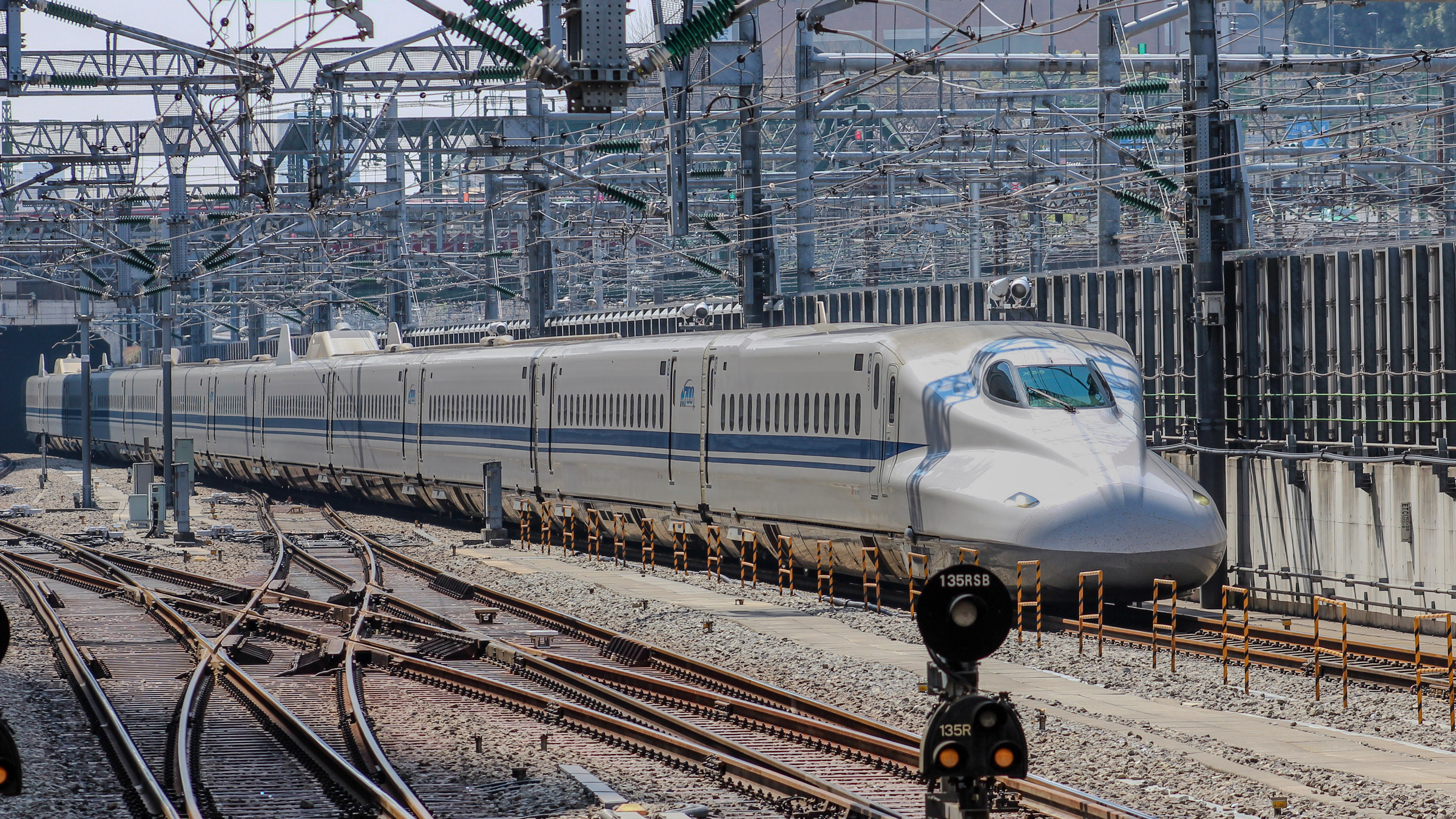
Take a direct Tokaido Shinkansen from Tokyo or Shinagawa to Kyoto Station. Nozomi is the fastest option, with the quickest Tokyo departures taking about 2 hours 15 minutes. SmartEX lists a regular-season adult Nozomi ordinary reserved seat at ¥13,970 one way; check the fare for your date before paying. Reserve early if you need seats together or oversized-baggage space. On designated busy dates, all Nozomi seats are reserved.
What You’ll Learn
- Choose between Tokyo and Shinagawa for an easier departure.
- Compare Nozomi, Hikari and Kodama, including fare benchmarks.
- Match your booking to a QR ticket, linked IC card or paper ticket.
- Reserve appropriate seats and luggage space before departure.
- Choose the correct exit or onward train at Kyoto Station.
Choose Tokyo or Shinagawa before booking
Start with the journey from your hotel, including changes, stairs and luggage. Tokyo Station and Shinagawa are separate boarding stations on the same Tokaido Shinkansen route. Book the one you intend to use, then follow that station and departure time on your reservation.
Tokyo Station suits a straightforward approach from the Tokyo Station, Marunouchi or nearby eastern-city areas. Shinagawa can be convenient when approaching from southern Tokyo or Haneda. Compare the actual hotel-to-platform route rather than choosing by a neighborhood name alone.
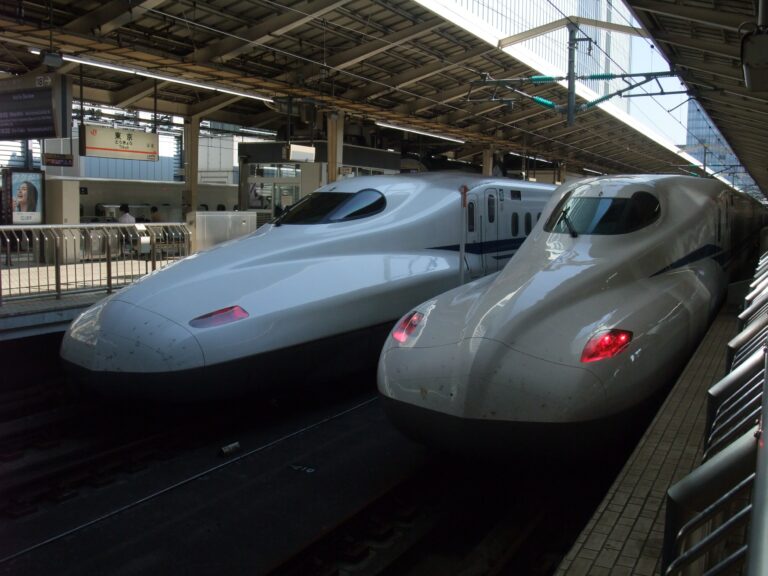
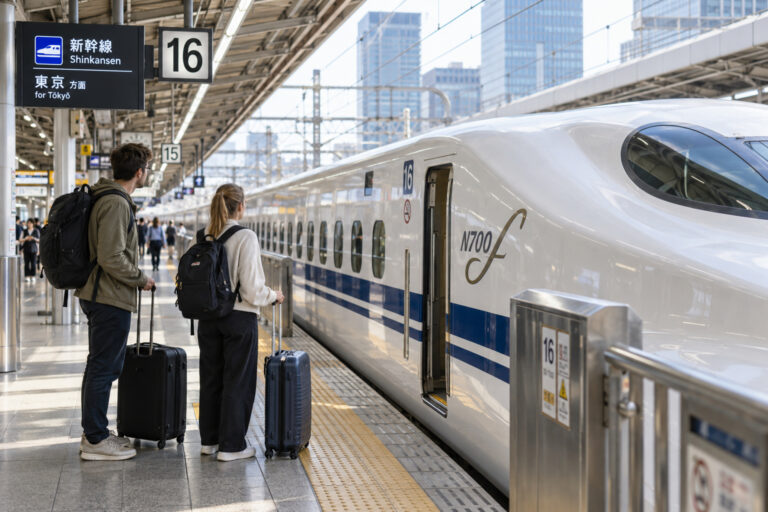
At Tokyo Station, follow signs for the Tokaido/Sanyo Shinkansen toward Nagoya and Shin-Osaka. Tokyo also has other Shinkansen lines, so a generic bullet-train symbol is not enough. Kyoto is an intermediate stop on many trains whose final destination is farther west.
Nozomi, Hikari or Kodama: time and tradeoffs
All three service types use the Tokaido Shinkansen. Choose a departure that explicitly lists Kyoto as a stop; some services finish before reaching it. The times below are approximate station-to-station planning figures from JNTO and Kyoto’s tourism information. Your booking’s timetable controls the actual journey.
Nozomi is the practical starting point for a traveler buying a single ticket. Hikari is especially useful if you already have a valid nationwide Japan Rail Pass. Kodama makes more sense when a specific fare or intermediate stop justifies the longer ride.
- Nozomi: the fastest Tokyo–Kyoto services take about 2 hours 15 minutes; other departures take longer.
- Hikari: allow roughly 2 hours 40 minutes, depending on the service.
- Kodama: allow roughly 3 hours 40 minutes for a through service.
- Add the trip to your departure station, time to find the platform, and onward travel in Kyoto to calculate your real travel day.
How much the Tokyo–Kyoto Shinkansen costs
These are published SmartEX adult one-way benchmarks for Tokyo or Shinagawa to Kyoto. They combine the Shinkansen basic fare and limited-express component. Reserved-seat figures below are for the regular season; the price displayed for your travel date and selected product is the amount to confirm.
SmartEX’s ordinary reserved fares can vary with the season. Discount products, station-issued tickets and booking agencies can have different prices or conditions. A lower headline price is only useful if its train restrictions and change rules fit your plans.
Local trains before and after a SmartEX journey are charged separately. SmartEX does not include the local city-zone coverage that can come with a conventional JR ticket. Compare the whole trip if you are connecting across Tokyo or Kyoto.
- Nozomi, ordinary reserved seat: ¥13,970.
- Hikari or Kodama, ordinary reserved seat: ¥13,650.
- Ordinary non-reserved seating: ¥13,320, where offered; a seat is not guaranteed.
- Nozomi, Green Car reserved seat: ¥18,840.
- At these benchmarks, an ordinary reserved Nozomi costs ¥650 more than non-reserved travel. Two adults pay ¥27,940 one way before local connections.
Buy the ticket that matches your plans
SmartEX is the railway’s official online booking service for this route. Search your intended boarding station, Kyoto, travel date, passenger count and seat type. Check the train number, departure time, seat allocation, total price and baggage arrangement before completing payment.
You can also buy at a JR ticket office or a suitable Shinkansen ticket machine. Have your stations, date, approximate time and party size ready. If the online account or payment process fails, resolve that in advance or leave substantial time for a station purchase.
If you use an agency such as Klook, compare its final total with SmartEX and read the exact delivery, collection, change and cancellation conditions. Do not assume an agency confirmation is a direct boarding ticket. JapaDeco provides independent guidance; the seller and railway handle reservations and transport.
Families, groups and travelers with large suitcases should book once their route is settled. Early-bird products can be useful when the schedule is firm, but their restrictions may outweigh a modest saving after an international flight.
QR, IC card or paper: know what opens the gate
Decide your boarding method before reaching the station. A booking reference, a QR code for collecting paper tickets and a QR ticket for direct boarding serve different purposes. Read the instructions attached to the product you actually bought.
SmartEX supports the following methods. Agency products may have different instructions, so follow the issuing seller rather than assuming every booking works the same way.
- Direct QR boarding: obtain the SmartEX QR ticket for each passenger and make it available on their phone or in print. Scan it at the appropriate reader and collect the Seat Information slip.
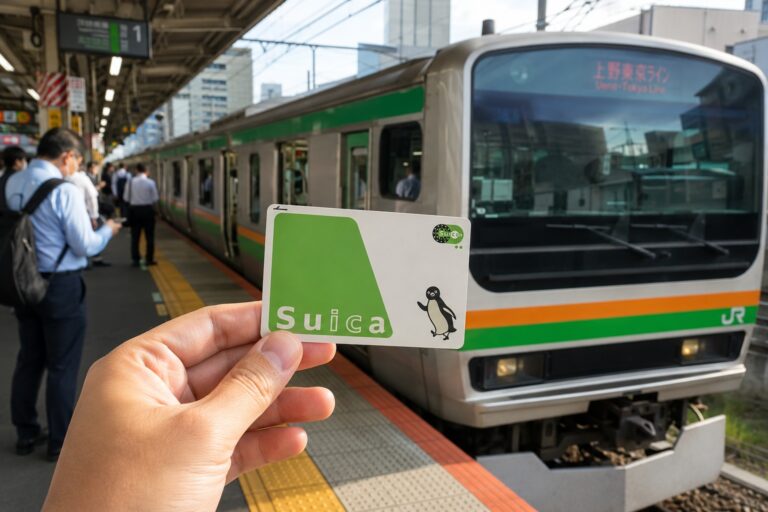
- Linked IC card: assign each passenger’s eligible IC card to the reservation before boarding. The Shinkansen fare is paid through the booking, not taken from the IC card’s stored balance. Local connections still need their own fare.
- Paper pickup: use a designated EX machine or eligible counter. SmartEX pickup requires the pickup code and login password; carry the payment card as well. Check the permitted collection window and location beforehand.
- Keep your actual QR ticket, linked card or paper tickets until you finish the journey. A Seat Information slip is useful onboard but does not itself open the exit gate.
Choose a seat, including the Mount Fuji side
An ordinary reserved seat gives you a particular train, car and seat. This is a sensible choice when traveling together, carrying luggage or arriving tired. Non-reserved travel offers no guarantee that your group can sit together, or that you will get a seat at all.
During designated peak periods, Nozomi runs with all seats reserved. Check JR Central’s current calendar for your exact travel date. Hikari and Kodama retain non-reserved seating, but it can be crowded. Do not buy a non-reserved ticket expecting an available Nozomi seat on those dates.
For the Mount Fuji side, JR Central recommends seat E in an ordinary car or seat D in a Green Car. Ordinary cars use a three-and-two layout; Green Cars have two seats on each side. Weather, cloud and passing obstructions affect the view, so treat it as a bonus rather than a guarantee.
Prioritize an accessible seat, an aisle or the required baggage arrangement over a scenic window when those needs matter more. Request accessibility assistance through the railway before travel rather than relying on a last-minute seat change.
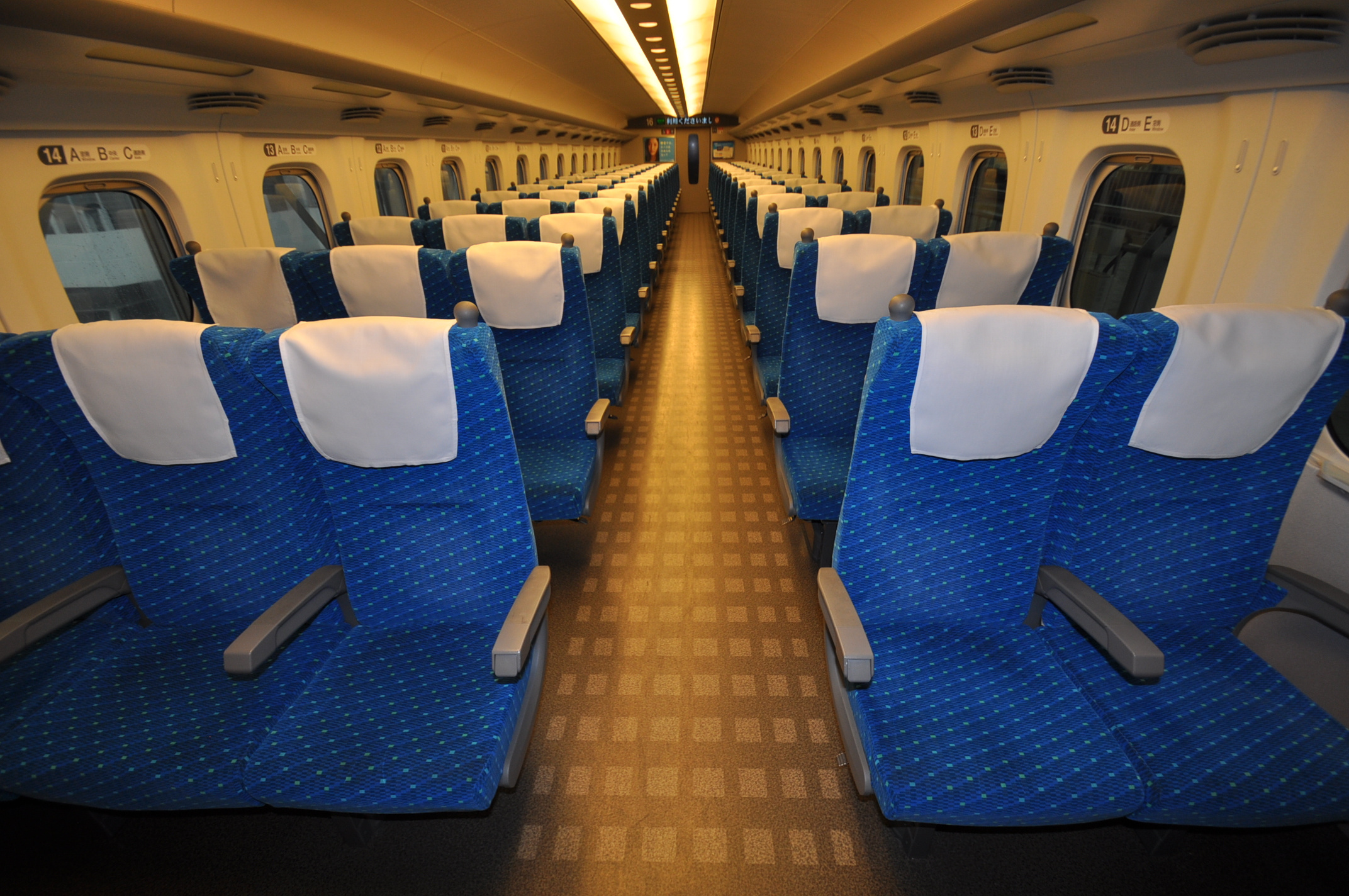
Measure your suitcase and reserve the right space
Measure length + width + height, including protruding parts, before choosing a seat. JR Central’s oversized-baggage rule applies to this route. A normal reserved seat does not automatically include the special area behind the last row.
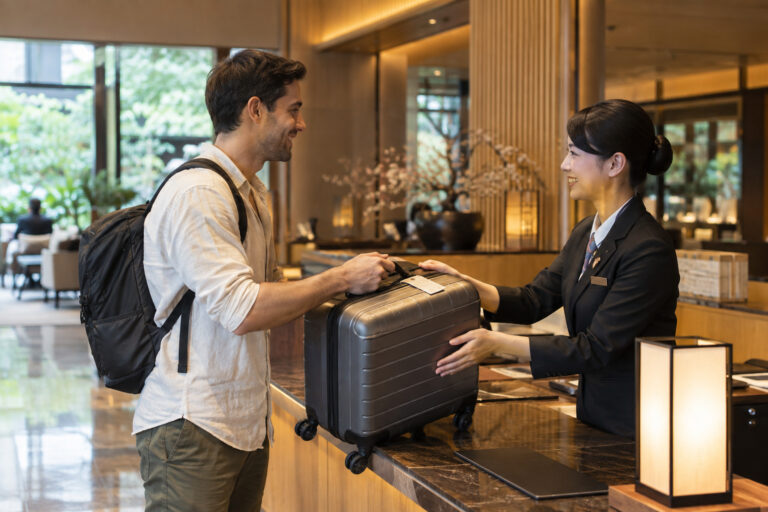
If you need an oversized-baggage area and the relevant seats are unavailable, try another departure or arrange luggage forwarding. Ask your hotel about collection deadlines and delivery timing; keep essentials with you for the time your case is in transit.
- Up to 160 cm in total: no oversized-baggage seat reservation is required. Use suitable onboard storage and keep the aisle clear.
- More than 160 cm and up to 250 cm: reserve a seat with an oversized-baggage area before boarding. The reservation adds no special baggage charge beyond the seat fare.
- More than 250 cm: the item cannot be carried onboard under the normal baggage rules.
- Bringing oversized luggage without the required reservation incurs a ¥1,000 handling fee, and staff specify its storage position. Do not treat this as a substitute for booking the space.
A practical boarding checklist
For a first visit, we suggest reaching the station about 30 minutes before departure with your boarding ticket already ready. Allow more time for ticket collection, a large group or a difficult transfer. This is a planning buffer, not an official check-in deadline.
Look for your train number and departure time on the departure board. The destination shown may be Shin-Osaka, Hakata or another station beyond Kyoto; confirm Kyoto in the stopping pattern. Use the platform markings for your booked car and let arriving passengers leave before boarding.
- Confirm the boarding station, date, train number, car and seat.
- Prepare everyone’s QR ticket, linked IC card or paper ticket before approaching the gates.
- If separate paper basic-fare and limited-express tickets were issued, follow JR’s instructions for inserting the applicable tickets together. Collect any tickets returned by the gate.
- Buy drinks or food only after allowing enough time to find the correct platform.
- Locate your seat and assigned baggage space without blocking the aisle.
Food, charging and comfort onboard
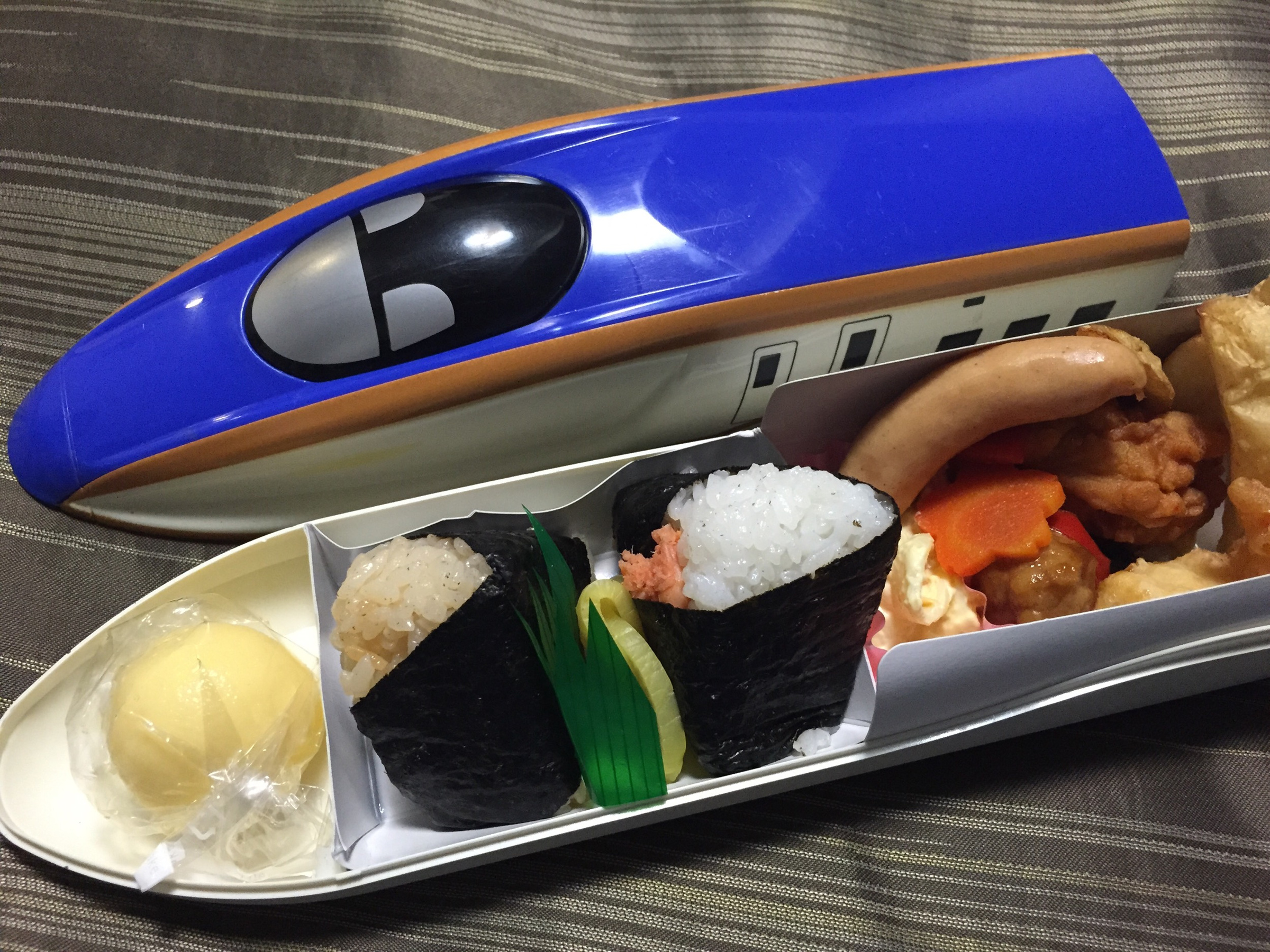
Buy an ekiben, sandwich or drink before boarding if you want a meal during the ride. JR Central no longer provides ordinary-car food-cart sales on this route. The train-shaped bento pictured is an example of railway food culture, not a promise of a particular product at your departure station.
Power sockets vary by train: N700S provides them at every seat, while other ordinary-car layouts commonly provide them at window seats and the first and last rows. Bring a charged battery if power is essential. Save your booking details and Kyoto hotel address before travel.
Keep calls and lengthy conversations away from seated passengers, use headphones quietly, and leave the aisle clear. Before Kyoto, put away your meal, check the overhead rack and prepare your bags so you can leave promptly when the doors open.
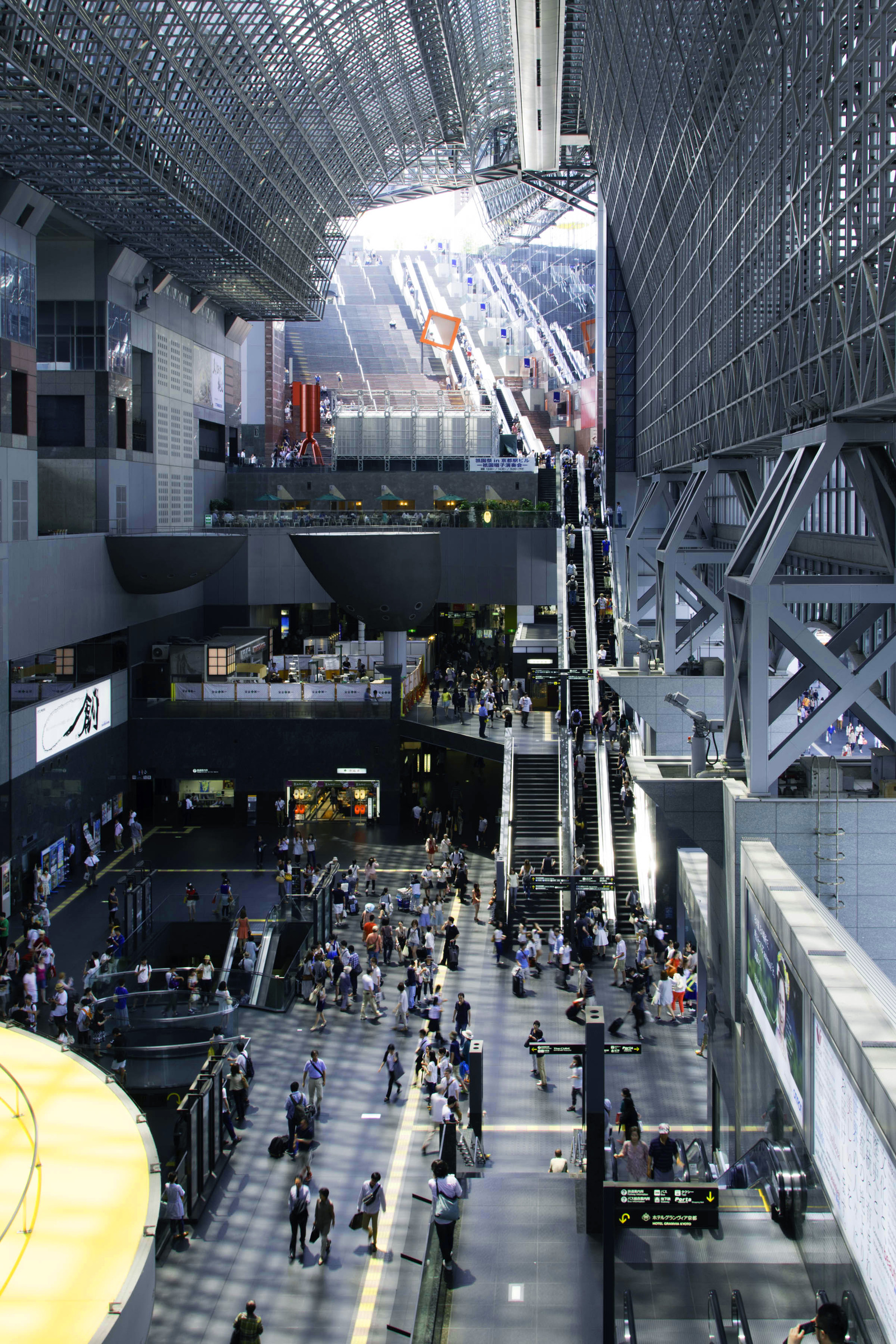
Arriving at Kyoto Station: choose the right exit
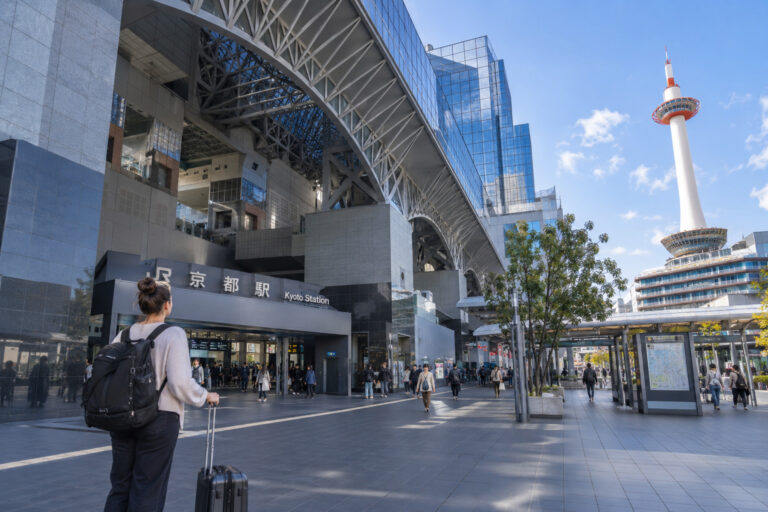
Kyoto Station has a north Karasuma side facing Kyoto Tower and a south Hachijo side. Check which side your hotel or onward transport uses before leaving the train.
The names can be misleading: the Shinkansen Central Exit is on the Hachijo side; it is different from the station’s north-side Central Exit. Follow the full exit name and direction, not just the word “Central.”
For an onward JR journey, follow the appropriate transfer signs before exiting to the street. The Karasuma subway is a separate connection and fare. It serves Shijo; JR’s Nara Line serves Inari and Uji, while the Sagano Line serves Saga-Arashiyama. Confirm the stopping pattern of your chosen train.
With large bags, compare the final walk and number of transfers with a taxi. Keep your accommodation’s address available in Japanese and English. Kyoto’s official station-navigation guide is useful for checking exits and facilities.
If you already have a Japan Rail Pass
A valid nationwide Japan Rail Pass covers eligible Hikari and Kodama travel on this route. Reserve the seat using the pass’s booking arrangements. Buying a normal SmartEX ticket is a separate purchase and does not apply your rail pass automatically.
Nozomi is not included in the pass alone. Pass holders can use it by buying the special NOZOMI MIZUHO Ticket before boarding and traveling with both that ticket and the valid pass. The published adult Tokyo–Kyoto special-ticket price is ¥4,960 per use; seat class must match the pass’s permitted use.
If you have not bought a pass, compare the full itinerary before doing so. A single Tokyo–Kyoto journey is a reason to price an individual ticket first. Add only journeys you really intend to take within the pass’s validity period.
Changing plans, missed trains and disruption
If you expect to be late, try to change your reservation before departure and before entering the gates or collecting paper tickets. The permitted changes, fare difference and refund fee depend on your product and seller. Once paper tickets have been collected, some procedures move to the station counter.
For the standard SmartEX product, a missed reserved train can generally be followed by non-reserved travel on a later train over the same section that day. Hayatoku fares are excluded from that rule. This does not guarantee a new reserved seat or a seat on an all-reserved Nozomi.
After a missed departure, ask station staff or your booking provider what your specific ticket allows. For major disruption, follow current railway notices and the seller’s instructions before buying replacements. Leave flexibility before an expensive timed activity or an onward flight.
When a bus or flight may be worth comparing
For a straightforward move between central Tokyo and Kyoto, our starting recommendation is the direct Shinkansen. It keeps the journey centered on railway stations and makes the departure and arrival easy to build into a sightseeing day.
If minimizing cash cost matters most, compare an overnight bus using the exact date, baggage allowance, arrival location and seat type. Include the effect of a poor night’s sleep on the next day. For a flight, compare the complete airport-to-hotel itinerary, including ground transport and waiting time. A short flight duration alone does not describe the full trip.
A same-day Kyoto visit from Tokyo is possible, but it leaves less time and creates a long travel day. An overnight stay is often the more comfortable choice when Kyoto is a main destination rather than a short stop.
Photography credits
These are licensed camera photographs. Longer originals were reduced for web use; all were JPEG re-encoded without cropping, retouching or compositing. Interiors, shops and station displays can change. The credited photographs retain their stated Creative Commons licenses.
- IMAGE-01: Zairon — CC BY-SA 4.0. Source: https://commons.wikimedia.org/wiki/File:Kyoto_Kyoto_Station_Blick_auf_den_Kyoto_Tower_2.jpg License: https://creativecommons.org/licenses/by-sa/4.0/
- IMAGE-02: David Kernan — CC BY 4.0. Source: https://commons.wikimedia.org/wiki/File:N700_Series_Shinkansen_on_Tokaido_Line_Tokyo_March_.jpg License: https://creativecommons.org/licenses/by/4.0/
- IMAGE-03: 衛兵隊衛士 — CC BY-SA 3.0. Source: https://commons.wikimedia.org/wiki/File:Shinkansen_N700_series_Standard-sized_car_seat.JPG License: https://creativecommons.org/licenses/by-sa/3.0/
- IMAGE-04: masataka muto — CC BY-SA 2.0. Source: https://commons.wikimedia.org/wiki/File:Ekiben_(16942832905).jpg License: https://creativecommons.org/licenses/by-sa/2.0/
- IMAGE-05: Muro2246 — CC BY-SA 4.0. Source: https://commons.wikimedia.org/wiki/File:KyotoStation-1.jpg License: https://creativecommons.org/licenses/by-sa/4.0/
FAQ
How far ahead should I book?
Book once your date is settled if you need seats together or specific baggage space. SmartEX accepts some reservations up to one year ahead, but train details and seat numbers for early bookings are finalized closer to travel. Check the product’s confirmation rules and baggage-seat availability.
Can I just tap Suica or PASMO to take the Shinkansen?
A stored-value IC card alone is not a Tokyo–Kyoto Shinkansen ticket. It must be linked to an eligible reservation for ticketless boarding; otherwise use the QR or paper-ticket method required by your booking.
Do I have to change trains between Tokyo and Kyoto?
No, if you book a direct Tokaido Shinkansen service that stops at Kyoto. Check the stopping pattern rather than assuming every Hikari or Kodama continues all the way there.
Is Green Car necessary for this journey?
No. An ordinary reserved seat is a comfortable starting choice for most travelers. Consider Green Car if its extra space is worth the actual price difference to you; it does not shorten the journey.
Can I stop in Nagoya and continue on the same SmartEX ticket?
SmartEX does not permit a sightseeing stopover on one ticket. If you want to leave the station and visit Nagoya, book suitable separate journeys or ask JR about another ticket type before paying.
What is the last train from Tokyo to Kyoto?
Check the official timetable or a booking search for your exact travel date and boarding station. Confirm that the service reaches Kyoto. Do not plan around an undated last-train time from a guide.
Can I buy tickets at the station on the day?
Yes, subject to availability and the product’s sales conditions. Leave time for queues and assistance. Booking ahead is preferable for busy dates, groups and oversized-baggage seats.
Book Tokyo–Kyoto Shinkansen tickets online
If you prefer to arrange your Shinkansen ticket before travel, compare the current route, date, seat and booking conditions before purchasing.
Check Shinkansen ticketsRelated Japan Travel Guides
Official References
- JNTO: Kyoto Station and fastest access from Tokyo
- Kyoto tourism: approximate Shinkansen travel times
- SmartEX: standard fare conditions and advance reservations
- SmartEX: ordinary reserved-seat fare chart
- SmartEX: non-reserved fare chart
- SmartEX: Green Car fare chart
- JR Central: Nozomi all-reserved travel periods
- SmartEX: boarding with a QR ticket
- SmartEX: boarding with a linked IC card
- SmartEX: where and how to collect paper tickets
- JR Central: oversized-baggage rules
- JR Central: Shinkansen boarding, seats and onboard services
- Kyoto tourism: navigating Kyoto Station
- Japan Rail Pass: covered routes and services
- Japan Rail Pass: the special Nozomi ticket
- SmartEX: what happens after a missed train
- JR Central: Shinkansen timetable
Final Thoughts
Choose the easiest departure station, book a train and seat that fit your plans, and settle luggage and boarding details before travel day. A direct reserved Nozomi is a useful starting choice for an individual ticket; compare Hikari if you already hold a Japan Rail Pass. Save your Kyoto exit and hotel route so the journey ends as smoothly as it begins.