
Kyoto Station Area Guide: Where to Stay, Eat and Get Around
A practical Kyoto Station area guide for first-time visitors: choose the right side of the station, decide whether to stay here, plan food and day trips, handle luggage, and avoid common transport mistakes.
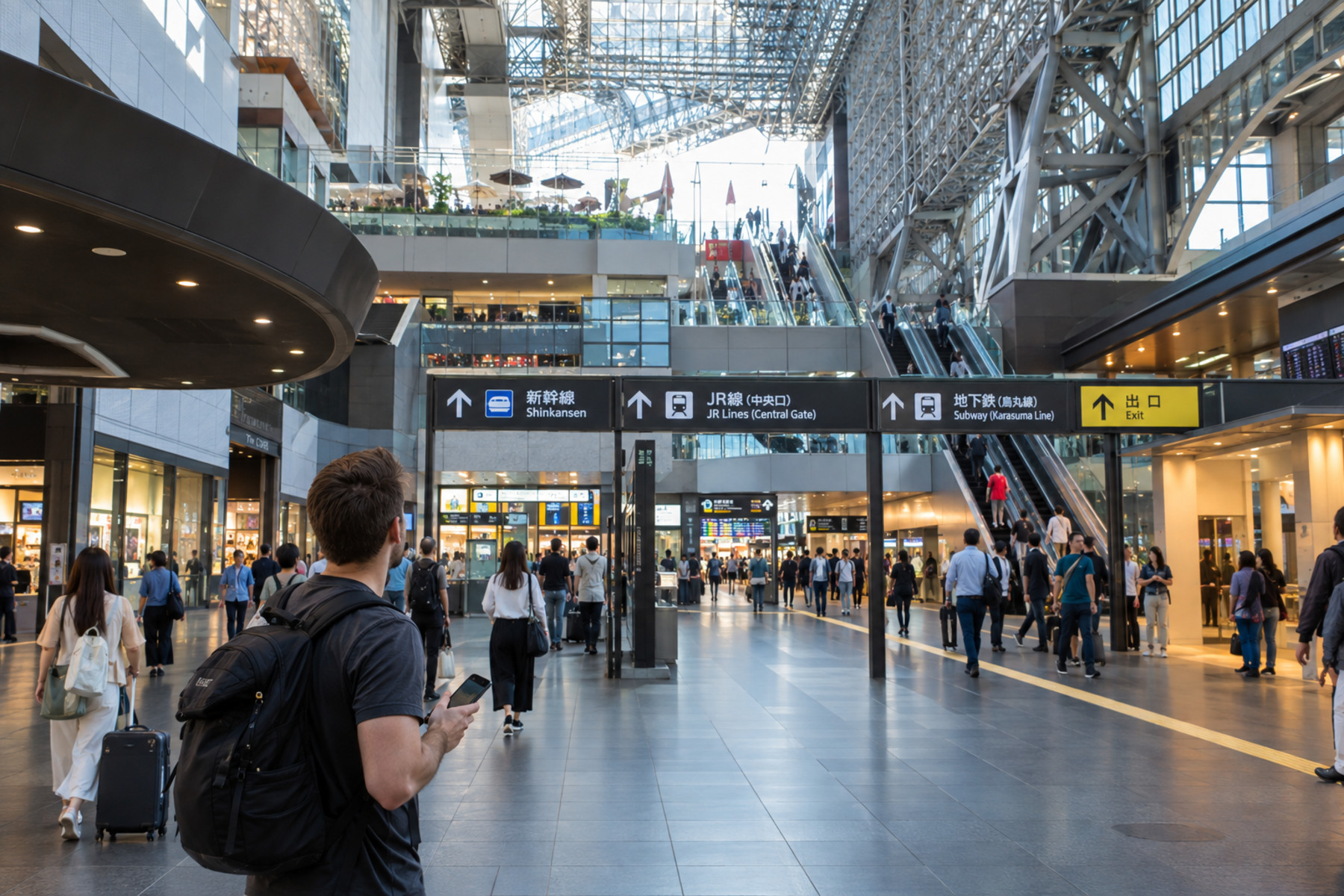
Kyoto Station is one of Kyoto’s most practical bases if you arrive by Shinkansen, travel with luggage, leave early, or plan several rail-based day trips. The north/Central Exit side is the strongest all-round choice for the main city-bus area, subway access and station-front services; the south/Hachijo side is usually more convenient for Shinkansen access and many business hotels. Choose downtown or Gion instead when evening atmosphere and walkable restaurants matter more than transport efficiency.
What You’ll Learn
- Whether Kyoto Station is the right area for your trip
- How the north/Central Exit side differs from the south/Hachijo side
- How to choose a hotel by actual walking route rather than map distance
- When trains or the subway are better than a direct sightseeing bus
- How to plan luggage storage or delivery before sightseeing
- Where to eat efficiently around the station
Is Kyoto Station the right base for you?
Kyoto Station works best when the station itself solves a recurring problem in your itinerary. It is especially strong for Shinkansen arrivals, early departures, large luggage, families, and trips built around JR or other rail connections.
Its tradeoff is atmosphere. The immediate station district is modern, transport-focused and convenient rather than the classic Kyoto streets many first-time visitors imagine. If most evenings will be around Gion, Pontocho, Nishiki Market or Shijo-Kawaramachi, staying downtown may reduce repeated return journeys.
- Best for: Shinkansen users, early trains, large luggage, families, several day trips and short first/final-night stays.
- Avoid if: your priority is traditional streets, late-night dining atmosphere or walking back from central Kyoto every evening.
- Decision rule: count how many days begin or end at Kyoto Station. If the station is central to most of them, staying nearby is usually efficient.
Choose the right side of Kyoto Station
The words “near Kyoto Station” are not enough. Kyoto Station is large, with different railways, gates, elevated passages and underground connections. A hotel that looks close in a straight line can still require a long indoor walk or an awkward road crossing with luggage.
Think first in two major sides: the north side around the Central Exit and Kyoto Tower, and the south side around the Hachijo exits. Then check the exact gate and walking route you will actually use.
- North / Central Exit side: best all-round choice for the main city-bus area, subway access, Kyoto Tower side and broad station-front services.
- South / Hachijo side: especially useful for Shinkansen travelers, Kintetsu access and many practical business hotels.
- Outer blocks east or west: can be quieter or better value, but only choose them after checking the real walking route with luggage.
- Do not confuse the local-line Central Exit on the north side with the Shinkansen Central Exit inside the Shinkansen area.
How to choose a hotel near Kyoto Station
The best hotel is not automatically the nearest pin on a booking map. Match the property to your arrival railway, likely station gate, luggage, sightseeing pattern and evening plans.
A slightly longer distance can still be easier if the route is covered and step-free. Conversely, a short map distance can be inconvenient if it involves several crossings, stairs or a station-side change.
- Match the hotel to the railway and gate you are most likely to use.
- Check the walking route for stairs, elevators, road crossings and weather exposure.
- Confirm room size and whether you can realistically open large suitcases.
- Check luggage storage before check-in and after checkout.
- Compare the final journey home after dinner, not only the morning departure.
- Recheck current cancellation, payment, tax and breakfast conditions for your dates.
First 10 minutes after arriving: orient yourself before moving
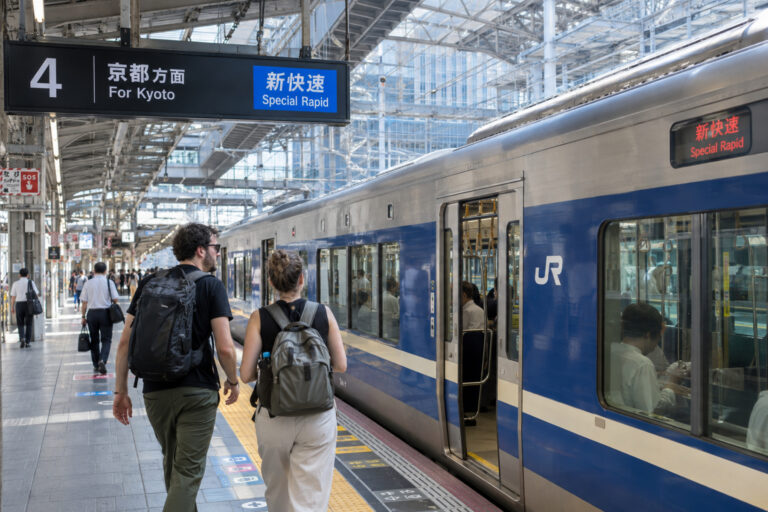
Do not rush out of the first gate you see. Confirm which railway you arrived on, which station side you need, and whether your next transport is above ground or below ground.
Kyoto’s official tourism guidance now provides dedicated transfer guidance for common routes including Shinkansen or the Kansai-Airport Limited Express HARUKA to the subway and city buses. If this is your first visit, checking the official station map or transfer guide before arrival can save unnecessary backtracking.
- Save the full name of your intended gate or exit.
- Check the official departure board before walking toward a platform.
- If you are transferring to a city bus, confirm the stop number and destination before joining a queue.
- With large luggage, decide on storage, delivery or hotel drop-off before sightseeing.
Use trains and the subway before defaulting to buses
Kyoto City’s official tourism guidance recommends combining trains, the subway and buses rather than relying on direct buses for every sightseeing trip. Rail can avoid road congestion and reduce time spent standing in crowded bus queues.
From Kyoto Station, the JR Nara Line is useful for Fushimi Inari and Uji, the JR Sagano Line for Arashiyama, and the Subway Karasuma Line for north-south travel through central Kyoto. For some eastern destinations, a rail transfer closer to the destination can be more comfortable than a long direct bus ride.
- Fushimi Inari / Uji: start by checking JR Nara Line options.
- Arashiyama: check the JR Sagano Line; its Kyoto Station platforms can require more walking than expected.
- Downtown: the Karasuma Line is useful for Shijo and Karasuma Oike.
- Gion / Kiyomizu area: compare rail-plus-walk or rail-plus-bus routes instead of assuming a direct bus is fastest.
- Always check live service information and the route for your actual travel time.
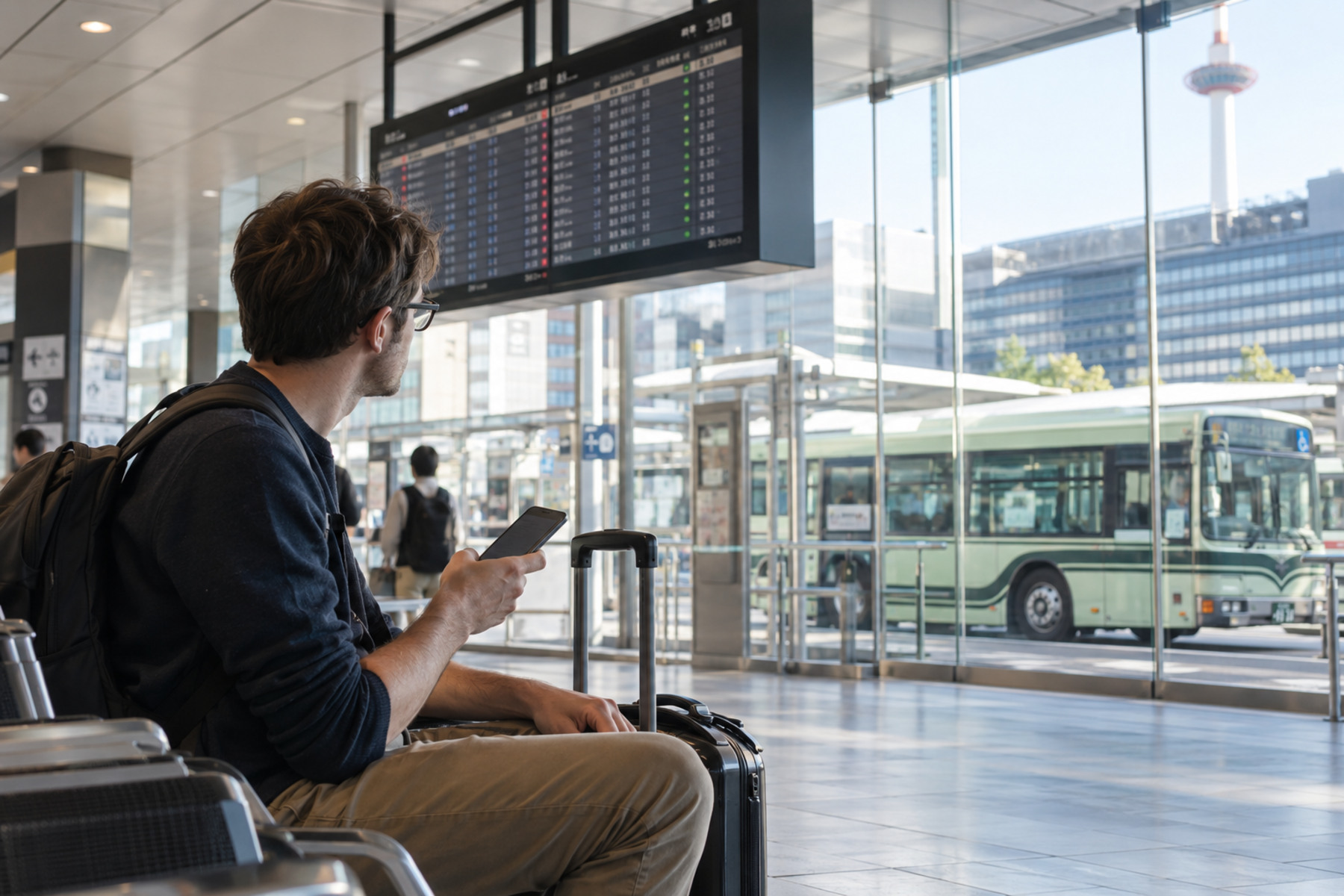
Where to eat around Kyoto Station
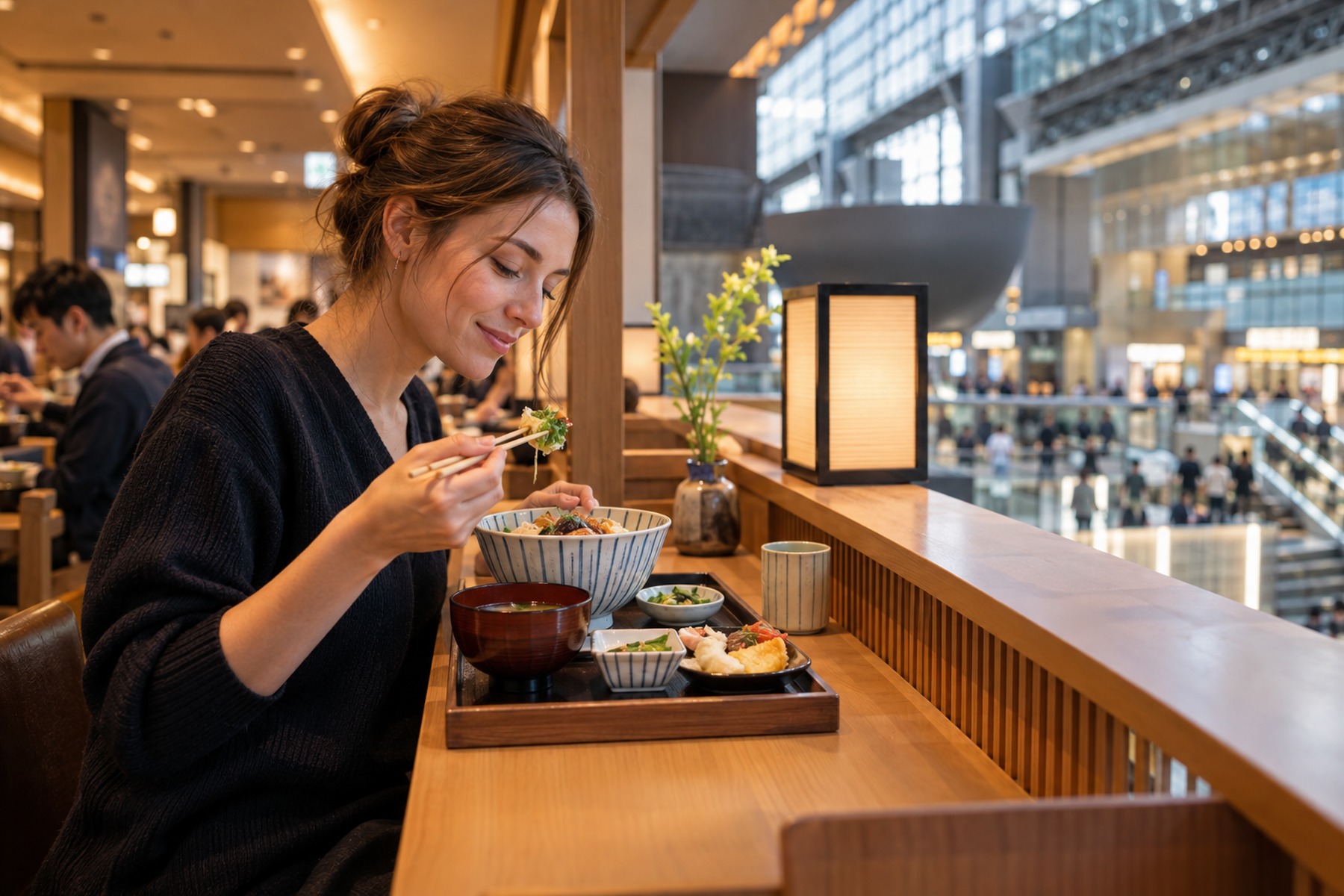
Kyoto Station is strongest for convenience and variety. The station complex and connected facilities provide takeaway food, cafes, ramen, department-store food floors and full-service restaurants, making the area useful before a train or after a late arrival.
The official Kyoto Station Building floor guide lists Kyoto Ramen Koji on the 10th floor, restaurant areas, JR Kyoto Isetan food floors and Kyoto Porta dining and shopping zones. Tenants and opening hours can change, so check the current floor guide for early breakfast, late dinner or dietary needs.
- Early departure: buy breakfast, drinks or a bento before reaching the platform, but confirm current opening hours.
- Quick meal: use the station building, Porta or department-store food floors.
- Group with different tastes: choose a dining floor or connected complex with several options.
- Special Kyoto dinner: consider downtown or Gion, then plan the return route to your hotel.
Luggage: solve it before sightseeing
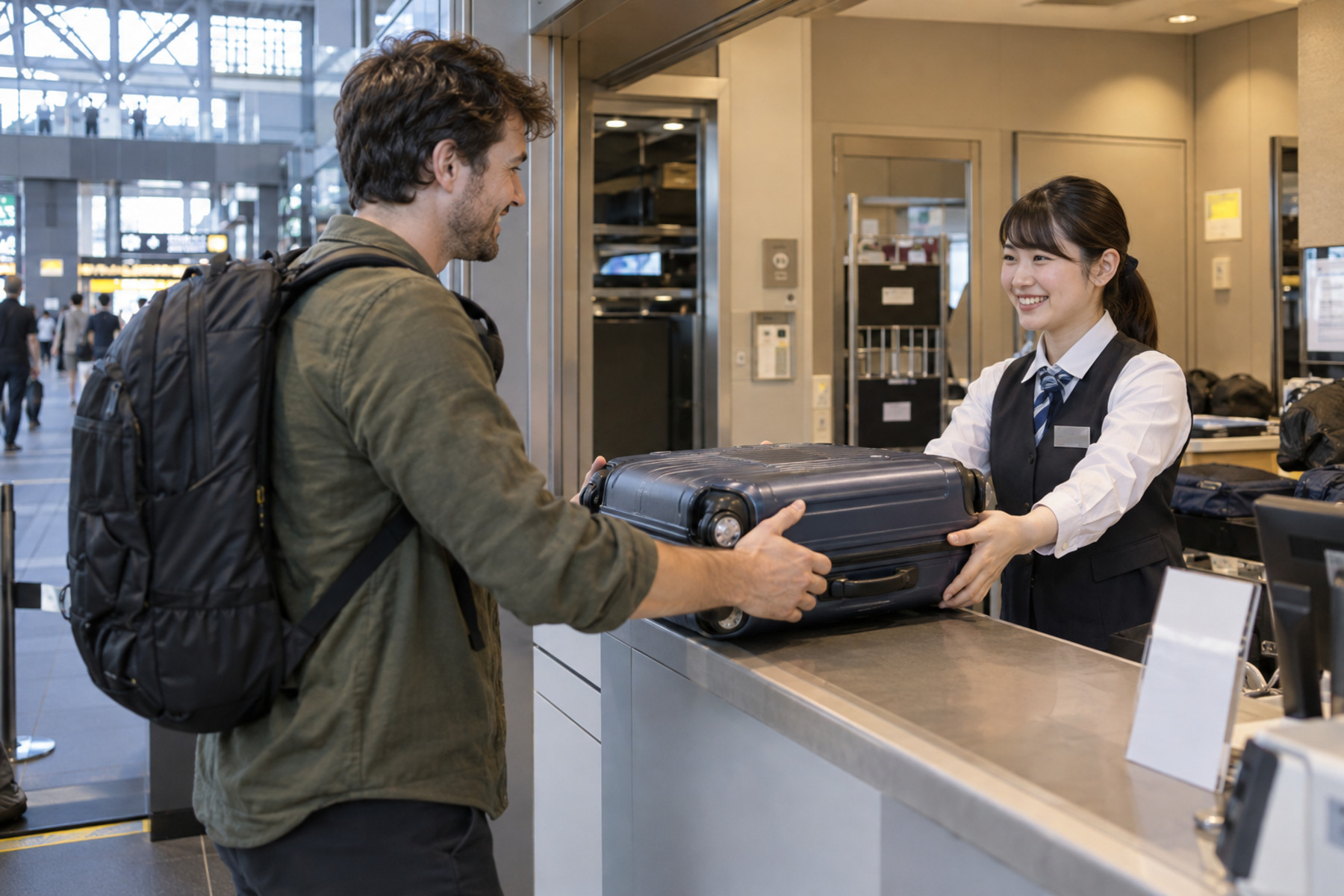
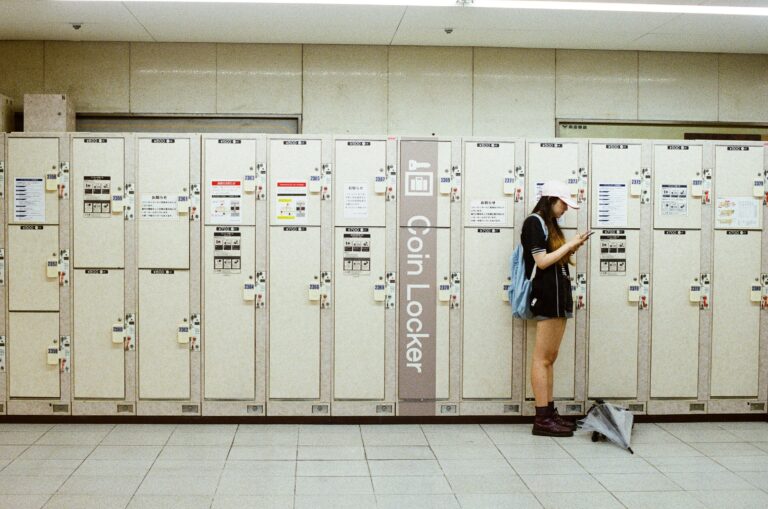
Kyoto’s official tourism guidance encourages hands-free sightseeing and lists luggage storage and delivery options around Kyoto Station. Coin lockers are useful, but large lockers can fill during busy periods and service counters have their own hours and conditions.
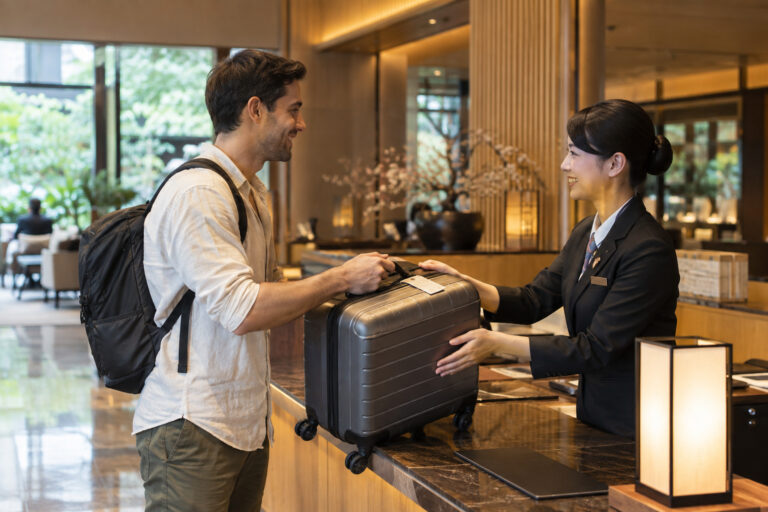
If your hotel accepts luggage before check-in, dropping bags there may be simplest. Otherwise compare station storage with a delivery service and keep passports, medication, valuables and essential electronics with you.
- Ask the hotel about pre-check-in and post-checkout storage.
- Check station locker size and availability rather than assuming a large locker will be free.
- For delivery, confirm cutoff time, accommodation coverage, item restrictions and expected arrival.
- Avoid carrying large suitcases onto crowded sightseeing buses when a practical storage or delivery option is available.
- Save a backup luggage option before you arrive.
Best day trips from a Kyoto Station base
Kyoto Station becomes especially valuable when several days involve rail. Starting directly from the station can remove an extra city crossing in the morning and make the return easier when you are tired.
Choose the railway based on the exact destination rather than the city name alone. Nara, Osaka and even different parts of Kyoto can have multiple reasonable routes.
- Fushimi Inari and Uji: JR Nara Line is a natural starting point.
- Arashiyama: JR Sagano Line provides a rail-first route from Kyoto Station.
- Nara: compare JR and Kintetsu according to the part of Nara you plan to visit.
- Osaka: choose the Osaka station closest to your actual destination rather than assuming every route should end at the same terminal.
- Tokyo / Nagoya / Shin-Osaka: Kyoto Station gives direct access to the Tokaido Shinkansen network; check the correct gate and current departure details.
Four practical stay patterns
A Kyoto Station hotel makes different kinds of trips easier for different reasons. Match the station side and hotel type to the pattern that resembles your itinerary.
- One night before an early Shinkansen: prioritize the Hachijo side, short gate access and a simple breakfast plan.
- Three or four nights with several day trips: prioritize easy access to JR plus a practical route to the subway and city buses.
- Family trip with several bags: prioritize elevators, a covered route, luggage storage, room size and minimal road crossings.
- Food-focused or nightlife-heavy trip: use Kyoto Station only if transport still matters more than evening atmosphere; otherwise compare downtown Kyoto.
Check before choosing
Kyoto Station is a major transport hub, and the details that matter most can change: train schedules, bus stops, restaurant tenants, opening hours, luggage-service conditions and hotel policies. Recheck the official sources for your travel date.
When a map app and an official transport source disagree, use the current railway, city transport or official tourism information for the service you are actually taking.
- Exact arrival/departure gate and station side
- Live train status and platform information
- Bus stop number and route direction
- Hotel luggage policy and check-in time
- Luggage storage or delivery hours and restrictions
- Restaurant opening hours
- Last comfortable route back to your hotel after dinner
Common Kyoto Station mistakes
Most Kyoto Station problems come from treating the station as one simple point. It is better to make decisions by railway, gate, side and final walking route.
- Booking a hotel because the listing says “Kyoto Station” without checking the exact entrance.
- Confusing the local-line Central Exit with the Shinkansen Central Exit.
- Assuming the closest-looking bus is automatically the fastest route.
- Carrying large luggage onto a crowded sightseeing bus when storage or delivery is practical.
- Leaving too little time for a distant platform or a separate railway gate.
- Expecting every restaurant, locker or baggage counter to have the same hours every day.
- Choosing the station for convenience, then spending every evening downtown and repeating the same cross-city trip.
FAQ
Is Kyoto Station a good area to stay for first-time visitors?
Yes, especially if you arrive by Shinkansen, carry luggage, leave early or plan several day trips. Choose downtown or Gion instead if traditional streets and evening atmosphere are more important than transport convenience.
Which side of Kyoto Station is best for hotels?
The north/Central Exit side is the strongest all-round choice for the main city-bus area, subway access and station-front services. The south/Hachijo side is usually more convenient for Shinkansen access and many business hotels. Always check the exact hotel entrance and walking route.
Is Kyoto Station close to Gion?
Not in the sense of a simple station-front walk for most visitors. Depending on the exact destination, you will normally use public transport, a taxi, or a combination of rail and walking.
Should I use buses for sightseeing from Kyoto Station?
Not automatically. Kyoto’s official tourism guidance recommends combining trains, the subway and buses. Rail can avoid traffic and reduce crowding for several major sightseeing areas.
Can I store luggage at Kyoto Station?
Yes. Coin lockers and baggage storage or delivery services are available, but capacity, hours, item restrictions and delivery conditions vary. Check the current official information and keep a backup option during busy periods.
Is the Hachijo side better for the Shinkansen?
It is generally the more convenient side for Shinkansen access, but the exact gate and hotel entrance still matter. Save the full gate name and check your walking route before arrival.
Can I eat well without leaving Kyoto Station?
Yes. The station complex includes cafes, takeaway food, ramen, department-store food floors and restaurant areas. For a more atmospheric Kyoto dinner, you may still prefer downtown or Gion.
How early should I arrive at Kyoto Station before a train?
There is no single rule for every traveler. Allow extra time if you have luggage, need to buy tickets or food, are unfamiliar with the railway, or must reach a distant platform. Check the current station map and departure information.
Related Japan Travel Guides
Official References
- Kyoto City Official Travel Guide — Getting Around Kyoto
- Kyoto City Official Travel Guide — Getting Around Kyoto by Subway & Train
- Kyoto City Official Travel Guide — Getting Around Kyoto by Bus
- Kyoto City Official Travel Guide — Luggage Services
- Kyoto City Official Travel Guide — Kyoto Station Transfer Guides
- JR-West — Route Maps, Timetables and Kyoto Station Map
- Kyoto Station Building — Floor Guide
Final Thoughts
Kyoto Station is the right base when transport convenience is part of the trip itself. Choose the north side for the broadest access to city transport and station-front services, the Hachijo side for Shinkansen efficiency, and an outer block only after checking the real walking route. Use rail and the subway strategically, solve luggage before sightseeing, and choose downtown or Gion instead when evening atmosphere matters more than easy departures.