
Rainy Season in Japan: When It Happens, What to Pack and How to Travel
Plan a comfortable trip through Japan’s rainy season with regional timing, packing advice, flexible city strategies, hydrangea ideas, transport tips and heavy-rain safety guidance.
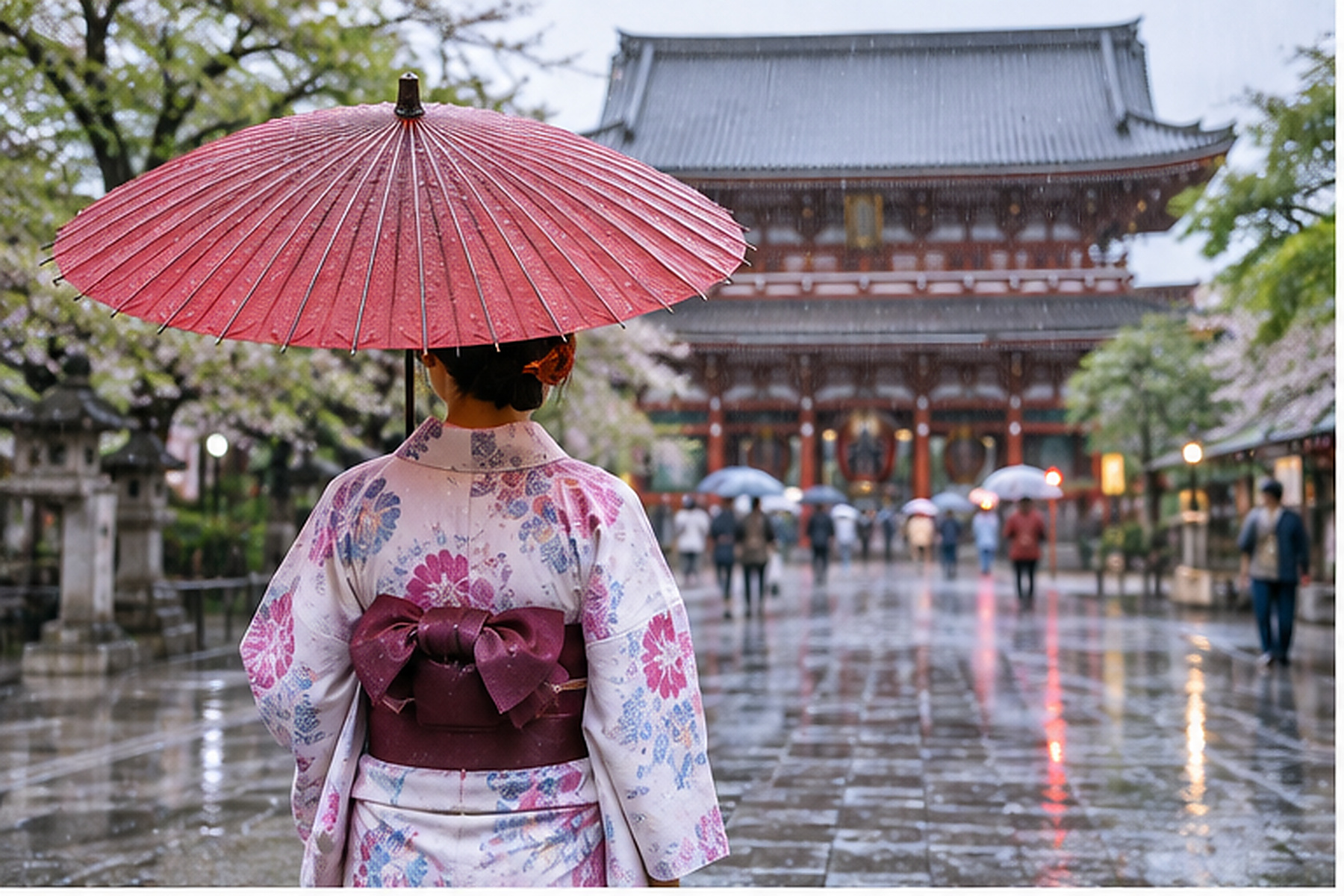
Japan’s rainy season, called tsuyu or baiu, usually reaches much of the main islands from early June into July, while Okinawa starts earlier and Hokkaido is outside the Japan Meteorological Agency’s normal Baiu classification. It does not mean nonstop rain. The best strategy is to pack breathable rain gear, water-resistant walking shoes and a compact umbrella, stay near useful transport, keep indoor backup plans, and treat official heavy-rain warnings as a signal to change plans rather than push through.
What You’ll Learn
- How rainy-season timing changes from Okinawa through central Japan to Tohoku
- What persistent humidity and intermittent rain mean for clothes, shoes and daily pacing
- How to build Tokyo, Kyoto and Osaka days that still work when the forecast changes
- When rainy weather is simply inconvenient and when official warnings require a safety-first response
- How to use hydrangeas, indoor attractions, hotels and transport access to make the season work in your favor
When Is the Rainy Season in Japan?
The rainy season is not one nationwide block of identical weather. The Japan Meteorological Agency identifies Baiu onset and withdrawal by region, and the transition moves broadly from south to north.
Long-term climatological guidance places Okinawa around early May to late June, while Kinki and Kanto/Koshin are typically around early June to the second half of July. Tohoku usually starts later and can extend farther into July. Hokkaido is not included in the agency’s normal Baiu regions.
These are planning ranges, not promises for a particular trip. The agency describes the beginning and end as transition periods rather than a single instant, so current forecasts matter more than a fixed date copied into an itinerary.
- Okinawa and Amami generally enter the rainy pattern earlier than the main islands.
- Tokyo, Kyoto and Osaka usually plan around a June-to-July rainy-season window.
- Tohoku tends to shift later than central Japan.
- Hokkaido can still have rain, but it does not have the same officially defined Baiu season.
What the Weather Actually Feels Like
Rainy season is often a mix of cloudy periods, drizzle, ordinary rain, humid breaks and occasional heavier rain rather than rain falling every minute of every day. That makes flexible sightseeing realistic, but it also makes rigid outdoor schedules frustrating.
Humidity is often the bigger comfort problem. Clothing can feel damp, shoes dry slowly, station floors become slippery and long walks feel warmer than the air temperature suggests. A breathable layer usually works better than a heavy waterproof coat for city travel.
Weather can also change within the same day. Check the forecast before leaving the hotel and again before a long outdoor transfer, mountain visit or day trip.
- Expect humidity and wet surfaces even when rainfall is light.
- Use breathable, quick-drying clothing instead of heavy cotton where possible.
- Keep one indoor option saved near each major sightseeing area.
- Leave extra walking time because umbrellas, crowds and wet stairs slow movement.
What to Pack for Rainy Season
The best rainy-season packing list is small and practical. Most travelers do not need expedition gear; they need to stay comfortable while walking between stations, hotels, restaurants and attractions.
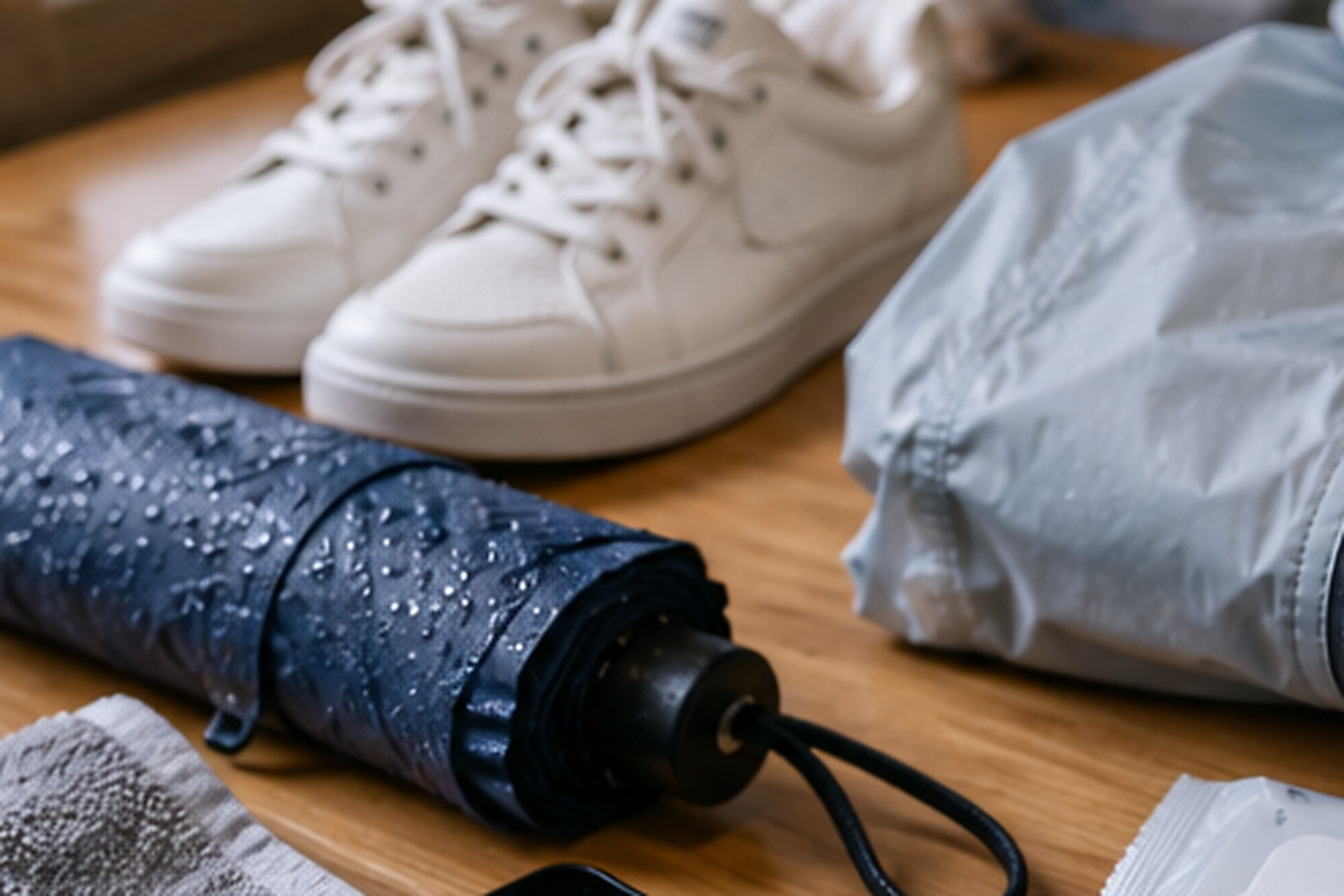
Water-resistant walking shoes are more useful than fashionable shoes that become uncomfortable when soaked. A compact umbrella is convenient for light or intermittent rain, while a breathable rain shell is useful when wind makes an umbrella awkward.
Protect electronics and documents separately. A small waterproof pouch or zip bag for your passport, phone accessories and tickets can prevent a minor downpour from becoming a trip problem.
- Compact umbrella
- Breathable lightweight rain shell
- Water-resistant walking shoes with reliable grip
- Extra socks and a small quick-dry towel
- Quick-dry tops and underwear
- Water-resistant pouch for documents and electronics
- Small plastic or reusable bag for a wet umbrella
How to Plan Tokyo, Kyoto and Osaka on Rainy Days
Tokyo is relatively easy to adapt because large stations, department stores, underground passages, museums, cafes and indoor attractions give you many ways to shorten exposed walks. The weak point is station complexity: the wrong exit can turn a short transfer into a long wet detour.
Kyoto rewards slower planning. Temples, gardens and old streets can look beautiful in light rain, but many famous areas involve outdoor walking, buses and limited shelter. Choose one geographic area rather than trying to cross the city repeatedly.
Osaka also adapts well thanks to major station complexes, shopping arcades, food districts and indoor attractions. On a wet day, clustering activities around one transport hub is usually more comfortable than chasing a long checklist.
- Check the exact station exit before you start walking.
- Choose one outdoor priority and several nearby indoor backups.
- Avoid scheduling tight cross-city transfers in heavy rain.
- Use a station-connected or near-station hotel when convenience matters more than neighborhood atmosphere.
Use the Season: Hydrangeas, Gardens and Indoor Views
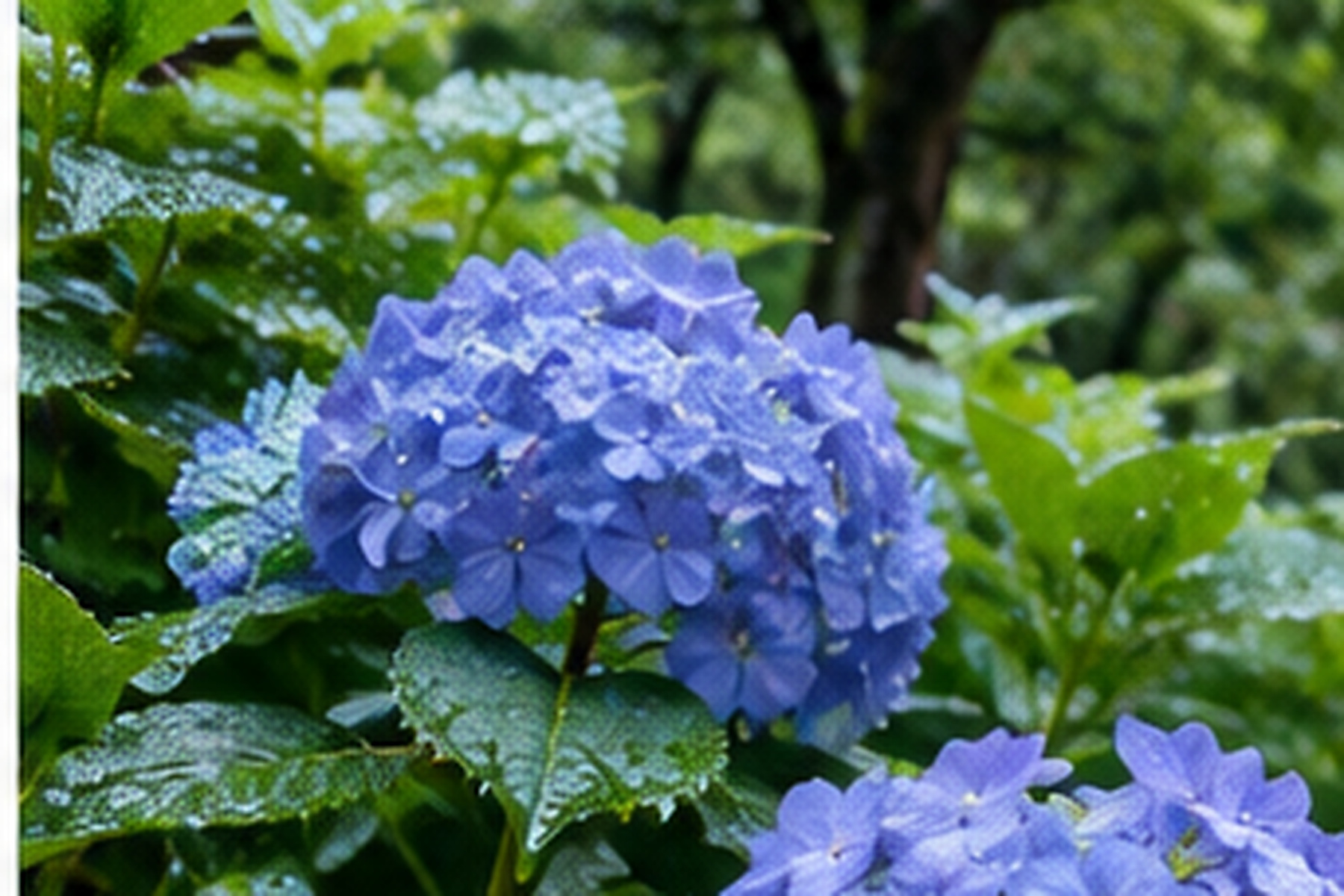
Rainy season has its own visual payoff. Hydrangeas are a signature early-summer sight, and damp temple grounds, gardens and green landscapes can be especially atmospheric in light rain.
Japan National Tourism Organization guidance highlights hydrangeas as one of the seasonal rewards of this period. The key is to distinguish pleasant rain from hazardous weather: a garden walk in drizzle is very different from continuing an outdoor plan during a heavy-rain warning.
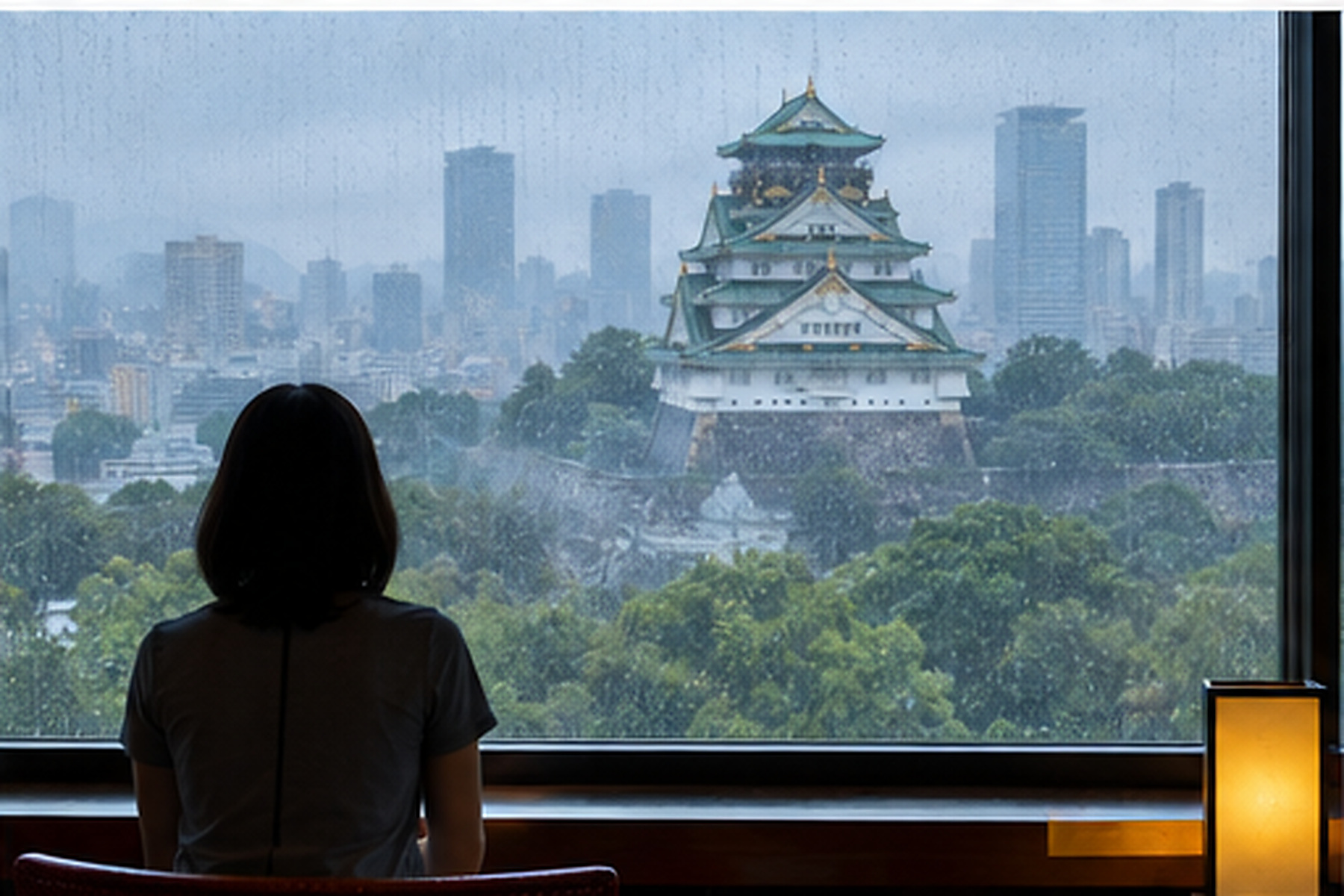
When rain strengthens, move the experience indoors. Museums, observation areas, department stores, food halls, cafes and covered shopping streets can keep a day useful without forcing bad-weather sightseeing.
- Hydrangea gardens and temple approaches can be excellent in light rain.
- Bring shoes with grip for wet stone and mossy surfaces.
- Save indoor attractions near your main outdoor destination.
- Do not treat scenic rain as a reason to ignore official warnings.
Transport Strategy: Fewer Transfers, Better Exits
Normal rain usually means inconvenience rather than a complete transport shutdown, but heavier rain can produce delays, slower road traffic and crowded stations. Build margin into airport transfers, reserved trains and time-sensitive reservations.
Use route apps for the broad journey, then verify operator information when weather becomes severe. During disruption, the railway or bus operator is the best source for the status of that specific service.
For city walking, station exits matter. A route that looks slightly longer on a map may be better if it uses underground passages, covered walkways or a closer entrance to your destination.
- Avoid the last possible connection when heavy rain is forecast.
- Check the transport operator directly during disruptions.
- Prefer covered or underground routes when they meaningfully reduce exposed walking.
- Keep luggage transfers simple on wet days.
Hotels, Laundry and Luggage Matter More in Wet Weather
A good hotel location becomes more valuable during rainy season. Being close to a station, convenience store, covered shopping area or restaurant cluster reduces the number of times you need to cross exposed streets.
Humidity also makes laundry slower. If your trip is long, check whether the property has coin laundry, dryers or a laundry service. Quick-dry clothing is much easier to rotate than heavy cotton after a wet day.
Large suitcases are especially awkward when you are holding an umbrella or moving through busy stations. Hotel storage, lockers and luggage delivery can reduce friction when your travel day is wet.
- Prioritize transport access over a scenic but isolated hotel location.
- Check laundry and drying options before a longer stay.
- Keep a dry change of socks easy to reach.
- Use luggage storage or delivery when it removes a difficult wet transfer.
Know When Rain Becomes a Safety Issue
The most important rainy-season skill is knowing when the problem has moved beyond comfort. Japan Meteorological Agency warnings cover hazards such as heavy rain, flooding and landslides, and higher alert levels require increasingly urgent action.
Foreign visitors can use Japan’s Safety tips service and official weather information for multilingual guidance. If an urgent warning or evacuation instruction affects your area, follow local instructions and staff guidance rather than trying to complete the day’s sightseeing plan.
During serious rain, avoid rivers, underpasses, steep slopes and other places where water or landslide risk can rise quickly. A hotel lobby, station or other safe indoor facility is a better place to reassess your route.
- Check official warnings, not only a general weather icon.
- Follow local evacuation information when issued.
- Do not enter swollen riverside areas, flooded roads or unstable slopes.
- Ask hotel or station staff for help if the warning system is unfamiliar.
Rainy Season Is Not the Same as Typhoon Season
Rainy season and typhoons are different weather patterns. Baiu is a seasonal cloudy and rainy period associated with the early-summer rain front, while typhoons are tropical cyclones that can bring much stronger wind, intense rain and broader transport disruption.
The seasons can overlap, so travelers should not assume every wet day is a typhoon or that rainy-season preparation is enough for severe storm conditions.
Heat is another risk. Humid early-summer weather can feel tiring even before midsummer heat peaks, so keep drinking water, take indoor breaks and avoid pushing a long walking schedule simply because the temperature does not look extreme.
- Use the typhoon guide for tropical-cyclone planning rather than treating all rain the same.
- Carry water and take breaks during humid weather.
- Change outdoor plans early when severe-weather guidance escalates.
- Do not let a packed itinerary override safety information.
A Simple Rainy-Day Decision Routine
A strong rainy-season trip does not require predicting the weather perfectly. It requires a routine that makes changes easy. Check conditions in the morning, identify your most weather-sensitive activity, and decide which backup you will use if rain strengthens.
Before a long transfer, check the forecast again and confirm transport status. If conditions are ordinary, continue with rain gear and extra time. If warnings are active, switch from optimization to safety and follow official guidance.
This approach preserves the trip without turning every forecast change into a crisis. You are not trying to beat the rain; you are building an itinerary that still works when it arrives.
- Morning: check forecast and official warnings.
- Before leaving: confirm shoes, umbrella and protected documents.
- Midday: reassess before long outdoor routes or transfers.
- Heavy rain: reduce movement and follow official safety information.
- Evening: dry gear, rotate socks and prepare the next day’s backup.
FAQ
When is rainy season in Japan?
Timing varies by region. Okinawa usually starts earlier, while much of central Japan plans around early June into July. Tohoku tends to start later, and Hokkaido is outside the Japan Meteorological Agency’s normal Baiu classification.
Does it rain every day during rainy season?
No. You can get cloudy periods, drizzle, dry breaks and heavier rain within the same trip. The season means rain is more frequent and humidity is higher, not that every day is a washout.
What shoes are best for Japan’s rainy season?
Comfortable water-resistant walking shoes with good grip are the most practical choice for most city travelers. Avoid shoes that become slippery or take a long time to dry.
Is rainy season a bad time to visit Japan?
Not necessarily. Travel is usually easier if you accept flexible days, shorter outdoor blocks and indoor backups. Hydrangeas, green gardens, food districts, museums and covered city areas can make the season rewarding.
Does Hokkaido have a rainy season?
Hokkaido is not included in the Japan Meteorological Agency’s normal Baiu regions, although it still gets rain and changing weather. It can be useful for travelers trying to avoid the typical main-island rainy-season pattern.
What should I do if a heavy-rain warning is issued?
Check official Japan Meteorological Agency and local-government information, follow evacuation instructions when issued, and stop treating the day as normal sightseeing. Move away from risky rivers, flooded routes and steep slopes, and ask nearby staff for guidance if needed.
Related Japan Travel Guides

Official References
Final Thoughts
Japan’s rainy season is easier when you stop treating dry weather as a requirement for a good day. Pack for humidity, choose transport-friendly bases, keep indoor alternatives close to outdoor priorities, and check official warnings before long transfers. Ordinary rain can be part of the atmosphere; severe rain is a reason to change the plan.