
How to Use Taxis in Japan: Fares, Apps, Payment and Etiquette
A practical guide to taxis in Japan: when they are worth using, how to hail or book one, payment, automatic doors, airport rides, luggage and taxi apps.
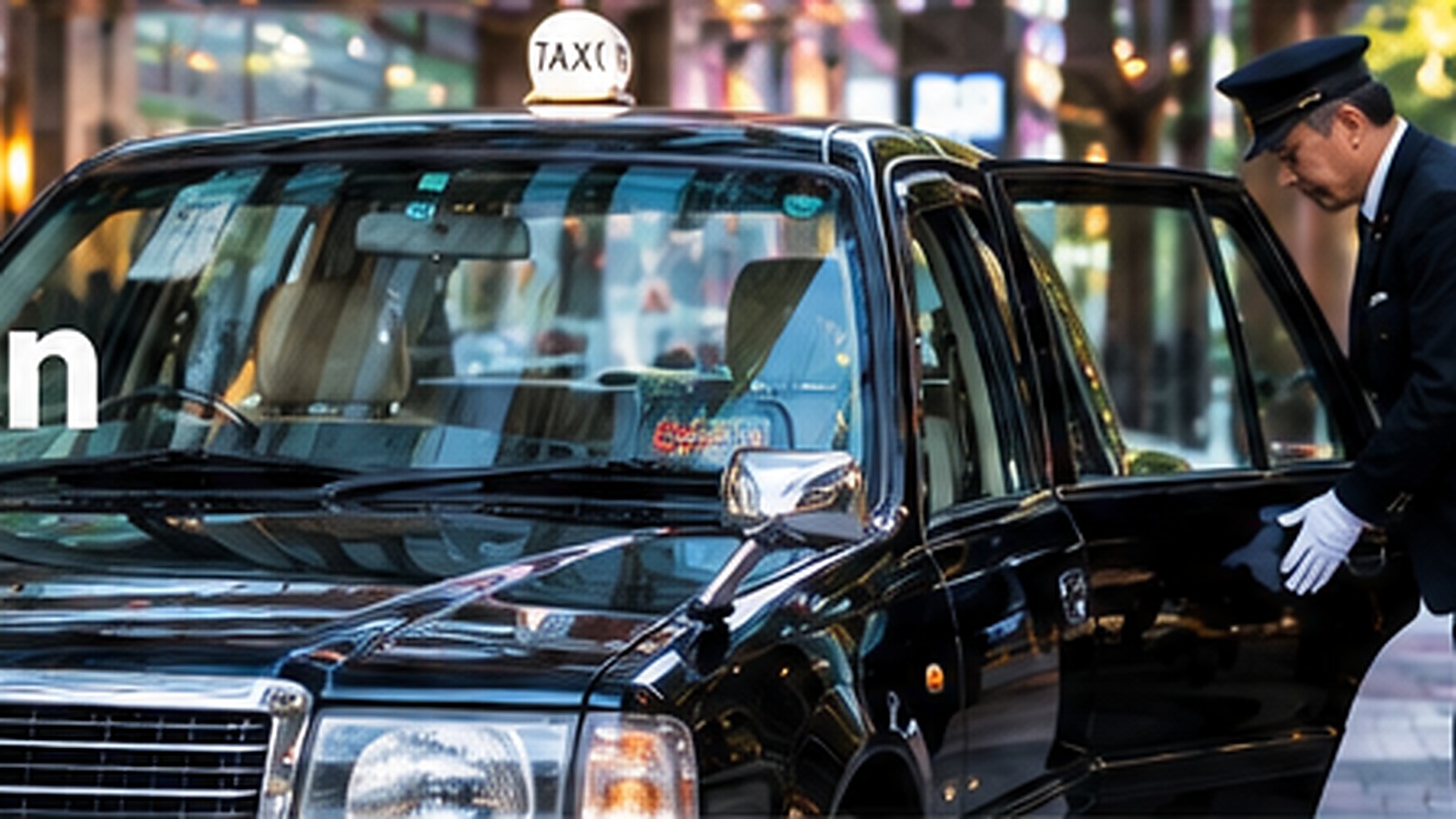
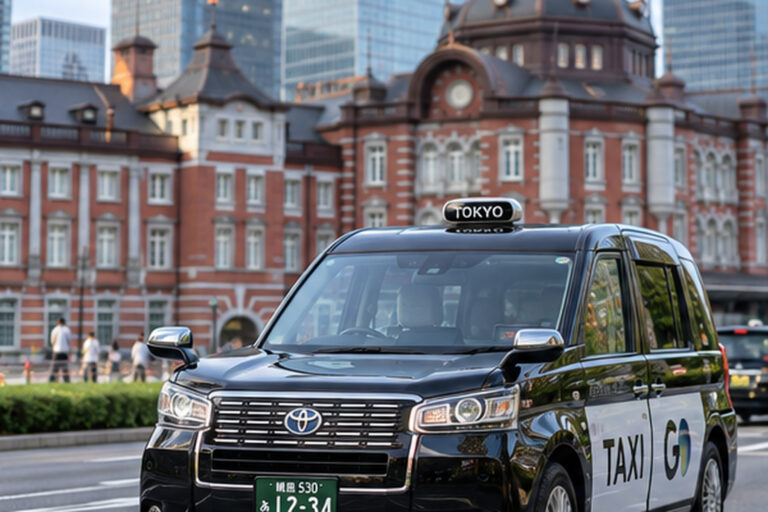
Taxis in Japan are generally clean, reliable and easy to use. Take one from a taxi stand, hail an available cab where stopping is safe, ask your hotel or venue to call one, or use a taxi app. Let the driver operate the rear door, show your destination clearly on your phone, confirm payment options before the ride if needed, and keep the receipt. Taxis cost more than trains or buses, so they are most useful for luggage, late nights, bad weather, families, airport transfers and routes with awkward public-transport connections.
What You’ll Learn
- When a taxi is worth the extra cost compared with trains or buses
- How to hail a taxi, use taxi stands and book through an app
- How fares, payment, automatic doors and receipts work
- How to handle airport rides, luggage and language barriers
When a Taxi Is Worth Using
Japan's rail and bus networks are usually the best value for routine travel, but taxis become useful when convenience matters more than price.
A taxi can remove multiple transfers, stairs and long walks. That is especially helpful after the last train, in heavy rain or heat, with children, with large luggage, or when a destination is poorly served by public transport.
- Late-night travel after trains or buses become limited
- Large suitcases, strollers or mobility needs
- Short hotel-to-restaurant or station-to-hotel rides
- Bad weather or difficult walking conditions
- Rural areas where public transport is infrequent
- Small groups sharing a short ride
How to Find a Taxi
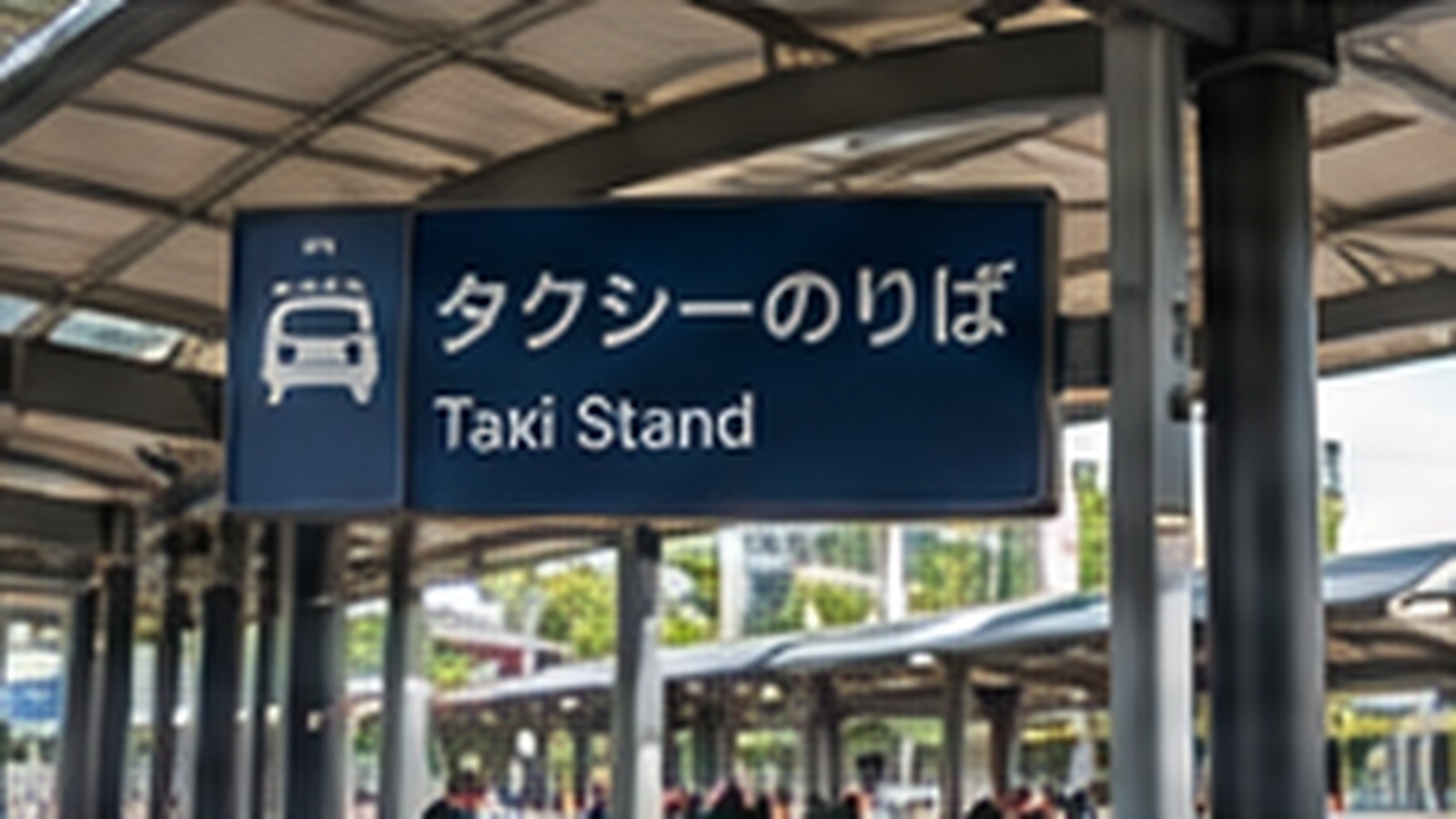
The easiest option for a first-time visitor is usually a taxi stand at a station, airport, hotel or major commercial area.
In busy cities you can also hail an available taxi from the street where stopping is legal and safe. Hotels, restaurants and attractions can often call a taxi for you.
- Taxi stand: simplest when a queue is available
- Street hail: useful in central city areas
- Hotel or venue call: useful when the pickup point is confusing
- Taxi app: useful when you want a confirmed vehicle and pickup point
Availability Signs and Automatic Doors
Japanese taxis display an availability indicator in the front window. The exact display can vary, so visitors should focus on whether the cab is clearly marked as available rather than memorizing one color rule.
Many taxis have rear doors operated automatically by the driver. Wait for the driver to open and close the door instead of pulling it yourself.
- Wait for the rear door to open before entering
- Do not slam or force an automatic door
- When possible, board and exit on the safer curb side
Show the Destination Clearly
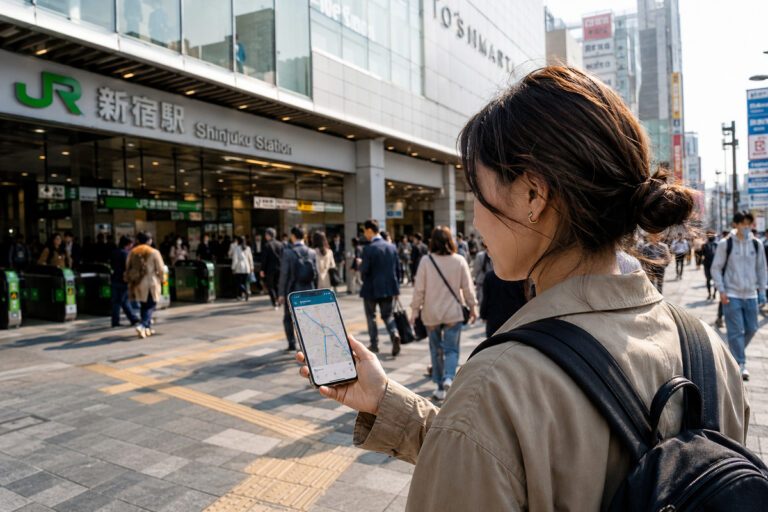
Do not depend on pronunciation alone. A map pin, Japanese address, hotel booking page or destination name written in Japanese is usually the fastest way to avoid confusion.
Keep the destination visible until the driver confirms it. If the entrance is difficult to find, show the exact map pin rather than only the building name.
- Save your hotel address in Japanese before going out
- Use a map pin for restaurants, small hotels and apartment-style stays
- Keep mobile data available so you can update the destination if needed
How Taxi Fares Work
Taxi fares are normally calculated by the meter, and the fare structure differs by region. Time spent moving slowly in traffic can also affect the fare.
Extra charges may apply for late-night travel, pickup, reservations, expressway tolls or special services. App-based services may also add dispatch or service fees.
For an unfamiliar route, treat any app estimate as a planning figure rather than a guaranteed final price unless the service specifically offers a confirmed or fixed fare.
- Long rides can become expensive quickly
- Traffic can increase a metered fare
- Tolls are normally separate when expressways are used
- Airport or app services may offer fixed-fare options in selected areas
Payment Methods and Receipts
Major-city taxis commonly accept cash and many accept credit cards or electronic payment, but payment support still varies by vehicle and operator. Carrying some Japanese yen remains a useful backup.
If you use an app, the payment method and any service fees are shown in the app. With in-car payment, check the payment icons or ask before departure if a particular card or electronic method is important to you.
Take the receipt after an important ride. It can identify the taxi company or vehicle and is extremely useful if you leave something behind.
- Japanese yen is the safest universal backup
- Check card or electronic-payment support before relying on it
- Keep receipts for airport rides, business trips and late-night rides
Taxi Apps: GO, S.RIDE, Uber and DiDi
Taxi apps reduce language friction because you set the pickup and destination on the phone. They can also show the assigned vehicle, estimated arrival and payment options.
GO provides broad coverage in Japan and supports international credit cards and Apple Pay for eligible app payments. Availability and individual services still depend on the area.
Uber in Japan commonly connects users with licensed taxi services, while available ride types vary by location. S.RIDE and DiDi are also used in selected areas. Install at least one app before you need a late-night or bad-weather ride.
- Confirm the pickup pin before requesting
- Check the vehicle number before boarding
- Review dispatch, reservation or service fees before confirming
- Do not assume every app operates in every neighborhood

Airport Taxis and Fixed Fares
Airport taxis are convenient when you have heavy luggage, children, a late arrival or a hotel that is awkward to reach by train. They are usually more expensive than rail or airport buses.
Haneda has official taxi stands and fixed-fare arrangements for designated Tokyo zones, although conditions, tolls and eligible areas vary by operator. Some taxi apps also offer airport flat-rate services in selected areas.
Before choosing a taxi from an airport, compare the full door-to-door journey with an airport bus or train. A taxi can still be the better choice when several people share the fare or when public transport would require difficult transfers.
- Use official airport taxi stands
- Confirm whether expressway tolls are included
- Check fixed-fare eligibility for your destination
- Compare the total trip, not only the ticket price
Luggage, Families and Accessibility
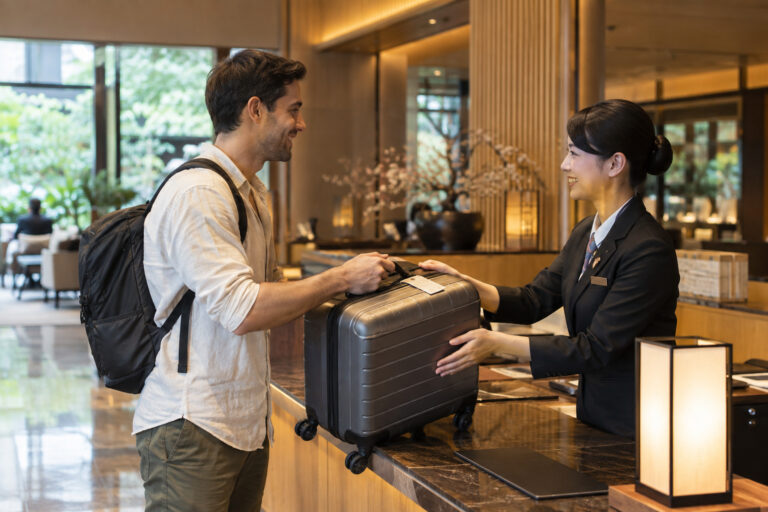
A standard taxi may not fit several passengers plus multiple large suitcases. If your group has a lot of luggage, request a larger vehicle, wagon or universal-design taxi where available.
Taxis can be valuable for families with tired children, travelers with mobility needs and anyone avoiding station stairs. At major transport hubs, look for staffed taxi stands or ask hotel staff to arrange the correct vehicle.
- Count both passengers and large bags before booking
- Request a larger vehicle when luggage space is uncertain
- Use luggage delivery when moving several large suitcases between cities

Taxi Safety and Etiquette
Licensed taxis in Japan are generally safe and professional. Normal courtesy is enough: wear your seatbelt, keep the car clean and avoid distracting the driver.
Tipping is not expected. Pay the fare and any legitimate tolls or charges shown by the meter, app or operator.
- Wear your seatbelt
- Keep food and drinks tidy
- Avoid loud or distracting behavior
- Let the driver handle the rear door
- Check the seat and footwell before leaving
If You Leave Something in the Taxi
Act quickly. The receipt is often the fastest route back to the operator because it can include the taxi company or vehicle information.
If you booked through an app, open the trip history and use its support flow. If a hotel or venue arranged the taxi, contact that location as soon as possible.
- Keep the receipt until you have checked your belongings
- Use app ride history for app-booked trips
- Contact the taxi operator as soon as you notice the loss
Taxi, Train or Airport Bus?
Use trains and buses for most routine urban travel. Use a taxi when the door-to-door benefit is worth the extra cost.
For airport travel, a limousine bus may be easier than rail when you have luggage and is often cheaper than a taxi. For short city trips with several people, the convenience of a shared taxi can be reasonable.
- Train: best for speed and value on major urban routes
- Bus: useful for airports and routes without convenient rail
- Taxi: best for direct travel, luggage, late nights and awkward transfers
FAQ
Are taxis in Japan safe?
Yes. Licensed taxis in Japan are generally safe, clean and professional. Use official taxi stands or established taxi apps when possible.
Are taxis expensive in Japan?
They usually cost more than trains and buses, especially for long rides. They are most useful when luggage, timing, weather or difficult transfers make public transport inconvenient.
Do Japanese taxi doors open automatically?
Many do. The driver commonly operates the rear passenger door, so wait for it to open and close instead of forcing it yourself.
Can I pay by credit card?
Many taxis in major cities accept credit cards, but acceptance varies. Carry some Japanese yen as a backup and check the payment icons or app before relying on a specific method.
Do I need to tip the driver?
No. Tipping is not expected. Pay the meter or app fare plus any valid tolls or additional charges.
Can I use Uber in Japan?
Yes in supported areas. In Japan, Uber commonly dispatches licensed taxis, and the available ride types depend on the location.
What should I show the driver if I do not speak Japanese?
Show a map pin, Japanese address, hotel booking page or destination name written in Japanese. That is usually clearer than pronunciation alone.
Should I keep the taxi receipt?
Yes. It is useful for expenses and can help identify the operator if you leave something in the vehicle.
Related Japan Travel Guides

Official References
Final Thoughts
Taxis in Japan are not the cheapest way to travel, but they are one of the easiest ways to remove friction from the right journey. Use public transport for routine travel, then switch to a taxi when luggage, weather, timing, mobility or a difficult route makes door-to-door transport worth the extra cost. Save your destination in Japanese, keep one taxi app ready, let the driver handle the rear door and keep the receipt until you have checked your belongings.