
Japan Power Plug Guide: Type A Outlets, 100V & Travel Adapters
Japan uses Type A outlets and 100V electricity. Check your charger input label, plug shape, and high-power devices before packing for Japan.
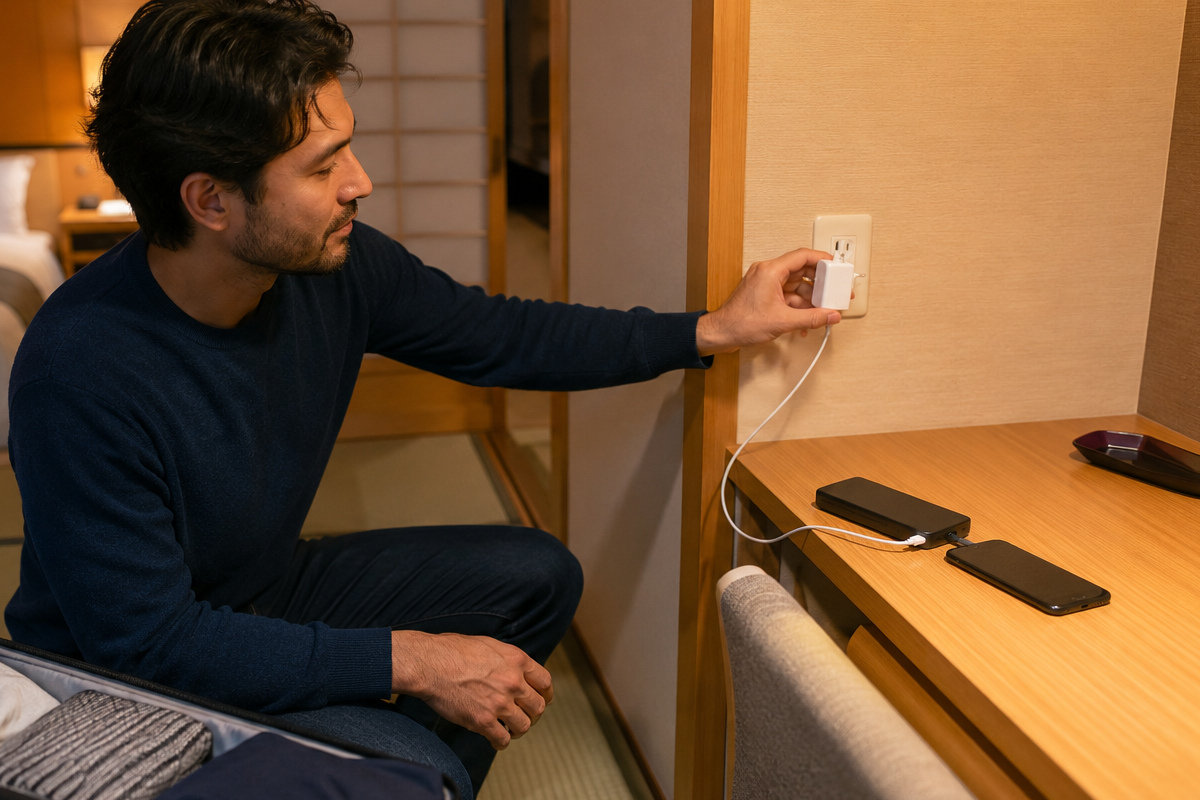
Japan uses Type A plugs with two flat parallel pins and 100V AC electricity. Eastern Japan generally uses 50Hz and western Japan generally uses 60Hz. If your charger says 100–240V and 50/60Hz, it will usually work electrically in Japan; you only need a plug adapter if the plug itself does not fit. A plug adapter changes shape, not voltage, so high-power or single-voltage appliances need separate checking.
What You’ll Learn
- What a normal Japanese Type A outlet and plug look like
- How Japan’s 100V supply and 50/60Hz regions affect devices
- The difference between a plug adapter and a voltage converter
- Which phones, laptops and camera chargers usually work without a converter
- Why hair dryers and other high-power appliances need extra care
What Power Plug Does Japan Use?
Japan’s standard travel plug is Type A: two flat parallel pins. This is the plug shape many travelers know from North America, but physical fit does not guarantee electrical compatibility.
Do not assume that a three-prong grounded plug will fit every room. Grounded outlets and USB charging points exist in some facilities, but a traveler should plan around the standard two-flat-pin Type A outlet.
- Standard plug shape: Type A, two flat parallel pins
- Standard supply: 100V AC
- Bring an adapter when your plug shape is not Type A
- Check both plug shape and the device input rating before use
Japan Voltage and Frequency: 100V, 50Hz and 60Hz
Japan uses 100V AC nationwide. The frequency is generally 50Hz in eastern Japan and 60Hz in western Japan; JNTO specifically notes western areas including Nagoya, Kyoto and Osaka as 60Hz.
For modern switching chargers, the easiest check is the printed input range. A charger marked 100–240V, 50/60Hz is designed to accept Japan’s supply. If the label does not include 100V, do not assume the device is suitable.
- Tokyo and much of eastern Japan: generally 50Hz
- Nagoya, Kyoto, Osaka and much of western Japan: generally 60Hz
- Most modern phone and laptop chargers list 50/60Hz
- Older, motor-driven or specialized equipment may be frequency-sensitive
Plug Adapter vs Voltage Converter
A plug adapter only changes the physical plug shape so it can fit a Japanese Type A outlet. It does not change 100V into another voltage.
A voltage converter or transformer changes voltage. Most travelers do not need one for modern USB phone chargers, laptop power supplies or camera chargers that already accept 100–240V. High-wattage appliances are a different case: never choose a converter by shape alone, and follow the appliance manufacturer’s voltage and wattage guidance.
- Adapter = changes plug shape
- Converter/transformer = changes voltage
- 100–240V charger = usually no voltage converter needed
- 220–240V-only appliance = do not simply plug it into Japan’s 100V supply
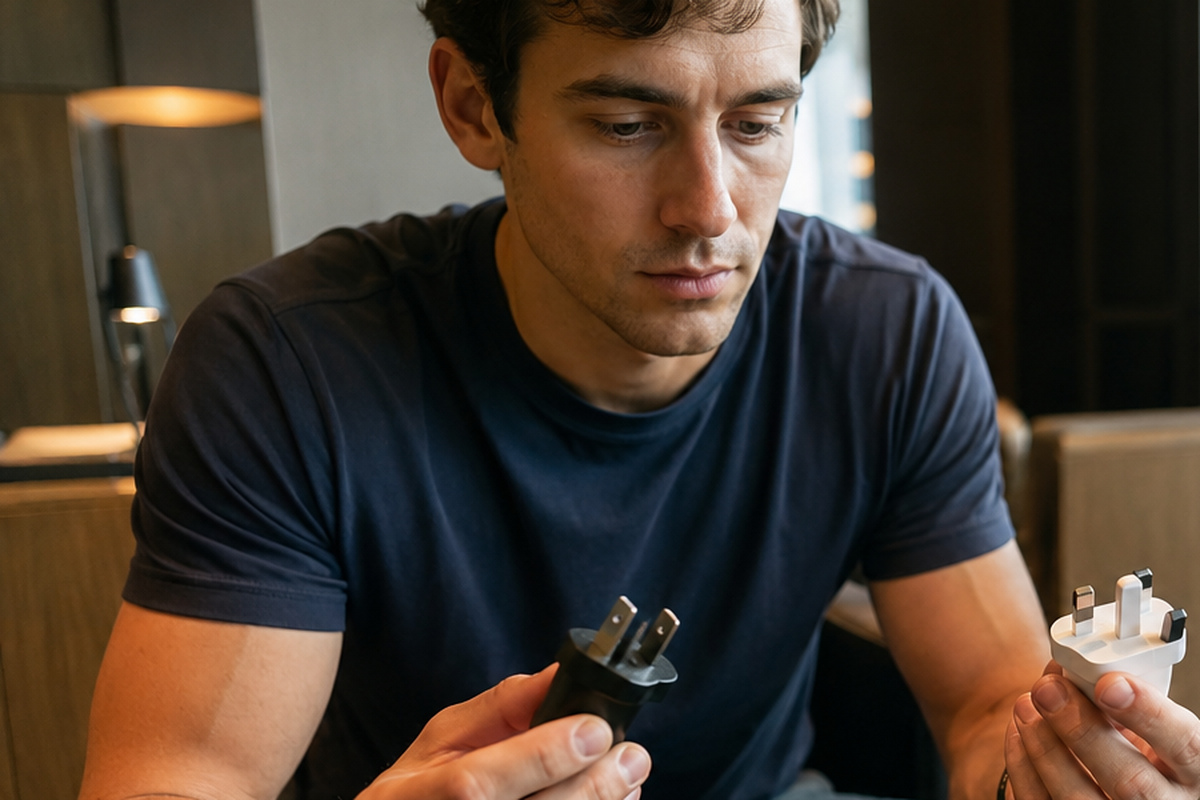
Phones, Laptops, Cameras and USB Chargers
Many modern phone, tablet, laptop, camera and USB-C chargers are multi-voltage. Check the small print on the charger itself rather than relying on the device brand or where you bought it.
If the charger accepts 100–240V and your plug is already Type A, you normally do not need extra electrical equipment. If the charger accepts 100–240V but has a UK, European, Australian or another plug shape, use a correctly rated Japan-compatible Type A adapter.
- Check the input label before departure
- Prefer a reputable multi-port USB or USB-C charger for several low-power devices
- Keep one charging cable and your adapter in carry-on luggage
- Avoid loose, damaged or poorly made adapters
Hair Dryers, Straighteners and Other High-Power Appliances
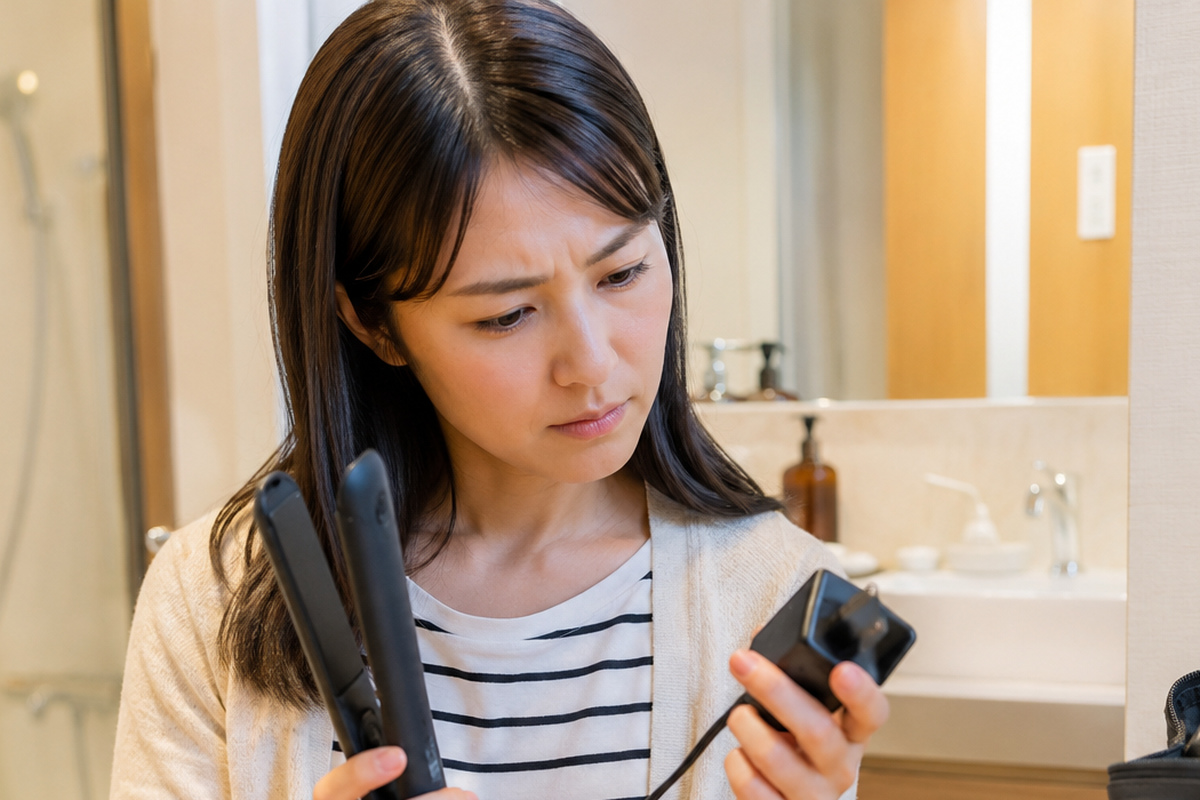
Heat-producing appliances deserve the most caution. Hair dryers, straighteners, curling irons, kettles, steamers and travel irons can draw far more power than phone chargers.
If the appliance is not explicitly compatible with 100V, do not assume a plug adapter makes it safe or effective. For short trips, using the hotel’s dryer or a genuine dual-voltage travel appliance is usually simpler than carrying a large high-wattage transformer.
- Check the appliance voltage switch or input label
- Use the Japan/100–120V setting on a genuine dual-voltage appliance when specified by its manufacturer
- Do not use a hotel shaver-only outlet for a hair dryer
- For expensive or high-power equipment, follow manufacturer guidance rather than generic travel advice
Hotel Outlets and Charging Several Devices
The number and location of hotel outlets varies. Newer rooms may provide bedside AC or USB charging, while older rooms can have only a few convenient sockets.
A compact, reputable multi-port charger is often more useful than carrying several separate charging bricks. Do not overload outlets or use damaged extension products, especially with high-power appliances.
- Plan for the standard Type A outlet, not a universal socket
- Do not rely on hotel USB ports as your only charging method
- Charge phones, cameras, power banks and pocket Wi-Fi overnight
- Keep high-power appliances separate from small USB charging setups
Charging on Shinkansen and During Long Travel Days
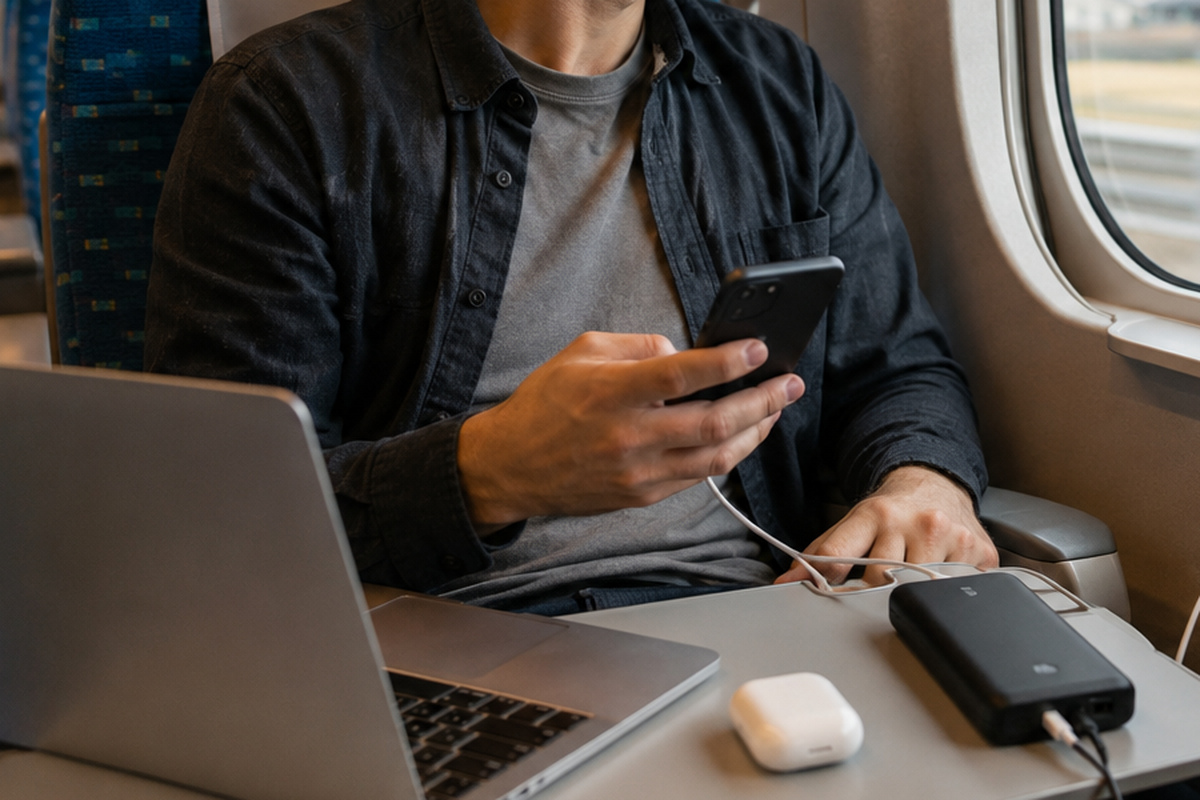
JNTO notes that newer Shinkansen models provide power outlets, but outlet availability still depends on the train and seating arrangement. Treat onboard charging as a useful extra rather than your only plan.
Start long travel days with your phone and power bank charged. Maps, translation, tickets, hotel directions and communication can drain a phone quickly even when the train itself has power.
- Charge before boarding
- Carry a power bank for sightseeing and transfers
- Do not assume every local train, bus or seat has power
- Keep your charger and cable accessible rather than buried in checked luggage
What to Pack and Where to Buy an Adapter in Japan
The easiest approach is to buy the correct adapter before departure so your phone can charge immediately after arrival. JNTO notes that adapters and transformers are also easy to find in major urban electronics districts and large electronics retailers.
Pack only what your devices actually require. One good adapter plus a multi-port charger is often enough for phones, a camera, earbuds and a power bank when every charger already accepts 100–240V.
- One correctly rated Type A travel adapter if your plug shape differs
- A multi-port USB/USB-C charger that accepts 100–240V
- Essential charging cables
- A power bank that complies with your airline’s current battery rules
- Manufacturer instructions for any high-power or medical equipment
FAQ
What plug type does Japan use?
Japan uses Type A plugs with two flat parallel pins as the standard travel plug.
What voltage does Japan use?
Japan uses 100V AC nationwide.
Do I need a voltage converter for my phone charger?
Usually not if the charger input label says 100–240V and 50/60Hz. You may still need a plug adapter if the plug shape does not fit Type A.
Can I use a UK or European charger in Japan?
If the charger itself accepts 100–240V, it can usually work electrically, but you need a correctly rated adapter that converts the plug shape to Japan’s Type A.
Can I use my hair dryer in Japan?
Only if the dryer is designed for Japan’s 100V supply or is a genuine dual-voltage model set according to the manufacturer’s instructions. A plug adapter alone does not change voltage.
Are power outlets available on Shinkansen?
Newer Shinkansen models provide outlets, but availability varies by train and seat. Charge before boarding and carry backup power if your phone is essential.
Related Japan Travel Guides


Official References
Final Thoughts
Japan’s electricity is straightforward once you separate three questions: does the plug physically fit Type A, does the device accept 100V, and does its frequency rating cover 50/60Hz? For most modern phones, laptops, cameras and USB chargers, checking the 100–240V label and bringing the correct plug adapter is enough. High-power appliances deserve separate manufacturer-level checking.