How to Order Food in Japan: Restaurants, Machines and Useful Phrases
A practical guide to ordering food in Japan, from waiting and pointing at menus to ticket machines, tablets, QR menus, dietary questions, payment, and tipping.
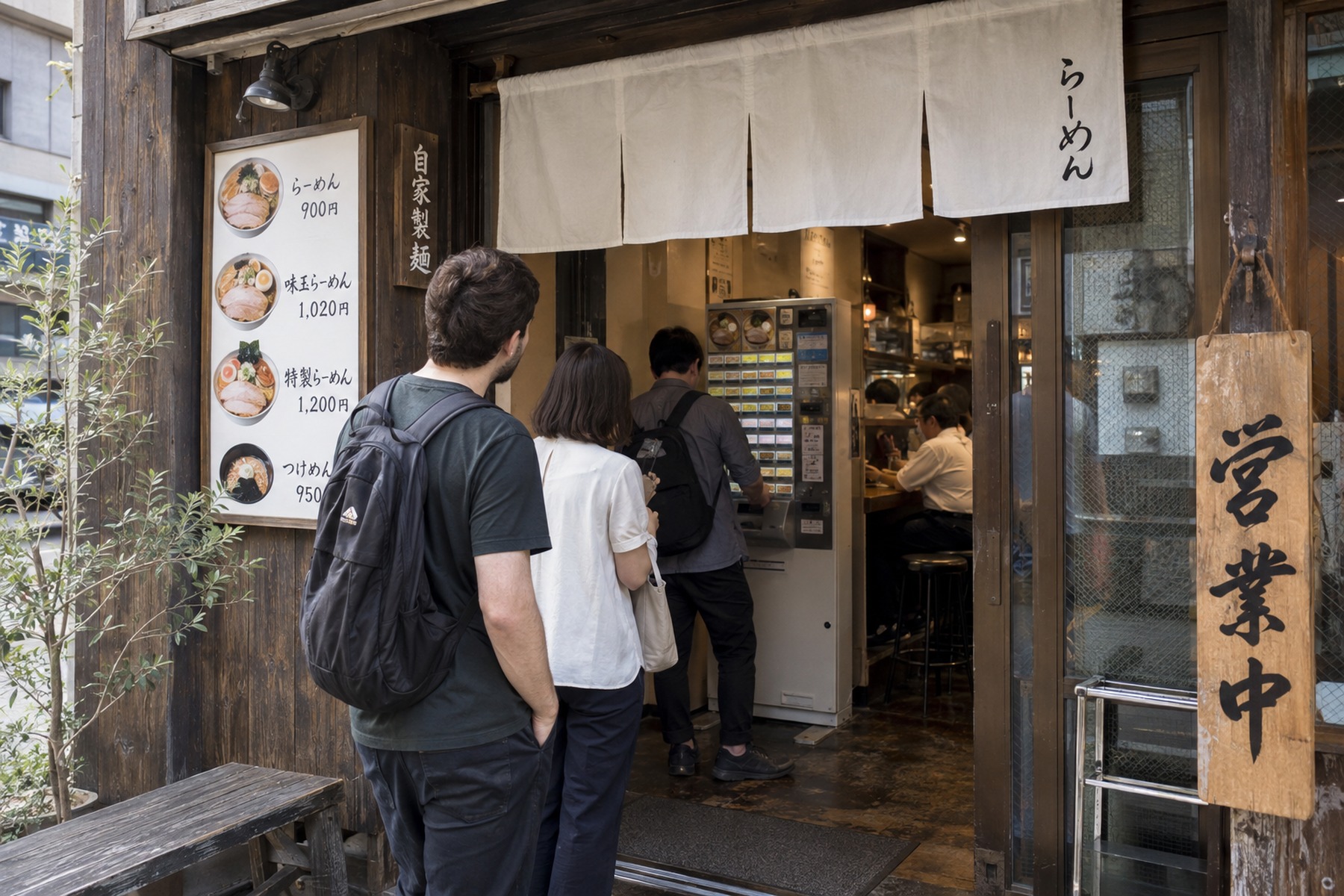
Pause at the entrance and identify the system before sitting down. You may need to wait for staff, buy a meal ticket, order at a counter, use a table tablet or scan a QR code. When ordering from a person, point to the item and say “kore o hitotsu onegaishimasu” for “one of this, please.” Keep the bill slip if one is placed on your table and take it to the register after eating.
What You’ll Learn
- How to recognize the ordering system before entering
- What to do at ticket machines, counters, tablets and QR menus
- Useful phrases that work without fluent Japanese
- How to communicate allergies and dietary restrictions
- When and where to pay without leaving a tip
First, Identify the Restaurant System
Ordering becomes much easier when you spend a few seconds observing the entrance. Look for a queue, a host stand, a ticket machine, a counter sign, table tablets, or instructions near a QR code. Do not assume every restaurant uses table service.
If other customers are buying tickets before sitting, follow that flow. If staff greet guests at the door, wait to be seated. At self-service cafés and food courts, you normally order first and carry or collect the meal yourself.
Small restaurants may have rules that are obvious to regular customers but unfamiliar to visitors. A polite “sumimasen” gets attention, and “doko de chūmon shimasu ka” asks where to order.
- Host or waiting list: wait near the entrance until staff direct you.
- Meal-ticket machine: choose and pay before taking a seat.
- Counter order: order and usually pay before sitting down.
- Table service: order from staff and usually pay after eating.
- Tablet or QR menu: send the order digitally from the table.
- Food court: keep the pager or receipt and collect the meal when called.
Entering, Waiting and Getting a Seat
A line may form inside, outside, or along marked floor positions. Join the end rather than standing beside the door. Some popular restaurants use a paper waiting list or digital ticket; writing only your name may not be enough if the form also asks for party size.
When staff ask “nanmei-sama desu ka,” they are asking how many people are in your group. Hold up the number of fingers and answer “hitori” for one person, “futari” for two, or say the number in English if needed.
Counter seats are normal for solo diners. Place large luggage only where staff permit it, because narrow aisles and emergency routes must remain clear.
- One person: “hitori desu.”
- Two people: “futari desu.”
- A smoking or non-smoking choice may be offered where both areas are legally permitted.
- If a restaurant is full, staff may show a waiting time or say “manseki,” meaning no seats are currently available.
Ordering From Staff Without Fluent Japanese
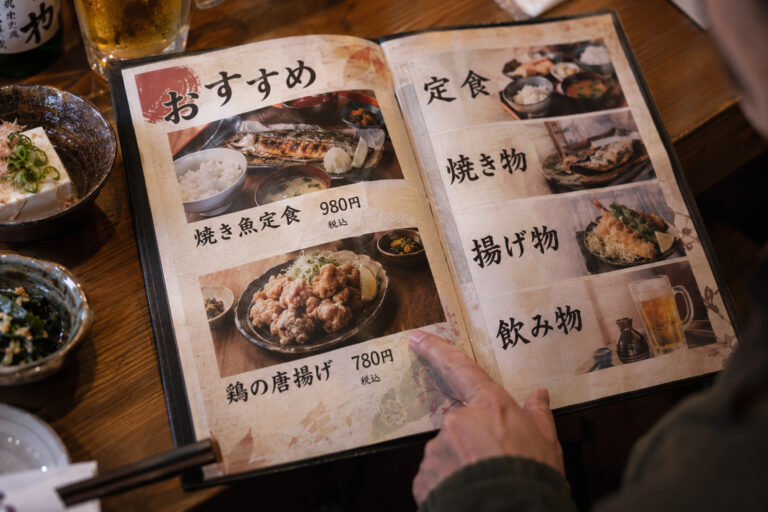
Pointing is acceptable when it is calm and specific. Keep the menu facing the server, point to one item, and state the quantity. “Kore o hitotsu onegaishimasu” means “one of this, please.” For two, use “futatsu.”
A server may ask follow-up questions about size, noodles, rice, toppings, drink sets, or whether an order is for dine-in or takeaway. Do not say yes automatically. Ask them to repeat slowly with “mō ichido, yukkuri onegaishimasu,” or point to the available choices.
Photos help identify a dish but do not prove its ingredients or portion size. Confirm unfamiliar set meals, sauces and add-ons before the order is submitted.
- “Eigo no menyū wa arimasu ka?” — Do you have an English menu?
- “Kore o hitotsu onegaishimasu.” — One of this, please.
- “Osusume wa nan desu ka?” — What do you recommend?
- “Nuki ni dekimasu ka?” — Can this be left out?
- “Mō ichido, yukkuri onegaishimasu.” — Once more, slowly, please.
- “Daijōbu desu.” — No thank you or I am fine, depending on context.
How to Use a Meal-Ticket Machine
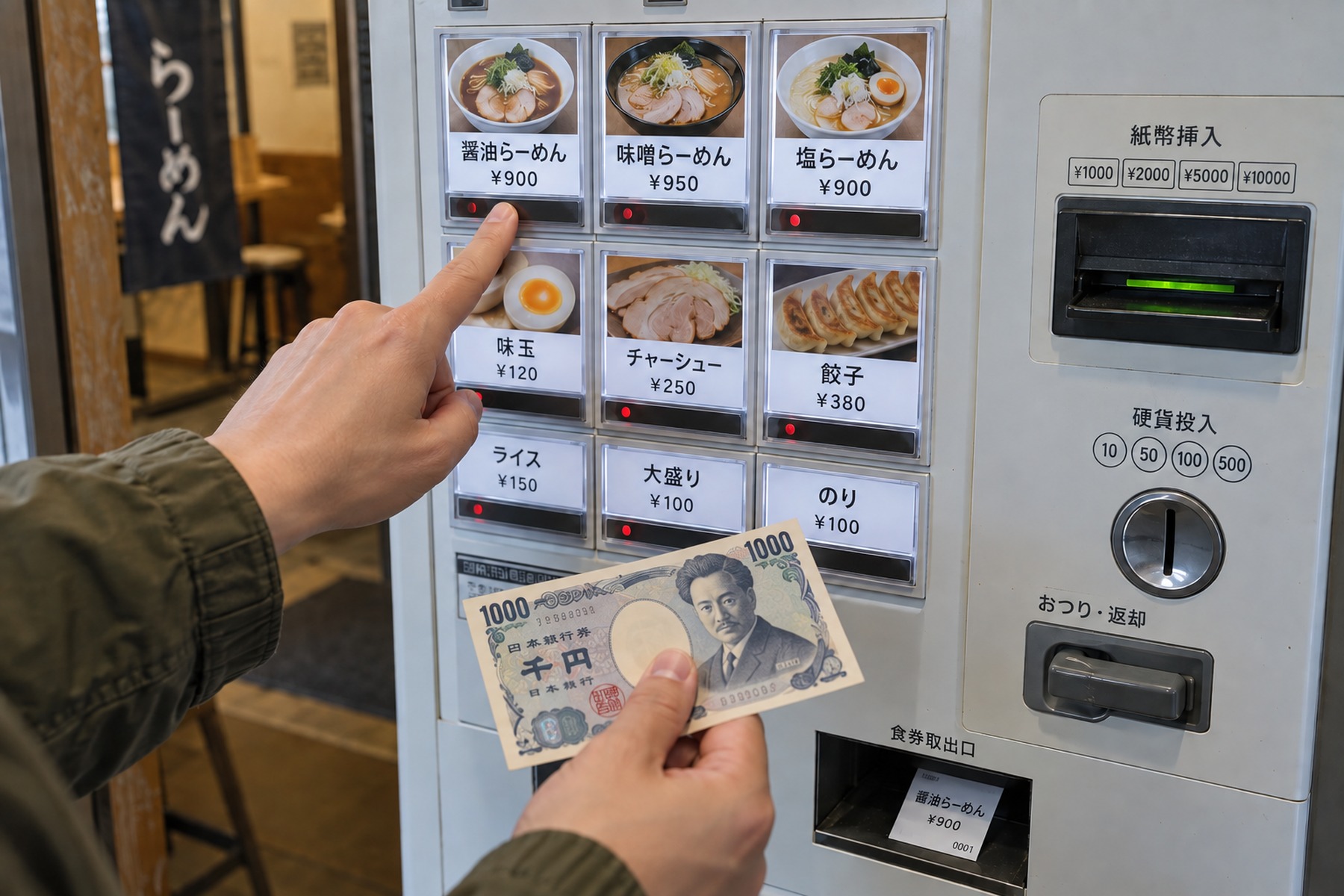
Meal-ticket machines are common at ramen, soba, curry, beef-bowl and other fast casual shops. The usual flow is payment first, selection second, then taking both the ticket and any change. Some machines reverse the first two steps or use a touchscreen, so follow the on-screen cue.
Study the menu outside before reaching the front of a queue. On a button machine, insert accepted cash, press the physical button beneath the meal label, collect the printed ticket, and hand it to staff. A red or unlit button can mean an item is sold out.
Machines may ask for noodle firmness, portion size or toppings after the main item. Choose the standard option if you do not recognize the choices. Keep small yen notes and coins available because payment support varies by machine.
- Choose the base dish before adding eggs, extra meat, rice or drinks.
- Check whether the price shown is for a full meal or only a topping.
- Take your change before moving away from the machine.
- Give the ticket to staff even if the machine appears to send an electronic order.
- If you need time, step aside and let the next customer use the machine.
Tablets, QR Menus and Counter Ordering
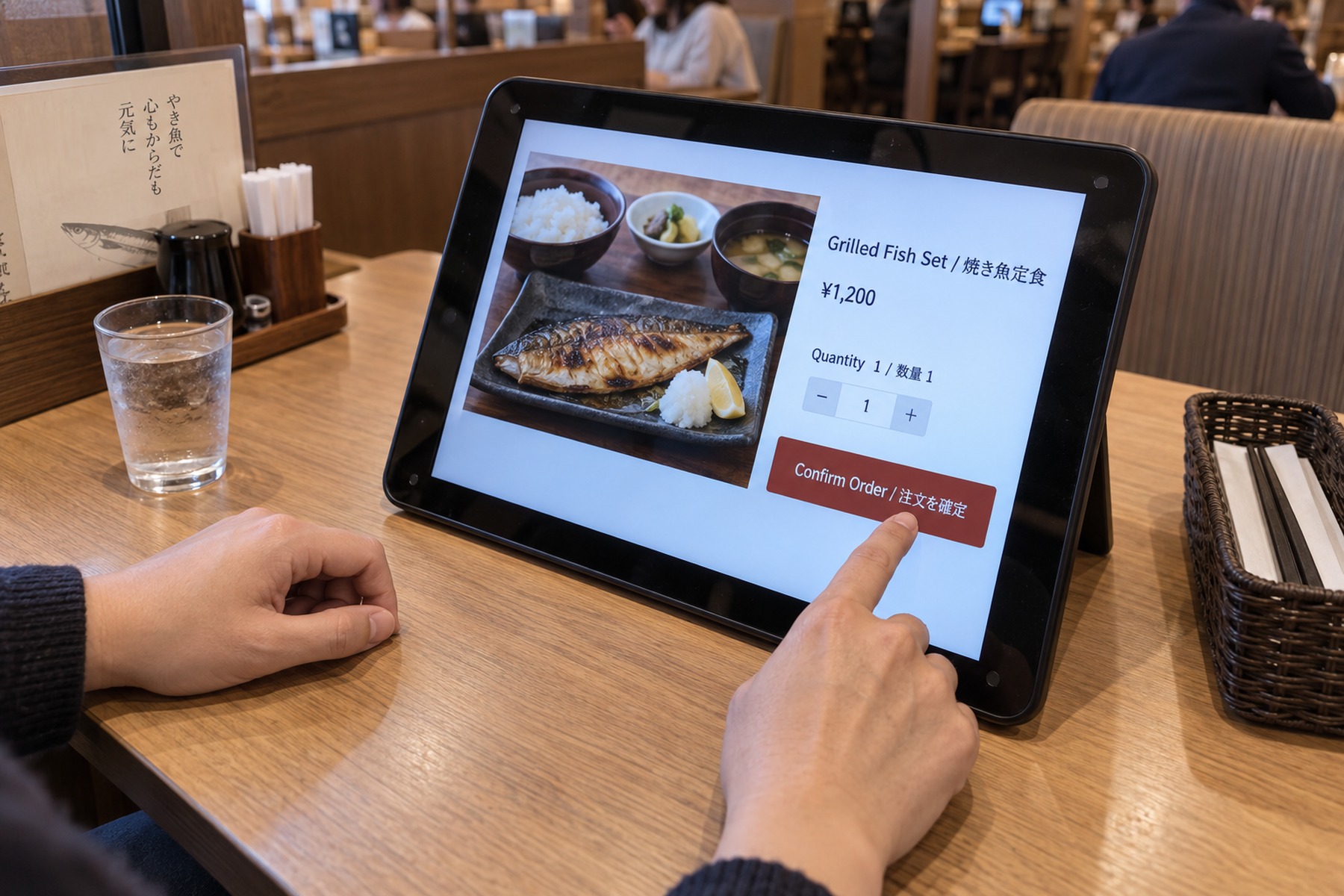
Tablets are common at family restaurants, sushi chains and casual dining venues. Look for a language button, choose the item, review quantity and options, then tap the final order confirmation. Adding an item to a cart is not always the same as sending the order.
QR ordering normally opens a mobile webpage. Confirm that the code belongs to your table, use the restaurant’s official page, and check the cart total before submitting. A working mobile connection also helps with translation, but do not photograph or scan codes that are unrelated to your table.
At a counter café, order and pay before sitting unless staff say otherwise. You may receive a number, pager or table marker. Keep it visible and listen for the number rather than waiting for table service.
- Verify table number, quantity and options before confirming.
- Check the order history if dishes seem delayed.
- Do not submit the same order again unless the first one clearly failed.
- Keep your browser open until the restaurant confirms the order.
- At food courts, return trays to the designated station after eating.
Allergies and Dietary Restrictions
Pictures, dish names and a removed topping are not enough to verify allergens. Broth, sauce, cooking oil, seasoning, garnish and shared equipment can contain ingredients that are not visible. Vegetarian-looking noodle soup may still use fish or meat stock.
For a serious allergy, carry a clear Japanese allergy card that names the ingredient and explains cross-contact risk. Show it before ordering, not after food arrives. If staff cannot confirm safety, choose another meal rather than asking them to guess.
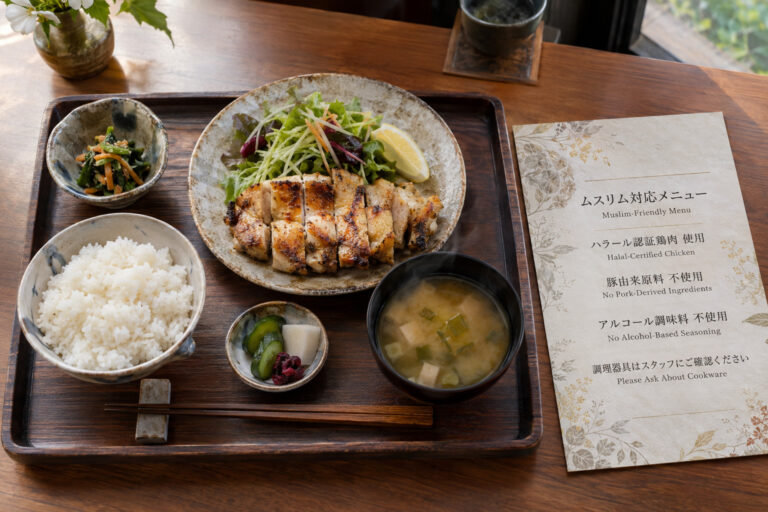
Packaged items have Japanese food labels, but restaurant menus do not always provide the same detail. Religious and lifestyle requirements also need specific questions: “no meat” does not automatically exclude fish stock, gelatin or alcohol-based seasoning.
- State whether traces or shared cooking equipment are unsafe for you.
- Ask about broth, sauces and frying oil, not only visible toppings.
- Keep emergency medication with you.
- Use the Consumer Affairs Agency’s food allergy communication sheet as a preparation aid.
- When certainty is impossible, do not eat the dish.
When the Food Arrives
Check that the dish roughly matches your order before you begin. If something appears wrong, politely call staff with “sumimasen” and show the ticket, tablet history or menu item. Do not eat most of the dish and then try to return it.
Water or tea may be self-service. Condiments at the table are usually shared, so use them neatly and close lids after use. At sushi chains, take only the plate you intend to keep and never return a plate to the conveyor.
Slurping noodles is acceptable, but it is not required. Important chopstick rules include not planting chopsticks upright in rice and not passing food directly from one pair of chopsticks to another.
- Use the provided call button where available instead of shouting.
- Ask before moving dishes or trays between tables.
- Keep bags and coats out of service aisles.
- At self-service restaurants, clear or return the tray when signs or other customers indicate that system.
How to Pay and Why You Do Not Tip
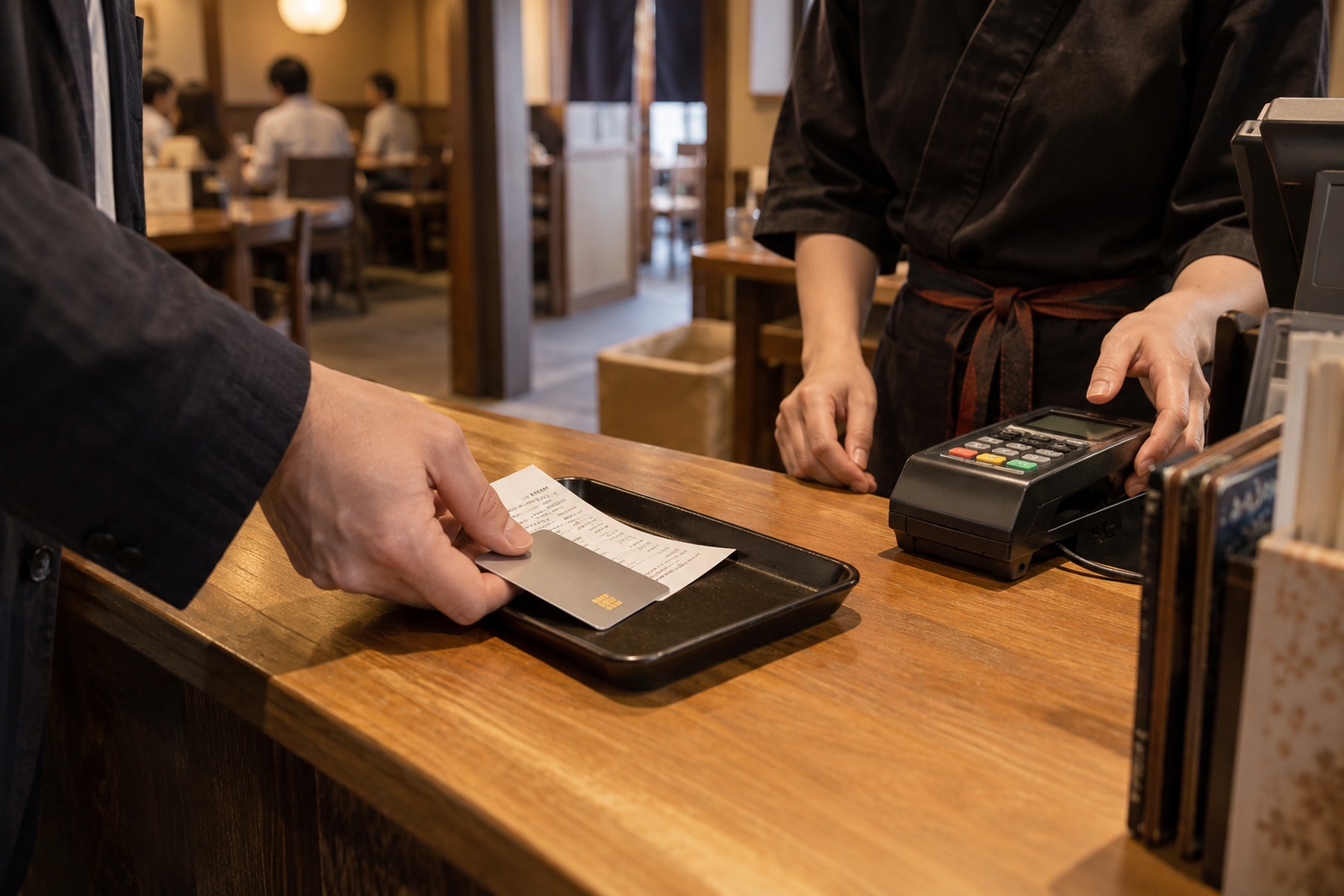
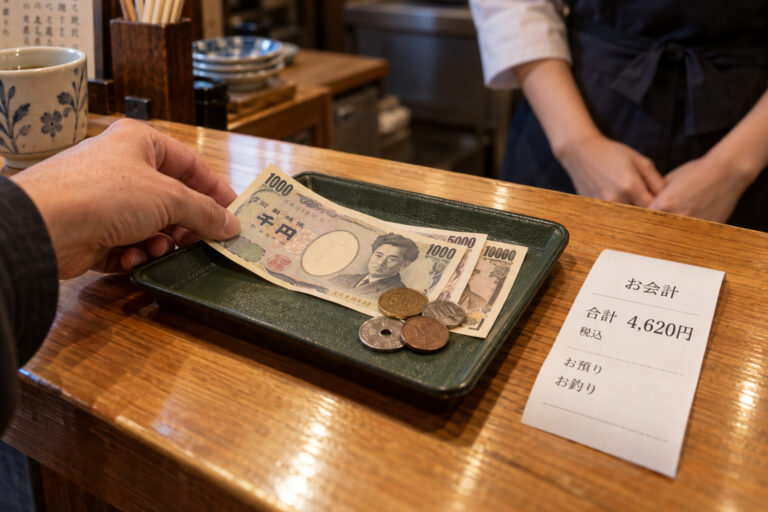
Payment timing depends on the system. Ticket machines and most counter cafés collect payment before the meal. Table-service restaurants often place a small bill slip at the table; carry it to the register near the entrance when you are ready to leave.
Do not assume staff will bring a card terminal to the table. Check payment marks before ordering if cashless payment matters, and keep a backup method. Even when a card brand is shown, the terminal or network can occasionally be unavailable.
Tipping is not expected in ordinary Japanese restaurants. Leaving money on the table can look like forgotten cash. Pay the exact bill at the designated register and offer thanks with “gochisōsama deshita” as you leave.
- Keep the bill slip on the table until payment.
- Take the slip, cash or card to the register rather than waving it across the room.
- Use the small payment tray when one is provided.
- Collect your card, receipt and change before leaving.
- Do not add a tip at normal restaurants.
What to Do When You Are Unsure
Stop and identify the single next step: wait, buy a ticket, call staff, confirm the cart, collect food, or pay. Showing the relevant screen or pointing at the exact item is clearer than a long translated sentence.
If the restaurant cannot accommodate a need, thank the staff and leave politely before ordering. A simpler restaurant with photos, set meals, a bilingual tablet or a clearly labeled counter may be a better choice than forcing a complicated order.
Your goal is not perfect Japanese. It is a correct order, confirmed dietary safety, and a smooth payment. Observation plus a few precise phrases handles most everyday meals.
- Show the ticket or order history when asking about a delayed dish.
- Use one short translated question at a time.
- Confirm quantity before confirming the whole order.
- Choose standard size and default toppings when optional settings are unclear.
- Ask before changing seats, splitting bills or packing leftovers.
FAQ
Can I order food in Japan without speaking Japanese?
Yes. Observe the ordering system, point to the exact menu item, state the quantity, and use a short phrase such as “kore o hitotsu onegaishimasu.” Ticket machines and bilingual tablets can also reduce spoken interaction.
Do Japanese restaurants always have English menus?
No. Chain restaurants and tourist areas often provide English support, while small independent restaurants may not. Photos and translation tools help, but they do not reliably confirm ingredients.
Do I pay before or after eating?
Ticket-machine shops and counter cafés usually take payment first. Table-service restaurants often collect payment afterward at a register near the entrance. Follow the ticket, bill slip and local instructions.
What if a ticket machine has no English option?
Compare the button photos and prices with the menu outside, choose the basic dish first, and add only options you understand. Step aside if you need time so the queue can continue.
How should I explain a food allergy?
Use a clear Japanese allergy card, show it before ordering, and state whether shared equipment or traces are unsafe. If staff cannot confirm the ingredients or cross-contact risk, do not eat the dish.
Should I tip restaurant staff in Japan?
No tip is expected at ordinary restaurants. Pay the stated bill at the designated counter or machine and take your change and receipt.
Related Japan Travel Guides
Official References
Final Thoughts
The most reliable ordering skill in Japan is recognizing the restaurant’s system before acting. Pause at the entrance, confirm the item and quantity, communicate dietary needs before ordering, and keep the ticket or bill slip until the meal is finished. A few short phrases and careful observation are more useful than trying to hold a complicated conversation.