Introduction
Sushi is one of the foods many travelers look forward to most when visiting Japan. For first-time visitors, however, choosing a sushi restaurant can feel confusing. Some restaurants are expensive and formal. Some require reservations. Some do not have English menus. Some are counter-only and may feel intimidating if you are not used to Japanese dining culture.
That is why sushi chains are so useful.
Japanese sushi chains are affordable, easy to use, and beginner-friendly. Many have touch screen ordering, pictures on the menu, clear prices, and casual seating. You can try many types of sushi without worrying too much about rules or language.
This guide introduces the best sushi chains in Japan for travelers. It explains what each chain is like, how conveyor belt sushi works, what to order, how much it costs, and what first-time visitors should know before going.
Why Sushi Chains Are Good for Travelers
Sushi chains are not always the most traditional sushi experience, but they are one of the easiest ways to enjoy sushi in Japan.
They are good for travelers because they are:
- Affordable
- Casual
- Easy to find
- Good for groups
- Good for solo travelers
- Often family-friendly
- Easier than small local sushi shops
- Usually clear about prices
Many sushi chains also have tablets or touch screens. Some locations offer English menus, and even when English is limited, pictures make ordering much easier.
If you are nervous about ordering sushi in Japan, a sushi chain is a smart first step.
Conveyor Belt Sushi
Many popular sushi chains in Japan are conveyor belt sushi restaurants.
In Japanese, this style is called kaitenzushi.
At these restaurants, sushi plates move around the restaurant on a conveyor belt. You can take plates directly from the belt, or you can order specific items from a touch panel.
Modern conveyor belt sushi chains often focus more on touch screen ordering than taking random plates from the belt. Your order may arrive on a special lane directly to your seat.
This system is easy for travelers because you can choose slowly, look at photos, and order only what you want.
【Image①】
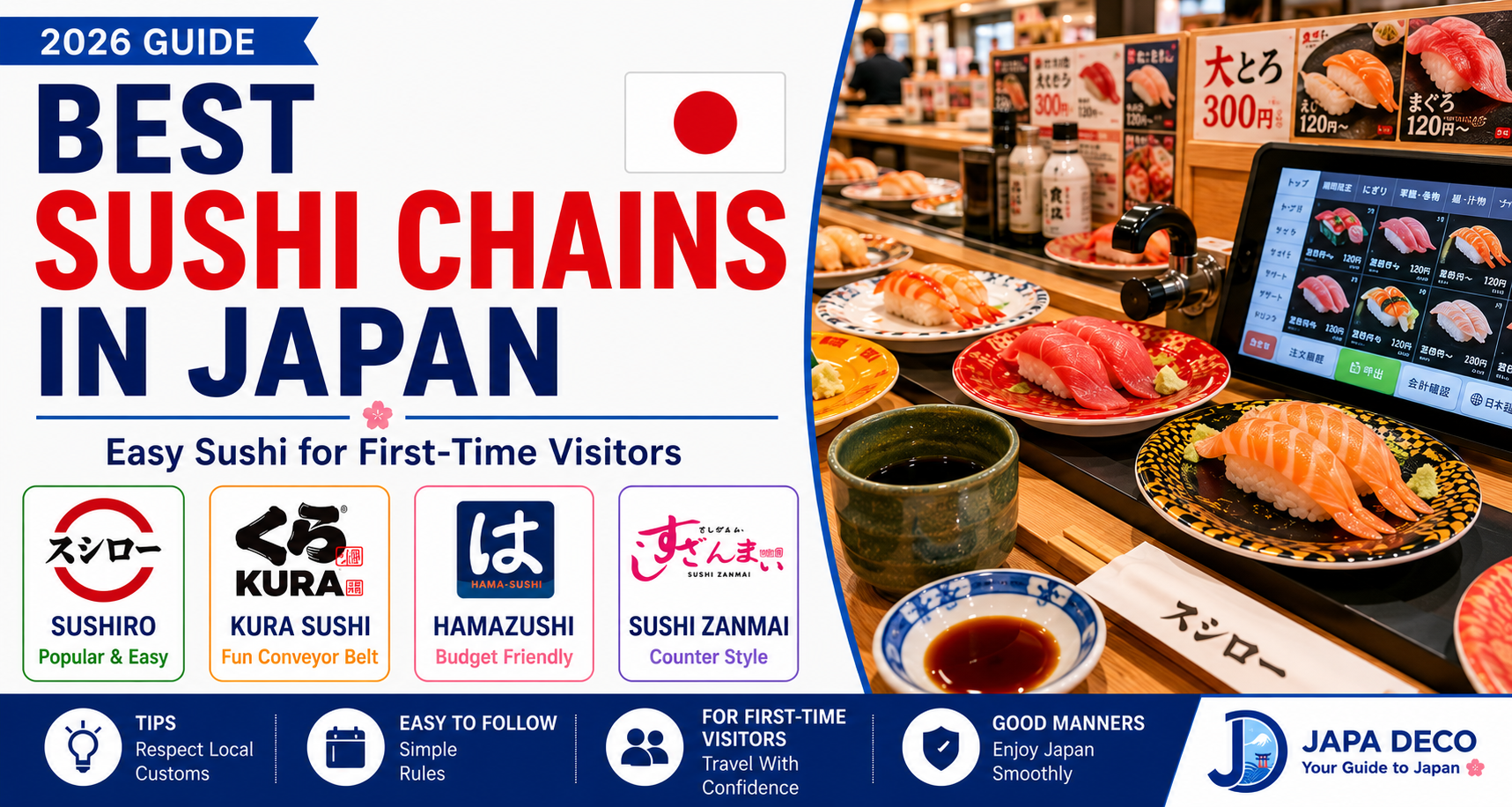
Sushiro
Sushiro is one of the most popular sushi chains in Japan.
It is known for being affordable, easy to use, and widely available. You can find Sushiro in many cities and suburban areas.
Sushiro is a good choice for first-time visitors because the menu is large and the atmosphere is casual. You can try classic sushi, seasonal items, side dishes, desserts, and drinks.
Popular items may include:
- Tuna
- Salmon
- Shrimp
- Egg
- Squid
- Scallop
- Grilled salmon
- Sea urchin when available
- Seasonal specials
Sushiro also offers non-sushi items such as ramen, fried chicken, fries, and desserts. This makes it helpful if you are traveling with someone who does not love raw fish.
The ordering system is usually simple. You use a tablet or touch screen, choose items, and wait for them to arrive.
For travelers who want a safe and easy sushi chain experience, Sushiro is one of the best choices.
Kura Sushi
Kura Sushi is another famous conveyor belt sushi chain.
It is especially fun for families and first-time visitors because many locations have a small game system. After eating a certain number of plates, you can put them into a slot at your table. This may trigger a short animation and sometimes a capsule toy prize.
Kura Sushi is casual, playful, and budget-friendly.
It offers classic sushi as well as side dishes, noodles, desserts, and seasonal items.
Kura Sushi is a good choice if you want the conveyor belt sushi experience to feel fun and memorable.
It may not feel as calm or traditional as smaller sushi restaurants, but it is easy and enjoyable.
If you are traveling with children, Kura Sushi is often a strong option.
Hama Sushi
Hama Sushi is a budget-friendly sushi chain found across Japan.
It is known for simple prices and a wide selection of sushi, side dishes, and seasonal items.
Hama Sushi can be a good choice for travelers who want an affordable meal without spending much time deciding. The atmosphere is casual, and the menu is easy to understand with pictures.
Common items include:
- Tuna
- Salmon
- Shrimp
- Squid
- Egg
- Corn mayo
- Seared fish
- Gunkan sushi
- Noodles
- Fried foods
Hama Sushi is often found outside major tourist centers as well, so it can be useful if you are traveling beyond central Tokyo, Kyoto, or Osaka.
If you want a simple and inexpensive sushi meal, Hama Sushi is worth considering.
Sushi Zanmai
Sushi Zanmai is different from conveyor belt sushi chains.
It is a casual sushi restaurant chain where sushi is usually ordered from a menu and prepared by chefs. Some locations have counter seating, table seating, or both.
Sushi Zanmai is especially well known in Tokyo, including areas such as Tsukiji and central city districts.
It is usually more expensive than budget conveyor belt sushi chains, but it can feel closer to a classic sushi restaurant while still being approachable for tourists.
Sushi Zanmai is a good option if you want:
- A more traditional sushi feel
- Counter-style sushi
- Fresh seafood
- A casual but slightly higher-quality experience
- A restaurant that is easier than small local sushi shops
For first-time visitors who want something between budget conveyor belt sushi and high-end sushi, Sushi Zanmai can be a good choice.
【Image②】
Uobei
Uobei is another popular sushi chain, especially known for its fast ordering system.
Instead of a traditional conveyor belt, many Uobei locations deliver sushi directly to your seat on a high-speed lane after you order from a screen.
This makes the experience simple and fun.
Uobei is often affordable and beginner-friendly. The ordering system usually uses pictures, and some locations may have English options.
It is a good choice if you want a modern sushi chain experience rather than a traditional one.
The food arrives quickly, so it is also useful when you want a fast meal between sightseeing plans.
What Should First-Time Visitors Order?
If you are new to sushi, start with familiar and easy items.
Good first choices include:
- Salmon
- Tuna
- Shrimp
- Egg
- Grilled salmon
- Seared tuna
- Cucumber roll
- Tuna mayo
- Corn mayo
- Scallop
If you are comfortable with raw fish, try tuna, salmon, yellowtail, squid, and scallop.
If you are unsure about raw fish, choose cooked or seared items.
Many sushi chains also offer:
- Fried chicken
- Ramen
- Udon
- French fries
- Desserts
- Tea
- Soft drinks
You do not need to eat only raw sushi. Casual sushi chains are flexible.
How Much Does Sushi Cost at Chains?
Prices depend on the chain, location, and item.
At budget conveyor belt sushi chains, many basic plates are affordable. Special items, premium seafood, and seasonal dishes cost more.
A simple meal may cost around 1,000 to 2,000 yen per person if you eat casually.
If you order many premium items, desserts, drinks, or side dishes, the total can be higher.
Sushi Zanmai and other counter-style chains may cost more than conveyor belt sushi restaurants.
The good thing about sushi chains is that prices are usually clear. Plates may have different colors or menu prices, and tablets often show the price before you order.
How to Eat at a Sushi Chain
The basic process is simple.
First, enter the restaurant and get a seat. In some chains, you may need to take a number from a machine or check in with a tablet.
Then sit at your table or counter.
You will usually find:
- Chopsticks
- Soy sauce
- Small plates
- Tea powder
- Hot water tap
- Pickled ginger
- Touch screen menu
Order sushi from the screen or take plates from the conveyor belt if that system is used.
When your food arrives, take it carefully.
At the end, call staff or use the checkout button on the tablet. Some restaurants count plates automatically. Others count your plates manually.
Then take your bill or table card to the register.
Sushi Etiquette for Beginners
Sushi chains are casual, so you do not need to worry too much.
Still, these tips help:
- Do not touch sushi you are not taking.
- Do not put plates back on the belt.
- Use only a small amount of soy sauce.
- Do not waste food.
- Return used plates only if the restaurant system tells you to.
- Keep the table clean.
- Follow the touch screen instructions.
You can eat sushi with chopsticks or your hands. Both are acceptable in casual settings.
For soy sauce, dip the fish side lightly when possible. However, at casual chains, nobody expects tourists to be perfect.
Wasabi and Ginger
Wasabi is the green spicy paste often served with sushi.
At some sushi chains, sushi comes without wasabi by default. You may need to add it yourself.
Pickled ginger is usually placed at the table. It is meant to refresh your mouth between different sushi pieces.
It is not usually placed on top of sushi like a topping.
If you do not like wasabi, you can avoid it easily at many chain restaurants.
【Image③】
Are Sushi Chains Good Quality?
Sushi chains are not the same as high-end sushi restaurants.
However, they are usually clean, reliable, affordable, and enjoyable.
For many travelers, the value is excellent.
You can try many different items at a low price, learn what you like, and enjoy sushi without pressure.
If your goal is a once-in-a-lifetime luxury sushi experience, you may want a high-end sushi restaurant.
But if your goal is an easy, fun, and practical sushi meal during your trip, sushi chains are a great choice.
Best Sushi Chain for Different Travelers
Here is a simple guide.
For first-time visitors:
Sushiro is a safe choice.
For families:
Kura Sushi is fun and easy.
For budget travelers:
Hama Sushi is practical.
For a more traditional feel:
Sushi Zanmai is a good option.
For a modern fast experience:
Uobei is enjoyable.
For travelers nervous about Japanese menus:
Choose a chain with touch screen ordering and pictures.
Common Mistakes to Avoid
One common mistake is ordering too much at once.
Start with a few plates, then order more.
Another mistake is assuming every sushi item is raw fish. Many items are cooked, seared, fried, or vegetable-based.
Some travelers also forget that small plates add up quickly. Even affordable sushi can become expensive if you keep ordering premium items.
Finally, avoid wasting food. Order slowly and only take what you plan to eat.
Should You Reserve?
Most casual sushi chains do not require reservations, but busy locations can have long waits.
Popular restaurants near tourist areas may be crowded at lunch and dinner.
To avoid long lines:
- Go before peak meal times
- Try late lunch or early dinner
- Use a ticket machine if available
- Check if the chain has an app or online waiting system
- Visit locations away from major tourist spots
If you see a long line, it may still move faster than expected.
Conclusion
Sushi chains are one of the easiest ways for first-time visitors to enjoy sushi in Japan.
They are casual, affordable, and much less intimidating than formal sushi restaurants. You can order from touch screens, choose from pictures, try many small plates, and enjoy sushi at your own pace.
Sushiro is a reliable first choice. Kura Sushi is fun and family-friendly. Hama Sushi is budget-friendly. Sushi Zanmai offers a more traditional feel. Uobei is fast and modern.
You do not need to know perfect sushi etiquette before you go. Just order slowly, avoid wasting food, use soy sauce lightly, and enjoy trying different items.
For many travelers, a sushi chain meal becomes one of the most fun and comfortable food experiences in Japan.
If you want sushi that is easy, affordable, and beginner-friendly, Japanese sushi chains are a perfect place to start.
コメント