
Japanese Etiquette for Tourists: Trains, Dining, Temples and Onsen
A practical guide to Japanese etiquette for travelers, covering public transport, queues, restaurants, chopsticks, shoes, temples, photography, onsen and shared spaces.
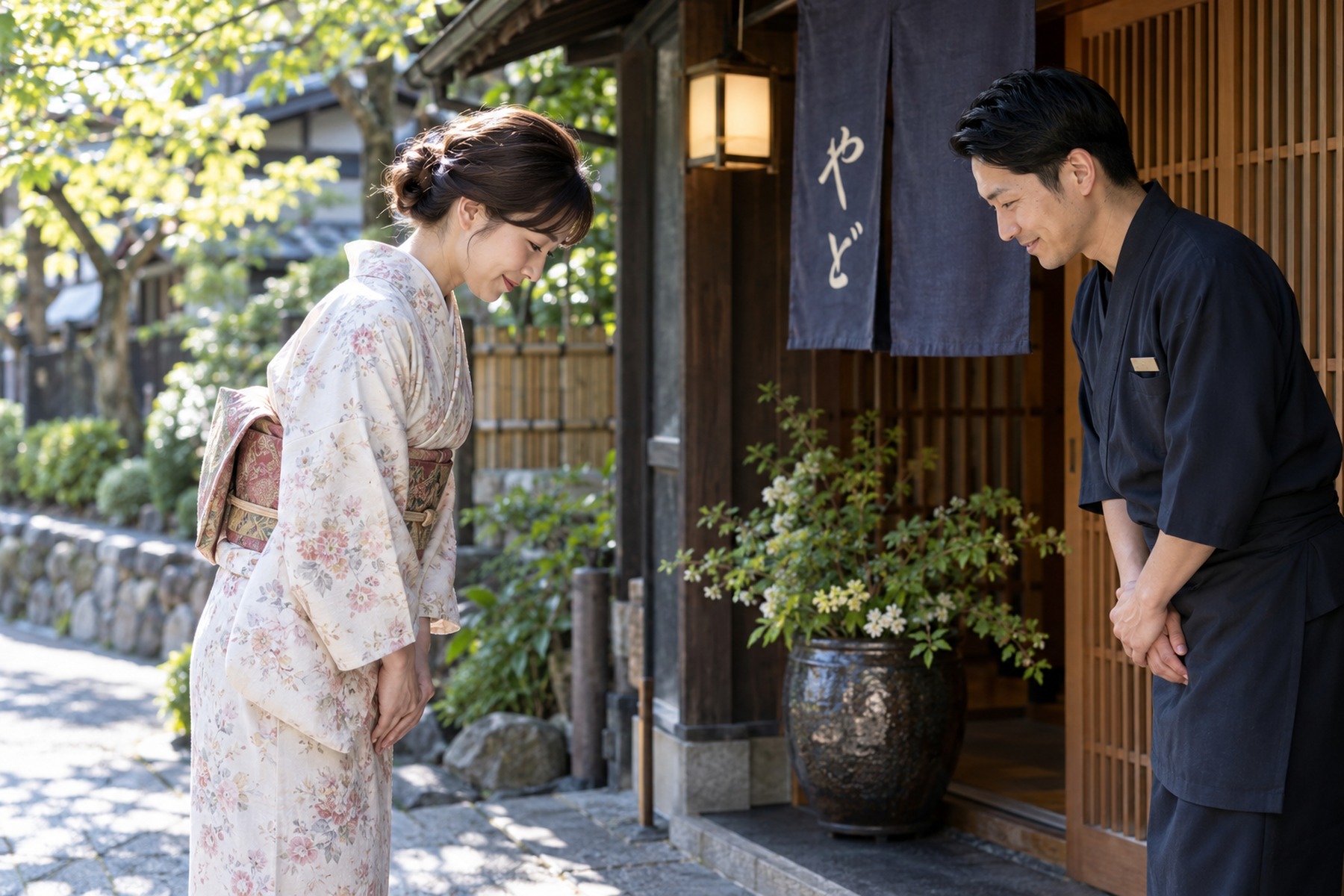
Most Japanese travel etiquette comes down to consideration: keep shared spaces comfortable, follow local signs, line up where indicated, let people exit before you board, keep calls and loud conversations off public transport, remove shoes when the space clearly requires it, ask before photographing people or restricted areas, and follow each bath, temple, restaurant or accommodation’s own rules. You do not need to imitate every local custom perfectly; when unsure, observe, ask, and choose the option that inconveniences others least.
What You’ll Learn
- How to behave on trains, buses, platforms and in queues without slowing other people down.
- Which dining and chopstick habits are useful for visitors and which “rules” are often overstated.
- How to handle shoes, tatami, ryokan entrances and other indoor thresholds.
- How to visit temples, shrines and onsen respectfully while following each facility’s own rules.
- What to do with photos, trash, luggage and other everyday situations where local instructions matter.
The Rule Behind Most Japanese Etiquette
Japan has many customs, but travelers do not need to memorize a long list of rituals. The most useful principle is to avoid inconveniencing people around you and to pay attention to the way a shared space is being used.
That means local signs and staff instructions outrank generic internet advice. A shrine, restaurant, hotel, bathhouse or neighborhood can have rules that differ from another place. If a rule is posted, follow the rule for that place rather than assuming one custom applies everywhere.
- Keep entrances, stairs, platforms and narrow streets clear.
- Lower your voice when a space is quiet.
- Follow queue markings, staff directions and facility signs.
- Ask before entering private property or photographing people.
- If unsure, observe first or ask a staff member.
Train and Bus Manners That Matter Most
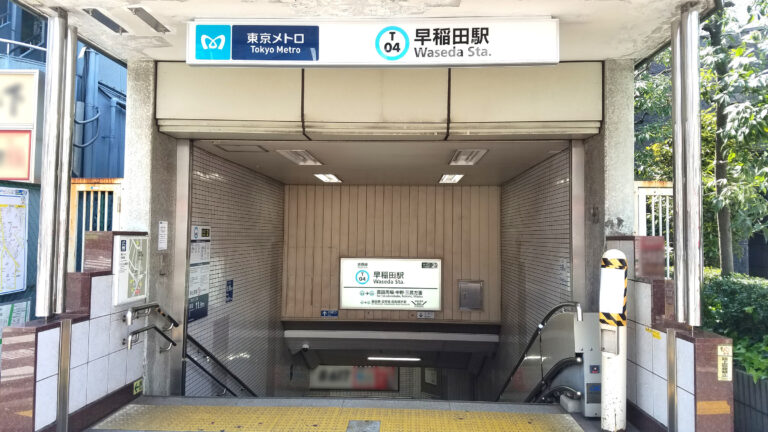
Public transport is one of the easiest places for visitors to notice Japanese etiquette. On platforms, use the marked waiting positions when they are provided and allow passengers to get off before you board. Inside a crowded vehicle, keep bags and backpacks from blocking doors or hitting other passengers.
Phone calls are generally avoided inside ordinary train and bus cars, and conversations are usually kept quieter than in many other countries. On long-distance trains, follow the operator’s instructions for where calls may be made.
- Queue at the floor markings instead of forming a second line.
- Let passengers exit before moving toward the door.
- Keep phone audio off and avoid calls inside ordinary cars.
- Move large luggage away from doors and aisles when possible.
- Leave priority seating available for people who need it.
Queues, Crowds and Walking Through Busy Areas
Orderly queues are common at stations, shops, attractions and restaurants. Cutting into a line or stopping abruptly in a narrow flow of pedestrians creates more friction than simply standing on the “wrong” side of a walkway.
There is no universal rule that eating while walking is forbidden everywhere in Japan. Some markets and attractions have designated eating areas, while other streets discourage eating on the move because of crowding, spills or litter. Follow the rule of the place you are visiting rather than treating it as a nationwide ban.
- Do not stop in the middle of a busy walkway to check your phone or map.
- Step to the side before regrouping with companions.
- Avoid bringing large luggage into tightly crowded areas when practical alternatives exist.
- Use lockers or luggage delivery when a large suitcase would obstruct others.
- Follow local eating and drinking signs in markets, temples and tourist streets.
Restaurant Etiquette Without Overthinking It
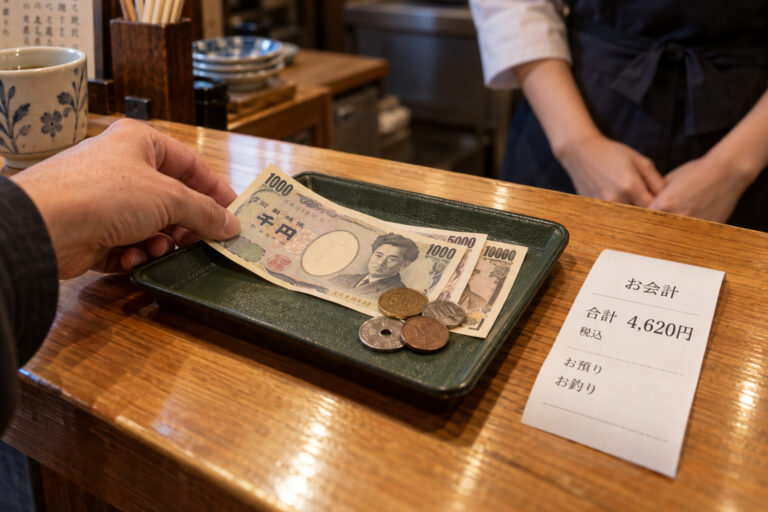
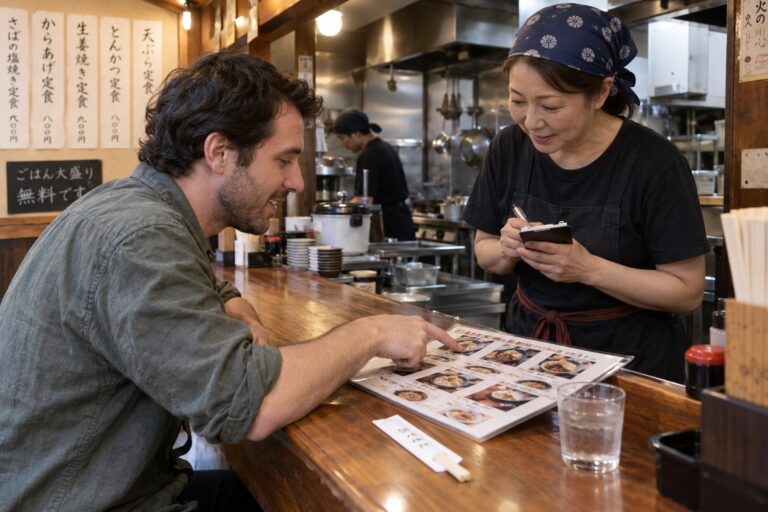
Restaurants in Japan range from ticket-machine ramen shops to counter sushi, izakaya and formal dining rooms. The best first move is to wait near the entrance if staff are seating guests and to follow the restaurant’s payment system rather than assuming you pay at the table.
Tipping is generally not customary in Japan and can cause confusion unless a particular service explicitly provides a gratuity option. A simple thank-you is enough in most ordinary restaurants. Slurping noodles is acceptable in many settings, but it is not something a visitor is required to do.
- Wait to be seated when staff are managing tables.
- Check whether payment is at the table, counter or vending machine.
- Do not leave cash as a tip unless the service specifically says gratuities are accepted.
- Return trays or dishes when the venue asks customers to do so.
- Keep shared counters and condiment areas tidy.
Chopsticks: A Few Customs Worth Remembering
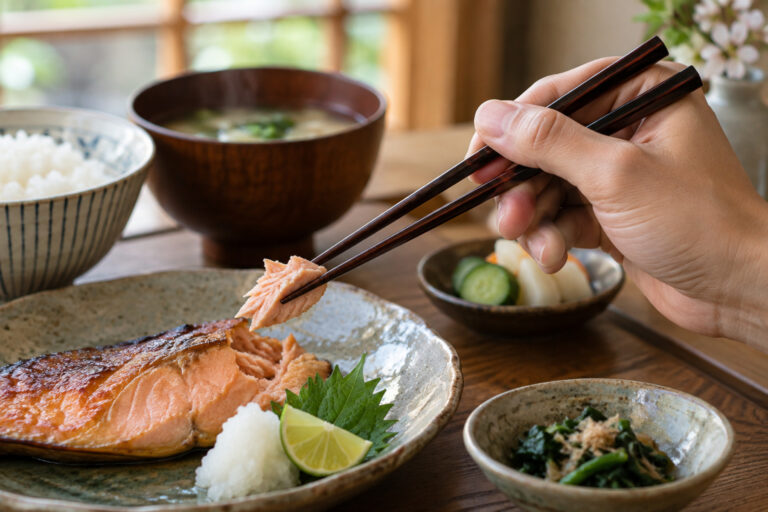
Perfect chopstick technique is not expected from every visitor. The important points are the customs that carry a strong cultural association or create an obvious mess for other diners.
Two actions are especially worth avoiding: leaving chopsticks standing upright in a bowl of rice and passing food directly from one pair of chopsticks to another. Both resemble practices associated with funerals. When a chopstick rest is provided, use it when you pause.
- Do not stick chopsticks vertically into rice.
- Do not pass food directly from chopsticks to chopsticks.
- Avoid pointing at people or dishes with chopsticks.
- Use serving utensils when the restaurant provides them.
- Place chopsticks neatly on the rest or holder when finished.
Shoes, Slippers and Indoor Thresholds
Shoes are removed in many homes, ryokan, tatami rooms and some traditional restaurants, temples and other buildings. The visual clue is usually a genkan-style entrance, a step up to a cleaner floor, shoe storage or slippers waiting inside.
Do not guess by appearance alone. Regular hotels and many modern restaurants allow outdoor shoes, while some traditional spaces do not. If toilet slippers are provided, use them only in the toilet area and switch back afterward.
- Pause at a raised threshold when you see shoes or slippers near the entrance.
- Keep outdoor shoes on the lower or designated side of the entrance.
- Do not step onto tatami with outdoor footwear.
- Use facility-provided slippers as directed.
- Ask staff if the boundary is unclear.
Temples, Shrines and Photography
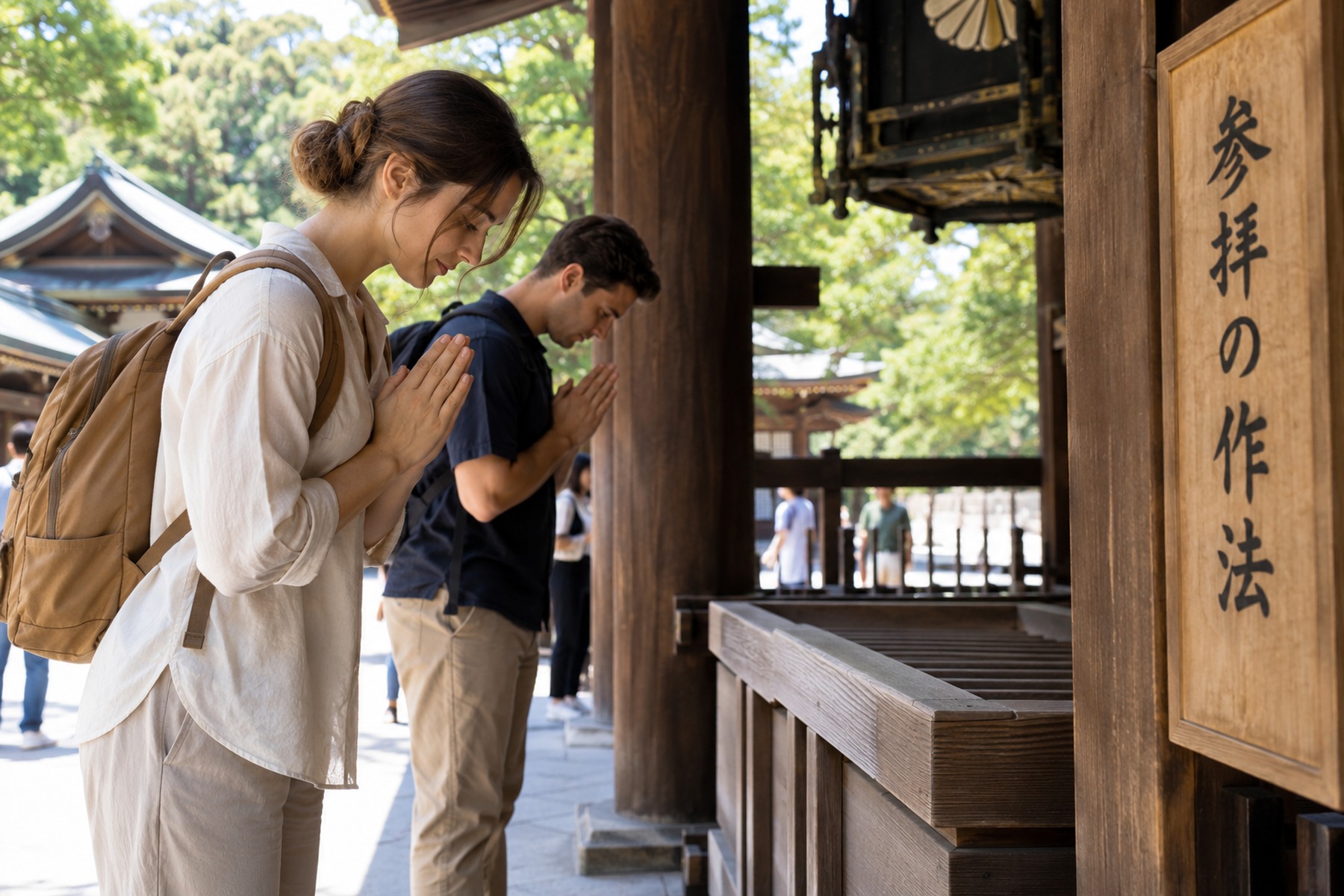
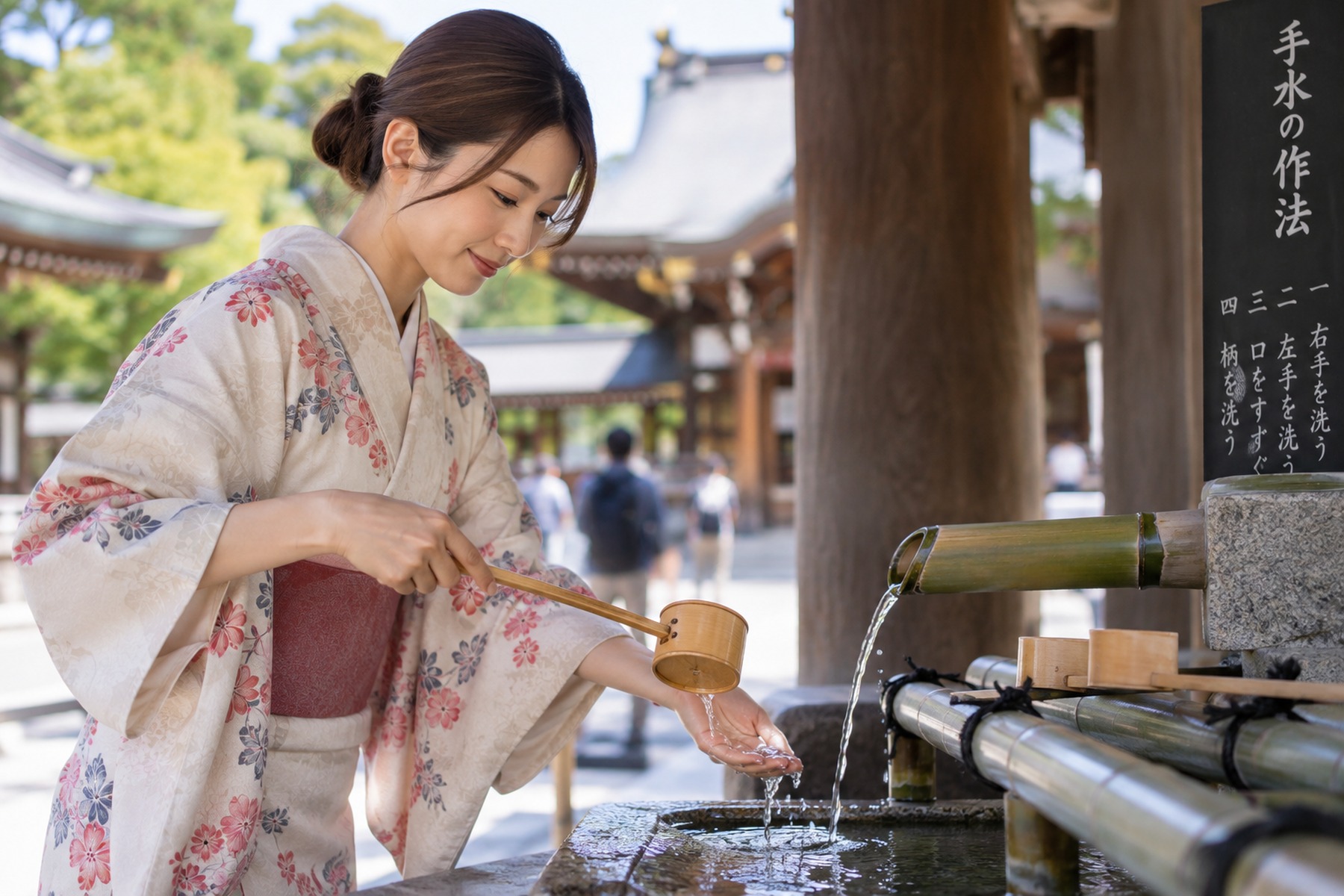
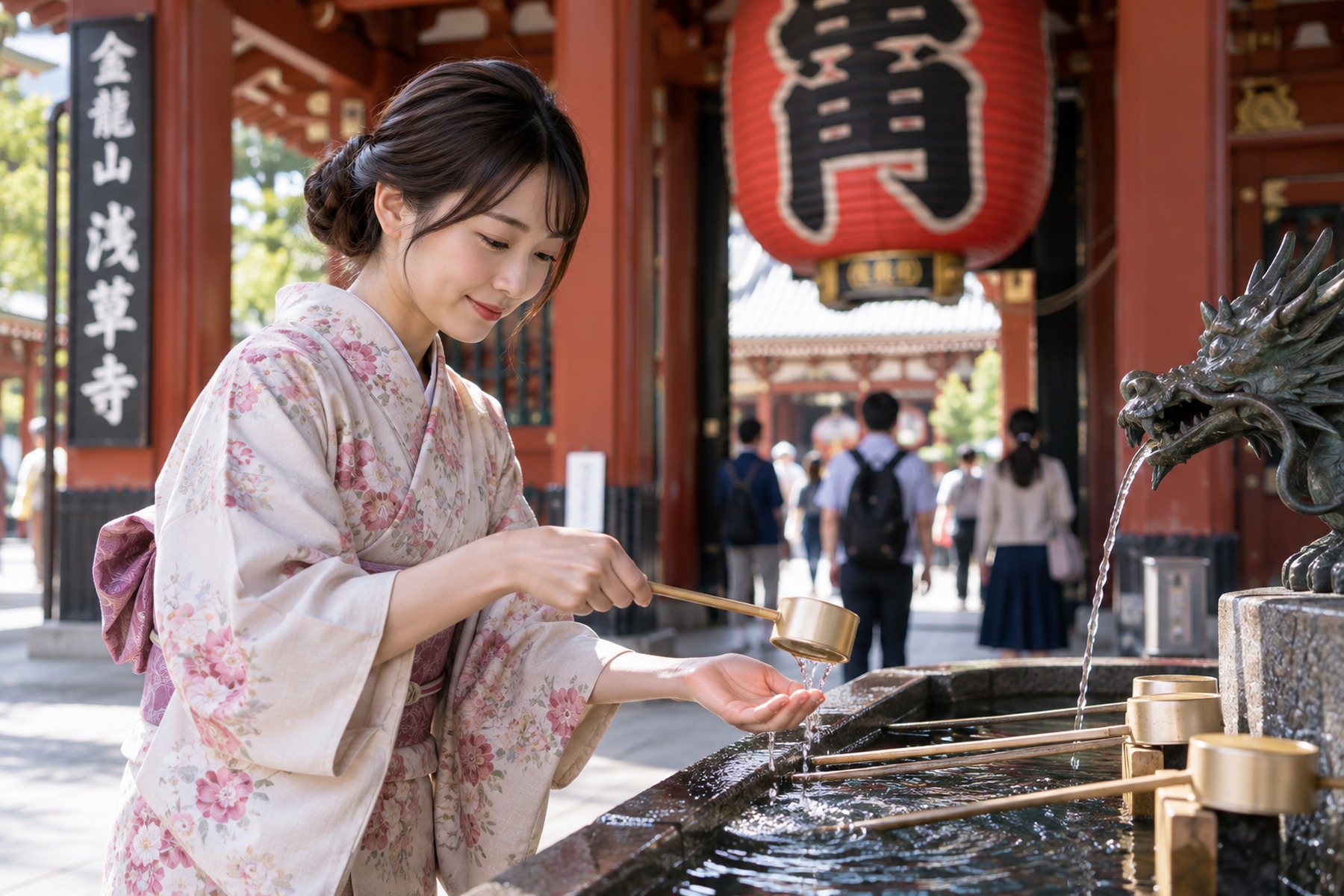
Temples and shrines are active religious and cultural spaces, not just photo locations. Visitors do not need to perform every ritual perfectly, but they should keep prayer areas clear, respect barriers and restricted zones, and avoid interrupting worshippers.
Photography rules vary by site and even by building within the same complex. Some areas allow outdoor photography but prohibit it inside halls or during ceremonies. Ask before photographing people, and never enter private property simply to get a better angle.
- Follow posted photo restrictions and staff instructions.
- Do not block worship areas for portraits or video.
- Stay out of roped-off, sacred or private areas.
- Keep voices low during prayers and ceremonies.
- Do not touch religious objects unless visitors are clearly invited to do so.
Onsen and Public Bath Basics
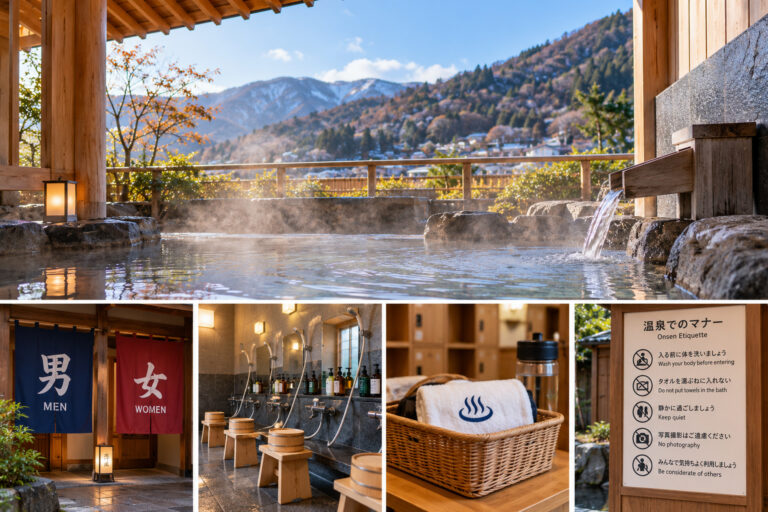
Onsen and sento have some of the clearest facility-specific etiquette in Japan. The usual pattern is to wash your body before entering the shared bath, keep towels out of the bathwater and bathe without a swimsuit unless the facility explicitly operates differently.
Tattoo policies vary. Some facilities allow tattoos, some allow small tattoos if covered, and others restrict entry. Check the rules of the specific bath before traveling there rather than relying on a general statement about Japan.
- Wash and rinse before entering the shared bath.
- Keep towels out of the bathwater.
- Follow the facility’s clothing and swimsuit rules.
- Tie up long hair so it does not enter the bath.
- Check tattoo rules before arrival if they apply to you.
Trash, Cleanliness and Shared Spaces
Public trash bins are not available everywhere, so carrying a small bag for your own waste is useful. When bins are provided, use the labels and sorting instructions shown at that location instead of guessing.
Cleanliness etiquette also includes leaving tables, rental items and shared facilities ready for the next person. Do not leave cups, packaging or luggage where they create work or hazards for others.
- Do not litter even when no bin is nearby.
- Carry your trash until you find an appropriate bin.
- Sort waste according to the labels on the bin you are using.
- Return trays, towels or rental items where instructed.
- Do not drag heavy luggage across tatami or delicate surfaces.
What to Do When You Are Unsure
Visitors are not expected to know every local custom. A small mistake is usually less important than how you react once you notice it. Stop, correct what you are doing and respond politely.
A useful approach is to look for signs first, observe how the space is operating, then ask staff if the answer is still unclear. That works better than relying on rigid etiquette lists because local practice changes by venue, region and situation.
- Look for posted instructions before acting.
- Observe the queue, entrance or payment flow.
- Ask a simple question when a rule is unclear.
- Correct a mistake without arguing or drawing attention to it.
- Choose the option that causes the least disruption to other people.
FAQ
Do tourists need to bow in Japan?
No. A small bow is a polite gesture, but visitors are not expected to reproduce formal Japanese bowing etiquette. A friendly greeting and thank-you are enough in most travel situations.
Is talking on the phone on trains rude in Japan?
Phone calls are generally avoided inside ordinary train and bus cars. Keep your device silent and wait until you get off, or use a designated area on a long-distance train when the operator provides one.
Is eating while walking always rude in Japan?
No. It is not a single nationwide rule. Some markets and tourist areas have designated places to eat, while other locations discourage eating on the move because of crowding, litter or local policy. Follow the signs where you are.
Do I have to remove my shoes everywhere indoors?
No. Shoes are removed in many homes, ryokan, tatami rooms and some traditional facilities, but not in every hotel, restaurant or indoor space. Look for a genkan, raised floor, shoe storage, slippers or staff instructions.
Can tourists take photos at temples and shrines?
Often yes outdoors, but rules vary. Some halls, sacred areas or ceremonies prohibit photography. Follow posted restrictions, avoid blocking worshippers and ask before photographing people.
What are the basic onsen manners?
Wash before entering the shared bath, keep towels out of the bathwater and follow the facility’s rules on clothing, tattoos and other restrictions. Policies differ, so check the specific onsen before you go.
Related Japan Travel Guides
Official References
- Japan Tourism Agency — Travel Etiquette for the Future
- Japan National Tourism Organization — Japanese Customs and Etiquette
- Japan National Tourism Organization — Rules and Manners FAQ
- Japan National Tourism Organization — Train and Bus Travel Manners
- Japan National Tourism Organization — Japanese Manners Do’s and Don’ts
Final Thoughts
Japanese etiquette is easier when you stop thinking of it as a test and start treating it as shared-space awareness. Keep noise, luggage and movement considerate; follow the signs for the place you are actually visiting; and ask when a local rule is unclear. That approach is more useful than memorizing dozens of rigid “Japan rules,” and it will make trains, restaurants, temples, ryokan and onsen much easier to navigate.