
Tokyo Skytree vs SHIBUYA SKY: Which Observation Deck Should You Book?
Tokyo Skytree and SHIBUYA SKY deliver very different views of Tokyo. Compare height, rooftop atmosphere, ticket prices, weather risk, sunset timing, access and itinerary fit before you book.
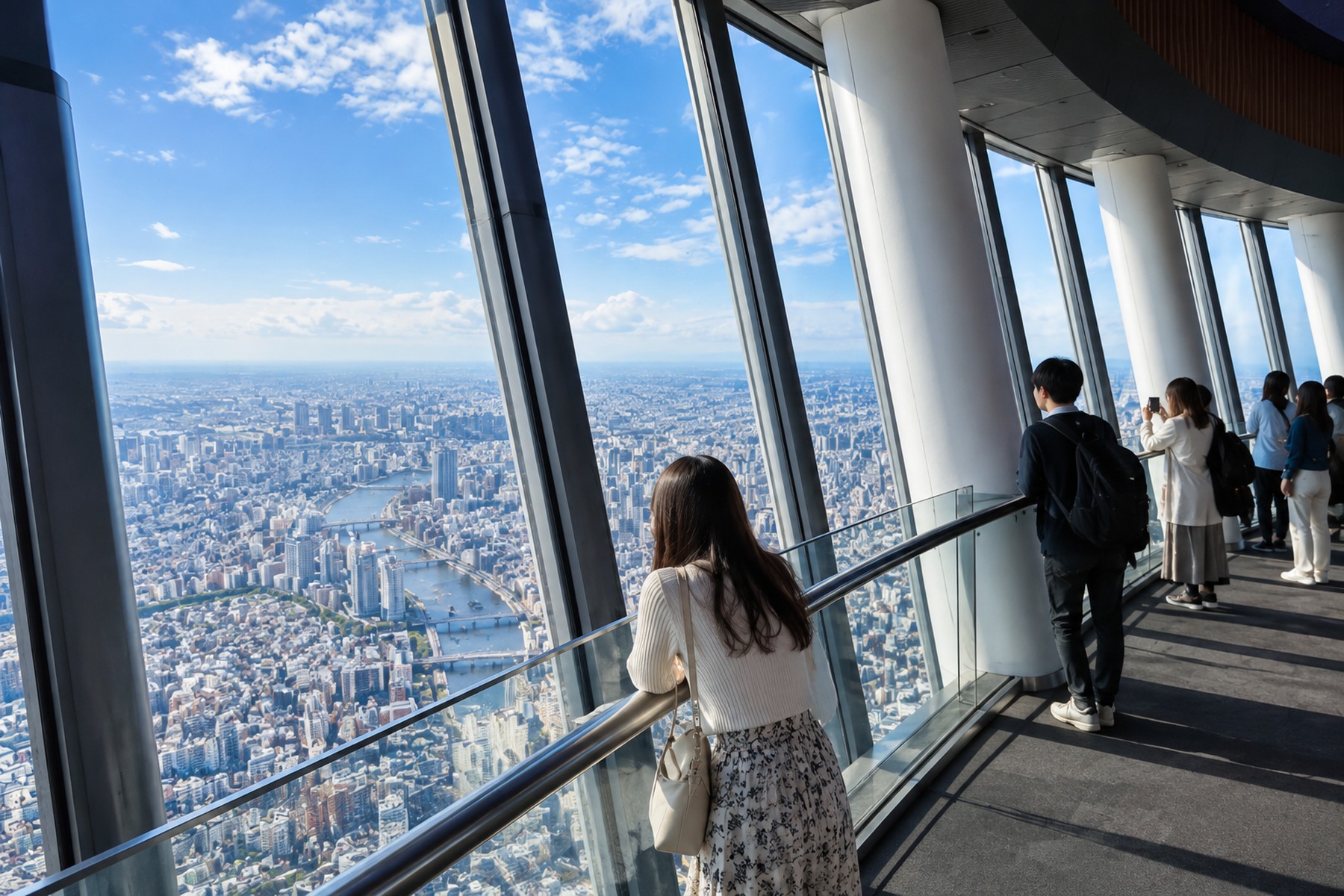
Choose SHIBUYA SKY if your priority is an open-air rooftop experience, a dramatic sunset slot and a location directly above Shibuya Station. Choose Tokyo Skytree if you want the highest viewpoint, an enclosed observation experience, a lower starting adult web price, or a day that pairs naturally with Oshiage and Asakusa. SHIBUYA SKY is more sensitive to wind and rain because its rooftop can close; Tokyo Skytree's main viewing areas are indoors, although clouds can still spoil the view. For most travelers, the choice is less about which deck is 'better' and more about whether you value rooftop atmosphere or maximum height and weather protection.
What You’ll Learn
- How Tokyo Skytree and SHIBUYA SKY differ in height, atmosphere and view style.
- How current adult ticket prices and booking windows compare.
- Why sunset at SHIBUYA SKY carries more weather and sell-out risk.
- Which attraction fits a Shibuya-focused day versus an Asakusa and Oshiage day.
- What baggage and photography restrictions matter before you arrive.
The fastest way to choose
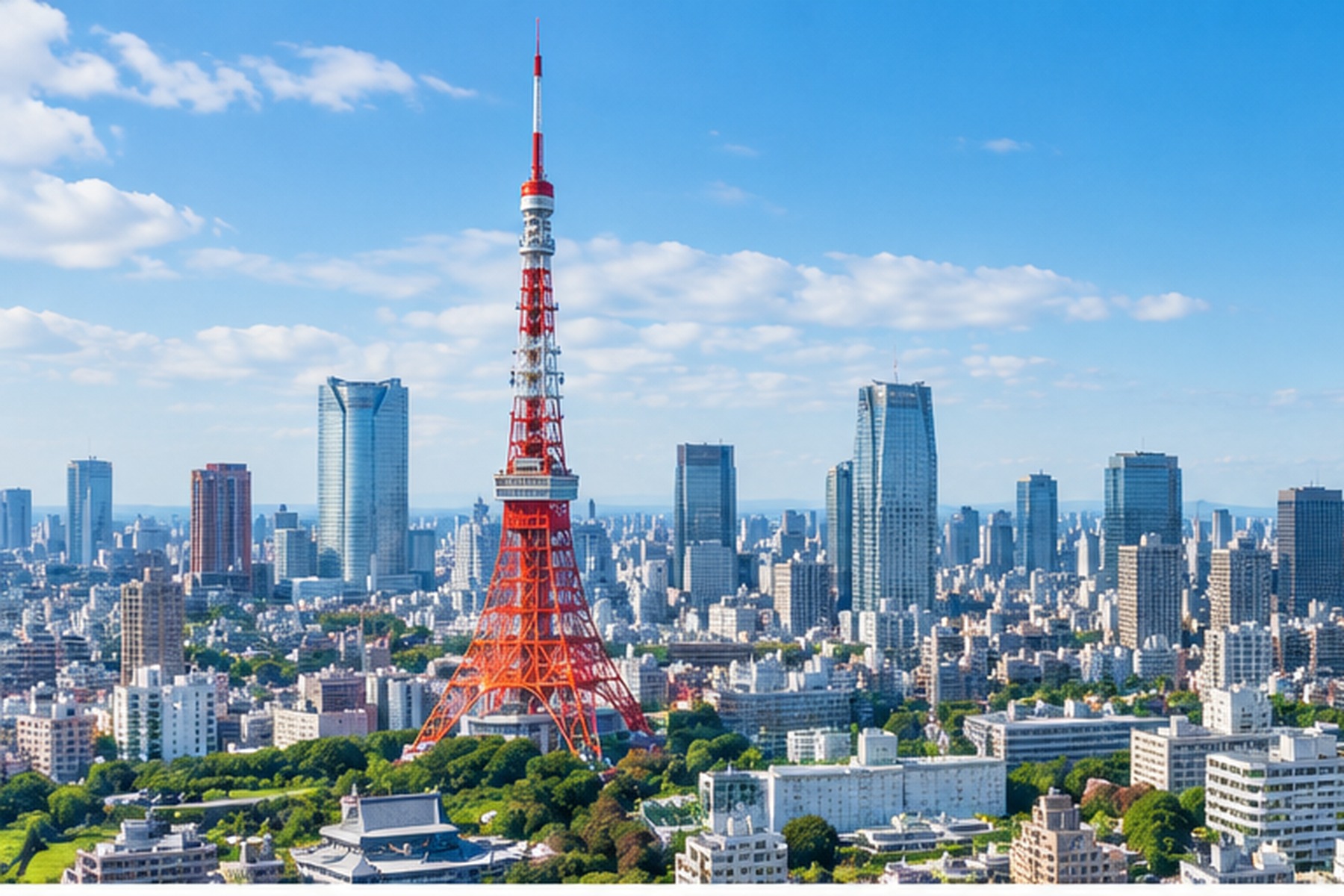
Tokyo Skytree and SHIBUYA SKY are both excellent observation experiences, but they solve different travel problems. Tokyo Skytree is the height specialist: its Tembo Deck sits at 350 meters and the Tembo Galleria climbs to the 445–450 meter level. SHIBUYA SKY is lower at about 229 meters, but it trades raw altitude for an open-air rooftop setting in the middle of one of Tokyo's busiest districts.
That difference changes almost everything. Tokyo Skytree feels like looking across the entire metropolis from above, with long-distance scale and a strong sense of height. SHIBUYA SKY feels closer to the city: trains, towers, streets and neighborhoods read more clearly, and the rooftop adds wind, sky and sunset light to the experience.
- Pick Tokyo Skytree for maximum height, indoor viewing, families, uncertain weather, or an east-Tokyo itinerary.
- Pick SHIBUYA SKY for rooftop atmosphere, sunset, central-city photography, or an evening based around Shibuya.
- If you are visiting both, schedule SHIBUYA SKY for the better-weather day and use Tokyo Skytree as the more weather-tolerant option.
View and atmosphere: maximum height versus open-air city energy
Tokyo Skytree's Tembo Deck uses large windows around the observation level, and the optional Tembo Galleria takes you even higher through a sloping glass corridor. On a clear day, the reward is geographic scale: the city spreads out in every direction and landmarks can feel small enough to understand Tokyo's overall shape rather than just one neighborhood.
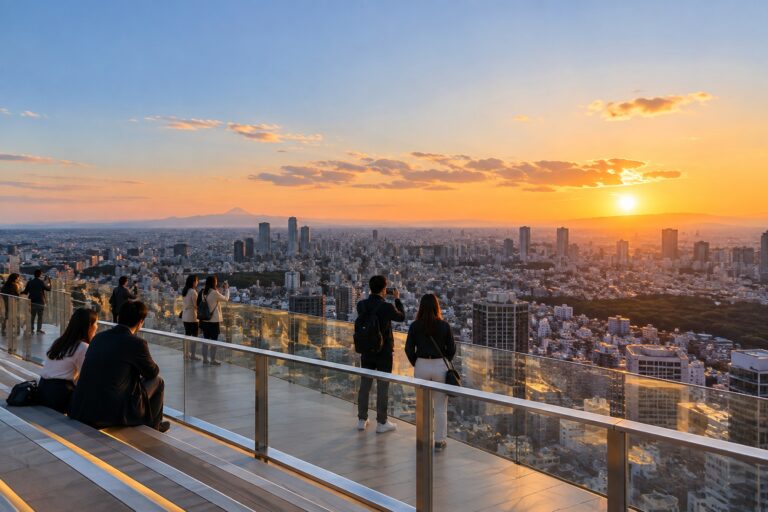
SHIBUYA SKY is designed around a different sensation. The indoor SKY GALLERY is on the upper level, while the rooftop SKY STAGE opens the view to the air. You are lower than at Skytree, but much closer to the dense urban core. That makes the experience especially strong if you want to photograph the city rather than simply prove you reached the highest point.
For first-time visitors who want the biggest possible 'Tokyo is enormous' moment, Skytree has the stronger altitude effect. For travelers who want the most cinematic, social and sunset-oriented experience, SHIBUYA SKY usually has the stronger atmosphere.
- Tokyo Skytree: Tembo Deck 350 m; Tembo Galleria 445–450 m.
- SHIBUYA SKY: about 229 m, with both indoor and open-air observation areas.
- Skytree emphasizes distance and scale; SHIBUYA SKY emphasizes proximity to the central skyline and rooftop immersion.
Ticket prices and booking pressure are not the same
Tokyo Skytree's official web ticket page lists adult Tembo Deck admission from ¥1,800 and the Tembo Deck plus Tembo Galleria combination from ¥3,000, with the final price depending on the date. Buying at the venue costs more than the corresponding web ticket, so advance purchase makes sense when your schedule is settled.
SHIBUYA SKY currently uses time-of-day pricing for adult web tickets: ¥2,700 for entry through 14:59 and ¥3,400 from 15:00 onward. Adult counter prices are higher at ¥3,000 and ¥3,700 respectively. The official site sells dates up to two weeks ahead, and popular late-afternoon slots can sell out.
That makes the booking strategy different. Skytree gives you more room to decide based on your broader itinerary. SHIBUYA SKY rewards earlier commitment if sunset matters. If your main concern is price, the lowest Skytree web ticket is cheaper; if your main concern is a premium sunset experience, expect SHIBUYA SKY's later slot to cost more.
- Tokyo Skytree adult web price: Tembo Deck from ¥1,800; Deck + Galleria from ¥3,000.
- SHIBUYA SKY adult web price: ¥2,700 through 14:59; ¥3,400 from 15:00.
- SHIBUYA SKY adult counter price: ¥3,000 through 14:59; ¥3,700 from 15:00.
- For detailed SHIBUYA SKY sunset-slot tactics, use the dedicated JapaDeco ticket guide rather than duplicating that planning here.
Sunset and weather risk matter more at SHIBUYA SKY
SHIBUYA SKY's rooftop is the feature that makes it special, but it is also the feature most exposed to weather. The official rules state that the rooftop may close because of strong wind, rain, snow, approaching thunderstorms, extreme heat and other unsafe conditions. The indoor SKY GALLERY can still provide a city view when the rooftop is unavailable, but the experience is no longer the same.
Tokyo Skytree is less exposed because the observation levels are enclosed. That does not make it weather-proof in the sightseeing sense: low cloud, haze or rain can erase the long-distance view even when the deck is operating normally. But you are not relying on an outdoor rooftop staying open.
For sunset, treat SHIBUYA SKY as a high-reward, higher-variance booking. Treat Skytree as the more dependable choice when your Tokyo schedule is tight or the forecast is unstable.
- SHIBUYA SKY: check rooftop operating status on the official site before you travel across the city.
- Tokyo Skytree: check the official day's operating hours and the visibility forecast, especially if long-distance views are the reason you are going.
- If sunset is non-negotiable, keep some itinerary flexibility instead of stacking nonrefundable timed attractions around the same evening.
Location: Shibuya convenience versus east-Tokyo sightseeing
SHIBUYA SKY sits in Shibuya Scramble Square directly above and connected to Shibuya Station, with the B6 subway exit serving the complex. That makes it exceptionally easy to combine with Shibuya Crossing, Center-gai, Miyashita Park, Harajuku or a west-Tokyo dinner without adding a major detour.
Tokyo Skytree is in Oshiage and is directly connected to Oshiage Station. The official access guidance also points to Tokyo Skytree Station, and the area is only a short rail ride from Asakusa. That makes Skytree much easier to justify when your day already includes Senso-ji, Nakamise, Sumida River or Tokyo Solamachi.
Do not choose the deck in isolation. A twenty-minute difference in the attraction itself matters less than where you are before and after it. The best observation deck is often the one that prevents an unnecessary cross-city transfer.
- Choose SHIBUYA SKY if your day is already in Shibuya, Harajuku, Omotesando or Shinjuku.
- Choose Tokyo Skytree if your day is already in Asakusa, Ueno, Ryogoku, Kinshicho or Oshiage.
- If you are staying near a direct Hanzomon Line or Toei Asakusa Line connection, Skytree can be simpler than it looks on a map.
Build the rest of the day around the viewpoint
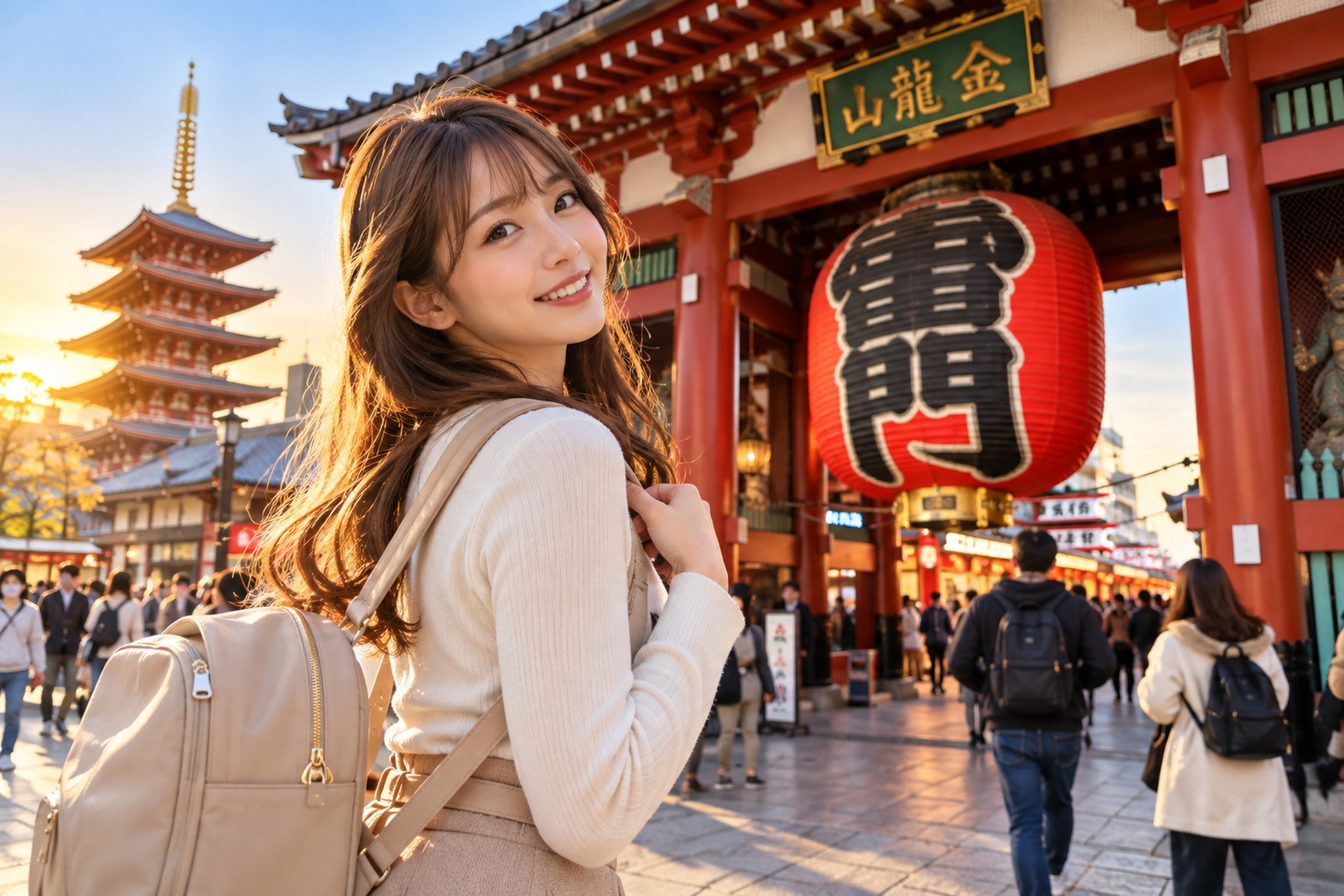
A Skytree visit works especially well as part of an east-Tokyo half-day. Start around Asakusa, visit Senso-ji and the surrounding streets, then move toward Oshiage for Skytree and Tokyo Solamachi. This keeps the day geographically compact and gives you both ground-level old-Tokyo texture and a high-altitude city overview.
A SHIBUYA SKY visit works better as the anchor of a central-west evening. You can arrive in Shibuya before your timed slot, explore the crossing and nearby streets, use the observation deck around late afternoon or evening, then continue to dinner or nightlife without a long transfer.
- Skytree day shape: Asakusa → Oshiage → Tokyo Skytree → Solamachi.
- SHIBUYA SKY day shape: Harajuku or Omotesando → Shibuya streets → SHIBUYA SKY → dinner in Shibuya.
- Avoid trying to do both observation decks back-to-back unless the comparison itself is a major purpose of your trip.
Photography, bags and comfort can decide the experience
SHIBUYA SKY has strict rooftop carry-in rules because loose items can become dangerous in wind. The official guidance allows a smartphone and certain cameras or binoculars that are secured by a neck strap or small enough for a pocket. Bags, backpacks, pouches, tripods, monopods and selfie sticks are not allowed on the rooftop and must be stored as instructed.
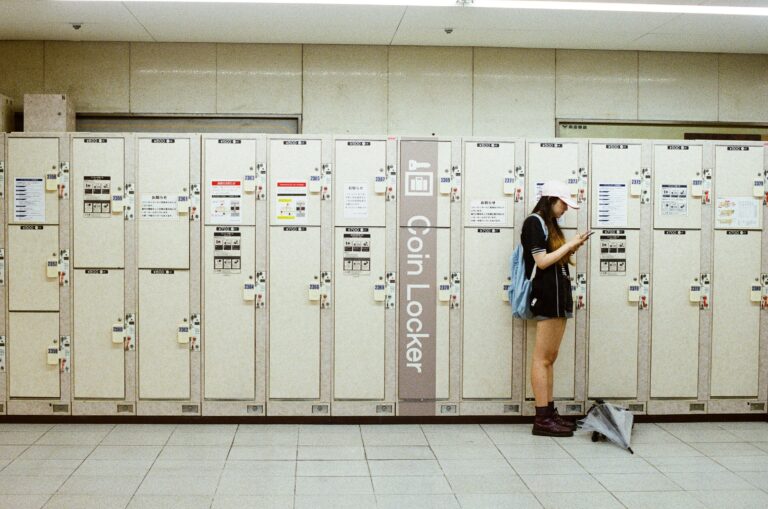
Large luggage should be dealt with before arrival. The facility advises travelers with suitcases and other large bags to use lockers around Shibuya Station rather than expecting to carry them through the rooftop experience. This is easy to miss if you plan SHIBUYA SKY immediately after hotel checkout.
Tokyo Skytree is more conventional for families and travelers carrying normal day bags. The larger practical issue is deciding whether the extra cost and time of the Tembo Galleria matter to you. The Tembo Deck already gives a major panorama, while the Galleria adds additional height and the sloping corridor experience.
- SHIBUYA SKY: arrive with pockets or a neck-strapped camera plan for the rooftop.
- Traveling with suitcases: store them before heading to SHIBUYA SKY.
- Tokyo Skytree: the Deck-only ticket can be enough if height matters less than simply getting a panoramic view.
Who should choose each observation deck
Choose Tokyo Skytree if you are traveling with children, dislike exposed rooftop spaces, want the highest possible public viewpoint, prefer a lower starting ticket price, or are already spending time in Asakusa and Oshiage. It is also the safer choice when you have only one fixed sightseeing window and do not want your headline experience to depend on rooftop weather.
Choose SHIBUYA SKY if you are comfortable committing to a timed slot, want an open-air rooftop, care about sunset and city photography, or plan to spend the rest of the day around Shibuya. It is particularly strong for couples, photographers and first-time visitors who want a dramatic memory rather than the maximum altitude.
If you have already booked one, do not automatically add the other. The second deck is worth it when you specifically want the contrast between east-Tokyo altitude and Shibuya rooftop atmosphere. Otherwise, spend the money and time on a different Tokyo experience.
- Best for maximum height: Tokyo Skytree.
- Best for open-air atmosphere: SHIBUYA SKY.
- Best for a Shibuya evening: SHIBUYA SKY.
- Best for an Asakusa and Oshiage day: Tokyo Skytree.
- Best for uncertain weather: usually Tokyo Skytree, because the main viewing experience is indoors.
A practical booking strategy
First decide which neighborhood will already be part of your day. Then decide whether sunset matters. If you want SHIBUYA SKY near sunset, book the timed slot as soon as your date becomes available and keep the surrounding afternoon flexible. If you want Skytree, choose between Tembo Deck only and the Deck plus Galleria based on how much you value the extra height.
On the day, check the official operating pages before leaving your hotel. SHIBUYA SKY publishes rooftop status, and Tokyo Skytree publishes date-specific operating hours. That final check matters because weather, special operations and seasonal hours can change the experience even when you bought the ticket well in advance.
- Step 1: choose the neighborhood fit.
- Step 2: decide whether open-air sunset is worth higher weather risk.
- Step 3: buy through the official ticket channel for the slot or date you actually need.
- Step 4: re-check operating status on the day before crossing Tokyo.
- Step 5: use the dedicated JapaDeco guides for Shibuya booking tactics, Tokyo transit and luggage storage.
FAQ
Is Tokyo Skytree higher than SHIBUYA SKY?
Yes. Tokyo Skytree's Tembo Deck is at 350 m and the Tembo Galleria reaches the 445–450 m level. SHIBUYA SKY is about 229 m above ground. The trade-off is that SHIBUYA SKY includes an open-air rooftop while Skytree's observation experience is enclosed.
Which is better for sunset?
SHIBUYA SKY delivers the more open and atmospheric sunset experience when the rooftop is operating. Tokyo Skytree gives a higher enclosed panorama and is less dependent on rooftop weather. If sunset is your priority, reserve SHIBUYA SKY early and check the rooftop status on the day.
Which is cheaper?
The lowest adult Tokyo Skytree web ticket starts below SHIBUYA SKY's adult web price. Skytree pricing varies by date and by whether you add the Tembo Galleria, while SHIBUYA SKY charges more for entry from 15:00 onward.
Can I bring a backpack onto the SHIBUYA SKY rooftop?
No. Bags, backpacks and pouches are among the items that cannot be taken onto the rooftop. Follow the facility's locker instructions, and store large luggage around Shibuya Station before entering.
Is it worth visiting both Tokyo Skytree and SHIBUYA SKY?
It can be if observation decks are a major interest because the experiences are genuinely different: Skytree is about extreme height and scale, while SHIBUYA SKY is about central-city proximity and an open-air rooftop. For most short trips, one well-chosen deck is enough.
Related Japan Travel Guides
Official References
Final Thoughts
Book Tokyo Skytree when height, indoor comfort and an east-Tokyo itinerary matter most. Book SHIBUYA SKY when the open-air rooftop and a Shibuya sunset are the experience you actually want. The strongest plan is the one that matches your neighborhood, weather tolerance and preferred view rather than trying to chase both famous names.