Introduction
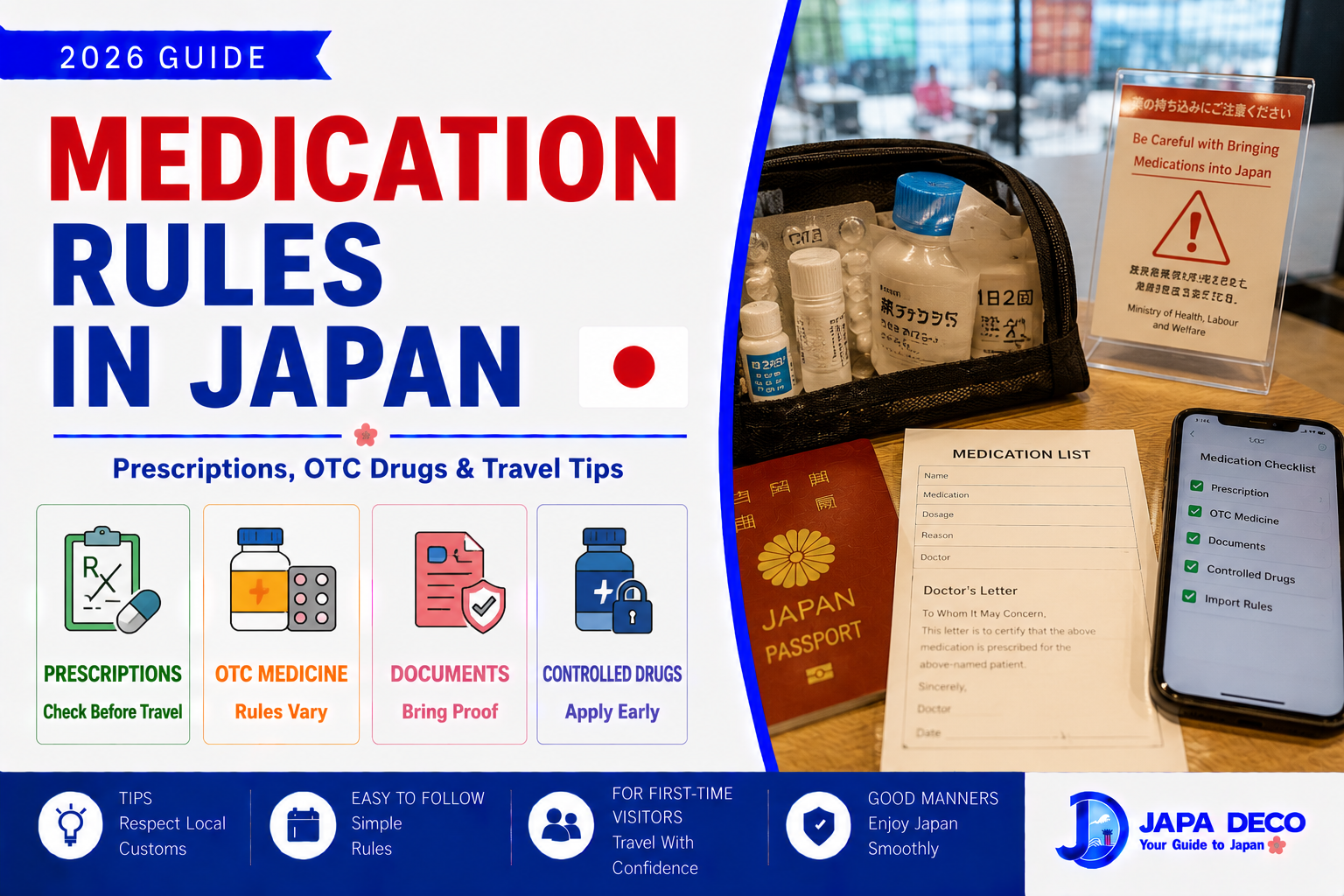
Bringing medication to Japan is something travelers should check before departure, not at the airport.
Japan has strict rules for some prescription drugs, over-the-counter medicine, narcotics, stimulants, psychotropics, medical devices, and certain ingredients. A medicine that is normal in your country may be restricted or prohibited in Japan.
This does not mean you cannot bring medicine. Many travelers bring normal personal medication without problems. But you need to check the rules carefully, especially if you take ADHD medicine, strong pain medicine, sleeping pills, anti-anxiety medicine, injections, inhalers, or large quantities.
This guide explains the basic medication rules for Japan and what first-time visitors should prepare.
Quick Answer
Before bringing medicine to Japan:
- Check whether the medicine is allowed.
- Keep medicine in original packaging.
- Bring a prescription or doctor letter.
- Carry medicine in your hand luggage.
- Do not bring more than needed.
- Check controlled substances carefully.
- Apply for permission early if required.
- Do not assume a valid foreign prescription is enough.
Japan’s Ministry of Health, Labour and Welfare explains that some medicines require Import Confirmation before travel, while controlled substances may require separate permission in advance. :contentReference[oaicite:0]{index=0}
Prescription Medicine
For normal prescription medicine, many travelers can bring a personal-use amount, but rules depend on the medicine type and quantity.
You should bring:
- Original prescription label
- Doctor letter if possible
- Medicine name
- Generic ingredient name
- Dosage information
- Amount needed for your trip
Do not bring medicine in random plastic bags without labels.
If customs or medical staff need to confirm what the medicine is, original packaging helps.
A doctor letter is especially useful if you take medicine daily or carry needles, injections, or controlled substances.
【Image①】
Over-the-Counter Medicine
Over-the-counter medicine can also be restricted.
Do not assume that a medicine is allowed just because it is sold freely in your home country.
Some cold medicine, allergy medicine, inhalers, pain medicine, sleep aids, or stimulant-related ingredients may be a problem.
Check the active ingredients, not only the brand name.
Brand names can differ by country, but ingredient names are what matter.
If you are unsure, check official Japanese sources or contact the correct authority before traveling.
Controlled Substances
Controlled substances need extra care.
This can include some:
- Narcotic pain medicines
- Stimulants
- Stimulant raw materials
- Psychotropics
- ADHD medicines
- Strong sleep medicines
- Anti-anxiety medicines
- Cannabis-related products
- Opium-related medicines
Japan’s Narcotics Control Department states that carrying medicines containing controlled substances for your own medical use may require advance permission, and some medicines cannot be imported even if they are prescribed in your country. :contentReference[oaicite:1]{index=1}
If your medicine is in this category, do not guess.
Check before travel and apply early if needed.
ADHD Medication
ADHD medicine is one of the most important categories to check.
Some ADHD medicines used in other countries may be heavily restricted or prohibited in Japan.
Even if you have a valid prescription, that does not automatically mean you can bring it.
Check the ingredient name carefully.
If your medicine contains a stimulant or controlled substance, you may need permission, or it may not be allowed.
Contact the proper Japanese authority or embassy before your trip if you are unsure.
Import Confirmation
For some medicines or quantities, you may need Import Confirmation before entering Japan.
This was formerly often known by travelers as Yakkan Shoumei.
The current process and name may depend on the medicine and situation.
You must receive approval before travel if it is required.
Do not wait until arrival at Japanese customs.
If you need Import Confirmation, prepare documents early because processing takes time.
【Image②】
How Much Medicine Can You Bring?
The allowed amount depends on the medicine category.
For some ordinary medicines, small personal-use amounts may not require Import Confirmation.
For other medicines, even a small amount may require permission.
For controlled substances, the rules are stricter.
Because rules depend on ingredients, quantity, and category, the safest approach is:
Check each medicine individually.
Do not rely on general advice if your medication is important.
Medical Devices
Medical devices can also have rules.
Examples include:
- Injection pens
- Syringes
- CPAP machines
- Blood glucose meters
- Contact lenses
- Medical massagers
- Other treatment devices
Japan’s official guidance notes that some medical devices for personal use may be brought within certain limits, while larger amounts or certain devices may require procedures. :contentReference[oaicite:2]{index=2}
If you use medical equipment daily, bring documentation and check rules before travel.
Keep Medicine in Carry-On Luggage
Keep important medicine in your carry-on bag.
Do not put essential medicine only in checked luggage.
Checked luggage can be delayed, lost, or damaged.
Carry with you:
- Daily medicine
- Emergency medicine
- Prescription copy
- Doctor letter
- Insurance information
- Medical device supplies
- Allergy information
Bring enough for your trip plus a small extra amount in case of travel delays, but do not bring excessive quantities.
Buying Medicine in Japan
Japan has pharmacies and drugstores, but you may not find the same medicine you use at home.
Brand names, ingredients, strength, and rules may be different.
Some medicine that is easy to buy in your country may require a doctor visit in Japan.
If you rely on a specific medicine, bring it legally from home rather than assuming you can buy it after arrival.
For minor problems, Japanese drugstores can help with common items such as basic cold medicine, stomach medicine, eye drops, and bandages.
But for regular prescription medicine, plan ahead.
【Image③】
What Documents Should You Bring?
Useful documents include:
- Prescription copy
- Doctor letter
- Medicine list
- Generic ingredient names
- Dosage instructions
- Insurance card or policy
- Import Confirmation if required
- Permission documents for controlled substances if required
A doctor letter should clearly explain that the medicine is for your personal medical use.
If possible, keep documents in English and simple language.
Also save digital copies on your phone.
Common Mistakes to Avoid
The biggest mistake is assuming that a foreign prescription makes everything legal.
It does not.
Another mistake is checking only the brand name instead of the ingredient.
Some travelers also bring medicine without original packaging, making it harder to identify.
Do not bring large amounts unless allowed.
Do not bring controlled substances without checking official rules.
And do not wait until the airport to solve medication questions.
Best Recommendation for First-Time Visitors
For first-time visitors, make a medication checklist at least several weeks before travel.
Write down:
- Medicine name
- Active ingredient
- Dosage
- Quantity
- Prescription status
- Whether it is controlled
- Whether documents are needed
Then check official Japanese guidance.
If anything is unclear, contact the relevant authority, embassy, doctor, or travel insurance support.
For simple medicine, this may take only a little time.
For controlled medicine, you may need much longer.
Conclusion
Medication rules in Japan are strict, but manageable if you prepare early.
Many travelers can bring normal personal medication without trouble, but some prescription and over-the-counter medicines may be restricted or prohibited. Controlled substances require special care, and some need advance permission before entering Japan.
Do not rely only on brand names or a foreign prescription.
Check active ingredients, keep medicine in original packaging, bring documents, and carry important medicine in your hand luggage.
If your medicine is essential, confirm the rules before travel.
Good preparation protects your health and prevents problems at customs.
コメント