
Wheelchair Accessible Japan: Transport, Hotels and Sightseeing
A practical wheelchair-accessible Japan guide covering airports, trains, station assistance, hotels, toilets, taxis, sightseeing, Kyoto, Tokyo and advance planning.
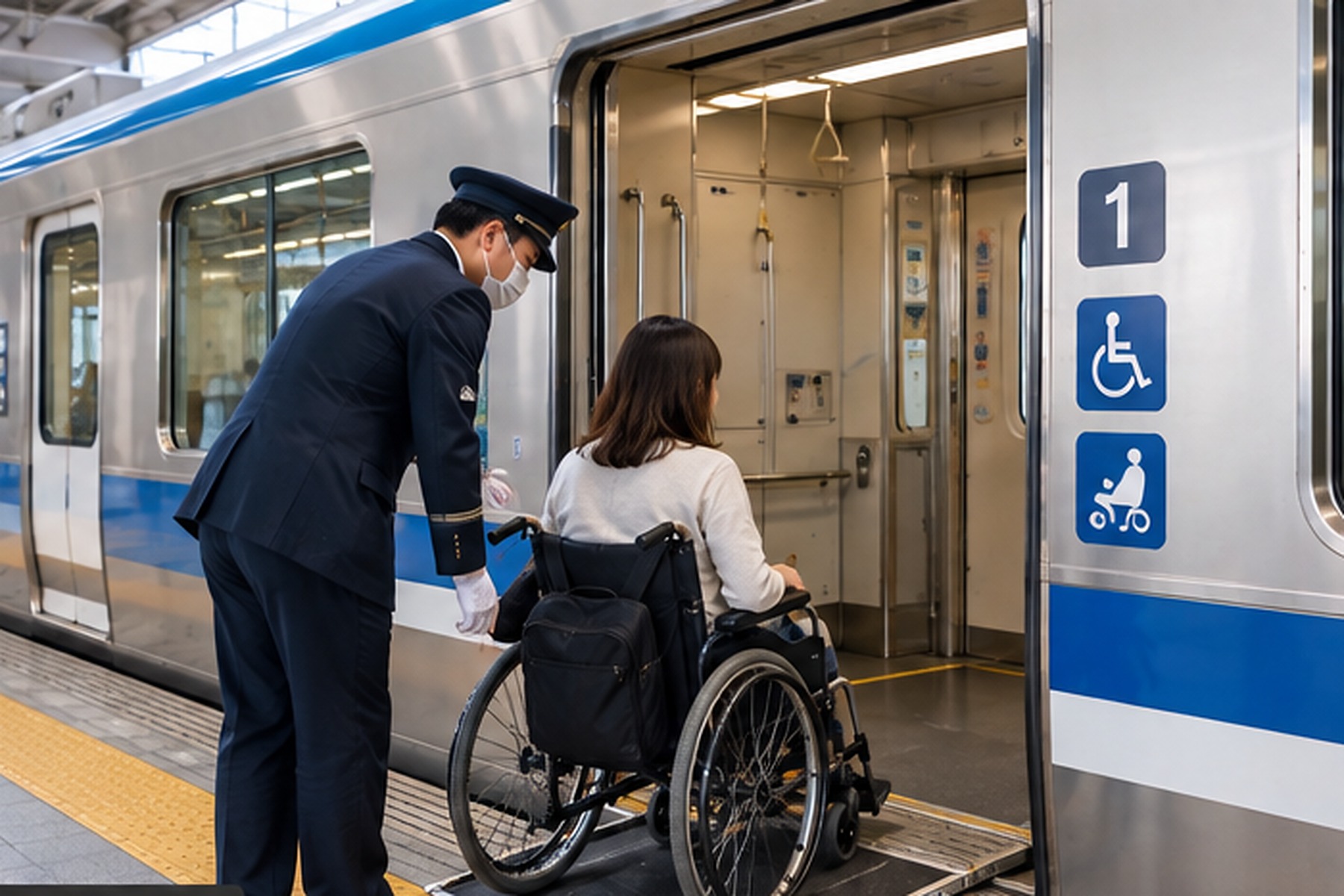
Japan can be very workable for wheelchair travelers, especially in major cities, airports, newer hotels and large transport hubs, but accessibility is not uniform. Check the exact station route, hotel room and attraction before the day of travel; allow extra time for staff-assisted boarding; avoid tight connections and rush-hour pressure; and confirm long-distance wheelchair spaces or seats with the railway operator in advance.
What You’ll Learn
- How wheelchair assistance works at Japanese train stations and on long-distance rail
- What to confirm with hotels before booking an accessible room
- How to plan toilets, taxis, airports and sightseeing without assuming every route is step-free
- Why station exits, slopes, gravel, thresholds and crowding matter as much as the destination itself
Japan Is Accessible, but the Exact Route Matters
Major Japanese cities have extensive elevators, ramps, accessible toilets and staff assistance, but a city being accessible does not mean every entrance, exit or transfer is step-free. The practical unit to research is the exact route you will use from street level to platform, hotel room or attraction entrance.
Tokyo Metro, for example, publishes station-by-station barrier-free information including elevator routes, accessible toilets, wheelchair-accessible equipment and mobility-scooter availability. Some stations have a complete step-free route while another line or exit at the same station may not.
- Check the exact station, line and exit rather than only the neighborhood name.
- Allow extra time when an elevator route is indirect or staff assistance is needed.
- Save the accessibility page for the station or attraction before leaving the hotel.
- Treat older buildings, traditional streets and historic sites as individual accessibility checks.
Airports Are Usually the Easiest Part of the Trip
Haneda and Narita publish dedicated assistance and universal-design information for travelers with mobility impairments. Their terminals provide accessible toilets, information counters and mobility support, and airport staff can direct travelers to airline assistance or onward transport.
If you need help from check-in through boarding, arrange it with the airline as early as practical. Airport assistance and railway assistance are separate systems, so confirm the handoff between the terminal and your train, bus or taxi.
- Tell the airline what assistance you need rather than requesting only a generic wheelchair service.
- Confirm whether you transfer independently to rail or bus after baggage claim.
- Keep mobility-aid specifications and essential medication accessible during the flight.
- Use airport information counters when you need help finding the step-free route.
Train Staff Can Assist With Boarding
JR East states that wheelchair users can approach station staff for escort to the platform and help boarding or leaving the train. Assistance may involve coordination with the destination or transfer station, so a wheelchair journey can take longer than the timetable alone suggests.
Portable ramps are commonly used where there is a gap or height difference between the platform and train. Tell staff your destination and transfers clearly, then wait at the place they indicate rather than moving to another part of the platform.
- Arrive earlier than you would for an unassisted local journey.
- Tell staff the destination and any transfer station before boarding.
- Do not schedule a very tight connection after an assisted boarding segment.
- If plans change, notify station staff so the receiving station is not waiting at the wrong train.
Check the Elevator Route Before Entering a Station
The nearest entrance is not always the accessible entrance. Large stations can have many exits, and the step-free route may use a different gate, building or street corner. Some elevator access can also follow building operating hours.
Tokyo Metro’s accessibility search is a good example of the detail you should look for: it distinguishes elevators inside and outside the gates, wheelchair-accessible toilets, stairlifts and whether a station provides a continuous accessible route from ground level to platform.
- Search the station’s official accessibility page before leaving.
- Use the exit connected to the elevator, even when another exit looks closer on a map.
- Ask staff which accessible exit best matches your destination.
- Keep a backup surface route in case construction or an elevator outage changes the plan.
Avoid Rush Hour When You Can
Crowded platforms and packed commuter trains make wheelchair travel more stressful even when the infrastructure is technically accessible. Tokyo’s official tourism guidance recommends avoiding the main morning and evening rush periods when possible.
Build sightseeing days around later departures, earlier returns or routes that do not depend on the busiest interchange at the busiest time. The goal is not to avoid public transport, but to give staff and the traveler enough space to use it comfortably.
- Shift optional trips away from the main commuter peaks.
- Use a taxi for one difficult segment when it meaningfully reduces transfers.
- Avoid carrying loose bags on the chair where they interfere with ramps or doors.
- Build extra time into major interchange stations.
Shinkansen Travel Needs More Advance Planning
Shinkansen trains include wheelchair-accessible seating or spaces on many services, but the reservation process and equipment vary by operator and train. JR Central states that wheelchair-accessible seats require a reservation, while JR East provides specific reservation procedures for wheelchair seats and wheelchair spaces.
Rail operators also publish size guidance for wheelchairs. JR Central and JR East describe a standard reference size of about 120 centimeters in length and height and about 70 centimeters in width, with travelers asked to consult the operator when equipment exceeds the stated dimensions.
- Contact or reserve through the railway operator as soon as the long-distance plan is stable.
- State whether you will remain in the wheelchair or transfer to a seat.
- Provide the wheelchair type and dimensions when asked.
- Do not assume a normal seat booking automatically reserves a wheelchair space.
Choose Hotels by Confirmed Room Details, Not the Word Accessible
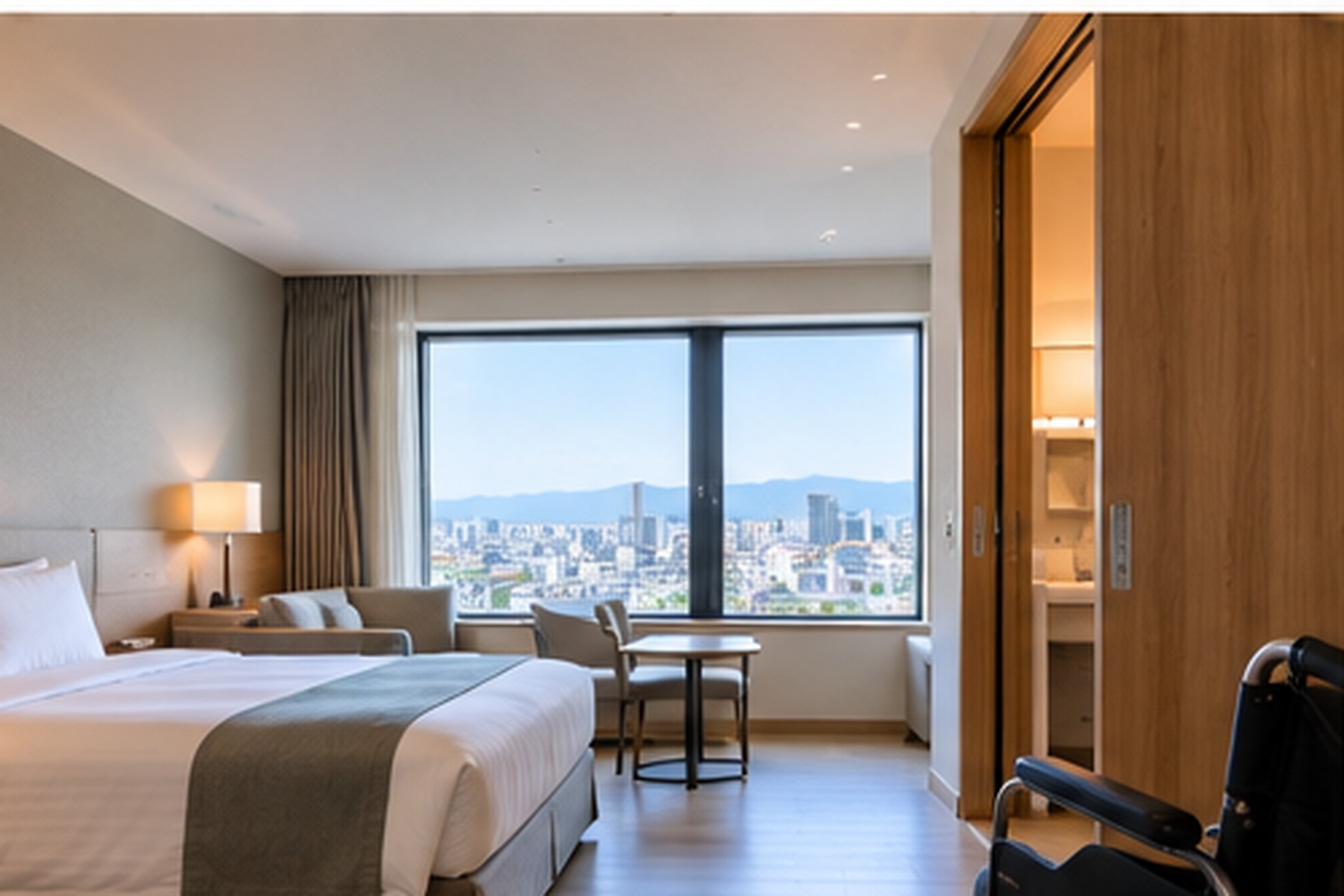
Hotel accessibility varies substantially. A property may have a step-free lobby and elevator but only a limited number of rooms with wider doors, usable turning space or adapted bathrooms. The booking label alone is not enough for travelers with specific transfer or shower needs.
Before paying a non-refundable rate, contact the property and ask about the exact room. Confirm the entrance route, door width, bed height, space beside the bed, bathroom threshold, toilet grab bars, shower arrangement and whether the chair can turn where you need it to.
- Ask for the exact accessible-room type and whether it is guaranteed on the reservation.
- Confirm bathroom layout with dimensions or current photos when possible.
- Check whether breakfast, laundry and other facilities are on a step-free route.
- Choose a hotel near a station with a verified elevator route.
Accessible Toilets Are Common but Should Still Be Planned
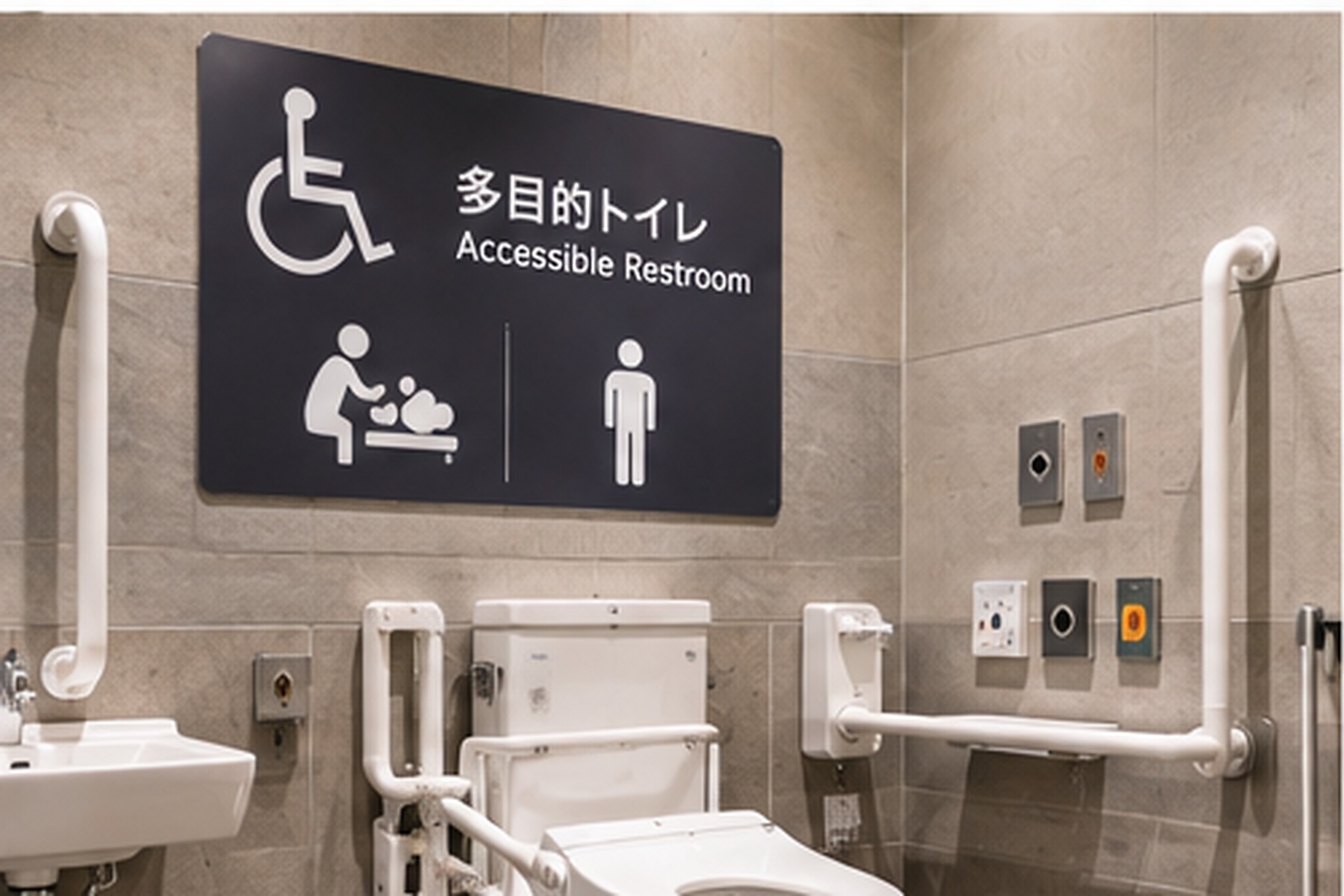
Large stations, airports, shopping centers and newer public buildings commonly provide wheelchair-accessible or multipurpose toilets. Tokyo Metro publishes toilet accessibility by station, including whether facilities are inside or outside the ticket gates.
Do not wait until the last moment in a historic district or small neighborhood. Add reliable toilet locations to the route before long sightseeing blocks, especially when the traveler needs more space, grab bars or an ostomate-compatible facility.
- Mark one reliable toilet near each major sightseeing area.
- Check whether the toilet is inside or outside a railway ticket gate.
- Allow extra time in large stations where the accessible toilet may be far from the chosen platform.
- Do not assume a small restaurant has an accessible restroom.
Taxis and Buses Can Fill the Gaps
Tokyo’s official accessibility guidance notes that non-step buses and universal-design taxis are available, particularly around airports, major stations and tourist areas. A universal-design taxi can be useful when a station transfer is inconvenient or the final destination is far from a step-free exit.
Vehicle compatibility still varies. Travelers using a larger powered wheelchair should confirm whether they can remain in the chair, whether a ramp or lift is available and whether advance booking is required.
- Use hotel staff or a taxi app to help request a suitable vehicle when necessary.
- Confirm wheelchair dimensions and whether transfer to a seat is required.
- Avoid relying on finding a compatible vehicle instantly late at night.
- Compare the taxi segment with the complexity of the rail alternative, not only the fare.
Historic Kyoto Requires More Site-by-Site Research
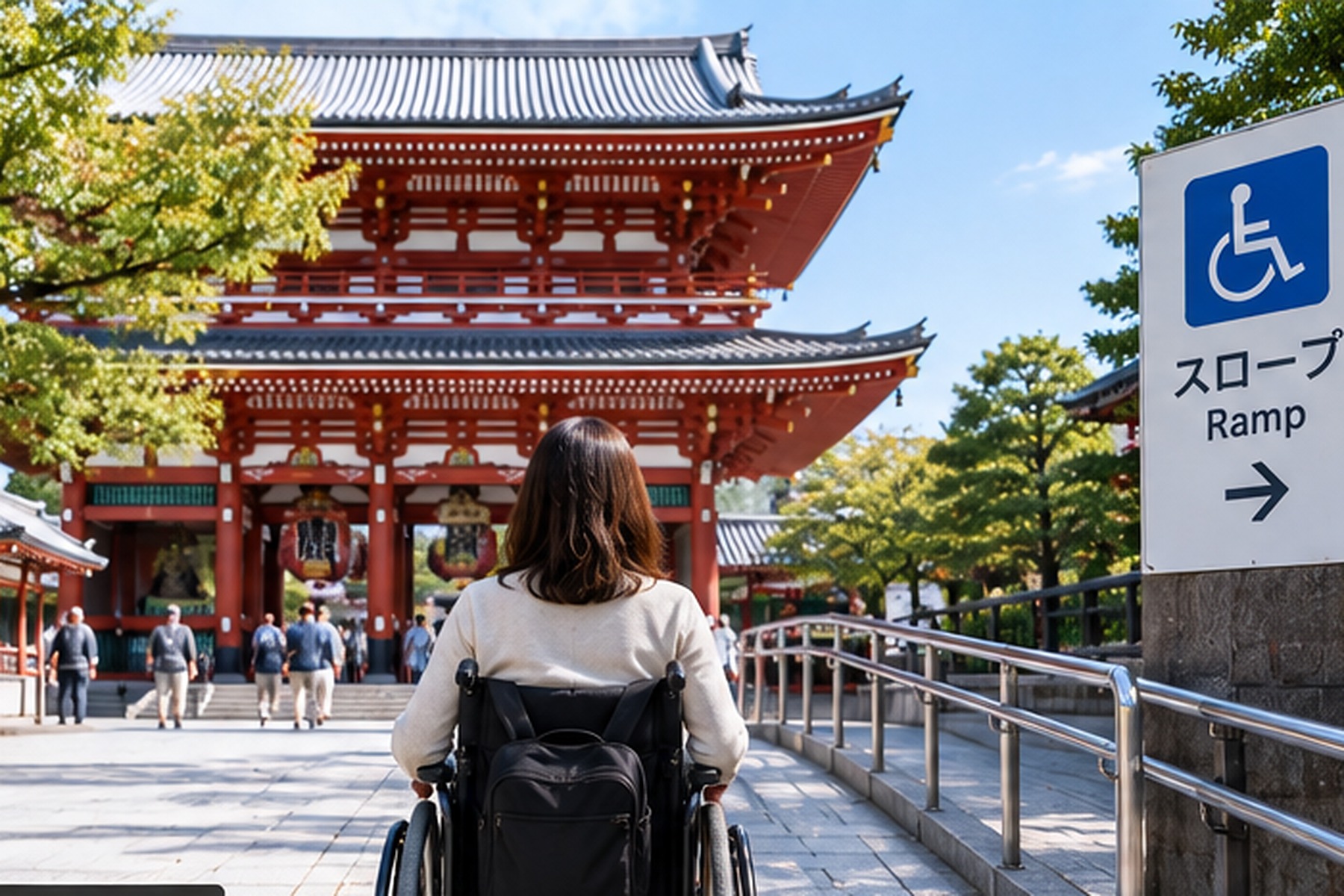
Kyoto has accessible stations, modern facilities and a dedicated Universal Sightseeing Guide, but temples, gardens and preserved streets can include gravel, steep slopes, steps and narrow thresholds. Accessibility can be partial: one area may be step-free while another part of the same site is not.
Kyoto’s official tourism site directs wheelchair travelers to universal-design information, model courses, restroom information and wheelchair-rental resources. Use those tools for the exact places you want to visit rather than assuming all famous temples work the same way.
- Check whether the accessible entrance differs from the main visitor entrance.
- Look for gravel, steep ramps and long outdoor approaches in addition to stairs.
- Confirm whether every building or garden section is accessible or only part of the site.
- Pair difficult historic sites with easier modern attractions on the same day.
Sightseeing Works Best With a Plan B
Elevator outages, construction, crowds and weather can change an accessible route on the day. A strong itinerary includes alternatives that are nearby and easier to access rather than treating every reservation as fixed.
Tokyo, Kyoto and Osaka all publish accessibility or universal-tourism information through official tourism organizations. Use those sources to build clusters of places that can substitute for one another without crossing the city.
- Keep one nearby indoor alternative for rain or extreme heat.
- Avoid stacking several accessibility-sensitive transfers into one afternoon.
- Recheck the route when construction or rail disruption is reported.
- Prefer flexible tickets when the day may depend on assistance or weather.
A Practical Wheelchair Travel Checklist
The best preparation is specific. Record what the traveler actually needs, then verify each transport, room and attraction against those requirements. Generic labels such as barrier-free or accessible do not replace measurements or route details.
Save the most important confirmations offline so they remain available if mobile data fails. Include hotel messages, railway reservation details, mobility-aid specifications, emergency contacts and any essential medical information.
- Record wheelchair dimensions and whether the traveler can transfer independently.
- Verify airport assistance, station routes and long-distance rail reservations.
- Confirm the hotel room itself, not just the building entrance.
- Save accessible toilet locations for long sightseeing days.
- Keep a backup route or attraction for every difficult segment.
FAQ
Is Japan wheelchair accessible?
Many parts of Japan are highly accessible, especially major airports, cities, railway hubs and newer facilities. Accessibility still varies by station, exit, hotel room and attraction, so the exact route should be checked rather than assuming an entire city or site is step-free.
Can wheelchair users ride trains in Japan?
Yes. Railway staff can assist wheelchair users with platform access and boarding, often using a portable ramp when needed. Allow extra time and tell staff your destination and transfers.
Can wheelchair users ride the Shinkansen?
Yes, but wheelchair-accessible seats or spaces may require a reservation and the process varies by railway operator. Check the operating company early and provide wheelchair details when requested.
Are Tokyo subway stations wheelchair accessible?
Many are, but accessibility differs by line, station and exit. Tokyo Metro publishes detailed station pages showing continuous accessible routes, elevators, toilets, stairlifts and mobility-scooter availability.
Are hotels in Japan required to have accessible rooms?
Accessible-room availability varies by property and room type. Do not rely on the property’s general accessibility label; contact the hotel and confirm the exact room, bathroom and route you need before booking.
Is Kyoto accessible for wheelchair travelers?
Yes, but traditional sites vary widely. Kyoto’s official tourism resources provide universal-design information, model routes and wheelchair-related services. Check each temple, garden or historic street individually.
Should I avoid rush hour in a wheelchair?
When practical, yes. Crowded commuter periods make platforms and trains harder to navigate even where step-free infrastructure exists. Traveling outside the busiest periods generally gives more space for assisted boarding and transfers.
Related Japan Travel Guides

Official References
- JNTO — Traveling With a Disability
- GO TOKYO — Accessibility Guide
- Tokyo Metro — Search Station by Barrier-Free Facility
- JR East — Accessibility
- JR Central — Train Accommodations
- Kyoto Travel — Universal Sightseeing
- Narita Airport — Customers Requiring Assistance
- Haneda Airport — Mobility-Impaired Customers
Final Thoughts
Wheelchair travel in Japan works best when you plan the route at the same level of detail that you plan the destination. Major transport systems and cities provide extensive assistance and barrier-free infrastructure, but station exits, hotel bathrooms and historic sites can still change the experience. Verify the exact facilities you need, allow time for staff support, and keep a practical alternative for any segment that depends on one elevator, one entrance or one tight connection.