
Onsen Etiquette in Japan: Bathing Rules, Tattoos and First-Time Tips
Learn how to use an onsen in Japan with confidence, from washing and towel rules to tattoos, private baths, ryokan etiquette and first-time bathing tips.
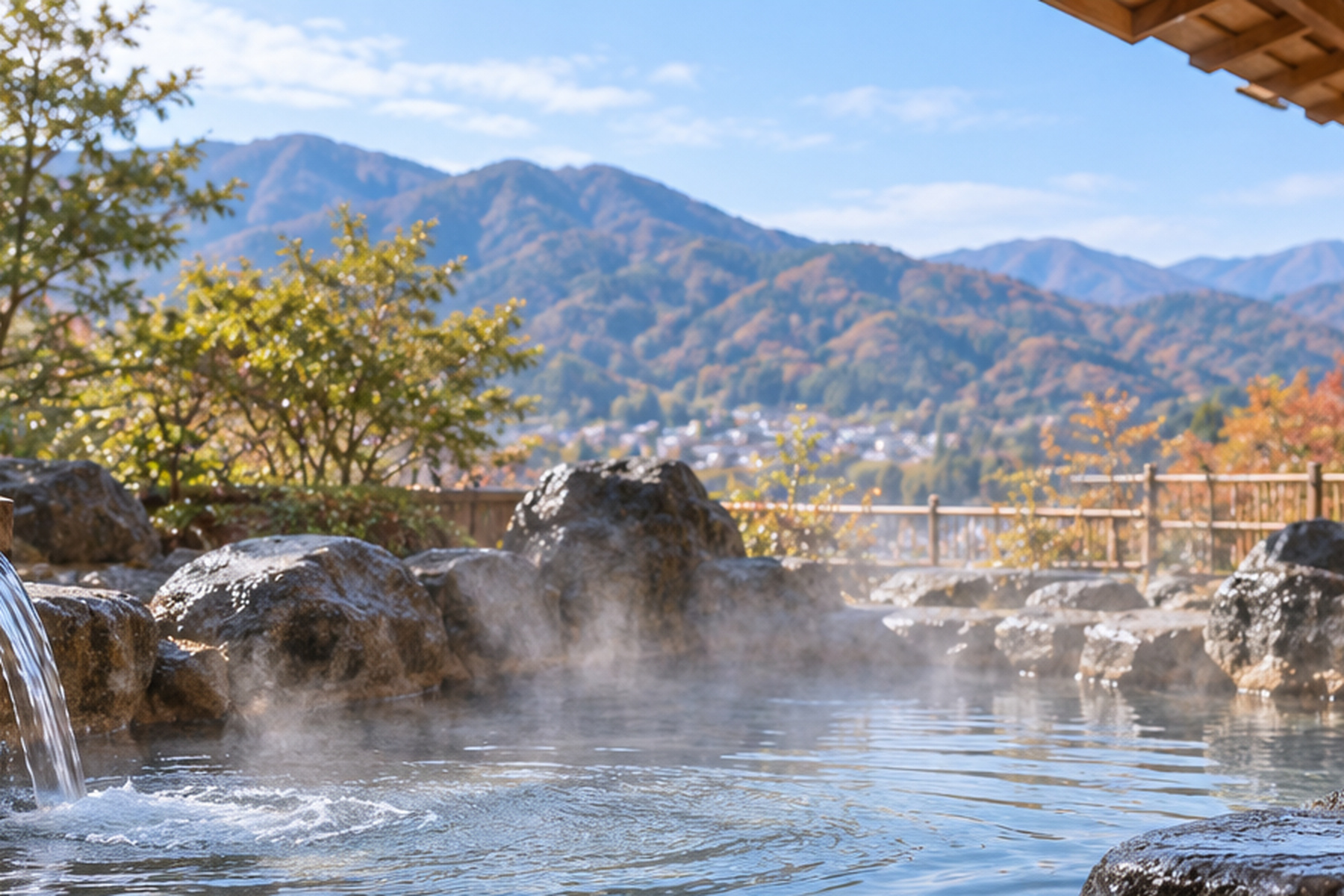
At a typical Japanese onsen, undress in the changing area, wash and rinse thoroughly before entering the bath, keep towels and hair out of the water, speak quietly and leave phones outside the bathing area. Swimwear is usually not worn unless the facility specifically says otherwise. Tattoo policies vary by property, so check before you go; a private bath or in-room bath is often the simplest alternative when access rules or privacy are a concern.
What You’ll Learn
- The normal onsen flow from changing room to washing area and bath
- What to do with towels, long hair, phones and swimwear
- How tattoo policies differ and what alternatives to look for
- How to choose between public baths, private baths and ryokan bathing
Know the basic onsen flow before you enter
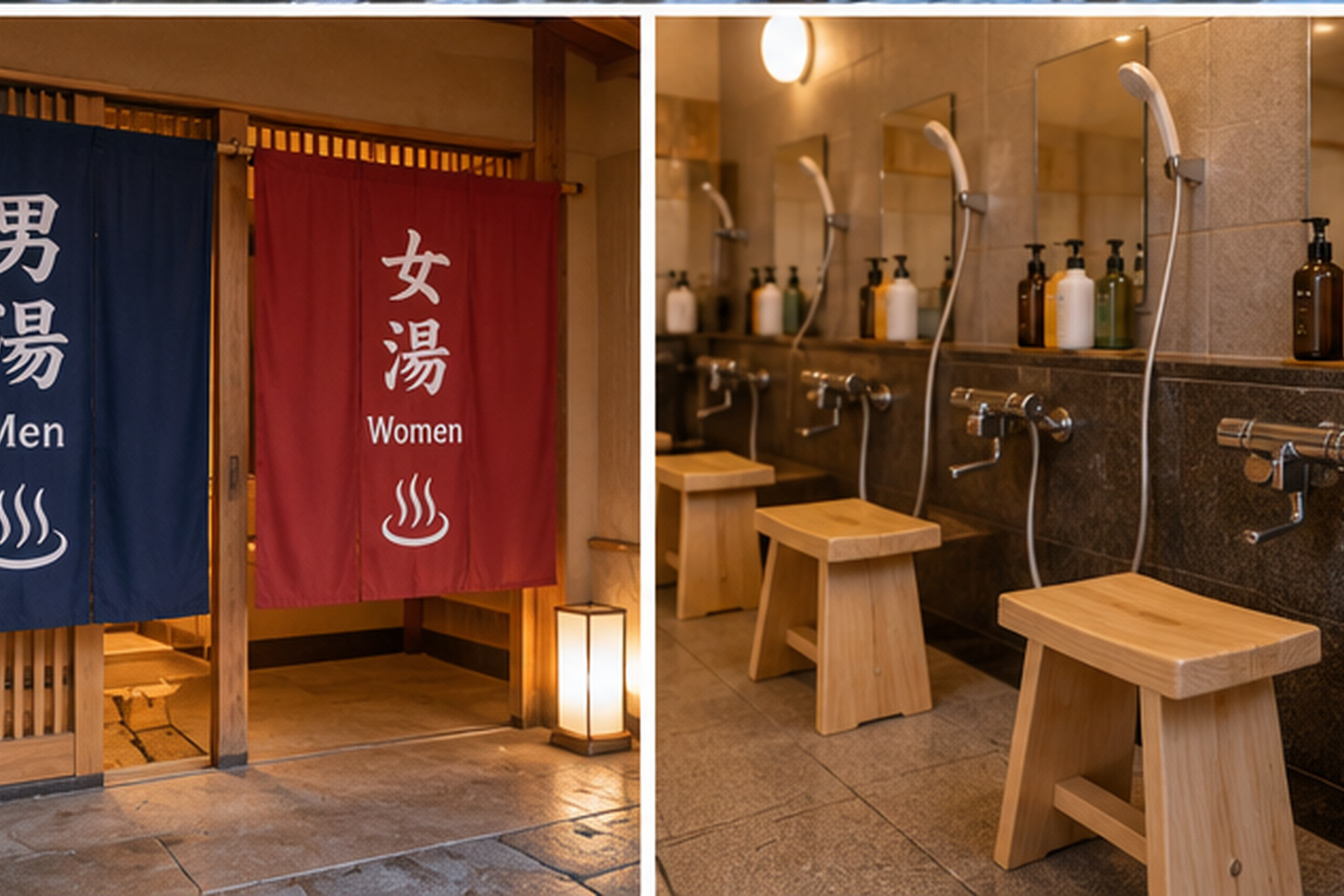
Most first-time uncertainty disappears once you know the sequence. Enter the correct changing area, remove your clothes, take only the items allowed into the bathing area, wash and rinse at the shower station, then enter the shared bath clean.
Bath layouts differ, but posted signs and staff instructions take priority over general etiquette. If a facility provides special bathing wear, mixed-bath rules or another local procedure, follow that facility's directions.
- Check the men’s and women’s entrances carefully before entering
- Store clothes and valuables in the changing area as directed
- Wash before soaking rather than using the bath as a place to clean yourself
- Follow local signs whenever they differ from general practice
Wash and rinse thoroughly before soaking
The shared bath is for soaking, not for washing. Use the seated washing stations, soap and shampoo before entering, then rinse away all soap and foam.
Many facilities also expect bathers to pour warm water over the body before entering. This can help you adjust gradually to the water temperature. Enter slowly, especially when the bath feels hotter than expected.
- Sit at the washing station and avoid splashing nearby bathers
- Rinse away soap and shampoo completely
- Remove makeup before entering the bath
- Ease into hot water rather than jumping in quickly
Keep towels, hair and personal items out of the water
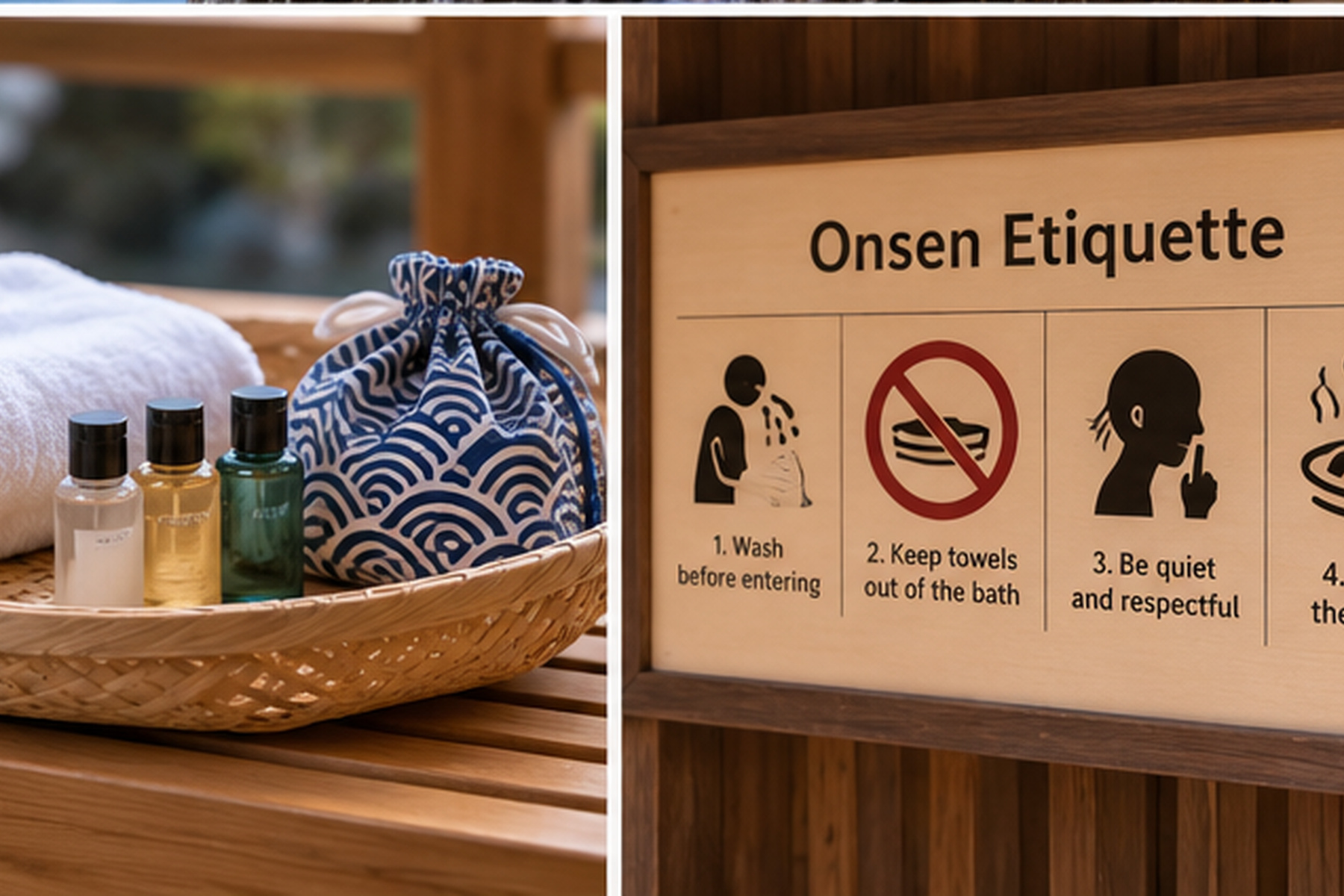
A small towel can be used for washing or modesty while walking between the changing and bathing areas, but it should not go into the shared bathwater. Place it beside the bath or on your head where appropriate.
Long hair should be tied up so it cannot touch the water. Phones, cameras and other recording devices should stay outside the bathing area unless the facility explicitly provides a designated photo opportunity.
- Do not soak or rinse a towel in the bath
- Tie up long hair before entering
- Do not swim, splash or treat the bath like a pool
- Keep phones and cameras out of the bathing area
Swimwear is usually not part of a standard onsen visit
Traditional shared onsen bathing is normally done without clothing or swimwear. This is standard bathing culture rather than a special requirement for tourists.
There are exceptions, including some mixed-gender baths, resort-style facilities or baths that provide specific bathing garments. Do not assume your own swimsuit is acceptable; check the property rules first.
- Expect standard public baths to require nude bathing
- Use only facility-approved bathing wear when an exception applies
- Choose a private bath if shared bathing makes you uncomfortable
- Never rely on a generic rule when the facility posts its own instructions
Tattoo rules vary by facility, so check before arrival
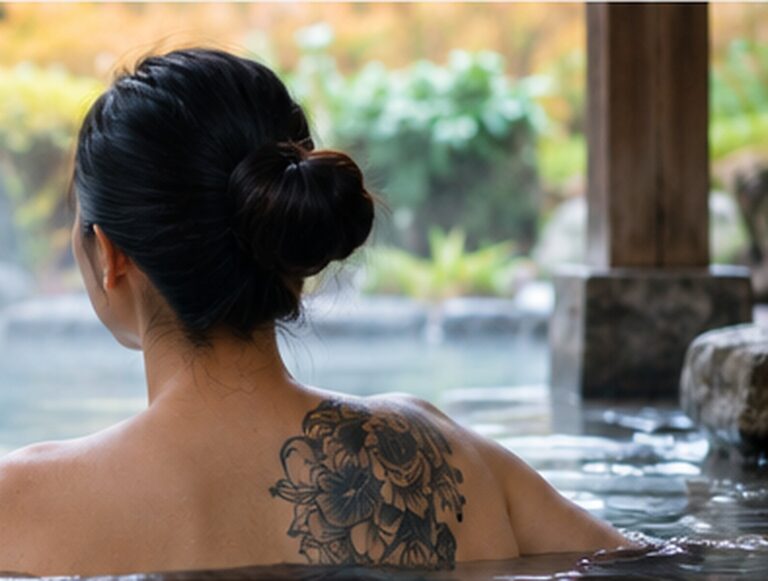
Tattoo policies are not uniform across Japan. Some onsen still restrict tattooed guests, while others accept tattoos, allow small tattoos when covered under stated conditions, or provide tattoo-friendly bathing options.
The safest approach is to check the official property website or contact the facility before you travel. If the policy is unclear, a private reservable bath or a room with its own bath can remove much of the uncertainty.
- Do not assume a tattoo cover sheet is accepted everywhere
- Check the property’s current policy before paying or traveling out of your way
- Look for kashikiri-buro, a private reservable bath, when available
- Consider an in-room bath if privacy and access certainty matter most
Keep the bathing area calm, quiet and clean
Onsen are shared relaxation spaces. Keep conversations low, move carefully on wet floors and avoid behavior that disturbs other bathers.
Do not bring food into the bathing area, and avoid entering the bath when intoxicated. If you feel overheated, dizzy or unwell, get out, cool down and rest rather than forcing yourself to stay in.
- Speak softly and avoid loud group conversations
- Do not reserve space with personal items
- Avoid alcohol before bathing
- Take breaks when the water feels too hot
Choose the right bath type for your comfort level
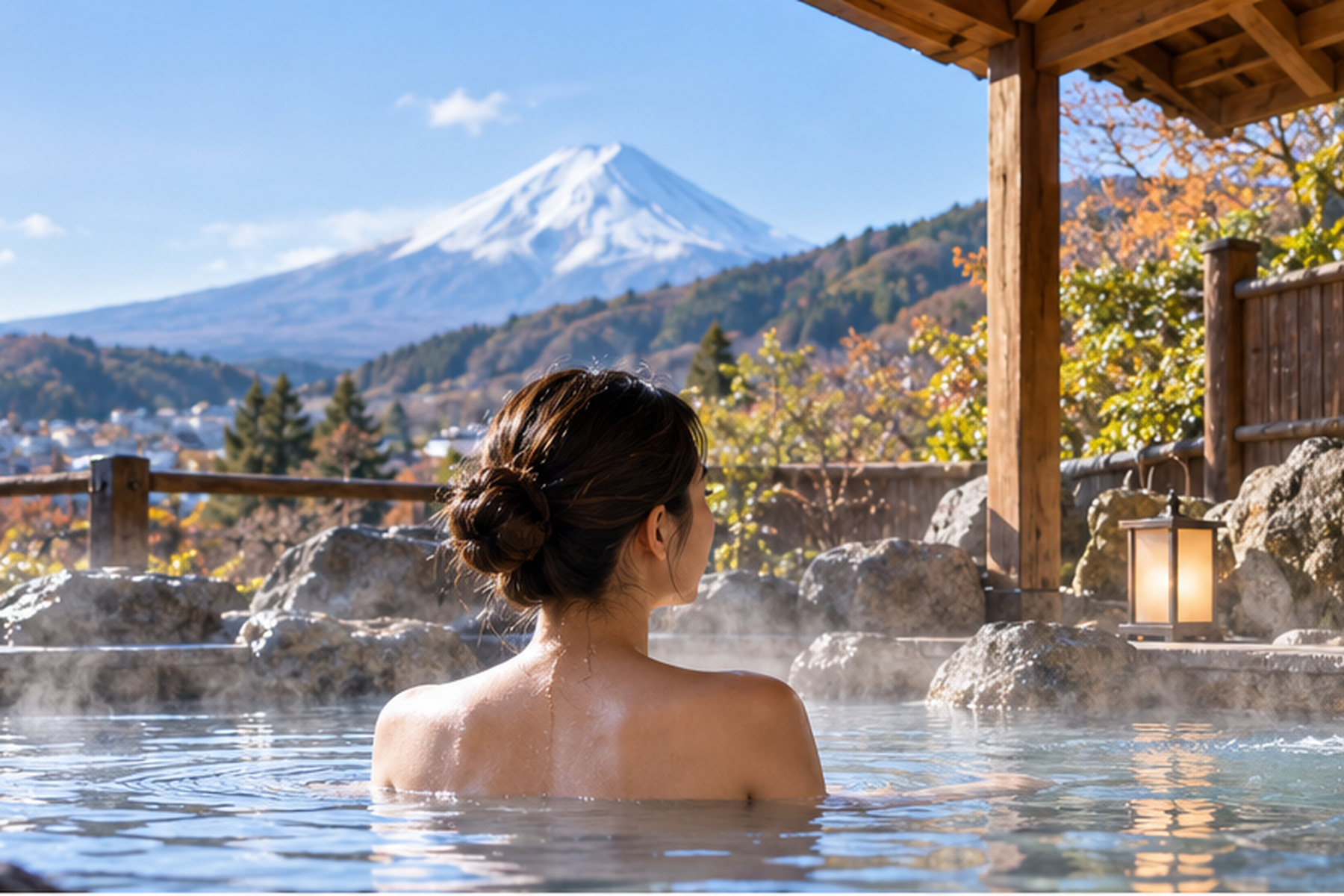
A public onsen gives you the classic shared-bathing experience, but it is not the only option. Private reservable baths are useful for travelers who want more privacy, while some ryokan rooms have their own indoor or open-air bath.
If the onsen experience matters to your trip, check bathing facilities before booking accommodation. Look for whether the property has a public bath, private bath, in-room bath, day-use access, tattoo guidance and any reservation requirement for private bathing.
- Public bath: best for the standard communal onsen experience
- Private reservable bath: useful for privacy, couples or uncertain tattoo access
- In-room bath: most private and convenient, usually at a higher room price
- Day-use bath: useful when you want an onsen experience without an overnight stay
A simple first-time strategy reduces most mistakes
For your first visit, choose a well-reviewed ryokan, hotel or day-use facility with clear visitor information. Arrive with enough time to read the signs rather than rushing just before closing.
Once inside, copy the calm pace of the space: change, wash, rinse, soak briefly, take a break and repeat only if comfortable. Onsen etiquette is mostly about keeping the shared water clean and respecting the people around you.
- Read the facility rules before undressing
- Ask staff when you are unsure instead of guessing
- Keep your first soak short if the water is very hot
- Prioritize cleanliness, quiet and local instructions
FAQ
Do I have to be naked in a Japanese onsen?
At most standard public onsen, yes. Bathers usually enter without clothing or swimwear. Some mixed or special facilities use approved bathing wear, so follow the property’s rules.
Do I need to wash before entering the bath?
Yes. Wash and rinse thoroughly at the shower station before entering the shared bathwater.
Can I put my towel in the onsen water?
No. Keep the small towel out of the bathwater. Place it beside the bath or on your head if appropriate.
Can I use an onsen if I have tattoos?
It depends on the facility. Some allow tattoos, some restrict them and some accept small covered tattoos under specific rules. Check in advance; a private bath or in-room bath is a useful alternative.
Can I take photos inside an onsen?
Do not use a phone or camera in the changing or bathing areas unless the facility has clearly designated a permitted photo area or private setting.
What is the easiest onsen option for a nervous first-time visitor?
A private reservable bath or a ryokan room with its own bath gives you more privacy. If you want the standard communal experience, choose a facility with clear instructions and allow time to learn the flow.
Related Japan Travel Guides
Official References
Final Thoughts
Onsen etiquette is easier than it looks. Wash before entering, keep towels and hair out of the water, stay quiet, keep phones away and follow the facility’s tattoo and bathing rules. If shared bathing or tattoo access makes you uncertain, choose a private bath or in-room bath and enjoy the experience without unnecessary stress.