
Pharmacies in Japan: OTC Medicine, Prescriptions & Drugstore Tips
A practical guide to using pharmacies and drugstores in Japan, including OTC medicine, prescriptions, pharmacist help, safety checks, and what travelers should prepare before visiting.
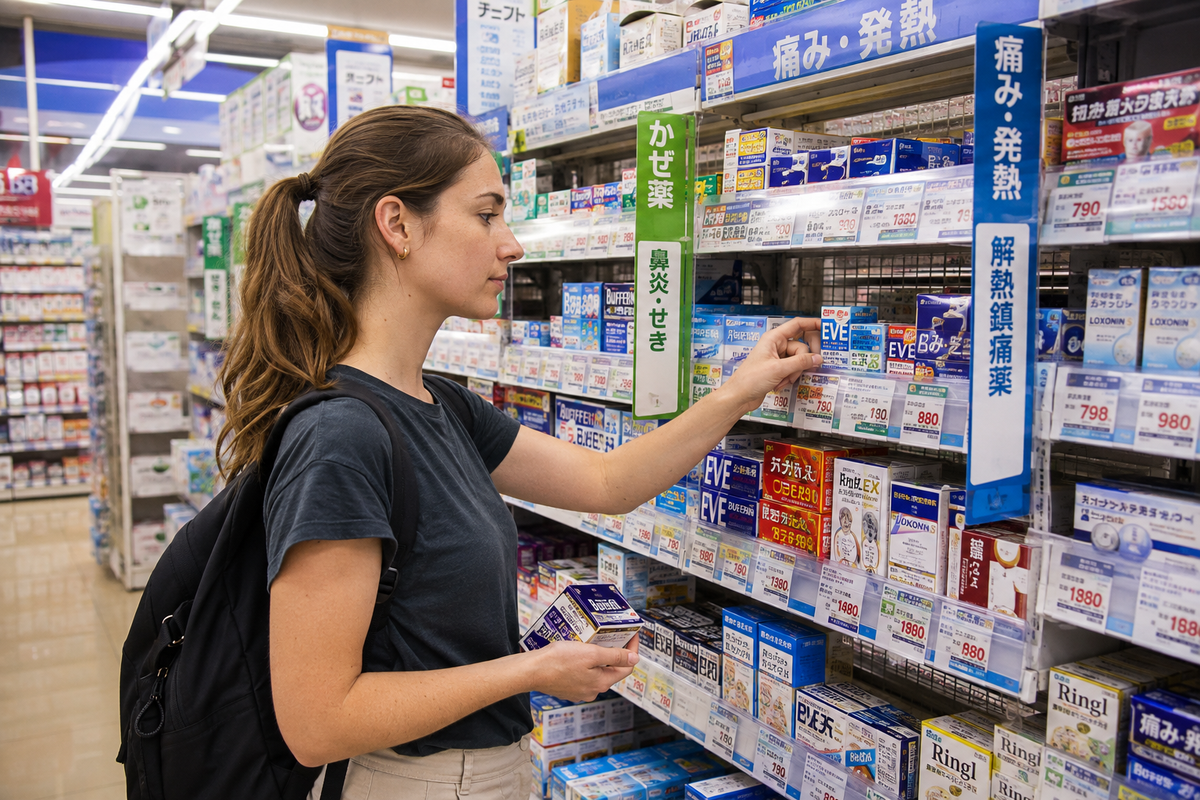
For mild, familiar symptoms, a Japanese drugstore or pharmacy can be a useful first stop for over-the-counter medicine and basic health items. Ask a pharmacist or registered sales clerk if you are unsure what to choose. Some OTC medicines cannot be sold unless the required qualified staff member is present. For prescription medicine, do not assume a prescription from overseas can simply be filled in Japan; you may need to see a doctor and receive a prescription that can be dispensed locally. If symptoms are severe or urgent, seek medical care instead of relying on a drugstore, and call 119 for an ambulance in an emergency.
What You’ll Learn
- The practical difference between drugstores and prescription pharmacies
- When OTC medicine may be enough and when to see a doctor
- How prescription medicine is dispensed in Japan
- How to ask staff for help and avoid common medicine mistakes
- What regular medicine travelers should prepare before departure
Drugstore or Prescription Pharmacy: Which One Do You Need?
Travelers often use the word “pharmacy” for several different kinds of shops, but the practical choice in Japan depends on what you need. A drugstore is the usual place for over-the-counter medicine and everyday health items. A dispensing pharmacy handles prescription medicine and has pharmacists who prepare medicine from a valid prescription.
JNTO’s medical guide directs travelers who do not need a doctor toward nearby pharmacies or drugstores and recommends consulting a pharmacist or registered sales clerk when necessary. If you already know that you need prescription treatment, start with a clinic or hospital rather than searching shelves for an equivalent product.
- Use a drugstore for mild symptoms and ordinary OTC health products
- Use a dispensing pharmacy when you have a valid prescription for medicine
- Use a clinic or hospital when you need diagnosis, testing, treatment, or prescription-level care
- Call 119 when the situation is a medical emergency
What Travelers Can Buy Without a Prescription
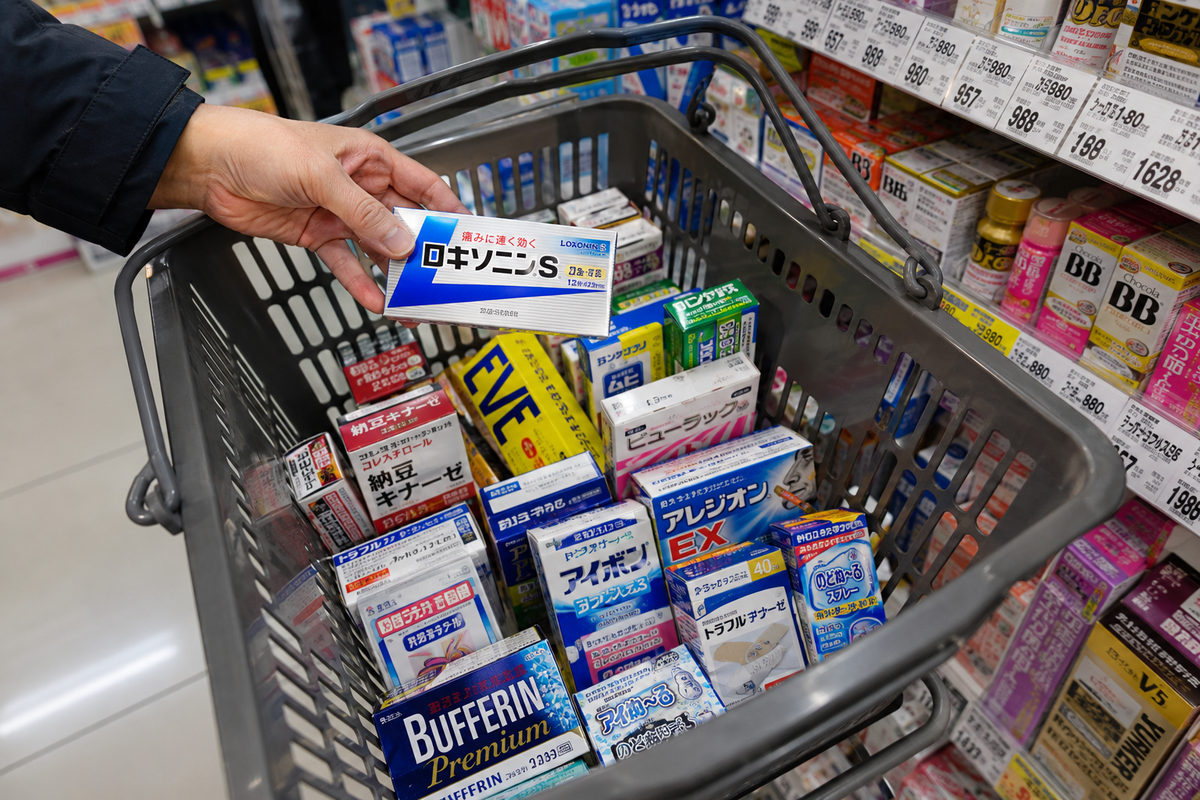
Japanese drugstores carry many OTC products for common travel problems, including pain relief, cold symptoms, stomach discomfort, motion sickness, minor skin problems, eye care, bandages, masks and other basic health items. Product names, ingredients and strengths may differ from what you use at home.
Do not choose medicine only because the package looks familiar. Check the active ingredients, dosage, age limits, warnings and whether the product overlaps with medicine you already take. When you are uncertain, ask qualified staff before buying.
- Pain and fever relief products
- Cold, cough and sore-throat products
- Stomach and motion-sickness medicine
- Eye drops and contact-lens care
- Bandages, blister care and basic first-aid items
- Sunscreen, insect-bite care and other travel health products
When a Pharmacy Is Not Enough
A drugstore is useful for mild problems, but it is not a substitute for medical assessment. If symptoms are severe, unusual, rapidly worsening, involve breathing trouble, chest pain, loss of consciousness, major bleeding, a serious allergic reaction or another urgent condition, seek medical care immediately.
For non-emergency illness that still needs a clinician, use an official medical-facility search service or ask your accommodation or insurer for help finding an appropriate clinic or hospital. Do not delay urgent care because you are worried about language or payment.
- Serious or worsening symptoms
- Injuries that may need stitches, imaging or other treatment
- Symptoms that require diagnosis rather than self-care
- Prescription medicine that needs a doctor’s assessment
- Any emergency that requires an ambulance
How Prescription Medicine Works in Japan
Prescription medicines are normally dispensed by a pharmacy on the basis of a prescription issued after a medical examination. MHLW’s patient guidance explains that an out-of-hospital prescription is taken to a community pharmacy, where the medicine is prepared and supplied.
MHLW also states that an out-of-hospital prescription is valid for four days including the date it was issued. Travelers should not assume that a prescription written overseas can be filled exactly as written in Japan. If you run out of regular medicine, contact a medical facility and bring information showing the active ingredient, strength and usual dose.
- Keep the prescription with you until the medicine has been dispensed
- Use active ingredient names rather than relying only on an overseas brand name
- Bring the original package or a clear medication record when possible
- Do not wait until your final dose before seeking help with a refill
Why Pharmacist Availability Can Matter
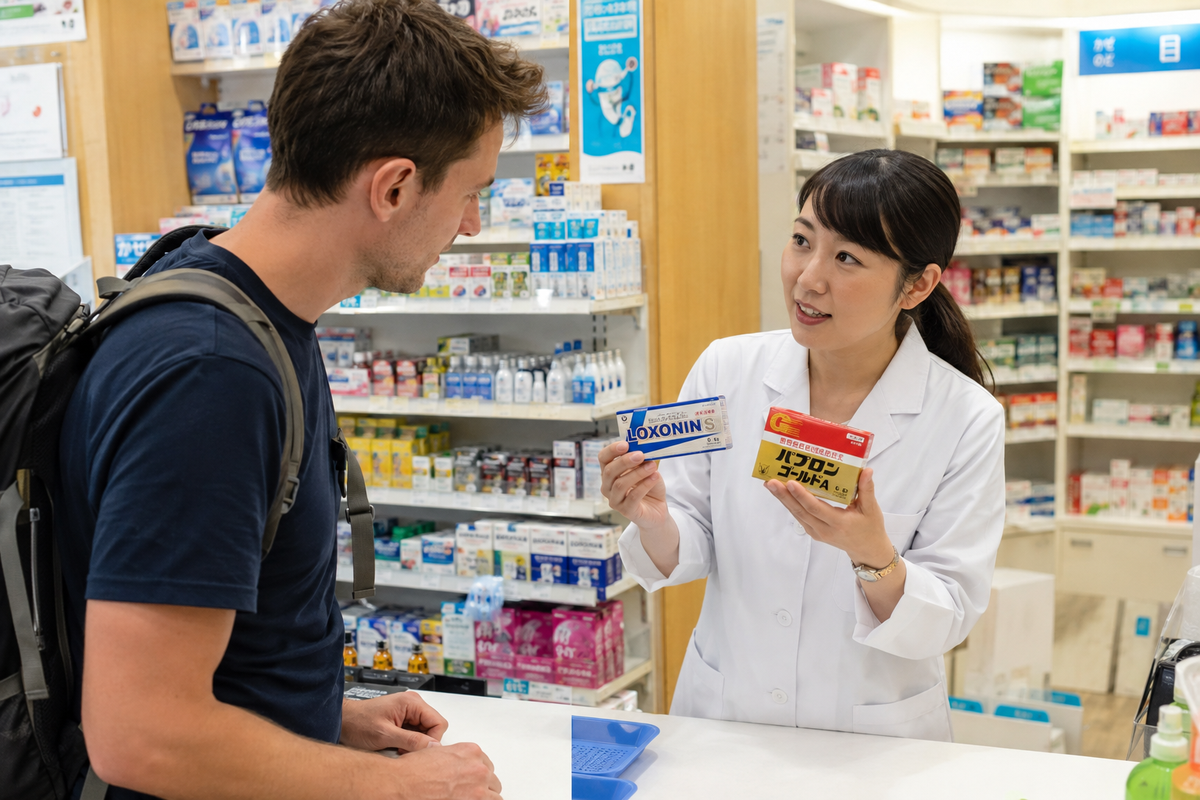
Japan’s OTC medicines are sold under rules that depend on medicine category and the qualifications of the staff present. MHLW states that first-class OTC medicines must be sold by a pharmacist, while second- and third-class OTC medicines may be sold by a pharmacist or registered sales clerk.
JNTO also warns that some medicines cannot be purchased when the pharmacist is not there. If staff tell you a product cannot be sold at that time, ask whether another suitable option is available or whether you should return when the pharmacist is present.
- Ask staff rather than guessing which product is strongest
- Expect some medicine categories to require qualified staff
- If a medicine is unavailable, ask whether staff absence is the reason
- Seek medical care if the symptoms are beyond ordinary self-treatment
How to Ask for Medicine Safely
You do not need perfect Japanese to make a pharmacy visit useful. Keep the explanation short: describe the main symptom, when it started, whether it is getting worse, your age, allergies and what medicine you have already taken. Showing the package of your regular medicine can be more reliable than trying to pronounce a brand name.
A translation app can help with simple communication, but medicine safety still depends on understanding the actual ingredients and directions. Before taking a product, confirm the dose, timing, age restrictions, warnings and whether it can be combined with your current medicine.
- State the main symptom and when it started
- Show current medicine or a medication list
- Mention allergies and important medical conditions
- Ask how much to take and how often
- Ask whether the product can be combined with medicine you already use
Opening Hours, Payment, and Receipts
Opening hours and payment methods vary by location. Large retail drugstores may keep longer hours than small dispensing pharmacies, while prescription pharmacies often follow nearby clinic schedules. Check the specific location before traveling there, especially at night, on weekends or on holidays.
Keep receipts and any prescription or medical documents if travel insurance may be involved. Whether an insurer covers medicine depends on the policy and the circumstances, so keep the paperwork first and ask the insurer what is required for a claim.
- Check the exact store or pharmacy hours before going
- Carry more than one payment option when practical
- Keep pharmacy and medical receipts
- Save insurer assistance details offline
- Do not rely on late-night access to a pharmacist everywhere
Prepare Regular Medicine Before You Travel
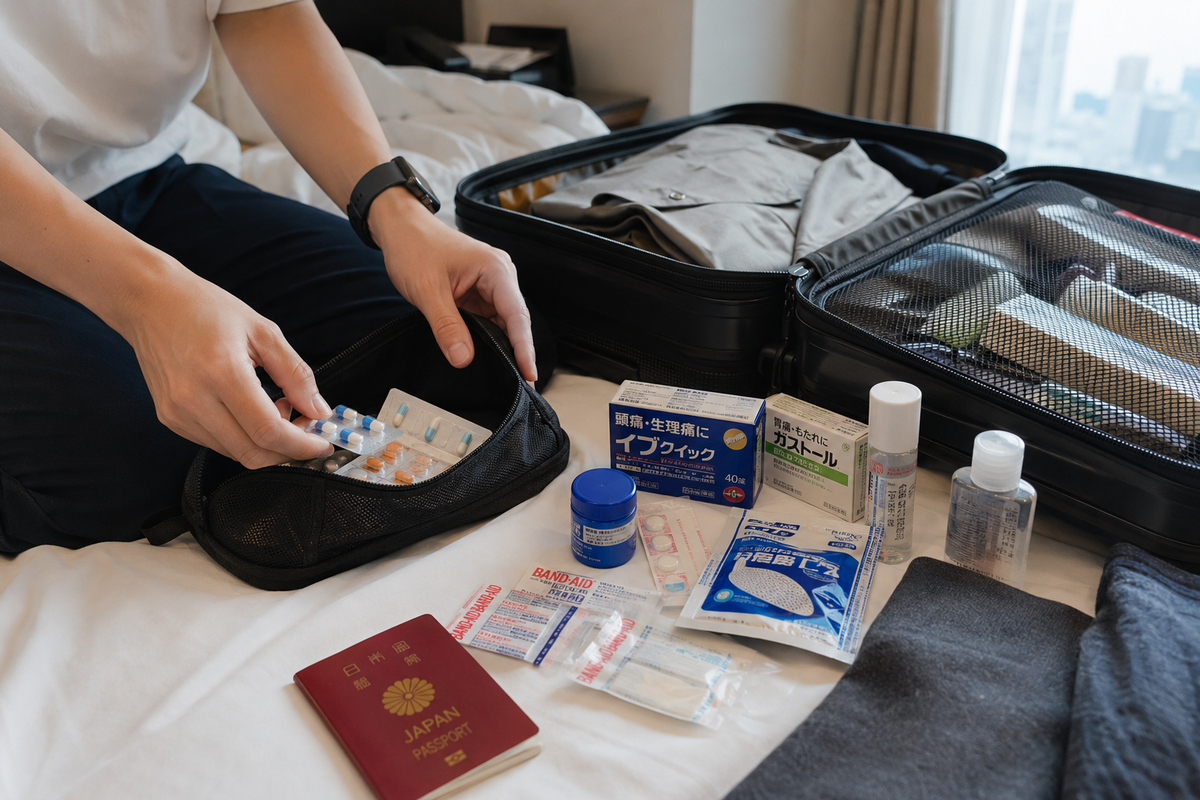
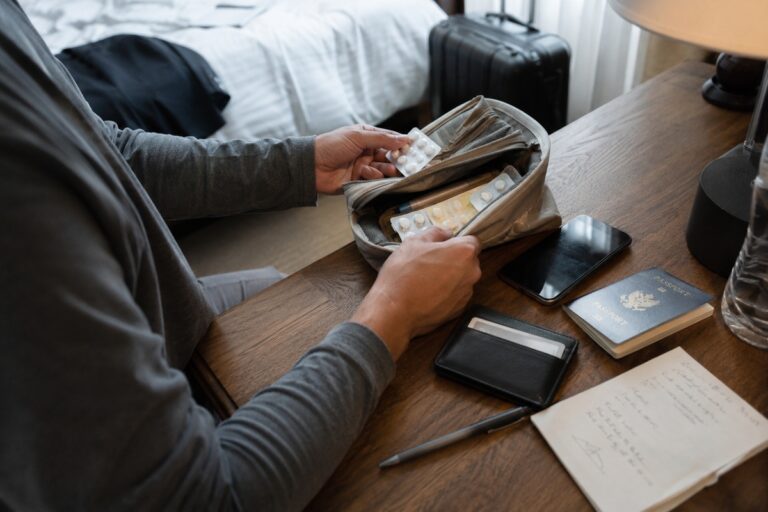
If you depend on regular medicine, preparation before departure is safer than assuming you can replace it in Japan. MHLW has specific rules for bringing medicines into Japan for personal use, including quantity limits and additional controls for some medicines and ingredients.
Check the exact active ingredient and quantity against current official rules before travel. Carry medicine in a form that can be identified, keep a medication list, and bring supporting documents when the official rules or your medical situation make them necessary.
- Check Japan’s current import rules for your exact medicine
- Know the generic or active ingredient name
- Carry enough legally permitted medicine for the trip
- Keep a medication and allergy list
- Do not assume the same brand or strength will be available locally
FAQ
Can tourists buy medicine at pharmacies in Japan?
Yes. Travelers can buy many over-the-counter medicines and basic health products. Ask a pharmacist or registered sales clerk when you are unsure which product is appropriate.
Can I use a prescription from my home country in Japan?
Do not assume it can be filled directly. Prescription medicines in Japan are normally dispensed from a prescription used by a Japanese pharmacy, so you may need to see a doctor in Japan. Bring the overseas prescription or medicine record as supporting information.
Why might a drugstore refuse to sell a medicine even when it is on the shelf?
Some OTC medicine categories require a pharmacist or other qualified staff member to be present. JNTO notes that some medicines cannot be purchased when the pharmacist is not there.
Can I buy the same medicine I use at home?
Maybe, but the brand, active ingredient, strength or legal status may differ. Use the active ingredient name and ask qualified staff rather than matching products by package appearance.
What should I do if my symptoms are getting worse?
Stop relying on self-treatment and seek medical care. If the situation is a medical emergency, call 119 for an ambulance.
How long is a Japanese out-of-hospital prescription valid?
MHLW patient guidance states that it is valid for four days including the date it was issued.
Related Japan Travel Guides
Official References
- JNTO — Guide for when you are feeling ill in Japan
- MHLW — Explanation of the Handling of Prescriptions Outside of the Hospital
- MHLW — Bringing medicines for personal use into Japan
- MHLW — Pharmaceutical and Medical Device Act, OTC sales rules
- Fire and Disaster Management Agency — 119 emergency calls
Final Thoughts
Japanese pharmacies and drugstores are useful for mild symptoms and everyday travel health needs, but the safest approach is to know their limits. Ask qualified staff when you are unsure, check ingredients instead of relying on familiar packaging, and move to a clinic or hospital when symptoms need medical assessment. If you use regular medicine, prepare it before departure and check Japan’s current import rules rather than assuming a local replacement will be available.