
Tokyo to Osaka: Shinkansen, Flights, Buses and the Best Route
Plan the Tokyo to Osaka trip with a practical comparison of the Shinkansen, flights and highway buses, plus tickets, luggage, seat choices and Shin-Osaka transfers.
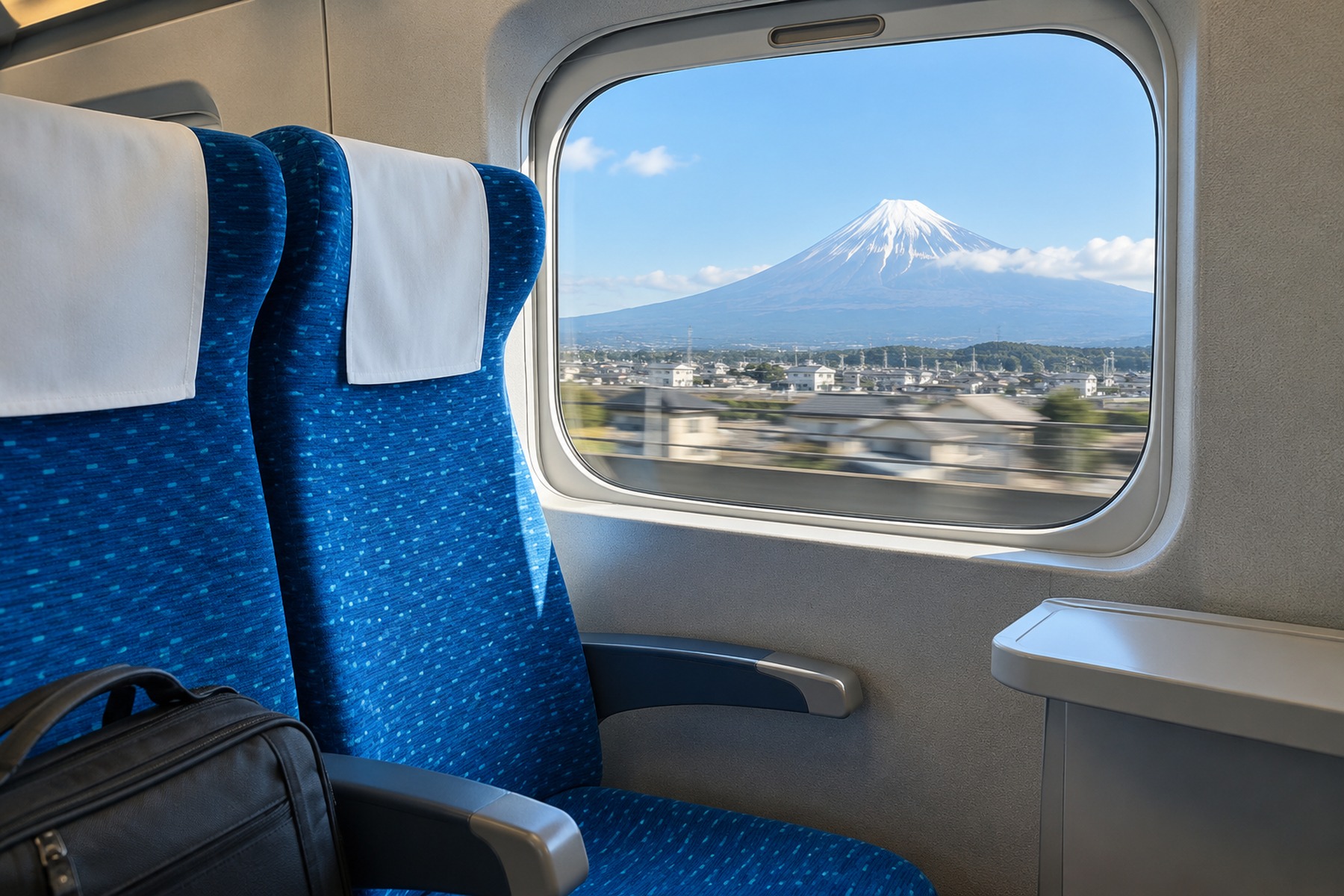
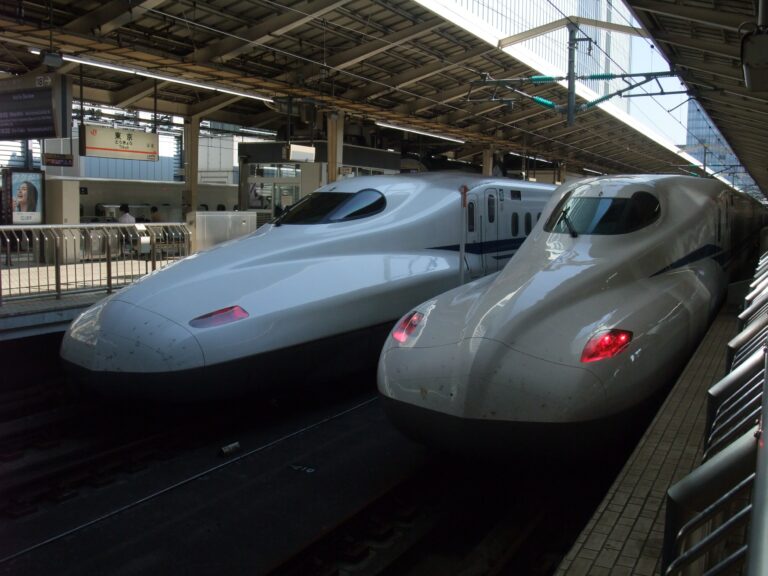
For most visitors, the Tokaido Shinkansen is the best way to travel from Tokyo to Osaka. Board at Tokyo Station or Shinagawa, ride to Shin-Osaka, then transfer for Umeda, Namba or your hotel area. The fastest Nozomi services take about 2 hours 21 minutes between Tokyo and Shin-Osaka. Flights can make sense for airport connections, while highway buses are mainly a budget choice.
What You’ll Learn
- Which Tokyo station is easier for your hotel and why Shin-Osaka is the arrival station.
- How Nozomi, Hikari and Kodama differ for a Tokyo to Osaka trip.
- What to know about seat reservations, oversized baggage and ticket booking.
- When a flight, highway bus or Japan Rail Pass can make more sense.
Tokyo to Osaka: Compare the Main Options
The best route depends on what you value most: door-to-door time, price, comfort, luggage handling or a flight connection. For a typical sightseeing trip, the Shinkansen is the strongest all-round option because it connects central Tokyo directly with Shin-Osaka and avoids airport check-in and long airport transfers.
A flight can still be attractive when you are already near Haneda, connecting to another flight, using airline miles or finding a strong fare. Highway buses can cut the cash cost substantially, especially overnight, but they trade away time and comfort.
- Shinkansen: best overall balance of speed, frequency, comfort and city access.
- Flight: worth checking for airport connections, miles or special fares.
- Highway bus: best for budget-first travelers who accept a much longer trip.
- Local trains: possible, but usually too slow and transfer-heavy for ordinary sightseeing.
Use Tokyo or Shinagawa, Then Ride to Shin-Osaka
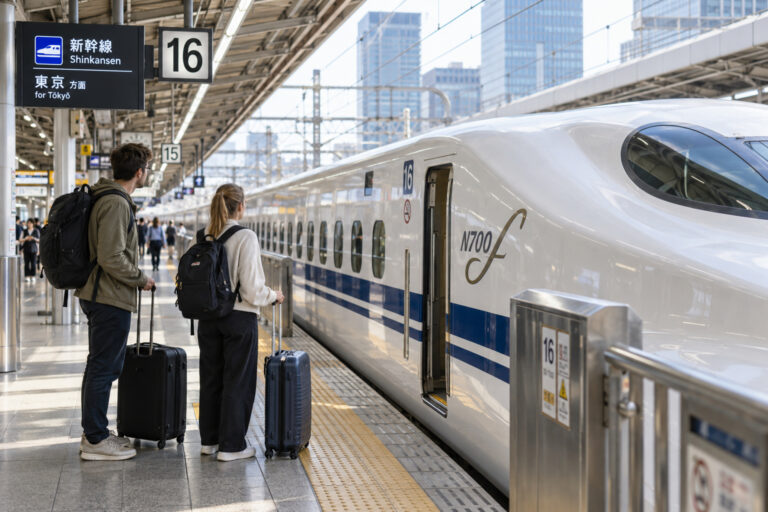
Tokaido Shinkansen trains for Osaka depart from both Tokyo Station and Shinagawa Station. Choose the station that is easier from your hotel instead of crossing the city just to start at Tokyo Station. Tokyo Station is convenient for Marunouchi, Ginza, Nihombashi and nearby central areas, while Shinagawa can be simpler from southern Tokyo and the Haneda side of the city.
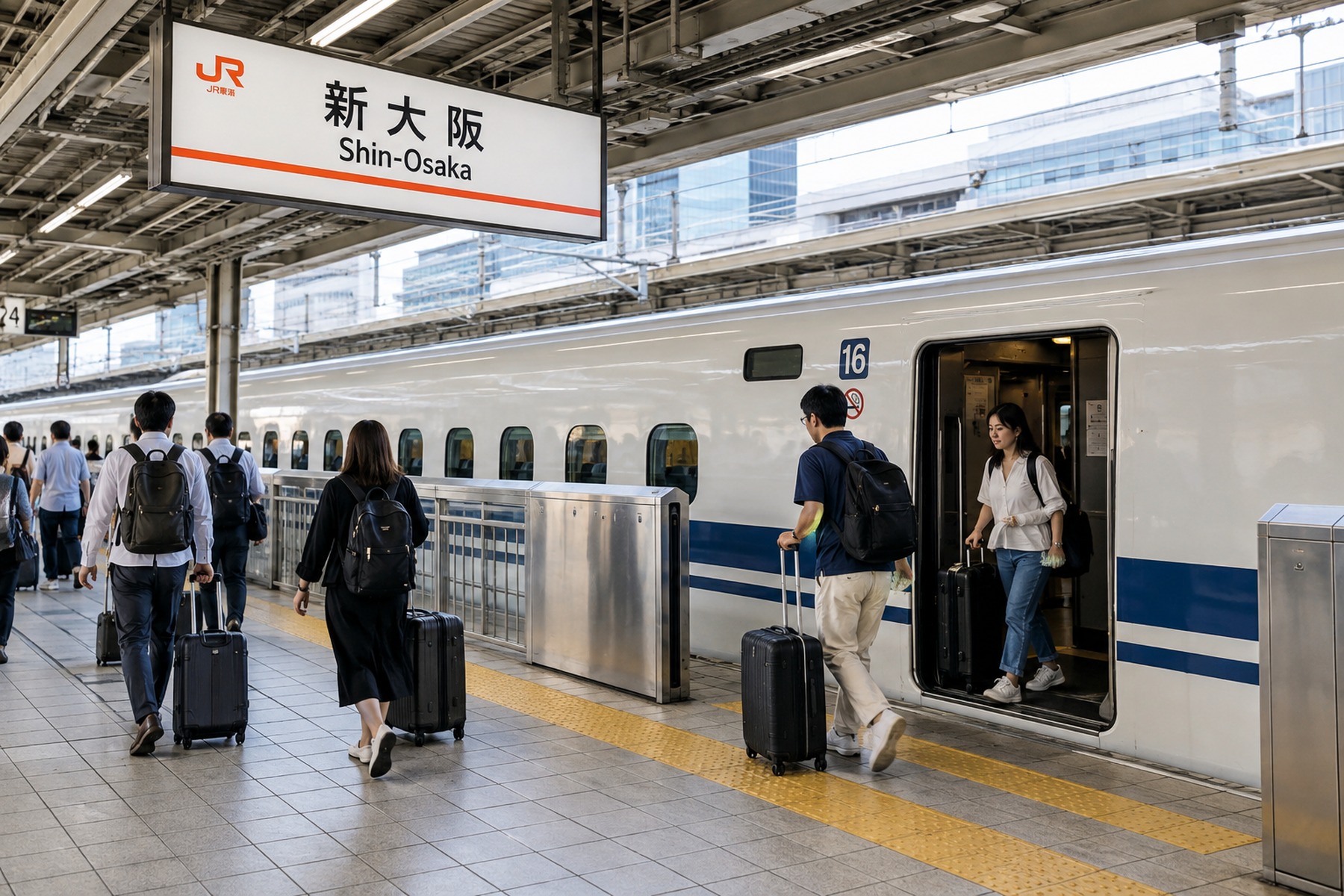
The Shinkansen does not terminate at Osaka Station. It arrives at Shin-Osaka Station, which is north of the main Osaka/Umeda area. Your real trip therefore has two parts: the long-distance ride to Shin-Osaka and the local transfer to your final neighborhood.
- Tokyo Station: major hub with many services, but large and busy.
- Shinagawa Station: often easier to navigate and useful from southern Tokyo.
- Shin-Osaka Station: the Shinkansen arrival point for Osaka.
- Osaka Station/Umeda, Namba, Shinsaibashi and Tennoji require an onward local train or subway ride.
Nozomi, Hikari or Kodama: What Should You Choose?
Nozomi is normally the simplest choice for a traveler buying a standard ticket and wanting the fastest practical trip. JR Central lists the fastest Tokyo to Shin-Osaka journey at about 2 hours 21 minutes. Hikari makes more stops and is slower, while Kodama stops at many more stations and is rarely the best choice for a straightforward Tokyo to Osaka transfer.
For an adult ordinary reserved seat on Nozomi, SmartEX lists a regular-season Tokyo to Shin-Osaka price of ¥14,520. The exact amount can vary by travel season and by the product you buy, so check the live price before paying rather than treating one fare as permanent.
During major peak travel periods, Nozomi operates with all seats reserved. If your trip falls in a busy holiday window, reserve before you reach the station instead of assuming a non-reserved car will be available.
- Nozomi: fastest and usually the easiest normal-ticket choice.
- Hikari: slower, but useful for some pass or itinerary situations.
- Kodama: many stops; mainly useful when your destination is a smaller Shinkansen station.
- Peak periods: check current reservation rules because Nozomi may be all-reserved.
How to Book and Board Without Stress
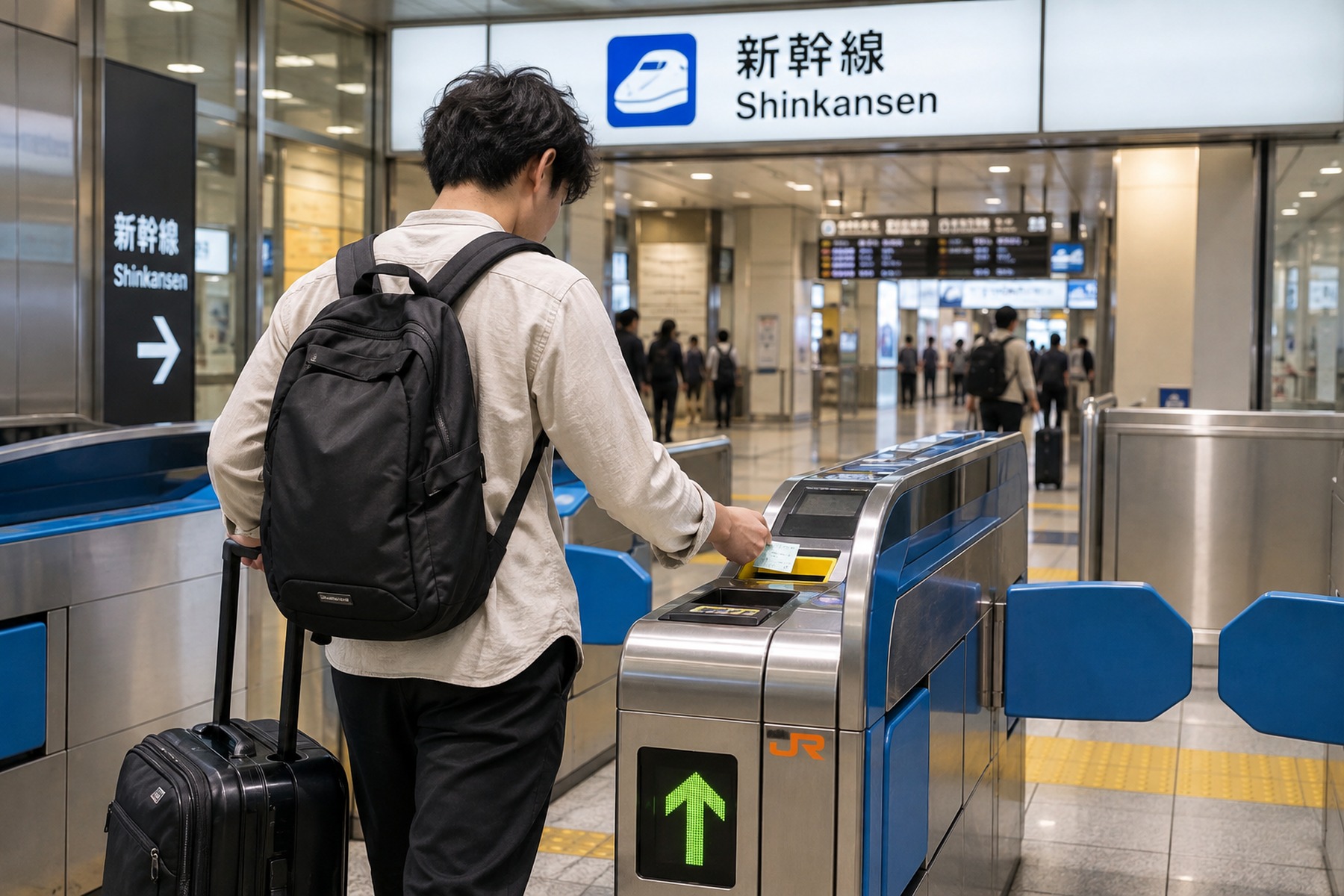
You can buy Tokaido Shinkansen tickets at station ticket machines and counters, or reserve online. SmartEX combines the base fare and Shinkansen limited-express fare and supports boarding with a QR ticket or a registered IC card. The service can accept bookings well before travel, which is useful if you need seats together or have a fixed departure time.
When booking, confirm four things before payment: departure station, Shin-Osaka as the destination, train type, and seat type. If you are using a paper ticket, QR ticket or IC card, know which method you will use at the Shinkansen gate before you join the queue.
- Choose Tokyo or Shinagawa based on your hotel location.
- Select Shin-Osaka, not Osaka Station, as the Shinkansen destination.
- Reserve seats for families, groups, fixed schedules or busy travel periods.
- Keep the QR ticket, IC card or paper ticket ready before reaching the gate.
Luggage Rules Matter More Than Many First-Time Riders Expect
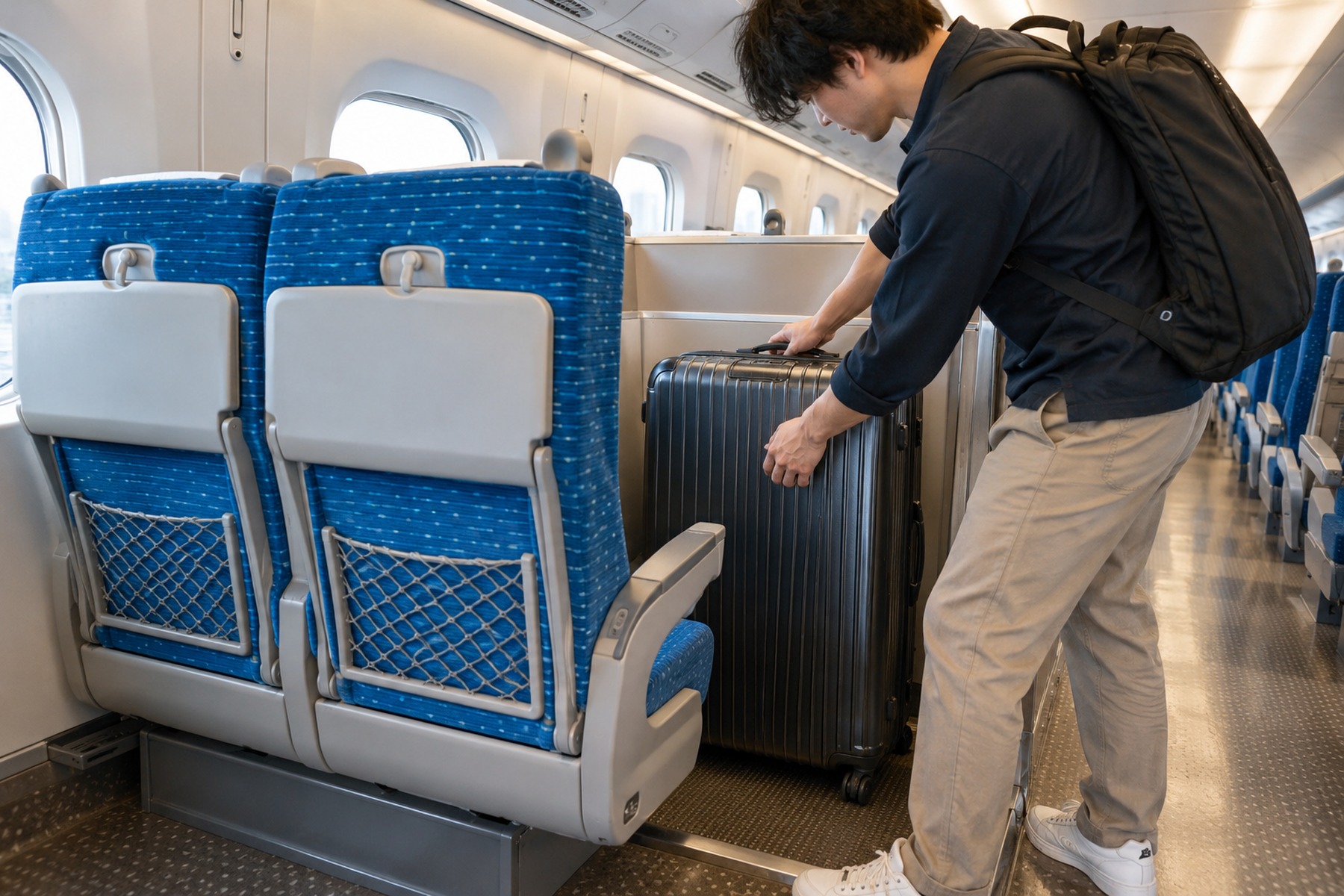
On the Tokaido Shinkansen, baggage with total outside dimensions of 160 cm or less generally does not require an oversized-baggage reservation. Bags with total dimensions from 161 cm to 250 cm require a seat reservation linked to an oversized baggage area. Items exceeding 250 cm in total dimensions cannot be brought on board under the standard carry-on rules.
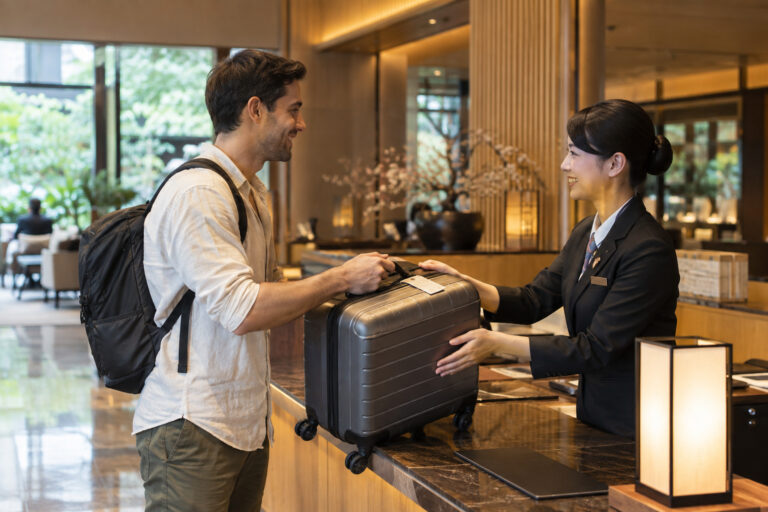
If you bring oversized baggage without the required reservation, JR Central states that a ¥1,000 baggage fee can apply. Large suitcases are also easier to manage when you reserve in advance because the dedicated spaces are limited. If you have several heavy bags, luggage delivery can be more comfortable than moving everything through Tokyo and Shin-Osaka.
- Up to 160 cm total dimensions: usually no oversized-baggage reservation required.
- 161 to 250 cm total dimensions: reserve a seat with an oversized baggage area.
- Over 250 cm total dimensions: cannot be carried on under the normal rule.
- Multiple large bags: consider luggage delivery instead of carrying everything on the train.
What to Do After You Arrive at Shin-Osaka
Do not plan your hotel transfer as if Shin-Osaka and central Osaka were the same place. Shin-Osaka is a major transport hub, but most visitors continue by local train or subway. Check the exact neighborhood of your hotel before you travel so you know whether you are heading toward Osaka/Umeda, Namba, Shinsaibashi, Tennoji or another area.
For Namba and Shinsaibashi, the Osaka Metro Midosuji Line is often a straightforward option. For Osaka Station and Umeda, local rail connections are short. The important point is to include this final transfer when comparing door-to-door time against a flight or bus.
- Osaka/Umeda: use a local rail connection from Shin-Osaka.
- Namba and Shinsaibashi: the Midosuji Line is commonly convenient.
- Tennoji: subway or JR routes can work depending on your hotel.
- Always compare the final hotel transfer, not only the long-distance segment.
When Flying or Taking a Highway Bus Makes Sense
Flying can be competitive when your trip naturally begins or ends near an airport, when you are connecting to another flight, or when a fare or mileage redemption is unusually good. For most city-center travelers, however, the short flight time is offset by airport access, security, boarding and the transfer from the Osaka-area airport to your final destination.
Highway buses are the main alternative for travelers prioritizing price. Overnight services may also replace a hotel night, but sleep quality and arrival time matter. A cheap bus is not good value if you arrive exhausted and lose the next sightseeing day.
- Fly when the airport is already part of your trip or the fare is unusually favorable.
- Take a highway bus when saving money matters more than travel time.
- Avoid comparing only the scheduled flight time with the Shinkansen time.
- For overnight buses, check seat type, luggage allowance, departure point and arrival time before booking.
Choose the Route That Fits Your Trip
A first-time visitor with a short itinerary usually gets the most value from the Shinkansen because it is simple and predictable. Families benefit from reserved seats and easier movement. Budget travelers may prefer a bus. Travelers continuing by air may find a flight more logical than entering central Osaka first.
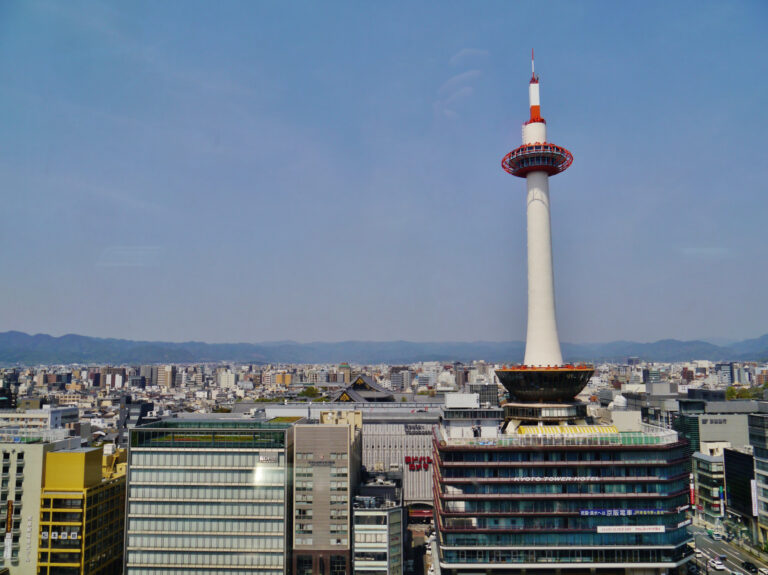
If Kyoto is also on your itinerary, remember that Kyoto Station comes before Shin-Osaka when traveling west from Tokyo. A Tokyo → Kyoto → Osaka sequence is often more efficient than going to Osaka first and backtracking to Kyoto.
- First-time visitor: Shinkansen is usually the least complicated choice.
- Family or group: reserve seats together and allow extra station time.
- Budget-first traveler: compare highway buses with discounted rail products.
- Tokyo → Kyoto → Osaka trip: stop in Kyoto before continuing to Osaka.
Should You Use the Japan Rail Pass?
Do not buy a Japan Rail Pass only because you are taking one Tokyo to Osaka ride. Compare the total cost of all long-distance JR journeys in your itinerary. The pass can make more sense when your trip includes several expensive intercity journeys in a short period, but a single Tokyo to Osaka leg often favors ordinary tickets.
The pass does not include Nozomi by itself. A pass holder who wants to ride Nozomi must buy the dedicated Nozomi/Mizuho add-on ticket for that trip. For Tokyo to Shin-Osaka, the official add-on is a separate charge, so include it when comparing a pass with ordinary tickets.
- One Tokyo to Osaka ride: compare ordinary tickets first.
- Several long-distance JR rides: calculate the full itinerary before deciding.
- Nozomi: requires the dedicated add-on ticket when using a Japan Rail Pass.
- Do not assume the fastest train is automatically included with the pass.
Booking Strategy and Common Mistakes
A flexible solo traveler on an ordinary day may be comfortable booking closer to departure. Reserve earlier if you need adjacent seats, an oversized-baggage area, a specific train, or travel during a busy period. Online booking is also useful when you want to remove ticket-machine decisions from the station day.
The most common mistakes are simple but costly in time: choosing the wrong Osaka station, assuming non-reserved Nozomi seating exists during a peak period, forgetting the luggage rule, or comparing a flight without adding airport access. Fix those four points and the route becomes straightforward.
- Do not confuse Shin-Osaka with Osaka Station.
- Check current Nozomi reservation rules before peak travel.
- Measure very large luggage before booking.
- Compare door-to-door time, not just the train or flight segment.
- Plan the local transfer from Shin-Osaka to your hotel before departure.
FAQ
What is the best way to travel from Tokyo to Osaka?
For most visitors, the Tokaido Shinkansen is the best overall option because it combines fast city-to-city travel, frequent departures and a simple arrival at Shin-Osaka.
How long does the Shinkansen take from Tokyo to Osaka?
The fastest Nozomi services take about 2 hours 21 minutes between Tokyo and Shin-Osaka. Other services take longer because they make more stops.
Does the Shinkansen go to Osaka Station?
No. Tokaido Shinkansen trains arrive at Shin-Osaka Station. From there, transfer to a local train or subway for Osaka/Umeda, Namba, Shinsaibashi, Tennoji or your hotel area.
Do I need to reserve a seat?
A reservation is strongly recommended for families, groups, fixed schedules and travelers with oversized baggage. During major peak periods, Nozomi operates with all seats reserved.
Do I need a luggage reservation on the Shinkansen?
Only oversized baggage is subject to the special reservation rule. On the Tokaido Shinkansen, luggage with total dimensions from 161 cm to 250 cm requires a seat with an oversized baggage area.
Can I use a Japan Rail Pass on Nozomi?
Not with the pass alone. Japan Rail Pass holders need the dedicated Nozomi/Mizuho add-on ticket to use Nozomi, so compare that extra cost with ordinary tickets.
Prefer the fastest Tokyo–Osaka option?
Compare direct Shinkansen ticket options with the slower highway-bus alternative before booking.
Check Shinkansen ticketsConsidering a Tokyo–Osaka highway bus?
If price matters more than travel time, compare current intercity and overnight bus options, departure points and booking conditions before choosing.
Check highway bus ticketsRelated Japan Travel Guides
Official References
Final Thoughts
For most Tokyo to Osaka trips, the simplest plan is still the strongest one: choose Tokyo or Shinagawa based on your hotel, take a Nozomi to Shin-Osaka, reserve when your schedule or luggage makes it useful, and plan the final transfer before you leave Tokyo. Compare flights or buses only when they solve a specific budget, airport or itinerary need.