Introduction
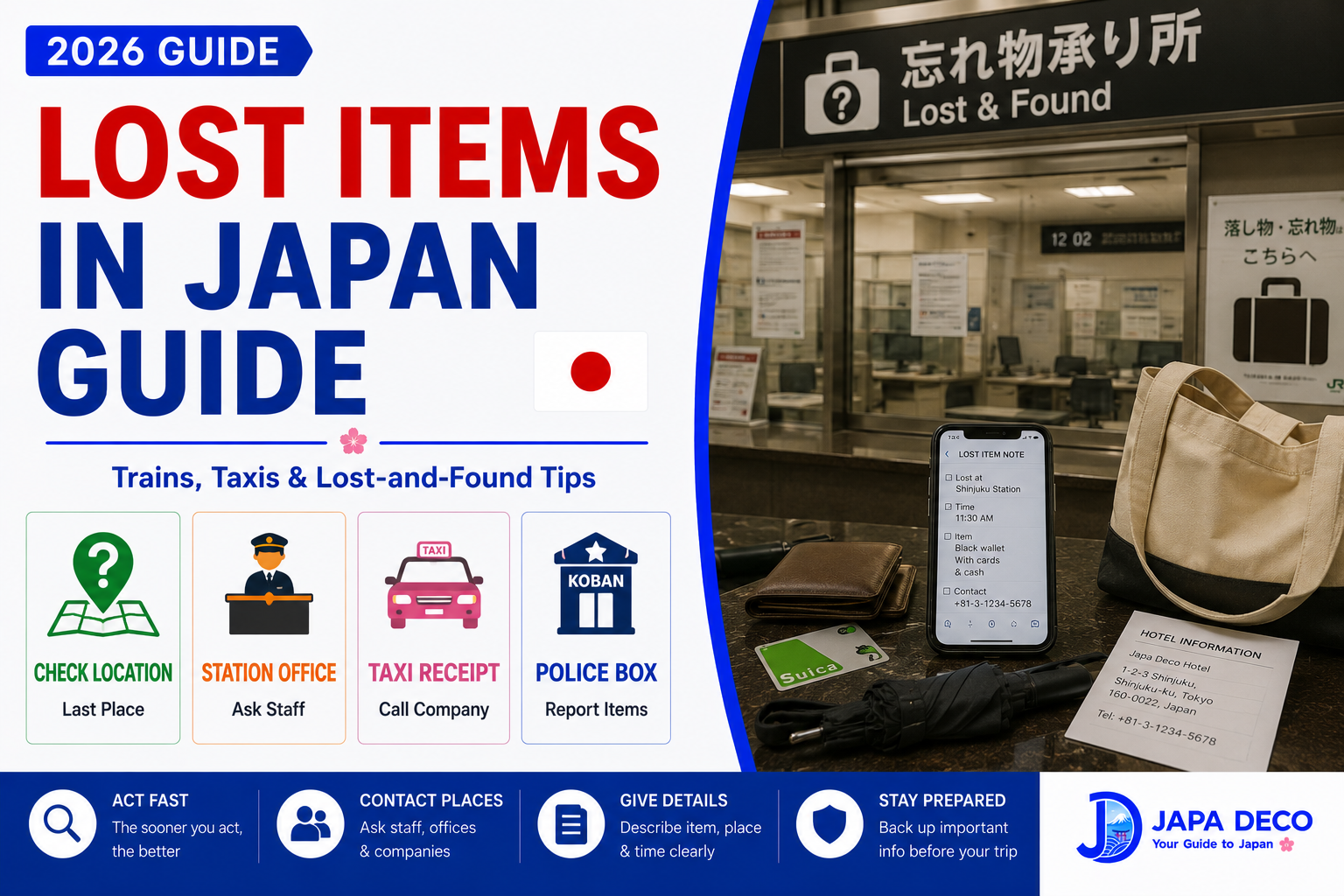
Losing something during a trip is stressful, but Japan is one of the better places for lost items.
Many lost wallets, phones, umbrellas, bags, and train items are turned in to station offices, police boxes, stores, taxis, or lost-and-found centers. However, you still need to act quickly and contact the right place.
The most important rule is simple: think about where you last had the item.
If you lost it on a train, ask station staff. If you lost it in a taxi, check your receipt or app history. If you lost it in a store or restaurant, contact the shop. If you lost it on the street, go to a police box.
This guide explains what to do if you lose something in Japan.
Quick Answer
If you lose an item in Japan:
- Check your bag, hotel, pockets, and last seat.
- Think about where you last used the item.
- Contact the place directly if possible.
- Ask station staff if it was lost on a train.
- Use your taxi receipt if it was lost in a taxi.
- Go to a koban police box if it was lost outside.
- Keep a clear description of the item ready.
- Act early, especially for passports, phones, wallets, and credit cards.
Japan’s lost-and-found system is good, but it works best when you know where and when the item was lost.
First: Check Carefully
Before reporting the item, check carefully.
Look in:
- Backpack pockets
- Jacket pockets
- Suitcase pockets
- Hotel room
- Hotel safe
- Coin locker
- Restaurant seat
- Train seat area
- Taxi seat
- Shopping bag
- Restroom area
- Convenience store counter
Many travelers think something is lost, then find it in a hidden pocket.
Check calmly before moving to the next step.
If You Lost It on a Train
If you lost something on a train, ask station staff as soon as possible.
Tell them:
- Train line
- Departure station
- Arrival station
- Time
- Direction
- Car number if known
- Seat number if known
- Item description
For Shinkansen or limited express trains, seat and train information can help a lot.
Show your ticket if you still have it.
If the item is found later, the railway company may tell you where to pick it up.
【Image①】
If You Lost It at a Station
Large stations have station offices or lost-and-found counters.
If you lose something at a station, go to station staff and explain.
Useful phrase:
“I lost my wallet.”
“I lost my phone.”
“I lost my bag.”
You can also use a translation app.
Station staff may ask:
- What item?
- What color?
- What size?
- Where did you lose it?
- What time?
- What is inside?
Give simple and clear information.
If You Lost It in a Taxi
Taxi lost items are easier to find if you have a receipt.
A taxi receipt may show:
- Taxi company name
- Phone number
- Vehicle number
- Date and time
- Fare
- Pickup or drop-off details
If you used a taxi app, check your ride history.
Ask your hotel front desk to help call the taxi company if needed.
If you paid cash and did not keep the receipt, it becomes harder.
For taxi rides in Japan, keeping receipts is a good habit.
If You Lost It in a Store or Restaurant
If you lost something in a shop, restaurant, cafe, museum, or attraction, contact that place directly.
Go back if it is nearby.
Tell staff where you sat or where you think you left it.
Useful details:
- Time you visited
- Table number if known
- Item type
- Color
- Brand
- What was inside
- Your contact information
Many places keep lost items for a certain period before handing them to police or a lost-and-found office.
If You Lost It on the Street
If you lost something outside, go to a nearby koban.
A koban is a small police box.
Police boxes are common near stations and busy areas.
Tell the officer what you lost and where you think you lost it.
Useful phrase:
“Otoshimono o shimashita.”
This means:
“I lost something.”
You may need to fill out a report.
If the item is found later, the police may contact you if they have your information.
【Image②】
What Information Helps?
Prepare a clear description.
Useful information includes:
- Item type
- Color
- Brand
- Size
- Shape
- Time lost
- Place lost
- What was inside
- Your name
- Phone number
- Hotel address
- Email address
- Photo of the item if available
For wallets, avoid saying card numbers out loud in public.
For phones, be ready to show a device name, case color, or lock screen description.
Lost Wallet
If you lose your wallet, act quickly.
Steps:
- Check recent locations.
- Ask station, shop, or taxi company if relevant.
- Report to police.
- Stop or freeze credit cards if needed.
- Contact your bank.
- Check IC card balance if possible.
- Keep your passport and remaining cash safe.
If your wallet has your credit cards, do not wait too long before contacting your card company.
Japan is safe, but financial cards should be protected quickly.
Lost Phone
A lost phone can create big problems because travelers rely on it for maps, translation, tickets, and communication.
If you lose your phone:
- Use Find My iPhone or Find My Device if available.
- Ask station or shop staff.
- Contact taxi company if needed.
- Report to police.
- Contact your mobile provider.
- Use hotel Wi-Fi or another device to access accounts.
- Change important passwords if necessary.
Before your trip, prepare backup access to your email and important apps.
Do not rely on one device only.
Lost IC Card
If you lose a normal anonymous IC card, it may be difficult to recover the balance unless the card is found.
If you use a registered IC card or mobile IC card, there may be more options depending on the service.
For a physical card, ask station staff.
If the balance was small, buying a new card or ticket may be easier.
For mobile Suica or similar services, use your phone account support.
Lost Umbrella or Small Item
Umbrellas are commonly lost in Japan.
If it is a cheap convenience store umbrella, many travelers simply buy a new one.
But if the item is valuable or personal, ask the place where you lost it.
Common small lost items include:
- Umbrella
- Hat
- Gloves
- Water bottle
- Scarf
- Charger
- Earbuds
- Shopping bag
For small items, act soon because storage periods may be limited.
【Image③】
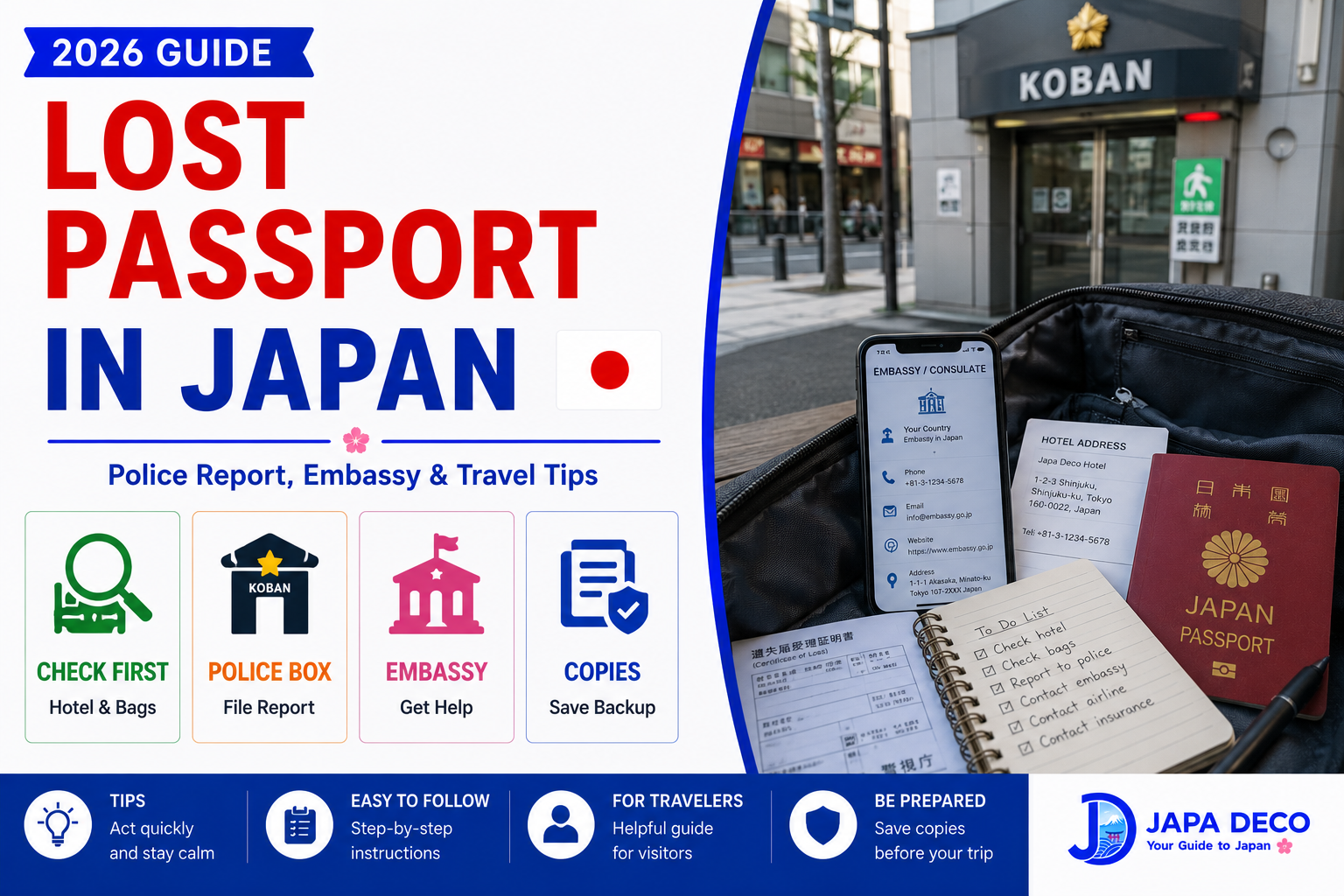
Lost Passport
A lost passport is more serious than a normal item.
If your passport is missing, check carefully first.
Then report it to police and contact your embassy or consulate.
You may need a police report and emergency travel document.
Do not treat a passport like a normal lost item.
Start the process quickly, especially if your flight is soon.
How Long Are Lost Items Kept?
Lost item storage rules depend on where the item was found.
Train companies, stores, taxis, airports, and police may have different procedures.
Some items are kept locally for a short time, then transferred.
This is why early action matters.
If you wait many days, finding the item may become more difficult.
Ask staff where the item will be sent if it is found later.
Useful Japanese Phrases
Useful phrases:
“Otoshimono o shimashita.”
I lost something.
“Saifu o nakushimashita.”
I lost my wallet.
“Keitai o nakushimashita.”
I lost my phone.
“Pasupooto o nakushimashita.”
I lost my passport.
“Kono densha ni wasuremashita.”
I forgot it on this train.
“Lost and found wa doko desu ka?”
Where is lost and found?
You can also show these phrases on your phone.
Common Mistakes to Avoid
The biggest mistake is not remembering where you last had the item.
Another mistake is throwing away taxi receipts.
Some travelers also wait too long before asking station staff.
Do not describe the item too vaguely.
Instead of saying “bag,” say “black backpack with a blue keychain.”
Do not forget to check your hotel safe before checking out.
Also, keep passport, wallet, and phone in separate secure places when possible.
Best Recommendation for First-Time Visitors
Before your trip, prepare for lost items.
Take photos of:
- Passport
- Suitcase
- Important bag
- Travel insurance
- Credit card contact number
- Hotel address
During your trip, keep a simple habit:
Phone, wallet, passport.
Check these three before leaving trains, taxis, restaurants, hotels, and restrooms.
If something goes missing, act quickly and contact the most likely place first.
Conclusion
Losing something in Japan is stressful, but there is a good chance of recovery if you act quickly and contact the right place.
For trains and stations, ask station staff. For taxis, use your receipt or app history. For shops and restaurants, contact the location directly. For street loss, go to a koban police box.
Prepare a clear item description, time, location, and contact information.
Japan’s lost-and-found system is helpful, but it works best when you provide accurate details.
Stay calm, act early, and follow the correct route based on where the item was lost.
コメント