
Lost Items in Japan: What to Do & How to Get Them Back
Lost something in Japan? Follow the right recovery route for trains, taxis, airports, shops, hotels, or streets, and learn how police lost-property reports work.
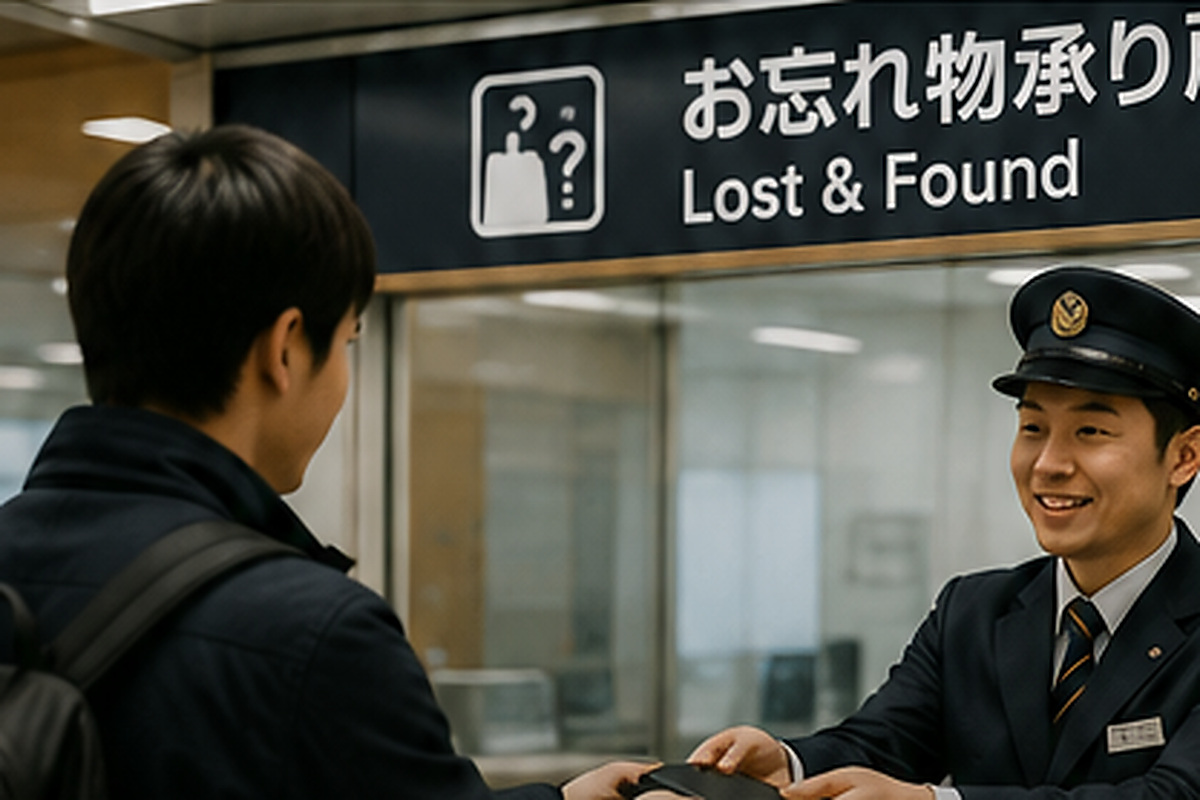
If you lose something in Japan, first contact the place or operator connected to where you last had it. Ask station staff for train or station losses, contact the taxi company using your receipt or app history, and contact the hotel, shop, restaurant, attraction, or airport desk for items left there. If the item was lost on the street, in a public place, or you are not sure where it disappeared, file a Lost Property Report at a police station or koban. For a missing phone or payment card, also contact the carrier or card issuer immediately.
What You’ll Learn
- How to choose the right first contact based on where the item was lost
- How lost-property reports, police matching, and follow-up work
- What to do differently for trains, taxis, airports, phones, wallets, and passports
- What details improve the chance of matching a found item to you
What to Do in the First 10 Minutes
Start by retracing the last few places where you clearly remember having the item. Check every pocket, bag compartment, seat area, hotel safe, charging point, and counter before making multiple calls.
Then contact the organization that controls the place where the item was most likely lost. In Japan, found property often stays with a station, transport operator, hotel, shop, restaurant, attraction, or airport before it is transferred elsewhere. A precise first contact is usually faster than contacting unrelated offices.
For urgent items such as a phone, cash card, credit card, passport, medicine, or travel documents, start the recovery process immediately and protect any account or service that could be misused.
- Write down the approximate time, place, route, seat, shop, or taxi ride before details fade.
- Keep tickets, receipts, booking confirmations, and app ride history.
- Take a photo or note the brand, color, size, case, stickers, serial number, and distinctive marks.
- Give a reachable email address or phone number, especially if you may leave Japan soon.
Lost Items on Trains and at Stations
If you lose something on a train, platform, station concourse, ticket gate, restroom, or station facility, speak to station staff as soon as possible. Give the operator, line, station, direction, approximate time, train or car number if known, and the exact place you may have left the item.
Do not assume every railway uses the same lost-and-found process. Items can move between stations, a railway lost-and-found center, and police depending on the operator and the time that has passed. Through-service trains can also cross onto another company's network.
JR East currently directs passengers to contact station staff directly; if you cannot go to a station, its English FAQ provides the JR East Infoline. Tokyo Metro advises contacting the nearest station office on the day of loss, then its Customer Relations Center or Lost & Found Center from the following day.
- Show a reserved-seat ticket, IC-card route history, or booking record if it helps identify the train.
- Describe where the item was: seat pocket, overhead rack, platform bench, restroom, ticket gate, or train car.
- Follow the operator's instructions about where and when to collect the item; storage locations can change over time.
Lost Items in Taxis and Ride Apps
For a taxi loss, the receipt is one of the best recovery tools because it can identify the taxi company and trip details. If you booked through an app, open the ride history and use the operator's support channel.
If you have neither a receipt nor app history, write down the pickup location, drop-off location, approximate time, fare, vehicle color, company name, and any part of the license plate you remember. Hotel staff may also be able to help identify the company if the taxi was called by the hotel.
If the item is valuable and you cannot identify the taxi, file a Lost Property Report with police so the details can be matched if the driver or company turns it in.
- Do not discard taxi receipts until the trip is over.
- If the lost item is your phone, use another device to access the ride account and device-tracking tools.
- Avoid repeatedly calling multiple companies without trip details; start with the operator connected to your ride.
Hotels, Shops, Restaurants, and Attractions
If you know you left an item at a hotel, shop, restaurant, museum, theme park, temple, shrine, or other managed facility, contact that facility first. Japan's National Police Agency also directs people who lost property at a particular facility to the facility manager.
For hotels, give your name, stay dates, room number if known, where you think the item was left, and a detailed description. Ask staff to check the room safe, bedside area, bathroom, luggage storage, restaurant, and housekeeping records.
For shops and restaurants, contact the exact branch whenever possible. Large facilities may have a service counter or security office and can keep found items for a period before transferring them to police or another central location.
- Keep purchase receipts because they can prove the branch and time you visited.
- If you already left the city, ask what identification or authorization is required for collection or shipping.
- Do not assume a chain's other branch can access the same lost-property records.
Streets and Public Places: Police Boxes and Lost Property Reports
If the item was lost on the street, in a park, in an unmanaged public area, or you do not know where it was lost, go to a police station or koban and submit a Lost Property Report. The report records your description of the loss so police can cross-reference it with property that is later handed in.
A Lost Property Report is not proof that the loss occurred, and filing one does not mean police will actively search for the item. The practical value is matching your report against found property and giving police a way to contact you if a match is identified.
The National Police Agency says found property reported to police is generally retained for three months. Some categories can be handled differently, so always follow the instructions from the office that has your item.
- Give the date and time window, exact or approximate location, item type, color, shape, brand, and distinctive details.
- Include names, serial numbers, account numbers, or other identifying numbers when appropriate and safe to do so.
- For cards and phones, also contact the issuer or carrier immediately to suspend or protect the service.
Lost Items at Haneda and Narita Airports
Airport lost-and-found contacts depend on the exact area where the item was lost. First identify whether it was on the aircraft, before security, after security, in customs or immigration areas, in a lounge, or elsewhere in the terminal.
Haneda Airport currently routes many lost-item inquiries through its find chat service, with new inquiries handled from 9:00 to 21:00, while some areas such as parts of Terminal 3 after departure and airline lounges use different contacts. Use Haneda's official lost-and-found page to choose the correct facility.
Narita Airport advises contacting the airline for items left on the aircraft. If the location is unknown, contact Narita International Airport Information; if the airport location is known, its official lost-and-found page lists terminal-specific contacts. Narita's listed airport lost-and-found offices are open 24 hours.
- Know the terminal, flight number, airline, security status, gate, shop or lounge, and approximate time.
- For an item lost on the aircraft, start with the airline rather than the airport's general desk.
- Check the official airport page because the correct contact can differ by controlled area.
Search Online and Follow Up
Japan's National Police Agency provides information about searching published found-property records, and online Lost Property Report procedures are available only through supported prefectural police systems. Availability is not identical in every prefecture.
Use online search as a supplement, not a substitute for contacting the operator or facility that first handled the loss. A train company, airport, store, or hotel may still have the item before it reaches police records.
Follow up when the handling office tells you an item may be transferred later. Keep every report number, inquiry number, email, and the name of the office or company you contacted so you do not have to rebuild the timeline.
- Search with the place and date where the item was found when those details are available.
- Recheck after a transfer window if staff say the item has not yet reached a central lost-and-found office.
- Use official operator and police pages rather than third-party contact lists for current procedures.
Phones, Wallets, Cards, Passports, and Medicine
High-priority items need two tracks at the same time: recovery and risk control. For a phone, use the device maker's tracking and remote-lock tools, contact the place where it may have been lost, and contact the carrier if the SIM or number needs protection.
For a wallet or payment cards, contact the last place where you used them and promptly notify card issuers or banks. Do not wait for suspicious transactions before suspending a card you cannot locate.
For a passport, report the loss to police and contact your embassy or consulate for the replacement process. JapaDeco's dedicated Lost Passport in Japan guide is the better next step for document replacement. For essential medicine, contact the place where it was lost and seek medical or pharmacy guidance if a dose or prescription cannot safely be interrupted.
- Separate the recovery task from account-security actions; do both when necessary.
- Keep copies or secure photos of passport details, insurance information, and important serial numbers before travel.
- Do not post sensitive card, passport, or account numbers publicly while asking for help.
How to Claim a Found Item or Recover It After Leaving Japan
When an item is found, the organization holding it will tell you what identification and documents are required. Bring the requested ID and any claim or inquiry reference. Requirements differ between police, railways, airports, and private facilities.
If you leave Japan before the item is recovered, give a valid email address and phone number when you file the report. The National Police Agency advises also providing the contact details of a person in Japan who could communicate with police or receive the item on your behalf, if you have one.
Police guidance indicates that shipment at the owner's expense or collection by a proxy may be possible in some cases with the required forms and identification. Confirm the exact procedure with the police station or facility holding the item before sending documents or money.
- Do not travel to a collection point until the holding office confirms the item and pickup location.
- Ask whether a proxy, hotel representative, friend, or shipping arrangement is accepted.
- Keep a scan or photo of every form and reference number you submit.
What Details Make a Match Easier
The better your description, the easier it is for staff or police to distinguish your item from dozens of similar ones. 'Black backpack' is weak; 'black 25-liter backpack with a blue zipper pull, a red passport pouch in the front pocket, and a white luggage tag' is much stronger.
For electronics, note the make, model, color, case, wallpaper, lock-screen contact information, serial number, or device identifier if available. For bags and wallets, list distinctive contents without revealing unnecessary financial information.
Also describe the loss event: where you sat, which exit you used, which direction the train was traveling, whether the item was under a seat or on a rack, and the approximate time you noticed it missing.
- Item: type, brand, color, size, model, case, markings, stickers, damage, or accessories.
- Contents: a few distinctive non-sensitive contents that help identify the item.
- Place: station, train line, car, seat, shop branch, hotel room, taxi route, airport terminal, or gate.
- Time: last confirmed use and the time you noticed it was missing.

Useful Japanese Phrases
You do not need fluent Japanese to start a lost-property inquiry. Show the item photo, receipt, route, or written description on your phone and use a short phrase. Staff can then ask follow-up questions or bring in someone who can help.
When pronunciation is difficult, displaying the Japanese text is usually more useful than trying to explain a long story.
- 忘れ物をしました。 (Wasuremono o shimashita.) — I lost / left something behind.
- この財布を探しています。 (Kono saifu o sagashiteimasu.) — I am looking for this wallet.
- 電車の中に忘れました。 (Densha no naka ni wasuremashita.) — I left it on the train.
- 遺失届を出したいです。 (Ishitsutodoke o dashitai desu.) — I would like to file a Lost Property Report.
- どこで受け取れますか? (Doko de uketoremasu ka?) — Where can I pick it up?
Preventing Lost Items on Your Next Travel Day
A simple routine prevents many travel losses: use the same pocket or pouch for your phone, wallet, passport, and room key; check the seat and rack every time you stand up; and pause for five seconds before leaving a taxi, restaurant, hotel room, or train.
Keep receipts until the end of the trip, photograph valuable items and serial numbers, and attach a contact tag that does not expose sensitive home-address information. Device trackers can help locate bags, but they do not replace reporting the loss to the correct operator or police.
The most useful habit is consistency: know exactly where your essentials live, and perform the same exit check every time you move.
- Phone, wallet, passport, keys: touch-check the same four places before leaving.
- Train or taxi: look at the seat, floor, rack, and door-side pocket before you exit.
- Hotel: check the safe, outlets, bathroom, fridge, bedside area, closet, and luggage storage tag.
- Keep digital copies of receipts and important identification details in secure storage.
FAQ
Do I need to file a police report for every lost item in Japan?
No. If you know the item was left at a train station, hotel, shop, restaurant, taxi, airport, or other managed facility, contact that operator or facility first. File a Lost Property Report with police when the item was lost on the street, in an unmanaged public place, the location is unknown, or a report is needed for an important item or later claim.
How long are lost items kept in Japan?
It depends on who holds the item. The National Police Agency says found property reported to police is generally retained for three months, while transport operators and facilities may keep items for shorter periods before transferring them. Always ask the specific office holding your item.
Can I search for lost property online in Japan?
Yes, police provide online information for searching published found-property records, and some prefectural police systems support online Lost Property Reports. Coverage and procedures vary by prefecture, so use the National Police Agency's current links and the official page for the place where the loss occurred.
Can someone else collect my lost item for me?
Sometimes. Police, railways, airports, and private facilities can have different proxy and identification rules. Confirm the required authorization, ID copies, forms, and collection location directly with the office holding the item before sending someone.
What if my item is found after I have left Japan?
Provide a valid email address and phone number when reporting the loss. Police guidance says a contact person in Japan, proxy collection, or shipment at the owner's expense may be possible depending on the case. Confirm the exact procedure with the office holding the item.
What should I do if I lose my passport in Japan?
Treat it as urgent: report the loss to police and contact your embassy or consulate for replacement or emergency travel-document instructions. Use JapaDeco's dedicated Lost Passport in Japan guide for the step-by-step process.
Related Japan Travel Guides



Official References
Final Thoughts
Japan's lost-property system is organized, but speed and precision still matter. Start with the operator or facility connected to the loss, use police for street or unknown-location losses, protect phones and payment accounts immediately, and keep every reference number. A clear description and a reachable contact can make the difference between a vague inquiry and a successful match.