
Japanese Street Food Guide: What to Try, Where to Find It and Etiquette
A practical guide to Japanese street food: the best foods to try, where stalls are common, how to eat politely, and what to check for allergies and dietary needs.
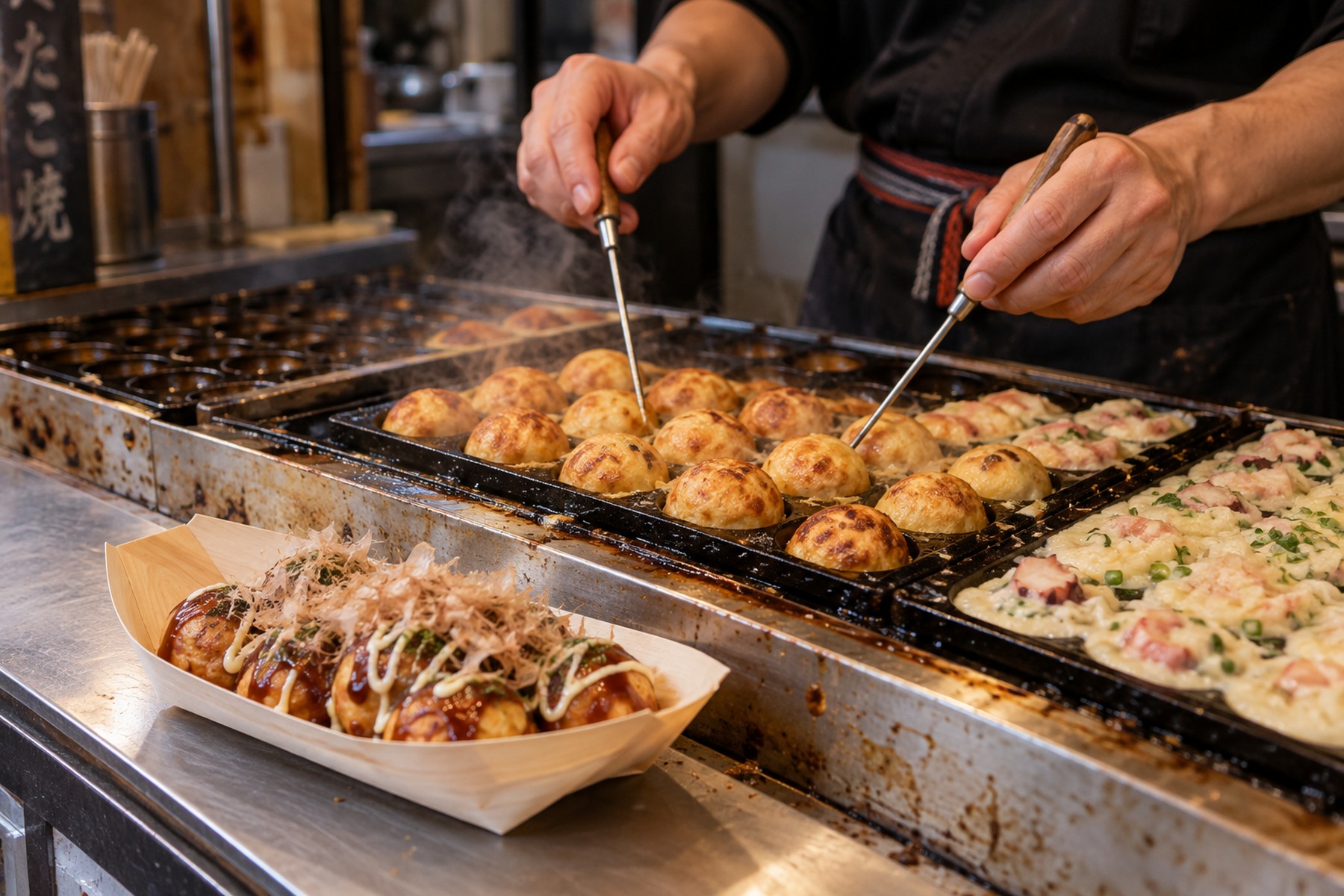
For a first taste of Japanese street food, start with takoyaki, yakitori or karaage for something savory, then add taiyaki or dango for something sweet. Festivals, food districts, market streets and Fukuoka yatai are good places to look. Do not assume eating while walking is welcome everywhere: follow signs and local practice, eat beside the shop when requested, and return or carry your trash.
What You’ll Learn
- Which street foods are easiest for a first visit
- Where stalls and casual food areas are most likely to appear
- How to eat without blocking streets or creating a trash problem
- What to check when you have allergies or dietary restrictions
How Street Food Works in Japan
Japan has plenty of casual food, but it is not a country where permanent food carts line every street. Street-food-style eating is concentrated around festivals, busy food districts, market streets, temple approaches, shopping arcades and a few local traditions such as Fukuoka's yatai.
That distinction matters when planning. Instead of hunting for one famous stall across town, choose an area where several foods are close together and sample a few items without turning the day into a long detour.
- Festivals: the widest mix of portable savory and sweet foods.
- Food districts: strong local specialties and late-day atmosphere.
- Markets and shopping streets: snacks mixed with everyday local food culture.
- Fukuoka yatai: compact evening stalls where eating at the counter is part of the experience.
The Best Japanese Street Foods to Try
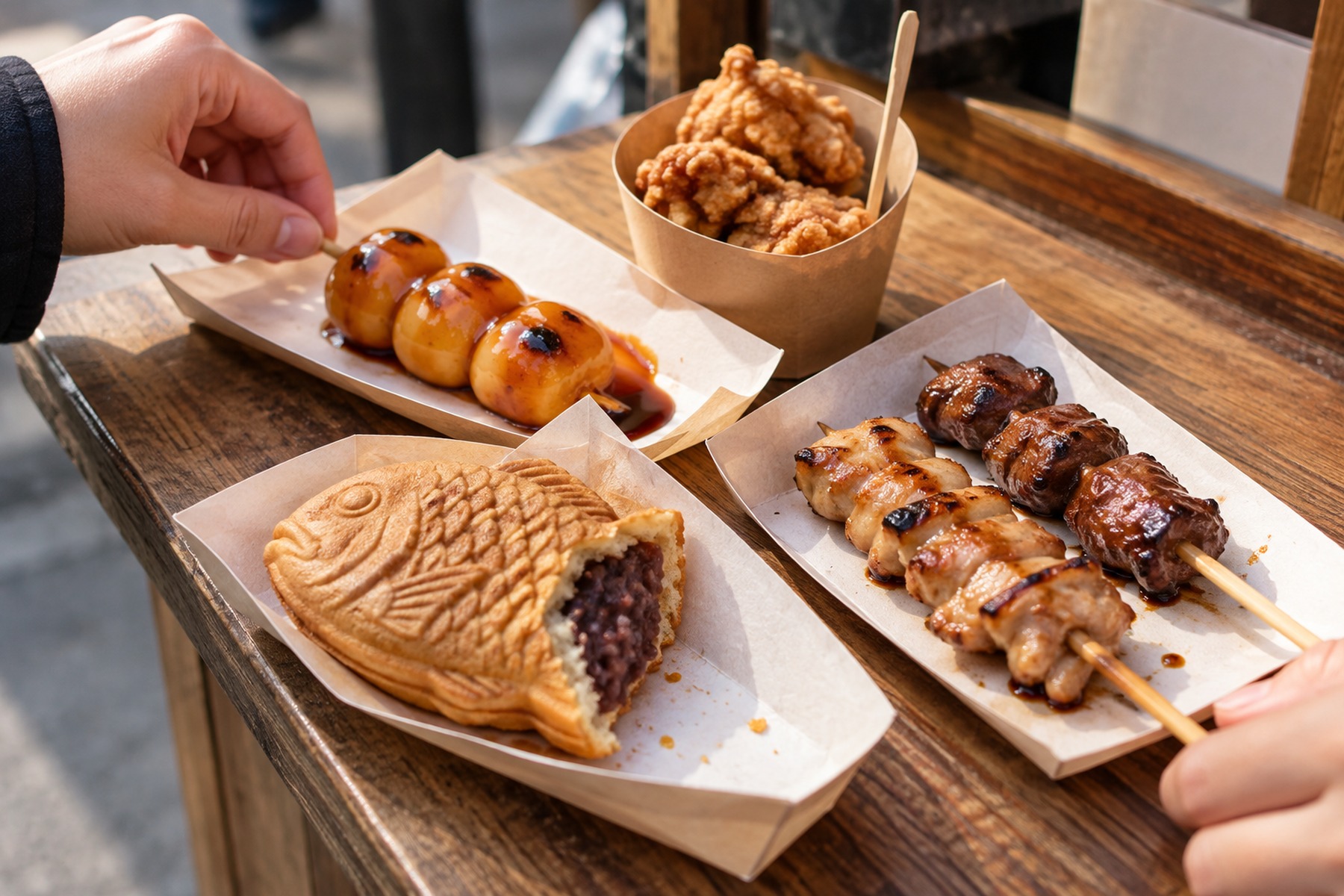
Start with foods that are easy to recognize, then add one regional or texture-driven choice. Takoyaki is soft batter with octopus cooked in a round griddle; the center can be much hotter than the outside. Yakitori is grilled chicken on skewers, while yakisoba is sauce-seasoned fried noodles commonly seen at festivals.
For sweeter choices, taiyaki is a fish-shaped cake commonly filled with red bean paste or custard, and dango are chewy rice-flour dumplings on a skewer. Karaage and korokke are reliable savory options for travelers who want familiar fried textures.
- Takoyaki: iconic Osaka-style snack; let it cool before biting.
- Yakitori: choose the chicken part if you prefer thigh, meatball or other specific cuts.
- Yakisoba: filling, easy to share and common at festivals.
- Okonomiyaki: more of a casual meal than a quick bite, especially in Osaka and Hiroshima styles.
- Karaage or korokke: approachable choices for first-time visitors.
- Taiyaki or imagawayaki: warm filled cakes for a sweet break.
- Dango or senbei: traditional textures and flavors often found near sightseeing streets.
- Kakigori: shaved ice for hot-weather sightseeing.
- Yaki imo: roasted sweet potato that suits cooler weather.
- Ikayaki: grilled squid for travelers who enjoy stronger seafood flavor and a chewier texture.
Choose Foods by Your Travel Style
The best first order is not necessarily the most famous item. Think about heat, texture, seafood, portion size and how much walking you still have ahead of you.
A simple approach is one savory item, one sweet item and a drink. If two people are traveling together, sharing lets you taste more without buying a full portion of everything.
- First visit: takoyaki, karaage, yakitori, taiyaki and dango.
- Picky eater: karaage, korokke, yakisoba, custard taiyaki and melon pan.
- Seafood fan: takoyaki, ikayaki and market seafood skewers.
- Hot day: lighter snacks plus kakigori and plenty of water.
- Budget-focused: pick one filling item before adding sweets and drinks.
Where to Find Good Street Food
Osaka's Dotonbori is a straightforward place to try local specialties such as takoyaki and okonomiyaki while exploring a dense entertainment district. Fukuoka is different: its yatai are temporary evening stalls, especially associated with areas such as Tenjin and Nakasu.
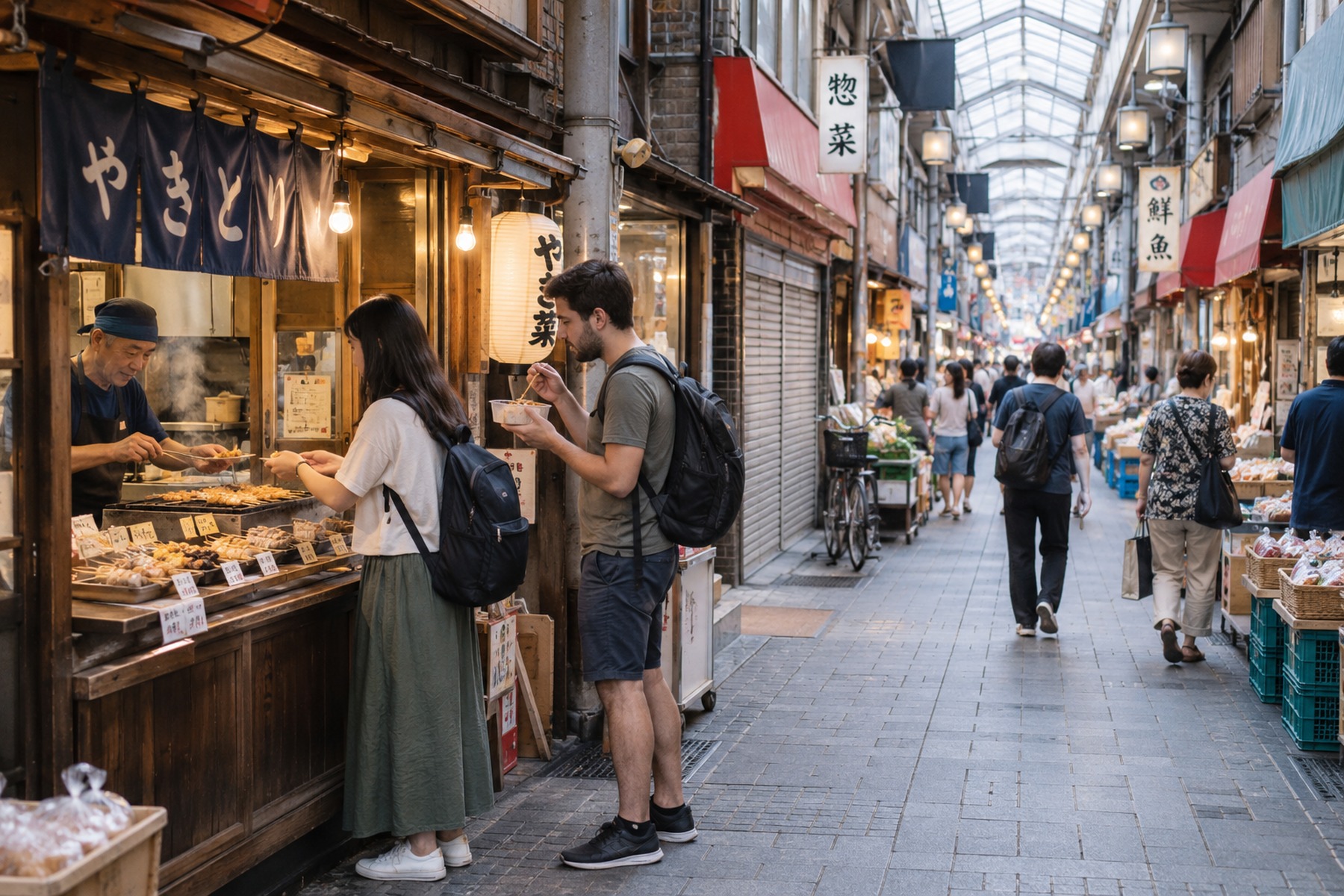
Kyoto's Nishiki Market is useful for seeing local food culture in a narrow covered market, but it is also a good reminder that each place can have its own rules. Food areas around Japan should be treated as working neighborhoods and businesses, not open-air dining rooms with one universal set of customs.
- Dotonbori, Osaka: strong for takoyaki, okonomiyaki and casual evening food.
- Tenjin and Nakasu, Fukuoka: classic yatai atmosphere after dark.
- Nishiki Market, Kyoto: local foods and snacks in a compact covered market.
- Seasonal matsuri: excellent variety, but expect queues and crowding.
- Local shotengai and temple approaches: useful for snacks, sweets and regional specialties.
Street Food Etiquette: Eat Where It Makes Sense
There is no single rule that says you can never eat while walking in Japan. The practical rule is more specific: follow the location. Some festivals are built around portable food, while crowded markets, temple areas and sightseeing streets may ask visitors to eat beside the shop or in a designated space.
At Nishiki Market, official visitor guidance asks people to eat food at the store where it was purchased and dispose of trash there. More broadly, do not block shop entrances or narrow pedestrian routes just to eat or take photos.
- Check signs before walking away with open food.
- Use a standing or seating area when one is provided.
- Keep doorways, counters and narrow lanes clear.
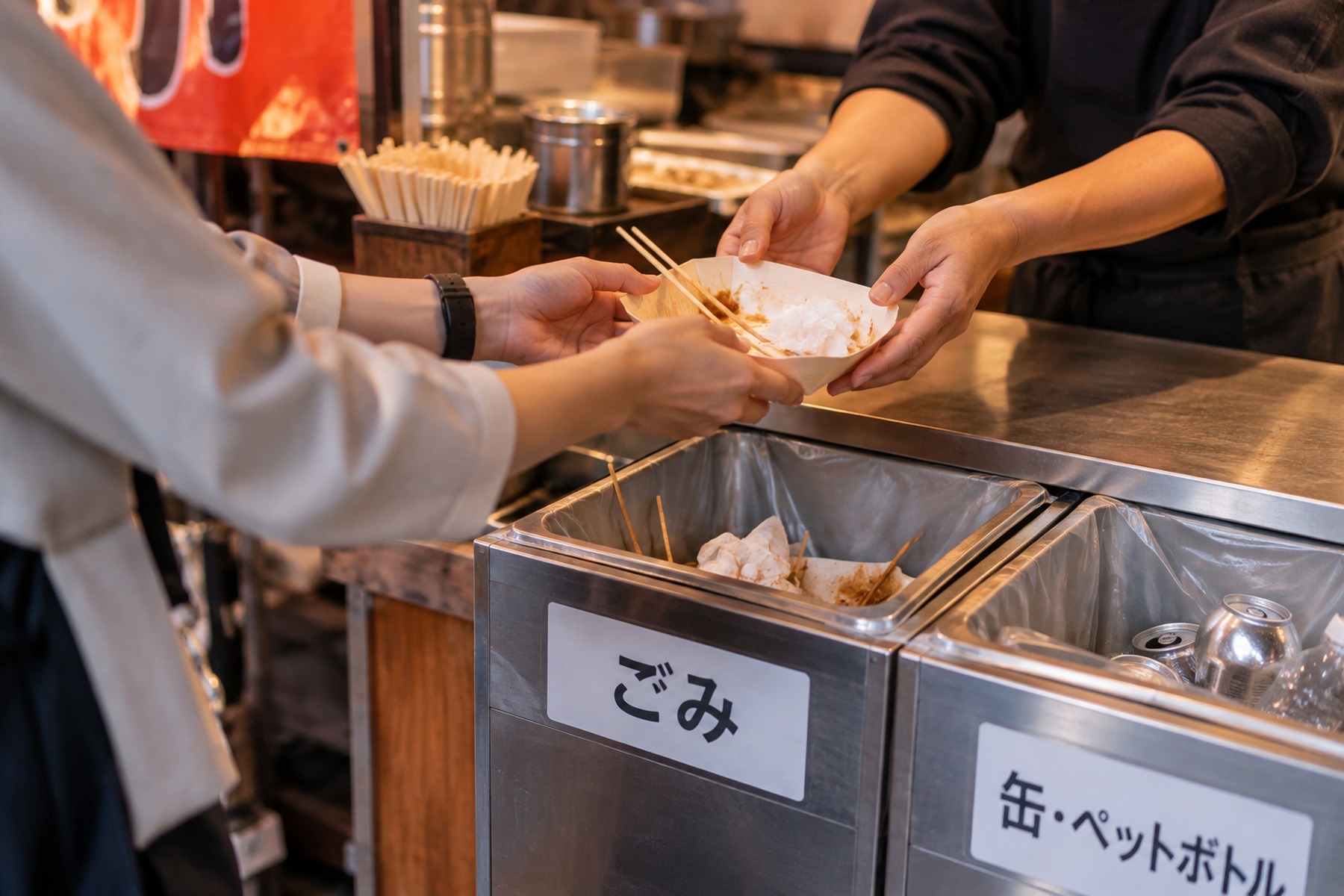
- Return trays, skewers or wrappers to the stall when that is the local system.
- If no bin is available, be prepared to carry your trash.
Allergies and Dietary Restrictions Need Extra Care
Street food can be difficult for strict dietary needs because sauces, batter, shared oil and toppings are not always obvious. Foods that look simple may contain wheat, egg, soy, seafood, dairy or fish-based stock, and cross-contact can occur in compact cooking spaces.
If an allergy could cause a serious reaction, do not rely on appearance or a guessed translation. Japan's Consumer Affairs Agency provides an English food-allergy communication sheet that travelers can show to staff. If the stall cannot confirm ingredients or cross-contact risk, choose another option.
- Ask about the full dish, including sauce, batter, stock and toppings.
- Remember that bonito flakes and fish-based dashi are common in savory foods.
- Shared grills, oil and utensils can matter for severe allergies.
- Carry your own translated allergy information rather than improvising at the counter.
Payment, Portions and Budget
Payment methods vary by stall and area, so do not assume every seller accepts the same cards or mobile payments. Having some cash available remains useful for small temporary stalls and local food areas.
Street food feels inexpensive one item at a time, but repeated small purchases add up quickly. Check the price before ordering, share when practical, and avoid buying several heavy fried foods before you know the portion sizes.
- Carry a small amount of cash even if you mainly use cards.
- Look at the displayed price before joining a long queue.
- Share several foods instead of buying full portions for everyone.
- Keep room for one regional specialty rather than ordering only familiar items.
A Simple First Street Food Plan
For a low-stress first attempt, choose one food area and stay there. Begin with a hot savory item, pause to eat it properly, then add a sweet snack only if you still want more. This keeps the experience about tasting Japan rather than collecting as many foods as possible.
If stalls are closed, too crowded or unsuitable for your dietary needs, switch to a convenience store, department-store food hall or casual restaurant. Street food should be a flexible part of the day, not a mission that disrupts the whole itinerary.
- Savory: takoyaki, yakitori, karaage or yakisoba.
- Sweet: taiyaki, dango or another local sweet.
- Drink: water or tea, especially in warm weather.
- Fallback: convenience store or food hall when weather, queues or dietary needs make stalls impractical.
Mistakes That Spoil the Experience
Most street-food problems are practical rather than complicated: hot food eaten too quickly, trash with nowhere to go, a queue that blocks a walkway, or an ingredient assumption that turns out to be wrong.
A better approach is to slow down, buy small amounts, watch how the stall expects customers to eat and dispose of waste, and leave if the food or setting does not suit your needs.
- Putting a whole fresh takoyaki in your mouth immediately.
- Assuming portable food means eating while walking is always acceptable.
- Leaving trays, cups or skewers near a stall or on a bench.
- Blocking the counter while taking photos.
- Ordering many items before checking portion sizes.
- Assuming a food is vegetarian or allergen-free from appearance alone.
- Planning an entire cross-city route around one snack when a food district offers more variety.
FAQ
What Japanese street food should I try first?
Takoyaki, karaage, yakitori, taiyaki and dango are good starting points. They cover savory, grilled, fried and sweet styles without requiring an adventurous first order.
Is it rude to eat while walking in Japan?
Not everywhere, but it is discouraged or restricted in some crowded markets, temple areas and sightseeing streets. Festivals can be more relaxed. Follow signs and local practice, and eat beside the shop or in a designated area when requested.
Where is Japanese street food easiest to find?
Look at seasonal festivals, Osaka food districts such as Dotonbori, Fukuoka yatai areas, local shopping streets, temple approaches and markets. Availability varies by place and time.
What should I do with street-food trash?
Use the stall's return point or bin when provided. If there is no suitable bin, carry the wrapper, cup or skewer until you find a proper disposal point.
Can I rely on street food if I have a food allergy?
Use extra caution. Ingredients, shared oil and cross-contact may not be obvious. Show clear allergy information to staff, and skip the food if the stall cannot confirm what you need to know.
Related Japan Travel Guides

Official References
Final Thoughts
Japanese street food is best treated as part of the place rather than a checklist. Pick a food area, try a few contrasting items, follow the stall's eating and trash rules, and pay attention to ingredients when dietary needs matter. A small number of well-chosen foods will usually give you a better experience than trying to eat everything at once.