
Japanese Breakfast Guide: What to Eat and Where to Find It
A practical guide to breakfast in Japan, from traditional rice-and-miso sets to ryokan meals, hotel buffets, kissaten morning sets, bakeries and convenience stores.
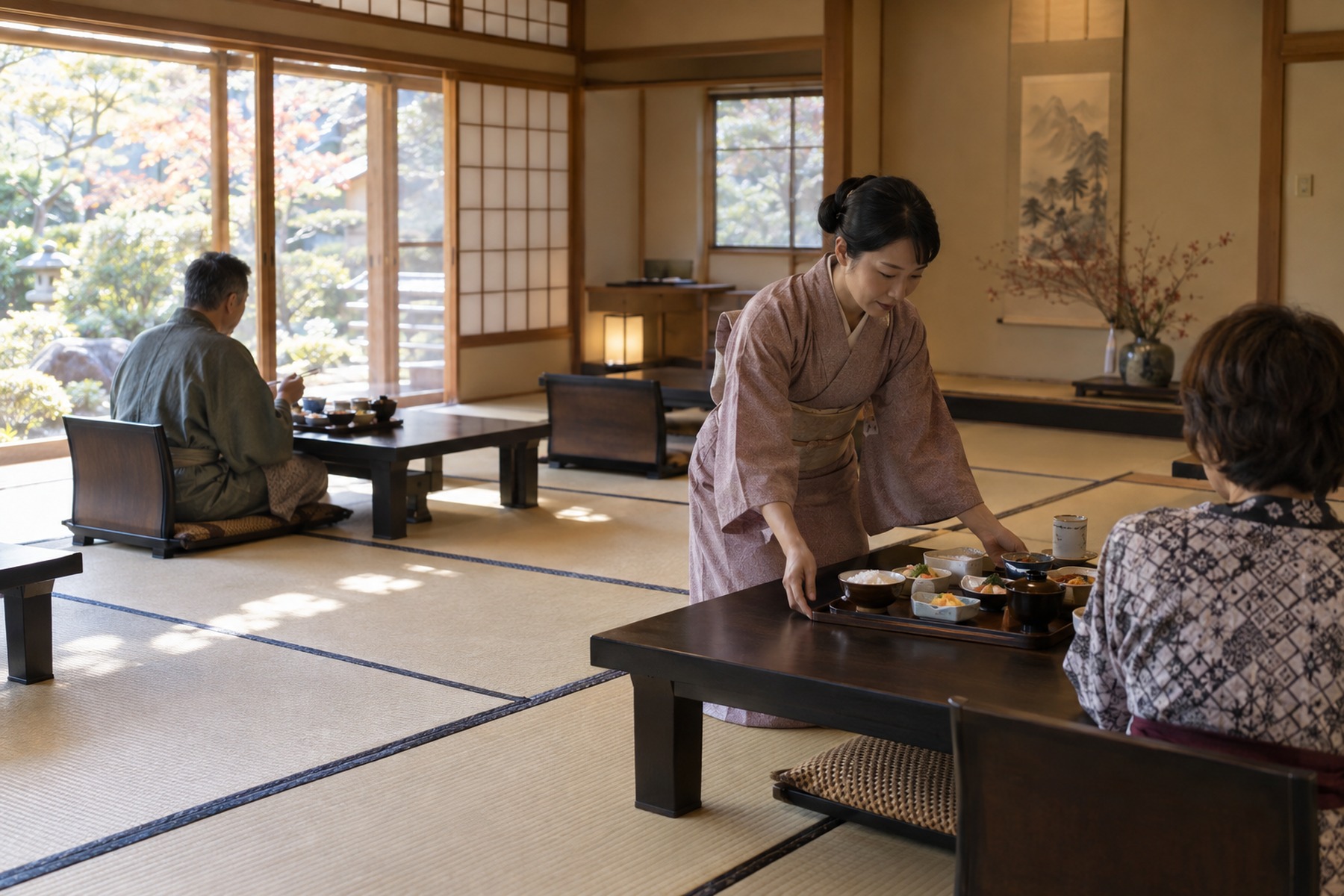
A traditional Japanese breakfast commonly combines steamed rice, miso soup, grilled fish, egg, pickles and small vegetable dishes, but travelers have many other choices. Book a ryokan breakfast for the fullest cultural experience, use a hotel buffet for variety, choose a teishoku chain for a quick hot meal, visit a kissaten or bakery for toast and coffee, and buy breakfast the night before when you have an early train or departure.
What You’ll Learn
- What is usually included in a traditional Japanese breakfast
- How ryokan, hotel, café and convenience-store breakfasts differ
- Which option suits an early train, sightseeing day or relaxed morning
- What to check for allergies and vegetarian or halal needs
- How to handle buffet service, ordering and breakfast etiquette
What a Traditional Japanese Breakfast Includes
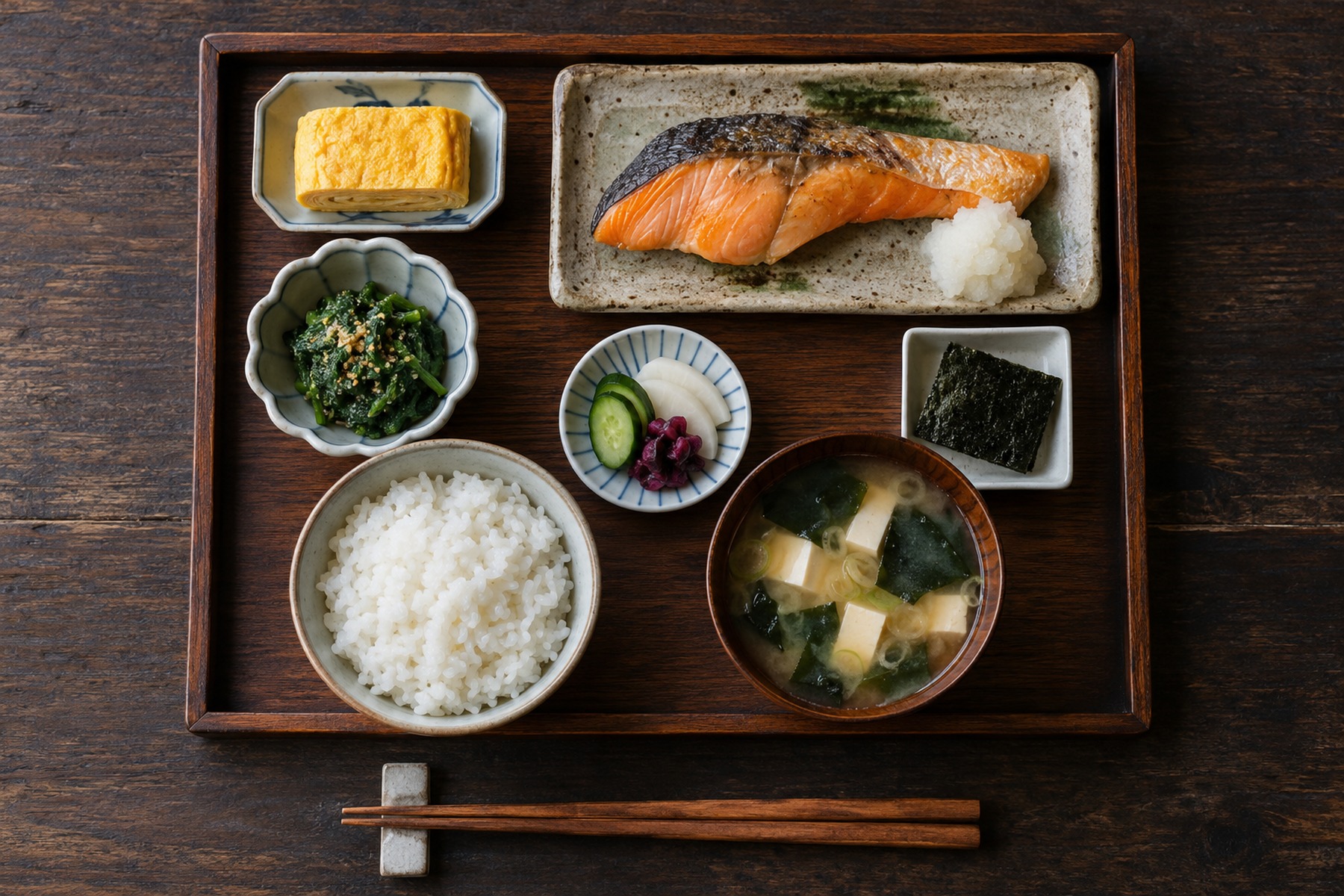
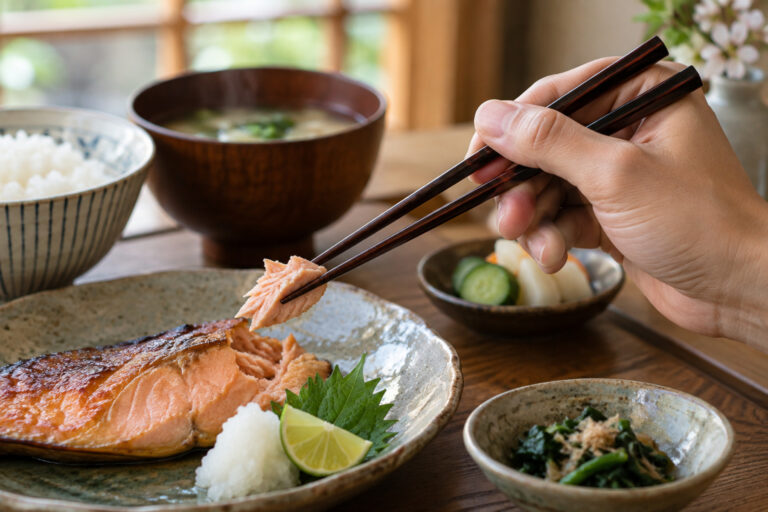
A traditional breakfast is usually a set of small, complementary dishes rather than one large main item. Steamed rice and soup form the base, while grilled fish, egg, vegetables, pickles and seaweed add texture and flavor. The exact combination changes by household, hotel, region and season.
Miso soup may contain tofu, wakame, mushrooms, root vegetables or local ingredients. Grilled salmon and mackerel are common hotel choices, while tamagoyaki, natto and chilled tofu may appear as sides. None of these items is mandatory for a meal to count as Japanese breakfast.
Eat the dishes in any comfortable sequence, alternating rice with soup and side dishes. Condiments such as nori, pickles and grated daikon are meant to support the meal rather than become separate courses.
- Rice: the staple at the center of most traditional sets.
- Soup: often miso soup, with stock and ingredients varying by kitchen.
- Main dish: commonly grilled fish or an egg preparation.
- Small sides: vegetables, tofu, pickles, natto or seaweed.
- Tea: often served with the meal, although coffee is also common in modern settings.
Choose Breakfast by Your Travel Morning
The best breakfast depends less on finding one famous dish and more on protecting the day ahead. A prepaid hotel meal reduces decisions, a convenience-store breakfast supports an early departure, and a café works when you have time to sit and plan.
Check opening hours and serving windows before relying on a restaurant. Many lunch-focused restaurants do not open in the early morning, while hotel breakfast may finish earlier than expected. Station shops are useful but should not be your only plan before the first trains.
A simple rule is to choose reliability on transfer days and experience on slow mornings. You can try one traditional breakfast without forcing every morning into the same format.
- Early train or airport day: buy portable food the night before.
- First morning after arrival: use the hotel or a nearby convenience store.
- Relaxed sightseeing day: try a kissaten, bakery or local set-meal shop.
- Ryokan stay: keep the scheduled breakfast as part of the experience.
- Family or mixed preferences: choose a buffet with clearly separated options.
Ryokan Breakfast as a Cultural Experience
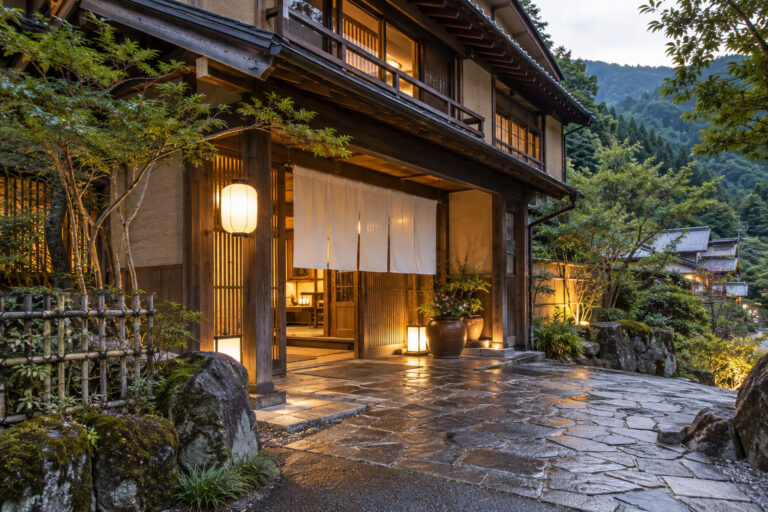
A ryokan stay often offers breakfast as part of the lodging plan, sometimes together with dinner. The meal may feature local fish, vegetables, tofu, rice and regional soup, presented in several small dishes. It is one of the easiest ways to experience a complete traditional-style breakfast without searching for a specialist restaurant.
Confirm whether meals are included when booking. Some plans are room-only, some include breakfast, and others include both dinner and breakfast. Also check where the meal is served and the assigned time; service may be in a dining room or another designated space rather than your guest room.
Tell the property about allergies and dietary restrictions before arrival. A multi-dish meal can contain fish stock, soy, wheat, egg, sesame or shellfish in sauces and side dishes, and last-minute substitutions may not be possible.
- Check the meal plan before confirming the room.
- Arrive at the assigned breakfast time.
- Expect local and seasonal variation rather than one fixed national menu.
- Communicate dietary needs in advance, not at the table.
- Ask before taking uneaten food away from the dining room.
Hotel Buffets and Set-Meal Breakfasts
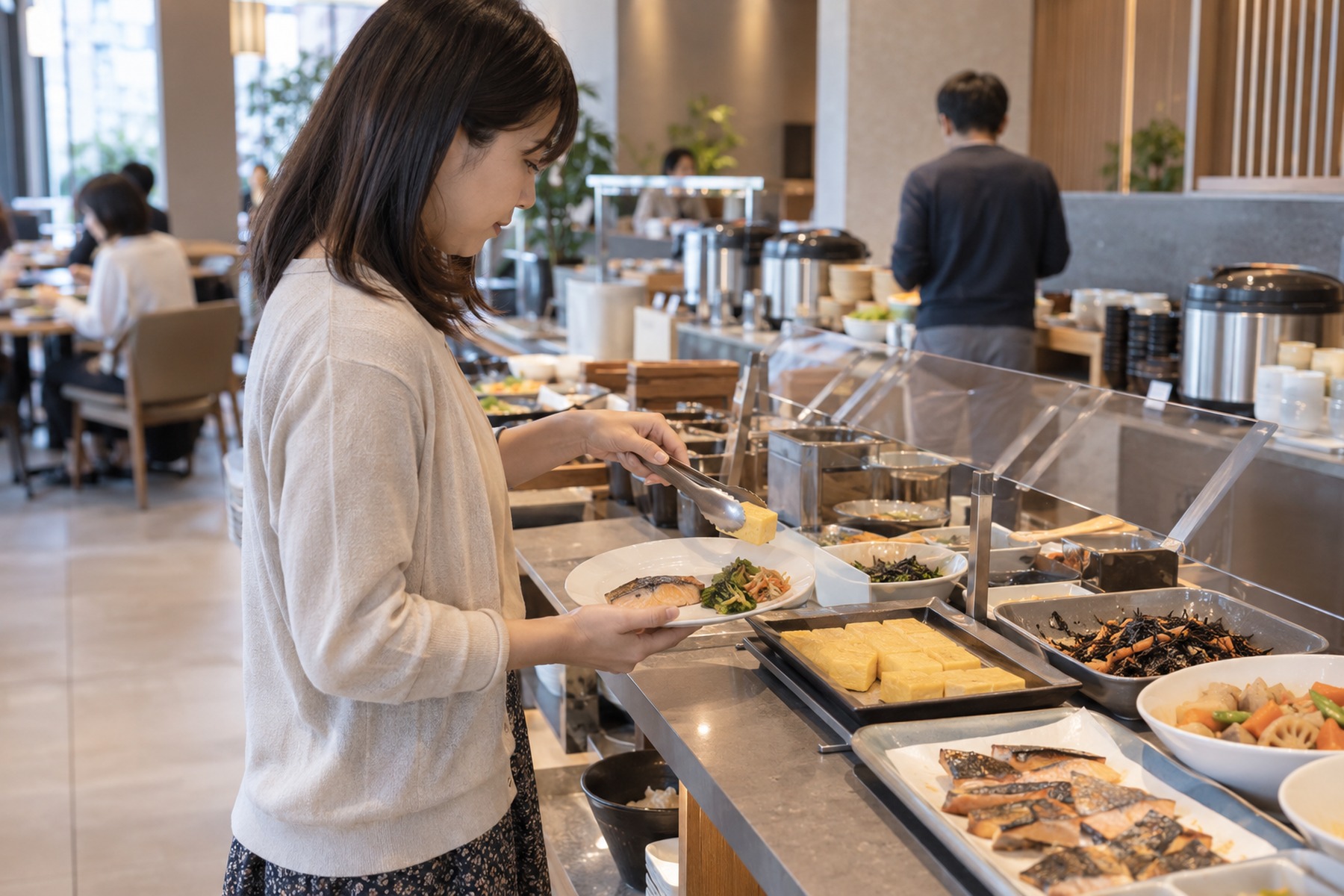
Hotel buffets are practical when travelers want Japanese and Western choices in one place. A typical spread may include rice, soup, fish, egg dishes and vegetables alongside bread, fruit, yogurt, cereal and coffee. The exact range depends on the property and is never guaranteed by the room price alone.
Check whether breakfast is included, the service hours and whether an advance breakfast rate differs from paying at the door. If you have an early departure, confirm that the dining room opens before you must leave; a breakfast box may exist at some properties but should not be assumed.
Take a small first portion and return if you want more. Use a clean plate when the hotel requests it, keep serving utensils at their stations and never move food between containers.
- Best for: variety, families and a predictable start.
- Check: inclusion, final entry time and departure schedule.
- At the buffet: take modest portions and avoid food waste.
- At a fixed set meal: ask about substitutions before service begins.
Kissaten, Cafés and Bakeries
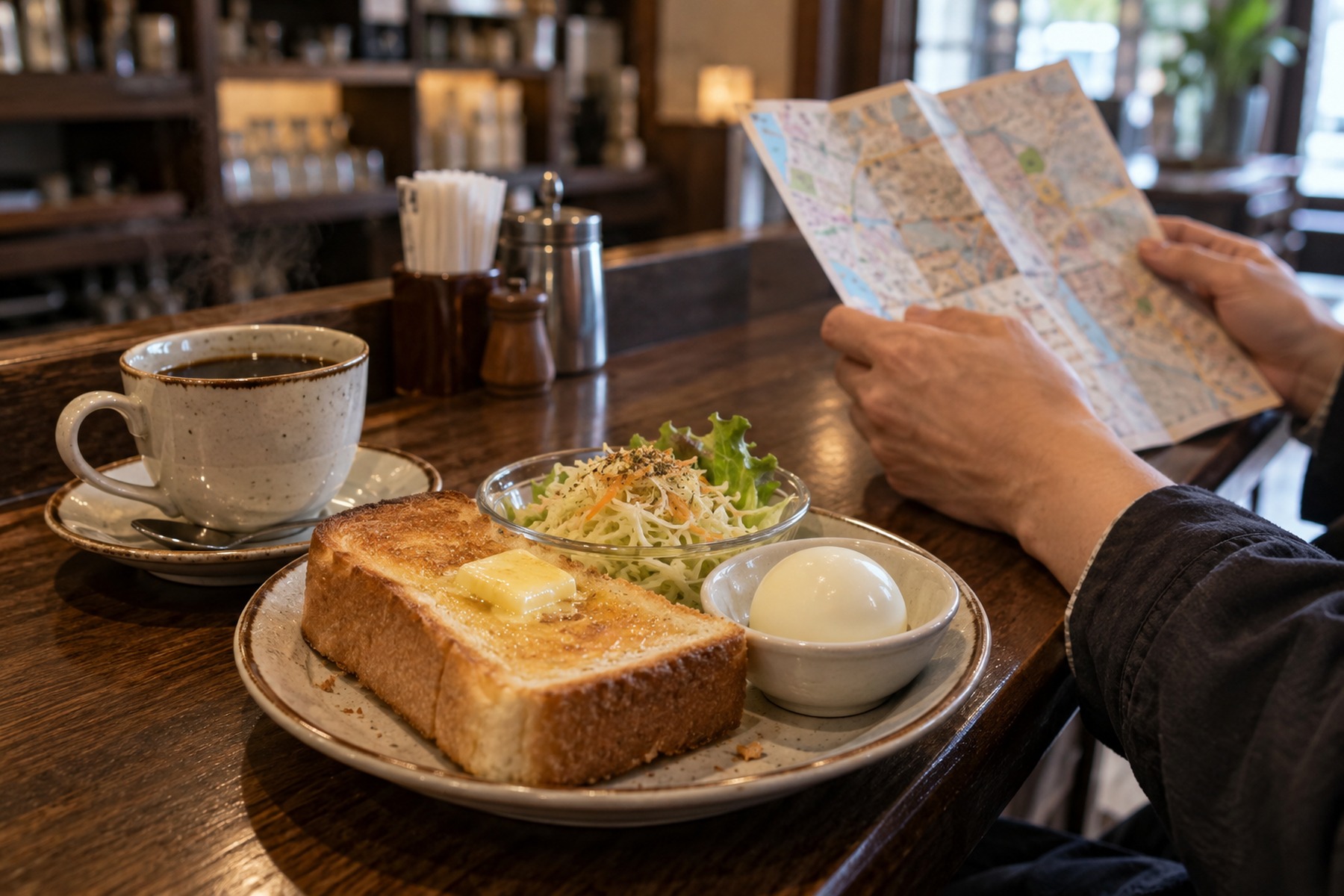
A kissaten is a traditional-style Japanese coffee shop. Many offer a morning service or “morning set” that pairs coffee or tea with toast and a simple addition such as boiled egg or salad. The offer and serving time vary by shop, and some places include food with the drink while others sell a separate set.
Modern cafés may offer sandwiches, pancakes, yogurt or egg dishes. Bakeries are useful for fast mornings, with savory rolls, filled breads and pastries that can be eaten in a seating area or taken away when the shop permits it.
Check whether the displayed price includes the drink and whether you are ordering for dine-in or takeaway. In a quiet kissaten, keep calls and videos unobtrusive and do not occupy a table long after finishing when people are waiting.
- Morning set: usually a drink plus a small breakfast combination.
- Kissaten: best for a slower, local coffee-shop atmosphere.
- Modern café: useful for familiar breakfast choices.
- Bakery: convenient for portable food and early sightseeing.
- Always confirm the shop’s serving time and ordering system.
Convenience Stores and Early Departures
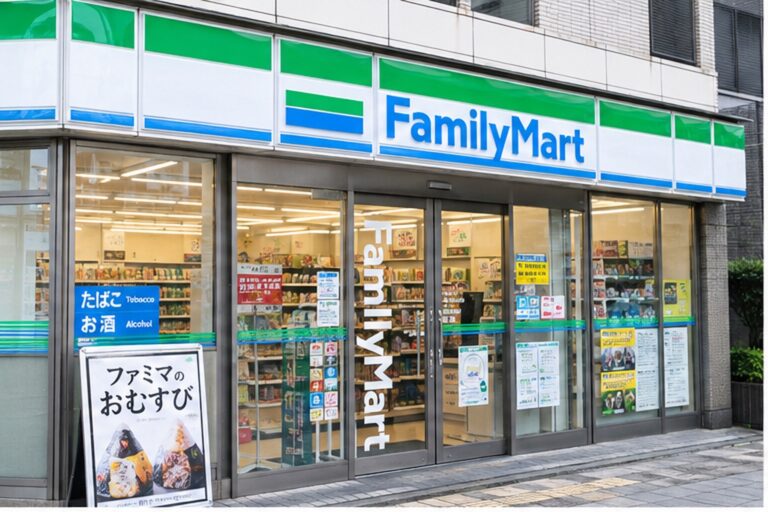
Convenience stores make a reliable travel breakfast when restaurants are closed or time is limited. Onigiri, sandwiches, bread, yogurt, fruit cups, boiled eggs, soup and bottled drinks allow you to build a light meal without waiting for table service.
Buy food the previous evening before an unusually early train, tour or airport transfer. Refrigerate items that require it and check the use-by information on the package. Some foods need heating, so ask at the register or choose an item that can be eaten cold if you will not have access to a microwave.
Do not assume every public place is suitable for eating. Use a hotel room, designated station waiting area, train seat where eating is customary, or another appropriate space, and carry packaging until you find the correct waste bin.
- Easy combination: onigiri, boiled egg or yogurt, and unsweetened tea.
- Portable combination: sandwich, fruit and bottled coffee.
- Check storage and use-by information before buying for the next morning.
- Collect disposable chopsticks or a spoon only when needed.
- Avoid messy or strongly scented food in crowded commuter spaces.
Allergies and Dietary Restrictions
Breakfast dishes can contain ingredients that are not visible. Miso soup commonly uses dashi made from fish, sauces may contain soy and wheat, tamagoyaki contains egg, and grilled fish may be served beside shared utensils. Bread and pastries can contain wheat, milk, egg or nuts.
A vegetarian-looking set is not automatically vegetarian, vegan or halal. Ask specifically about soup stock, sauces, cooking alcohol, meat and fish ingredients. Natto itself is made from soybeans, but packaged sauce or accompanying dishes still need checking.
For a serious allergy, show a clear Japanese allergy card before ordering and explain whether cross-contact is unsafe. Packaged-food labels are in Japanese; translation can assist, but uncertainty about a severe risk is a reason to choose another item.
- Check dashi in soup and simmered vegetables.
- Ask about soy, wheat, egg, milk, sesame, fish and shellfish as relevant.
- Give hotels and ryokan advance notice.
- Do not rely only on photographs or removed toppings.
- Avoid the dish when staff cannot confirm a serious risk.
Ordering, Payment and Useful Phrases
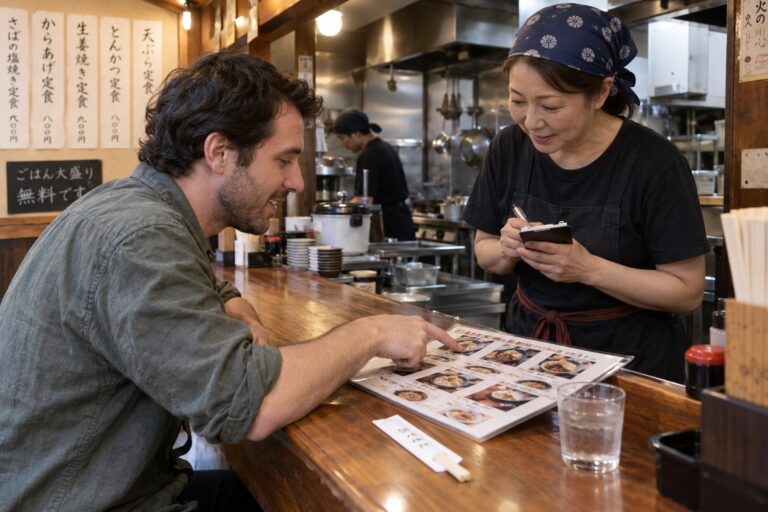
Breakfast ordering follows the same systems used at other Japanese restaurants. You may buy a ticket, order at a counter, use a tablet or wait for table service. Pause at the entrance and watch how other customers proceed before taking a seat.
Pointing to the exact item and saying “kore o hitotsu onegaishimasu” means “one of this, please.” “Mōningu setto wa arimasu ka” asks whether a morning set is available. When a drink choice is included, answer with the item name instead of agreeing before you understand the options.
Counter cafés often collect payment when you order, while table-service shops may ask you to pay at the register after eating. Tipping is not expected in ordinary restaurants.
- “Kore o hitotsu onegaishimasu.” — One of this, please.
- “Mōningu setto wa arimasu ka?” — Do you have a morning set?
- “Eigo no menyū wa arimasu ka?” — Do you have an English menu?
- “Mō ichido, yukkuri onegaishimasu.” — Once more, slowly, please.
- Keep a ticket or bill slip until payment is complete.
Breakfast Etiquette Without Overthinking It
At a set breakfast, you do not need to finish dishes in a prescribed order. Lift small rice and soup bowls when eating, use chopsticks carefully, and follow the same basic manners as at lunch or dinner. Do not plant chopsticks upright in rice or pass food directly between two pairs of chopsticks.
At a buffet, take only what you expect to eat and return for more if needed. Do not use personal utensils in shared serving dishes. At ryokan and small shops, arrive during the stated service window because the kitchen may prepare each meal for a specific time.
A polite “gochisōsama deshita” after the meal is appreciated. The most important habits are punctuality, tidy use of shared spaces and avoiding unnecessary food waste.
- Follow the stated breakfast time.
- Use dedicated buffet utensils and modest first portions.
- Keep luggage out of aisles and service paths.
- Return trays only where the venue indicates.
- Leave no tip at an ordinary breakfast venue.
FAQ
What do people in Japan eat for breakfast?
Breakfast varies widely. A traditional set may include rice, miso soup, grilled fish, egg and small side dishes, while toast, coffee, yogurt, cereal, sandwiches and convenience-store food are also common.
Is a Japanese breakfast always fish and rice?
No. Fish and rice are common in traditional sets, but cafés, bakeries, hotels and homes serve many Western-style and mixed breakfasts.
Is a ryokan breakfast included in the room price?
It depends on the booking plan. Check whether the rate is room-only, breakfast included, or includes both dinner and breakfast before confirming.
Can I find breakfast before an early train?
Yes, but do not rely on a particular restaurant being open. Buy suitable food the previous evening, use your hotel if service starts early enough, or check confirmed station and convenience-store hours.
Is miso soup vegetarian?
Not necessarily. Miso itself is made from fermented soybeans, but the soup often uses fish-based dashi. Ask about the stock as well as visible ingredients.
What is a kissaten morning set?
It is a breakfast offer at a traditional-style coffee shop, commonly combining a drink with toast and a simple side such as egg or salad. Contents, price structure and serving hours vary.
Related Japan Travel Guides
Official References
Final Thoughts
A good breakfast plan should support the day rather than complicate it. Reserve one unhurried morning for a ryokan or traditional set, use cafés and bakeries when you want a relaxed local start, and prepare portable food before early travel. Check meal times and dietary details in advance, then enjoy the variety instead of searching for one supposedly definitive Japanese breakfast.