Japanese Convenience Stores: Food, ATMs and Useful Services
Choose Japanese convenience stores for meals, overseas-card ATMs, payments, printing and parcels with clear step-by-step guidance, branch checks and travel tips.
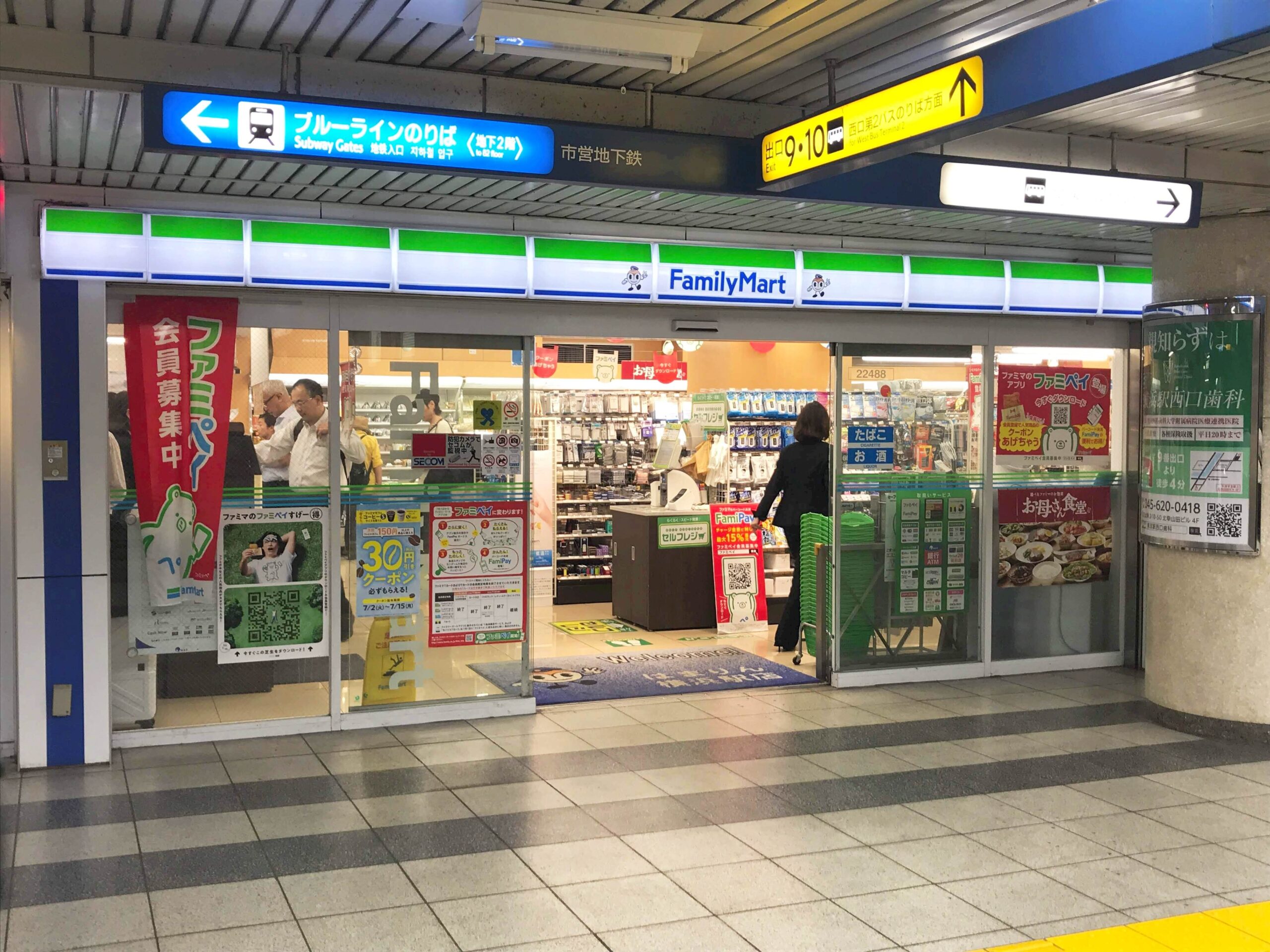
Japanese convenience stores are excellent for quick meals, drinks, everyday essentials and selected services such as overseas-card ATMs, printing and parcel dispatch. For food, read the deadline and ask about heating; for cards and cash, choose the correct register or ATM payment method; for tickets and printing, match the machine to your booking instructions. Facilities differ by branch, so confirm the specific service before making a special trip.
What You’ll Learn
- Which chain or branch to choose for food, ATMs, printing and parcels.
- How to read meal dates, request heating and avoid common allergen mistakes.
- How cash, credit cards and Suica work—and when services require a different payment method.
- How to use a foreign-card ATM, check fees and handle a failed withdrawal.
- How to print a PDF, complete a ticket payment and ship a parcel without losing documents.
Recognize the main convenience store chains
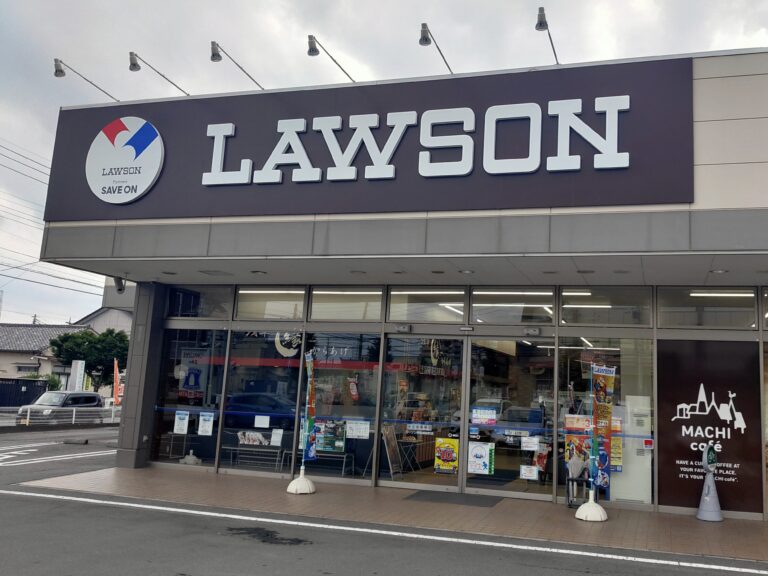
A Japanese convenience store, or konbini, is a useful first stop after arrival. The three familiar signs are 7-Eleven, FamilyMart and Lawson. All sell drinks, packaged food and everyday necessities, but their product lines, cashier equipment and service machines are not interchangeable. Even two branches of the same chain can have different operating hours and facilities.
Choose a branch for the task, not just the brand: a store beside a railway platform may be ideal for breakfast but too small for a customer toilet or printer. A full-size street branch may have an ATM and copier; a store inside an office or hospital may close with the building. Look at the exterior service icons or use the chain’s official store locator before walking there specifically to print, withdraw cash or send a parcel.
| What you need | Where to start | Check before relying on it |
|---|---|---|
| Food and drinks | Any major chain | Fresh-food availability and late-night stock |
| Overseas-card cash withdrawal | A branch with a Seven Bank ATM, or another compatible operator | ATM logo, card network, hours and withdrawal fee |
| Print a PDF or photo | Branch displaying a multi-copy machine | Supported service, app and file format |
| Collect tickets or pay a bill | The chain named in your booking instructions | Payment deadline, required numbers and accepted payment type |
| Send a parcel | Branch that accepts your carrier’s service | Package eligibility and collection cutoff |
Decision rule: when a task is time-sensitive, such as printing a ticket before an attraction opens, verify that exact branch and service first. A bright 24-hour sign does not mean every attached service runs 24 hours.
Build a reliable meal from the refrigerated shelves
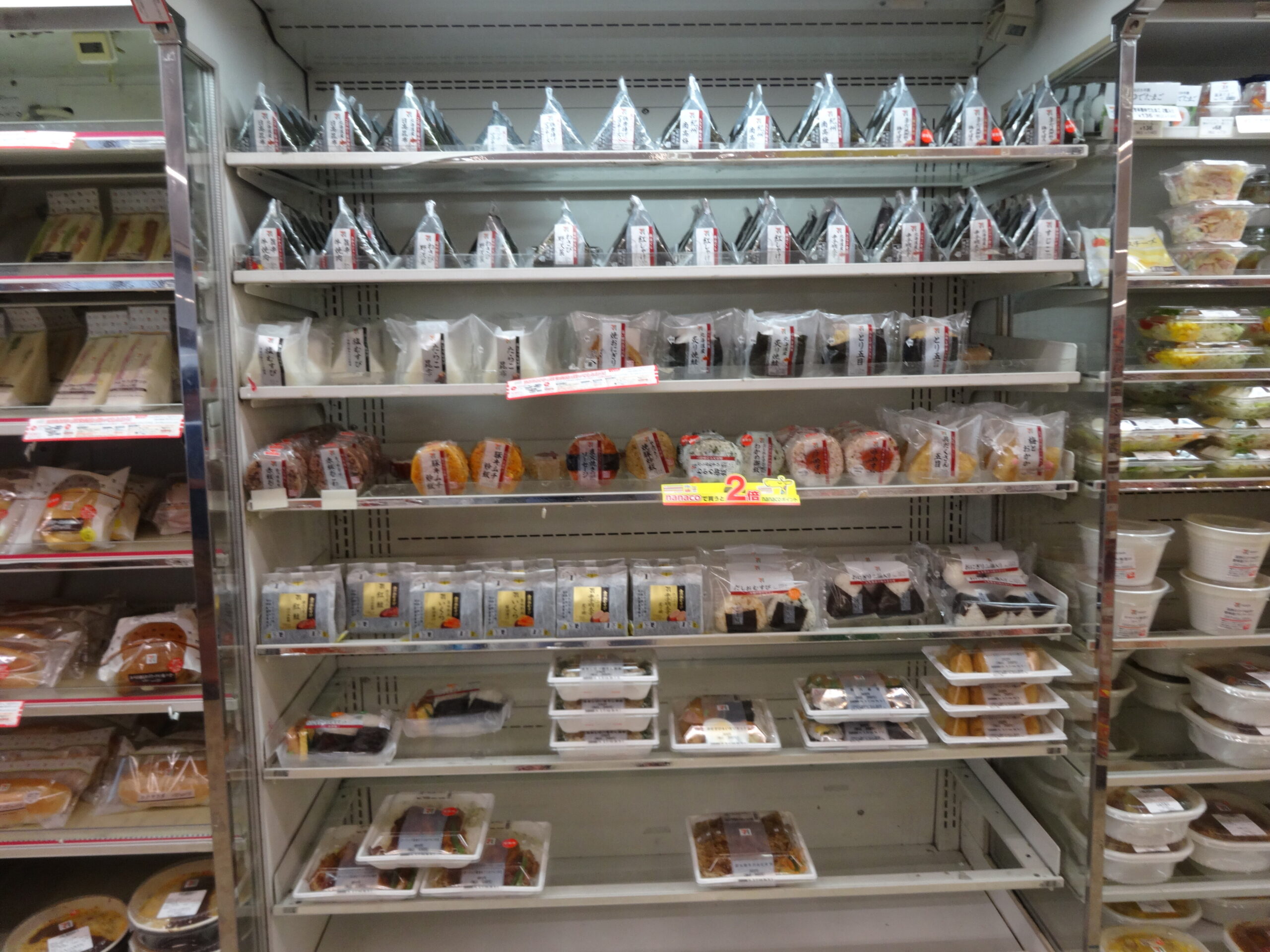
For an easy meal, start in the refrigerated section and choose a main item—onigiri (rice ball), sandwich, noodles or bento—then add fruit, a salad, soup or yogurt. The label often matters more than the shelf display. It shows the type of filling, allergens or ingredient information, storage requirements and a consumption deadline. An attractive product photo does not prove that a meal is vegetarian, halal, gluten-free or safe for a specific allergy.
Read the two common date labels differently: shōhi kigen (消費期限) is a use-by deadline for more perishable food; shōmi kigen (賞味期限) is a best-before indicator, not automatically a safety guarantee after opening. Check the time as well as the date on refrigerated meals. Keep chilled products cold and do not carry sushi or rice-based meals around in summer heat for hours.
- Choose a main food that fits your appetite and dietary restrictions.
- Check the printed deadline and whether refrigeration or heating is required.
- Check if sauce, dressing or noodles come in separate packets.
- Add a drink or side, then decide whether you will eat immediately or carry it.
- At checkout, request heating only if the packaging and store allow it.
Sample purchase: an onigiri, a salad and a bottle of tea create a portable lunch with no cooking. A microwave bento and soup are better when you can eat promptly. For a long train journey, select food that travels well and follow the operator’s food and waste rules.
Common mistake: assuming all onigiri contain only rice and vegetables. Tuna mayonnaise, fish flakes, meat sauces and shared preparation equipment can make a product unsuitable for some diets. Confirm the actual label rather than guessing from the English name.
Order hot snacks, coffee and counter items clearly
Fried chicken, croquettes, steamed buns and similar hot snacks are usually held behind or beside the checkout counter rather than on the self-service shelves. They may be displayed only by product name or an image. Point politely or show staff the product on a screen. Availability changes quickly; if the hot case is empty, do not assume the item is available immediately.
For coffee, the procedure depends on the chain and machine. In many stores you pay for the correct size and hot/iced type at the register, then take the purchased cup to a dispenser. Elsewhere, you select or scan at a separate machine. Do not press an unfamiliar drink button until the cup and size are confirmed. A large hot cup is not interchangeable with a small iced selection.
- Identify the product or cup size before you join the checkout queue.
- Order by pointing or say kore o hitotsu kudasai (“One of these, please”).
- Pay, and check whether staff will hand you the food or whether you need to collect it.
- For machine coffee, place the cup under the spout and use only the matching labeled button.
- Keep hot food separate from cold items and avoid spilling hot drinks on crowded trains.
Useful phrases: atatamete kudasai (“Please heat it”), sono mama de daijōbu desu (“It’s fine as it is”), and aisukōhī (“Iced coffee”). Translation is helpful, but a product photo on your phone is often faster in a busy store.
Pay without delaying the register
At the register, ordinary grocery purchases can often be paid in cash, by a supported credit card, by transit IC card such as Suica or PASMO, or by a locally supported QR payment. For example, 7-Eleven’s official payment guide lists card networks and transport IC cards, but this does not mean every mobile wallet works, or that every product and service can use every tender. Certain bill payments, prepaid products, tickets and other services may require cash or another specifically permitted method.
Follow the screen, not an assumption about the cashier: some registers ask you to choose the payment type and insert notes or coins yourself. Select the correct icon: credit card, transportation IC card, code payment or cash. If using a foreign card, your issuing bank can still decline a transaction even if its logo is accepted by the store. Carry a second method—ideally a little yen cash—rather than holding up a queue while trying the same rejected payment repeatedly.
- Set purchases on the counter and indicate whether any eligible food needs heating.
- Wait for the total and choose the payment method the register offers.
- Use the reader or cash terminal as instructed; do not tap both a bank card and IC card together.
- Collect change, the card, the receipt and every item before stepping aside to reorganize your bag.
For tickets and payment slips: read the email or booking page first. It may say you must pay at the register using a machine-generated voucher within a deadline and may forbid credit card payment. The rules for a ¥500 drink do not necessarily apply to a ¥5,000 ticket or utility bill.
Use an in-store ATM carefully
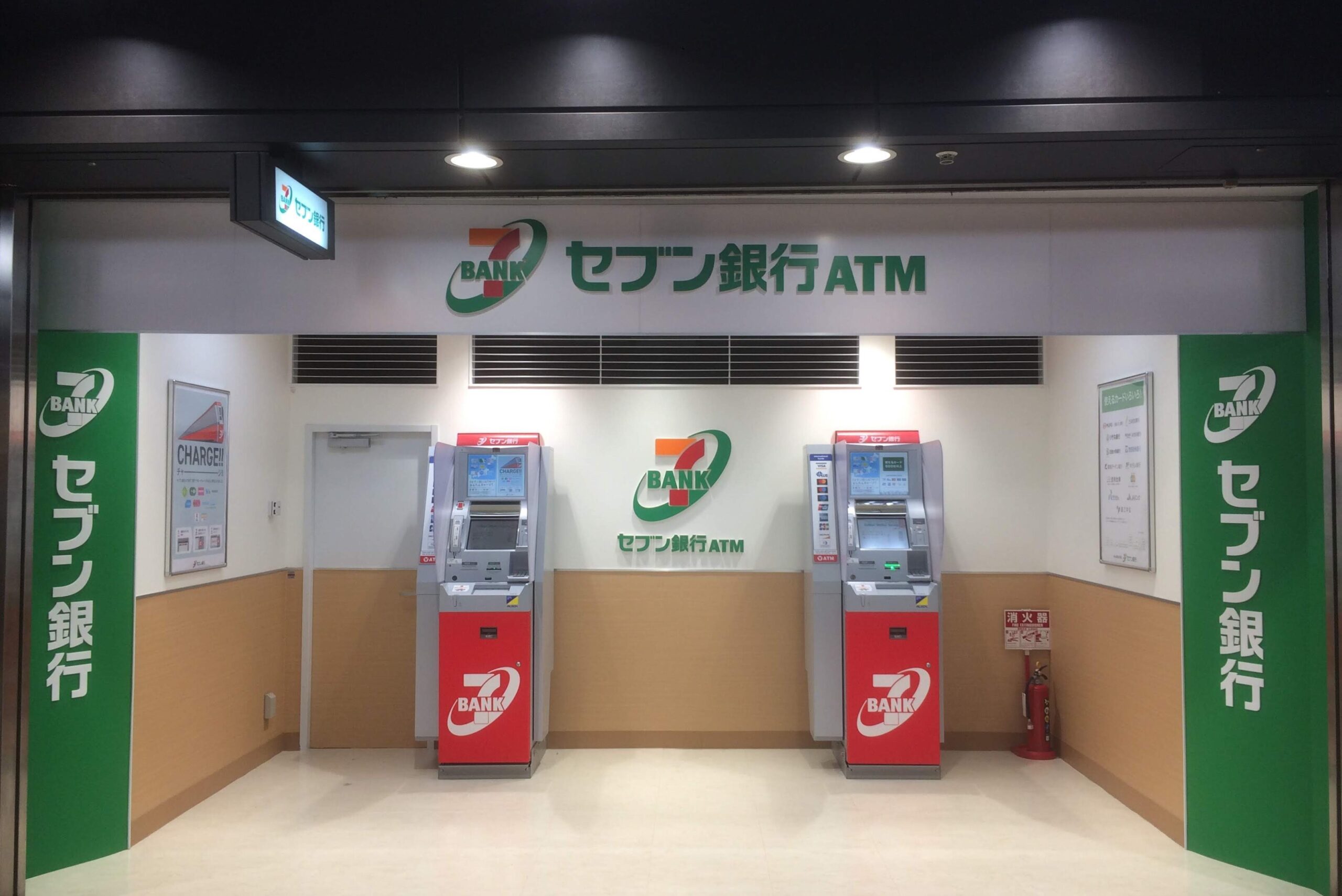
A store counter and an in-store ATM are two separate services. Seven Bank machines—common in 7-Eleven and some other premises—support a range of overseas-issued cards, with language options. FamilyMart and Lawson may have ATMs run by other operators, so check the ATM’s operator and accepted network logos rather than relying on the brand on the storefront. A supported card network does not guarantee that every individual card will be authorized.
Seven Bank publishes a withdrawal ceiling of ¥100,000 per transaction for overseas-issued cards, or ¥30,000 for magnetic-stripe transactions. Your home bank may set lower limits. Fees and eligible hours can vary by card brand and issuer; the ATM may also present a separate conversion offer.
- Check the machine logo and insert or tap the card as the display directs.
- Choose your preferred language, then select withdrawal.
- Enter an amount in Japanese yen within the machine and issuer limits.
- Review any stated ATM charge and exchange-rate option. If you want your own card network or issuer to convert the withdrawal, usually choose to be charged in JPY and decline a home-currency conversion offer, after checking the terms.
- Shield your PIN and collect the card, cash and receipt before leaving.
If it fails: do not enter your PIN again and again. Check that international withdrawals are enabled on your card, try a smaller sum, or find a different compatible ATM operator. If the machine retains your card, contact its posted support number before leaving the location. If it dispenses no cash but your bank shows a debit, keep the receipt and contact both the ATM operator and card issuer.
Ask before using toilets or an eat-in area
A konbini is not automatically a public restroom. Some branches provide customer toilets, some only permit access upon request, and some have no customer facility. Small station or central-city shops are particularly variable. Look for a toilet sign; if access is unclear, ask toire o tsukatte mo ii desu ka? (“May I use the toilet?”). If staff decline, do not pass behind employee-only doors.
Eat-in areas have become less universal, and seating may be limited to a short visit or to food purchased there. A branch may close its seating area earlier than the store. Do not open meals at a standing checkout counter or spread luggage across the seats.
Tax distinction: takeaway food is generally subject to Japan’s reduced consumption tax rate of 8%, while eligible meals consumed as dine-in are generally at the standard 10% rate. The legal treatment depends on the purchase and the customer’s declaration; tell staff if you intend to use the eat-in area and follow the register instructions. It is not acceptable to declare takeaway and then treat the seating area as an unrestricted dining room.
- Ask before using a toilet or seating area.
- Keep luggage clear of exits and accessibility paths.
- Separate rubbish according to the store’s bins; if there is no usable bin, carry it with you.
Handle heating, utensils, waste and allergies
At checkout, staff may ask whether to heat a meal and whether you need chopsticks, a fork or a spoon. The answer should depend on the product: a refrigerated bento may be heated, while ice cream, salads and certain sealed food should not. Microwaving may be performed by staff or at a customer-accessible station, depending on the branch.
For ingredients, look beyond the item’s English name. Japanese labels may include genzairyō (原材料, ingredients) and arerugī (アレルギー, allergy). Fish stock, mayonnaise, meat extracts or sauces can appear in dishes that look plant-based. Packaged-food allergen labels are more reliable than visually identifying the filling, but formats differ. A phone translation may help navigate a label; it cannot eliminate mistranslation or cross-contact risk. If an allergy is severe and reliable confirmation is not possible, choose a safer product rather than improvising.
Plastic shopping bags often cost extra, and stores may ask if you want one: fukuro wa irimasu ka? (“Do you need a bag?”). You can reply fukuro wa iranai desu (“I don’t need a bag”). Take only the utensils you need. If the package has sauce packets, open them away from delicate documents or electronics.
- Read the date/time, ingredients and serving directions before buying.
- Confirm heating, utensils and bag requests at checkout.
- Use the store’s bins only for waste they accept.
- Keep hot items upright and eat perishable food promptly.
Use copy, print and ticket machines with preparation
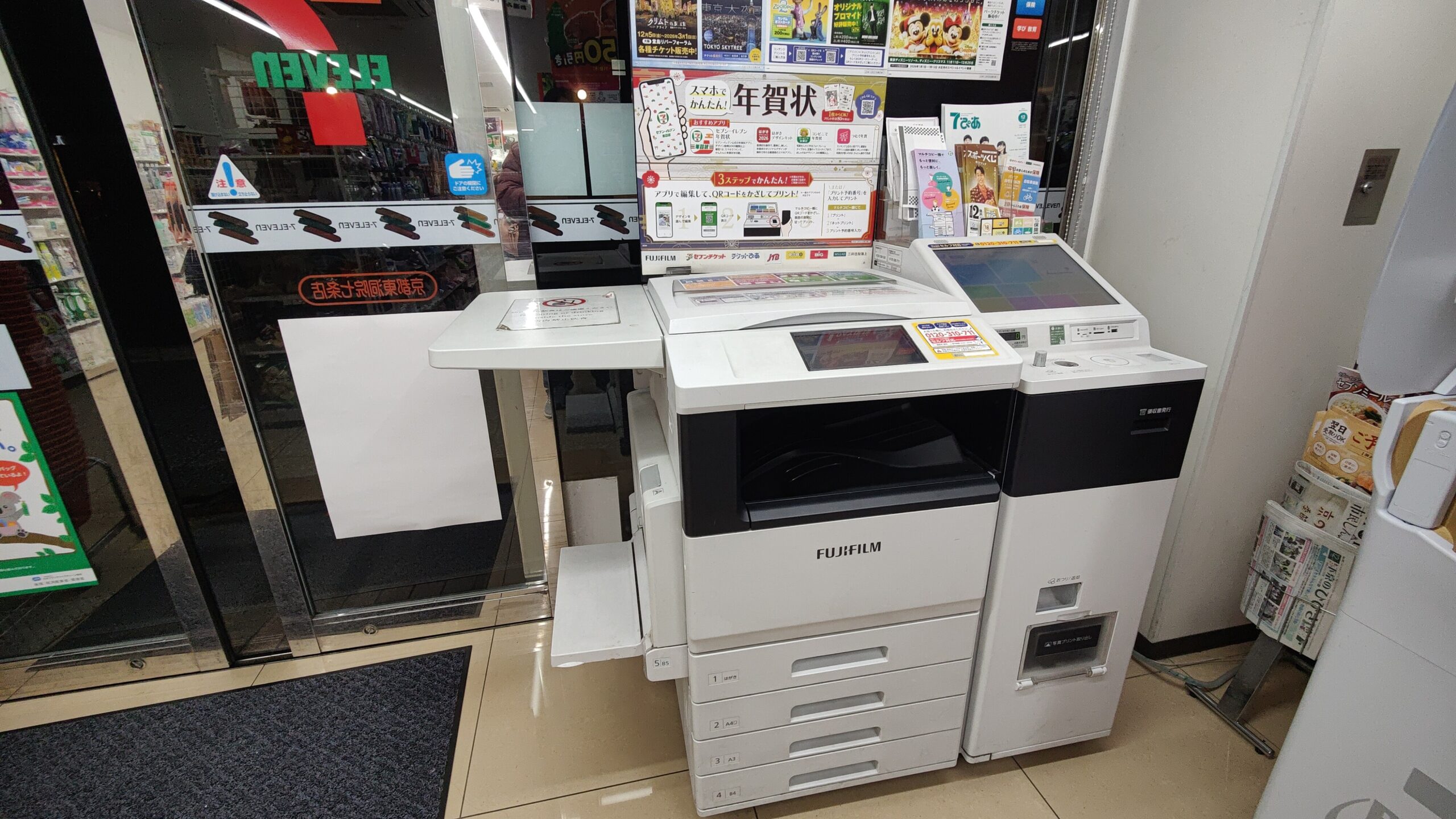
Multifunction copy machines can solve a practical travel problem: printing a PDF reservation, passport-related paperwork, attraction voucher or photograph when your hotel has no printer. Yet the chain, machine and print service must match. 7-Eleven has its own supported network-print options; FamilyMart and Lawson may offer different compatible services and apps. A file uploaded for one network will not automatically appear on the machine at another chain.
Before leaving the hotel: save the original PDF locally, confirm the paper size (often A4), check whether the booking requires color, and note any print reservation number or QR code. For documents containing sensitive passport or payment information, use a trusted service and avoid leaving files on shared devices.
- Find a branch with the required multi-copy service, not merely any nearby convenience store.
- Select the appropriate function—copy, document print, photo, network print, scan or ticket.
- Enter the registration code, connect the supported app or use the supported media as instructed.
- Check the on-screen preview, number of copies, orientation and displayed charge.
- Collect every printed page, original document, storage device and receipt before leaving.
Tickets and booking payments are different from document printing. Some services use a terminal to generate an application slip and require final payment at the register within a short period. For example, Lawson’s Loppi service may issue a slip that has to be settled at the register within 30 minutes. Always follow the specific ticket issuer’s instructions; a screenshot of a reservation code is not always a valid admission ticket.
If the machine rejects the file: check PDF compatibility, try a plain A4 copy, verify that the code belongs to the same chain, or ask staff where the relevant machine is located. Do not assume the clerk can retrieve a lost registration code or override an expired ticket deadline.
Confirm parcel and luggage services in advance
Some full-size convenience stores take parcels for domestic shipping or selected online marketplace services. This does not make every konbini a luggage-forwarding counter. The accepted carrier, packing rules, prohibited items, maximum dimensions, price, and collection time differ. A prepaid barcode for one service may not work at another store.
For hotel delivery: contact the receiving hotel before dispatch and confirm whether it accepts parcels for incoming guests, the reservation name format and the arrival date. Write the Japanese address, postal code, guest name and hotel phone number exactly. Large suitcases, airport-bound luggage, temperature-controlled items and international shipments may require a designated carrier counter or collection service rather than an ordinary shop.
- Identify the shipping carrier and service you need.
- Check the branch’s participation and any size or packaging restrictions.
- Confirm the receiver is willing and able to accept the shipment.
- Fill in or present the correct shipping label, booking ID and contact details.
- Retain the tracking number and proof of acceptance until delivery.
Practical example: if you leave Tokyo for Kyoto in the morning and want your suitcase waiting at a Kyoto hotel that evening, do not assume same-day delivery. Confirm the destination and carrier’s cutoff and realistic delivery date first. Carry medications, passports, chargers, valuables and the next day’s essentials yourself.
Treat tax-free shopping as a branch-specific service
Tax-free shopping is a specialized service, not a standard discount on ordinary drinks and snacks. Some 7-Eleven branches and other designated retailers offer it, but many nearby stores do not. A shelf label showing a regular price is not evidence that a visitor can claim a tax refund there. Look for the official tax-free indication and ask the staff before purchasing.
Important planning distinction: Japan’s tax-free shopping process is changing. Depending on the date of purchase, an eligible visitor may be subject to an at-purchase tax-exemption process or a system involving payment first and subsequent confirmation/refund. Before making a substantial tax-free purchase, check the current National Tax Agency or Japan Tourism Agency guidance and the retailer’s participation. Do not rely on an older store FAQ without checking its publication date and applicability.
Eligibility can depend on visitor status, passport verification, product category, transaction threshold and export requirements. Buying ordinary food for immediate consumption is not automatically compatible with tax-free export conditions. A receipt from a store without a qualifying tax-free transaction generally does not become refundable merely because the customer is a tourist.
- Confirm that the actual branch participates.
- Ask what identification and purchase conditions apply on that day.
- Check whether the product may be opened or consumed in Japan.
- Keep receipts and products available for any required departure inspection.
Respect age checks and local rules
Alcohol and tobacco sales in Japan are restricted to people aged 20 or older. A cash-register touch screen may request age confirmation, and staff can request identification even if the screen is tapped. Do not mistake the screen tap for permission to buy while underage. Smoking is also subject to local rules; a shop entrance is not an automatic smoking area.
Convenience stores are everyday working businesses, not themed tourist attractions. Wait your turn, keep phone calls quiet, and do not photograph customers, cashier screens or staff without permission. It is considerate to step away from the register after paying before repacking your backpack, checking receipts or opening a translation app.
Late-night safety: even if the sales floor is open, an ATM, copier or eat-in space may be out of service, and staff may not be able to handle a complex parcel request immediately. Bring a backup route or another nearby branch for essential services. Avoid leaving passport copies or booking details unattended while you ask for help.
- Have identification available where legally required.
- Use a designated smoking place only where permitted.
- Keep doorways, queues and emergency exits clear.
Use a quick visit checklist
Most avoidable mistakes happen because a traveler assumes one store can handle every task. A two-minute preparation check saves more time than trying several machines or payment methods without knowing which service is available.
| Your goal | Check before entering | Take away afterward |
|---|---|---|
| Breakfast or a train meal | Expiry time, allergens and whether food needs heating | Food, utensils you requested and packaging/waste plan |
| Cash withdrawal | ATM operator, card network, amount, fees | Cash, card, receipt |
| Printing | Correct chain/app, file type, paper size, code | Every page, original, USB/phone and receipt |
| Ticket collection | Issuer instructions, settlement deadline, accepted tender | Paid ticket or confirmed collection document |
| Parcel dispatch | Carrier, box size, destination acceptance, pickup time | Tracking number and dispatch receipt |
On leaving: check your phone, wallet, credit card, passport, shopping bag and all receipts. If the purpose was an ATM transaction or passport-related print job, make sure no sensitive materials remain. Save the official service page or store location on your phone if you will need help after leaving.
The simplest strategy is to separate tasks: buy food at whichever store is convenient, but choose the correct service-capable branch when the purpose is cash, printing, tickets or delivery.
FAQ
Are all Japanese convenience stores open 24 hours?
Many major-chain street branches open day and night, but station, hospital, office-building and individual branches may have limited hours. Check the particular store before relying on it late at night.
Which is better: 7-Eleven, FamilyMart or Lawson?
For an ordinary snack, use the nearest convenient branch. For printing, overseas-card ATMs, tickets or parcel delivery, choose the branch that has the exact operator or service your task requires. The brand alone is not enough.
Can staff heat a bento or other meal?
Often yes for eligible items. Ask at the register, or use a customer microwave if the store offers one. Follow packaging and staff guidance; not every refrigerated item should be heated.
What does the date on an onigiri mean?
A label marked shōhi kigen (消費期限) gives a use-by time; shōmi kigen (賞味期限) indicates best-before. Keep chilled foods stored as directed and do not rely on an app translation for a serious food safety concern.
Can I pay with a foreign Visa or Mastercard?
Many branches accept international card networks for ordinary merchandise, but the card issuer or some service-specific payment rules can prevent payment. Carry a second card or some yen cash.
Can I use Suica or PASMO to buy food?
Many stores accept transportation IC cards for eligible purchases; check the register payment options. Some bill-payment, ticket or prepaid services exclude IC payment.
Will a Seven Bank ATM accept my overseas card?
It accepts many overseas-issued cards, subject to network and issuer rules. Check the posted card logos, withdrawal limits and fees. The ATM can still decline an individual card.
How much can I withdraw from a Seven Bank ATM?
Seven Bank currently states a per-transaction ceiling of ¥100,000 for overseas-issued cards and ¥30,000 for magnetic-stripe transactions; issuer limits may be lower and fees may apply.
Should I choose yen or my home currency at the ATM?
If you want your card network or bank to convert the transaction, usually choose JPY and decline the ATM home-currency conversion offer, after reviewing both options and your bank terms. Do not assume a quoted home-currency rate is always the cheapest.
Can I use the toilet or eat inside?
Some branches provide customer toilets or eat-in seating, while others do not. Ask permission and follow any posted seating rules. Tell staff if the food will be consumed in a designated eat-in area.
Can a convenience store print a hotel voucher or PDF?
Often yes if the selected branch has a compatible multi-copy machine and you use its supported app, media or upload service. Confirm the chain, file type, paper size and code before travelling there.
Is a ticket reservation number the same as an admission ticket?
Not necessarily. Some reservations require machine operation, a printed payment slip and a separate cashier payment before a valid ticket is issued. Follow the specific booking issuer’s instructions and deadline.
Can I send a suitcase to my next hotel?
Some branches offer supported shipping services, but large luggage and hotel delivery can have restrictions. Confirm the carrier, the receiving hotel and the realistic delivery date. Keep essentials in hand luggage.
Can I buy alcohol if I am 18?
No. Japan generally restricts alcohol and tobacco sales to people aged 20 or older; the cashier may request proof of age.
Is all convenience store food safe for vegetarians or allergies?
No. Fish stock, meat extracts, eggs, dairy and other allergens may appear in packaged meals. Read manufacturer labels and avoid products whose ingredients or cross-contact risk cannot be reliably confirmed.
Are tax-free purchases available at every branch?
No. Tax-free status, product eligibility, visitor rules and refund procedure are specific and can change. Confirm branch participation and the current official process before buying.
Related Japan Travel Guides
Official References
Final Thoughts
The best convenience store is the one that actually provides the service you need. Pick any nearby chain for everyday food, but verify the exact ATM operator, printing system, ticket rules or parcel carrier before a time-sensitive visit. Check meal labels, use the correct checkout option, carry backup payment, and keep every card, receipt and document. Those simple habits turn a quick konbini stop into a reliable part of a Japan itinerary.