
Japan With Toddlers: Strollers, Trains and Easy Days
A toddler-first Japan guide for feeding and changing stops, stroller-friendly stations, Shinkansen seats, naps and realistic days in Tokyo and Kyoto.
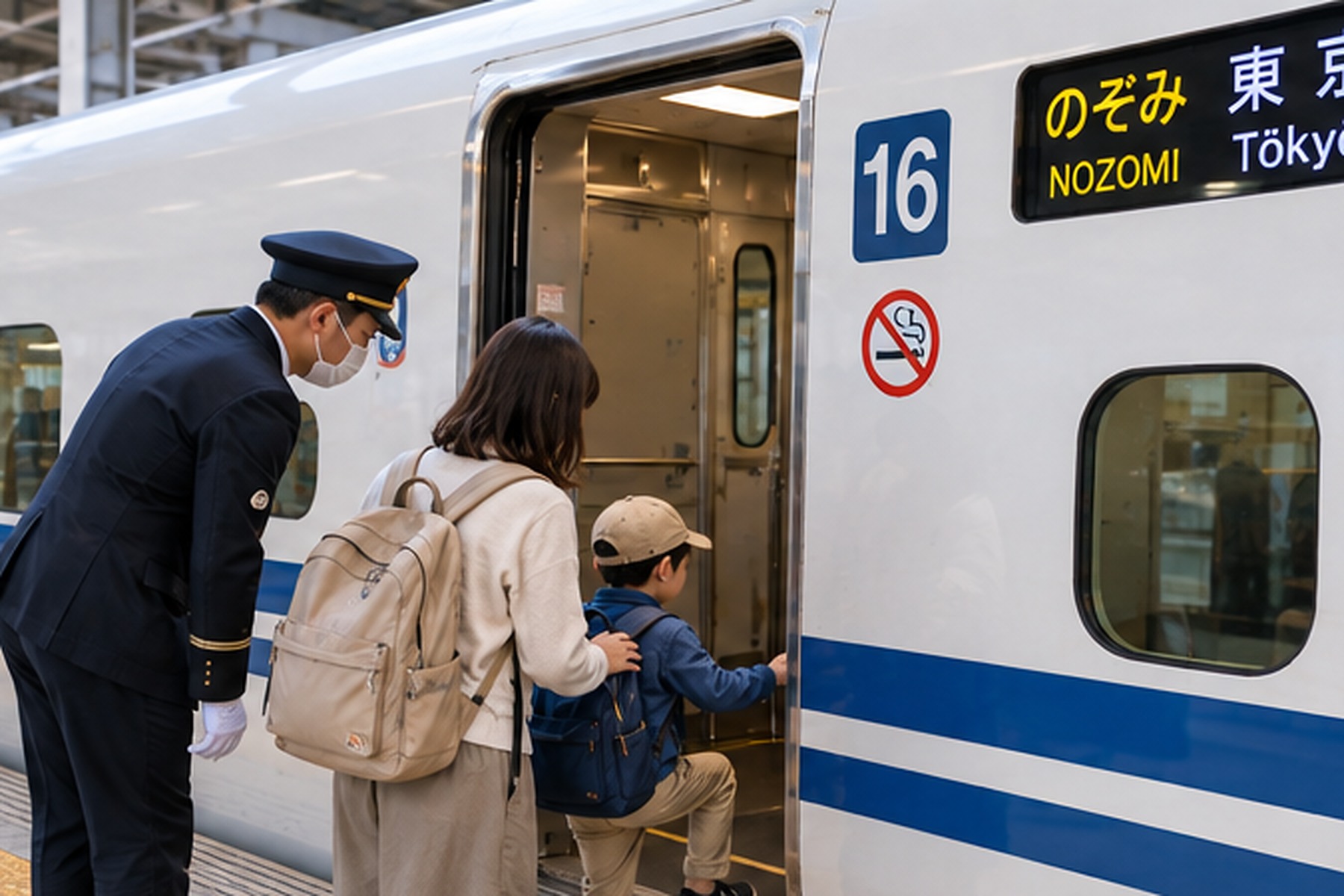
Japan is manageable with babies, toddlers and preschoolers if you plan the next feed, toilet stop, nap and elevator before you plan a second attraction. For a first visit, pick one area each morning, an indoor reset stop, and a hotel with a verified elevator route. A compact stroller works for city walking; a carrier is the backup for older stations and steps. On long train trips, decide whether your child needs a separate reserved seat before buying tickets.
What You’ll Learn
- Which decisions change between a baby, a new walker and a preschooler
- How to choose stroller, carrier and elevator routes without getting trapped at a station exit
- When a child needs a Shinkansen ticket or reserved seat
- Where to schedule changing, feeding, meals and indoor rest
- How to make a real Tokyo or Kyoto day work without rushing
Choose the Plan by Your Child’s Actual Needs
“Family-friendly” is too broad a label to plan a useful day. A baby who feeds frequently, a two-year-old who alternates between walking and a stroller, and a four-year-old who wants playground time need different routes. Use the child’s actual sleep and food rhythm rather than age alone.
| Traveling with | Best day shape | Transport setup | Decision to make before departure |
|---|---|---|---|
| Baby or pre-walker | One planned morning stop; feeding and rest are the schedule | Carrier plus optional compact stroller | Where are feeding and changing facilities near the stop? |
| New walker or toddler | One anchor activity and one nearby optional stop | Stroller for distances, carrier for awkward stairs | Can you avoid the busiest transfers and reach the hotel for a reset? |
| Older preschooler | One substantial attraction plus a park, snack or hands-on activity | Stroller only if still useful; build in walking breaks | Is the attraction suitable for your child’s height and ability? |
These are planning examples, not fixed developmental rules. For a child with mobility, sensory or medical needs, verify the facilities and transport support for that child specifically.
Hotel Checklist: The Last 300 Metres Matter
Compare hotels by the actual station exit, not just a “five-minute walk” label. The easiest route with a stroller may be longer than the shortest route shown on a map. A hotel near a lift, small supermarket and indoor breakfast option can eliminate several stressful decisions every day.
- Arrival: check that the route from station platform to street has usable lifts and that you know which exit they serve.
- Room: confirm the booked room allows the number and ages of children, including any existing-bed or extra-bed rules.
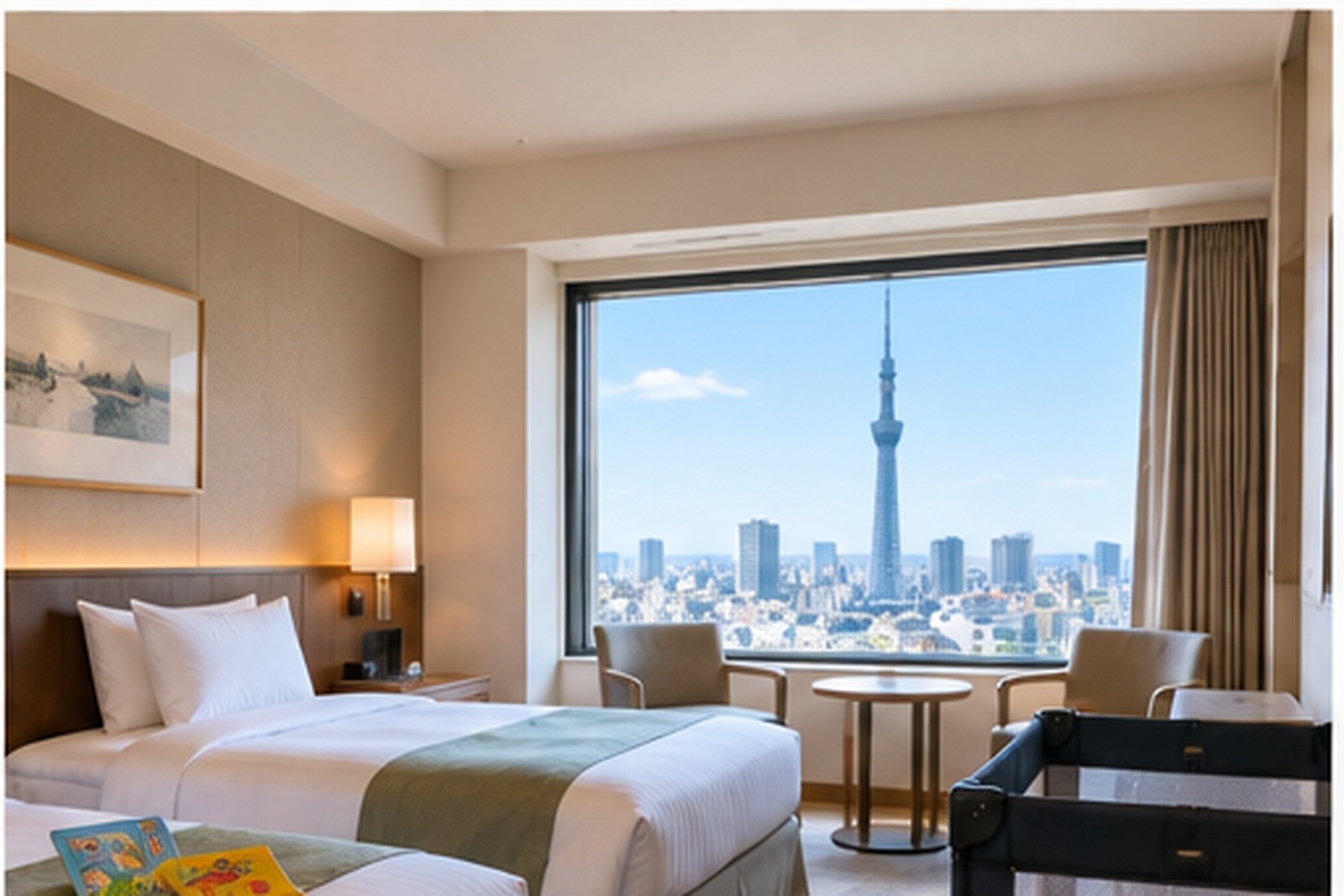
- Sleep: ask for a cot, bed guard or other suitable arrangement and verify availability in writing; do not assume “family room” guarantees one.
- Supplies: note a nearby supermarket, pharmacy or convenience store for nappies and familiar snacks.
- Reset: choose a location where returning mid-afternoon is genuinely possible.
Example: a hotel adding 15 minutes each way to your usual outing costs about 30 minutes per day; across five sightseeing days that is 150 minutes of extra walking and transfers. That is an illustrative time calculation, not a measured hotel comparison.
Stroller or Carrier? Use This Route Decision
JNTO recommends combining strollers with baby carriers depending on the route. Strollers are useful on wide pavements and inside major transport hubs, but a flight of stairs, a narrow temple approach or a busy interchange can overturn the plan. Do not assume the closest station entrance has a lift.
| Situation | Choose | Reason |
|---|---|---|
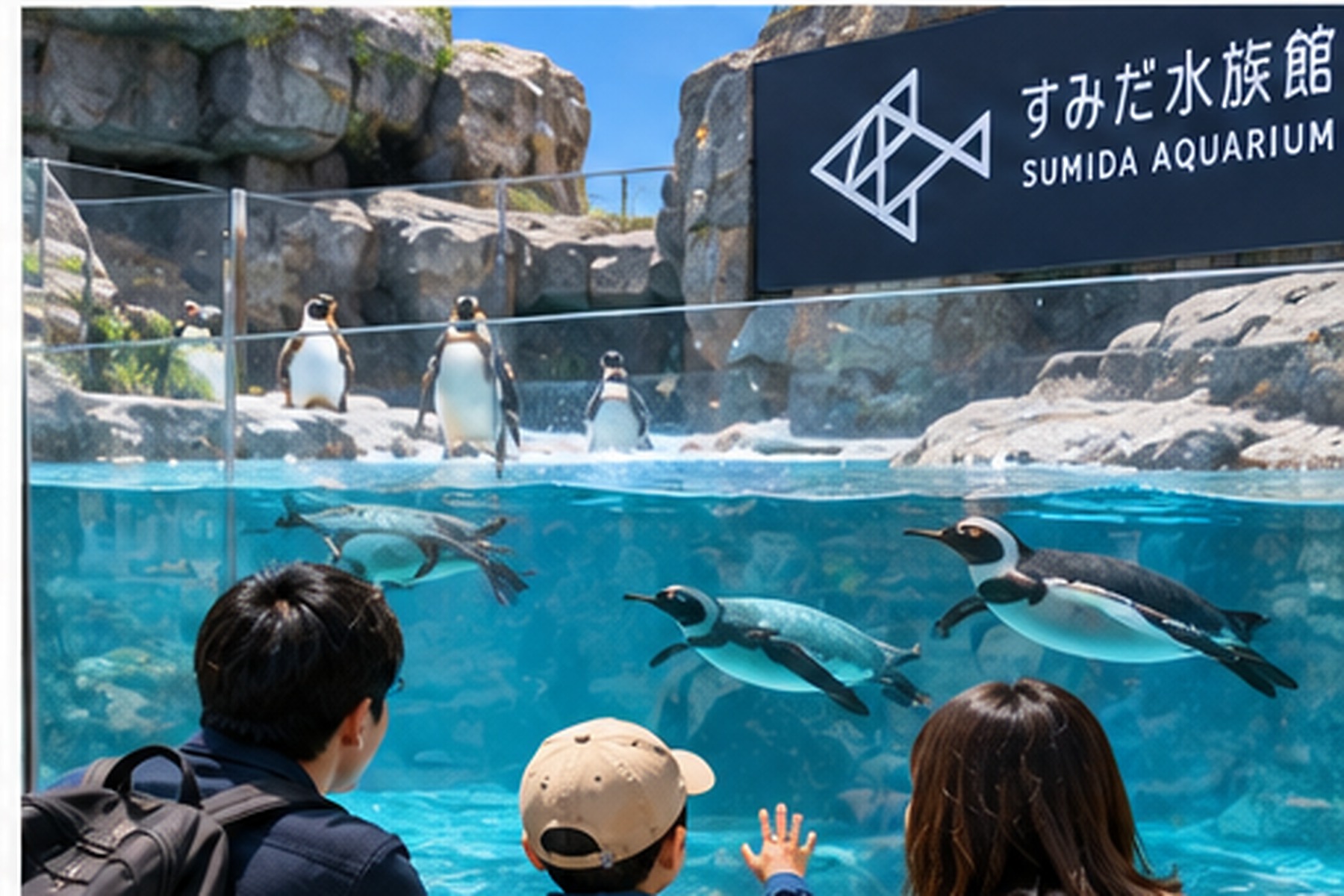
| Long city walk, shopping mall or aquarium | Compact stroller | A child can sit or nap; keep the aisle clear |
| Steps, narrow historical lanes or many transfers | Carrier, if appropriate for your child | Fewer lifts and folded-stroller transitions |
| Mixed urban day | Stroller plus small carrier | Switch rather than forcing one setup all day |
| Stroller and large suitcase together | Split tasks between adults or forward the suitcase | You need hands free at ticket gates and platforms |
Before leaving, search both the starting and destination stations for elevators. Tokyo Metro publishes a station barrier-free facility finder listing elevators and facilities for infants. If a lift is closed, ask station staff for another step-free route; do not carry an occupied stroller up or down escalators.
Urban Trains: Make the Platform Transfer Predictable
On most city trains, designated multipurpose areas can help when traveling with a stroller, but priority space is shared. Keep the brake on when stopped, never block doors, and follow staff instructions. In crowded periods, folding the stroller or waiting for the next train may be the safer choice.
- Find the lift to the correct platform before tapping through the gate.
- Allow extra time for the lift and for the walk to the carriage.
- Check the exit lift at the destination while still on the train if possible.
- Exit, locate a toilet or changing room, then begin sightseeing.
Failure plan: if the advertised lift is unavailable, return to staff or a staffed information desk for an accessible route. Never assume another exit on the map connects to your platform without stairs.
Shinkansen With a Toddler: Seats, Fares and the Stroller Rule
The child-fare rule is where a family can make an avoidable booking mistake. On JR services, children aged 6–11 generally pay child fares, while infants aged 1–5 and babies under one generally travel free with an accompanying fare-paying passenger when they do not occupy their own reserved seat. Important exceptions apply, including a separately occupied reserved seat, traveling without an accompanying fare-paying passenger, and more than two infants per accompanying paying traveler. JR’s school-year exceptions also matter at the age boundaries.
| Ticket decision | Practical result |
|---|---|
| Toddler rides with a paying adult and needs no separate reserved seat | Usually no separate infant fare; check the exceptions |
| Toddler needs their own reserved seat | Budget the applicable child fare and seat charges; do not count on a free seat |
| Child aged 6–11 | Child fares and applicable charges generally apply, with railway-specific exceptions |
| Adult traveling with three infants | The third infant generally requires a fare and charges |
For the Tokaido, Sanyo and Kyushu Shinkansen, strollers are exempt from the normal oversized-baggage reservation requirement, but you must reserve an appropriate seat if you want to use the reserved space behind the last row. Suitcases with a combined height, width and depth of more than 160 cm and up to 250 cm have different reservation rules. Check JR Central’s fare rules and baggage guide before purchasing.
On a Tokyo–Kyoto transfer, buy tickets with time to reach the platform, change a diaper before boarding if possible and pack one small reachable bag with food, wipes and a change of clothing. Never block the aisle with an unfolded stroller.
Diaper Changes, Feeding Rooms and Water: Plan the Stops
JNTO documents nursing and changing facilities in department stores, malls, major stations and other large buildings. They are not guaranteed at every small station or historic attraction. Find a known backup venue before a long outdoor walk.
A sensible sequence is: station toilet or baby room → attraction → meal or feeding break → optional second stop. On the way to a theme park or a long train journey, note the last convenient changing room rather than depending on an unknown facility at the destination.
- Look for signs reading Baby Room, Nursing Room, 授乳室 (nursing room) or おむつ交換台 (diaper-changing table).
- Bring the brand or type of formula and other essential feeding supplies your child already tolerates; availability can vary by store.
- Ask whether hot water, a microwave or a sink is actually provided; facilities differ.
- Keep a sealed bag for soiled items when a disposal bin is unavailable and follow local signage.
Use JNTO’s traveling-with-children guide for examples of family facilities, but verify the specific building before relying on it.
Food and Allergies: Avoid Last-Minute Guesswork
Convenience stores and department-store food halls can be useful, but they are not a substitute for checking ingredients. Food unfamiliarity is especially consequential for very young children. Choose foods with known ingredients and keep a reliable snack as a fallback.
- Check labels and ask staff about the exact product, including sauces, toppings and broths.
- For a serious allergy, carry the child’s care plan and prescribed medication as directed by their clinician. Do not rely only on machine translation or visual inspection of packaging.
- When ordering, show a clearly translated allergy card and still confirm that the staff understand it; cross-contact risks may remain.
- Choose seating near a toilet or exit when the child is tired or needs frequent breaks.
Read Japan’s Consumer Affairs Agency food-labelling information before travel. If safe food cannot be confirmed, use a known alternative rather than guessing.
Tokyo Day Plan: One Neighbourhood, One Indoor Reset
This is a sample day for a toddler who still naps; it is not a timetable every child should follow. Choose Ueno for a manageable cluster rather than jumping between distant districts.
| Approximate part of day | Example around Ueno | If the child is tired |
|---|---|---|
| Morning | Travel outside the commuter peak; Ueno Park or a preselected nearby museum | Use the park only; skip the ticketed stop |
| Lunch | Eat within easy reach of a toilet and baby room | Buy a simple meal or return to the hotel |
| Early afternoon | Nap or quiet indoor break; optionally one nearby short activity | Return to your hotel via the checked elevator route |
| Evening | Dinner near the hotel, then routine bedtime | No extra cross-city trip |
If your hotel is on the other side of Tokyo, pick a closer equivalent instead. The useful principle is short transfers and a known reset point, not that Ueno is required.
Kyoto Day Plan: Know When a Carrier Beats a Stroller
Kyoto’s well-known temple areas can involve sloping streets, steps and crowded approaches. Instead of combining the far sides of the city, choose one nearby area and make the return route easy.
| Choice | What you gain | Trade-off |
|---|---|---|
| Station-area shopping and indoor sightseeing | Facilities and transport near your base | Less traditional streetscape |
| Higashiyama temple neighbourhood | Historic atmosphere and streets | Slopes, crowds and steps; check access in advance |
| One garden or museum and a café | Predictable pace with room to rest | Fewer attractions in a day |
If a stroller is essential, confirm each individual venue’s access information and use a taxi or accessible transport where appropriate. If switching to a carrier, choose one suitable for your child and the weather. Visiting fewer places is often the practical decision, not a planning failure.
Tokyo Disney With a Baby or Toddler: Verify the Rental Limits
Tokyo Disney Resort offers Baby Centers for feeding and changes and provides strollers for rent. The official stroller-rental page states a one-day fee of ¥1,000 and suitability for a child who can sit unaided, is at least seven months old, is no taller than 100 cm, and weighs no more than 15 kg. These are official posted conditions, not a recommendation that every eligible child will fit comfortably; confirm them again when booking.
A practical park plan is to locate a Baby Center first, choose two or three child-appropriate attractions, and treat parade viewing, naps and feeding as real timetable items. Some attractions require a child to sit independently; check each ride’s restrictions.
- Check the official stroller-rental terms and current fee.
- Locate the Disneyland Baby Center; DisneySea has separate baby-care facilities.
- Bring a suitable stroller if your child is outside the rental limits or requires a specific setup.
What to Pack for the Next Four Hours, Not Just the Trip
Pack an accessible day bag so one adult can manage the child while the other finds a platform or a changing table. The quantities depend on age, season and usual needs; do not rely on fixed “one-size-fits-all” numbers.
- Feeding: familiar snacks, formula or baby food as appropriate, water and any essential utensils.
- Changing: nappies, wipes, change mat, spare clothes and sealed bags.
- Comfort: sun or rain protection, a light layer, and a familiar small comfort item.
- Transport: stroller rain cover, charger, offline hotel address, booked rail details and a suitable carrier when needed.
- Safety: child’s medical information, insurance details, prescribed medicines and emergency contacts.
When using luggage forwarding, carry everything the child needs until the bag physically arrives; delivery dates and eligible hotels vary by operator.
Arrival, Weather Changes and the Real Emergency Plan
Do not prepay for a timed attraction immediately after an international flight. Immigration, baggage collection, transport and a child’s sleep schedule can all change the arrival day. Check the forecast before setting out: in hot weather, swap a long outdoor walk for a nearby indoor activity; in heavy rain, avoid a route that depends on an exposed stroller transfer.
For an ambulance or fire emergency, call 119; for urgent police assistance, call 110. JNTO’s Japan Visitor Hotline is available around the clock on 050-3816-2787 (from overseas, +81-50-3816-2787) for traveler support in English, Chinese and Korean; it does not replace emergency services or a medical professional. Keep your hotel address and a child’s medication list offline.
For medications brought into Japan, check product ingredients and applicable import rules in advance. The Ministry of Health, Labour and Welfare explains restrictions and procedures.
Before You Book: A Five-Question Family Decision
Answer these in order before buying rail tickets or a non-refundable hotel:
- What is the child’s normal nap, feeding and toilet schedule?
- Can the child reach the hotel by a usable elevator route from the actual station exit?
- Does the child need their own train seat, and do age-based fare exceptions apply?
- Where is the reliable changing or indoor reset stop at the destination?
- What single activity can you remove if travel or the child’s energy does not go to plan?
For broader hotel booking, room categories and a family budget, use the Family Travel in Japan guide. This article is deliberately narrower: it addresses the decisions that are most likely to break a day with a baby, toddler or young child.
FAQ
Can I bring a stroller onto trains in Japan?
Yes, subject to each operator’s rules and consideration for other passengers. Plan an elevator route for the actual station exit; in crowded periods you may need to fold it or wait for the next service.
Does a toddler need a ticket for the Shinkansen?
A child aged 1–5 generally travels free with a paying companion without occupying a separate reserved seat, subject to important exceptions. A separately occupied reserved seat normally requires a child fare and applicable charges. Verify the relevant JR rules for the exact journey.
Does a stroller count as oversized baggage on the Shinkansen?
On the Tokaido, Sanyo and Kyushu Shinkansen, strollers are exempt from the oversized-baggage reservation rule. However, if you need the designated oversized-baggage space behind a reserved seat, reserve that space in advance. An oversized suitcase is treated differently.
Where can I change a diaper or feed a baby?
Many major department stores, malls, large stations and theme parks provide facilities, but not every venue does. Identify a facility at the destination and a backup before leaving the hotel.
Should I bring my own stroller to Tokyo Disney?
Check the park’s current stroller rental criteria. The listed rental is for children who can sit independently, from seven months of age, up to 100 cm tall and 15 kg, with a one-day fee shown on the official site. A personal stroller may be a better fit if your child is outside those limits.
Can I use a stroller around Kyoto temples?
It depends on the specific site and approach. Some temple grounds and historic streets have stairs, slopes and crowding. Confirm accessibility for each destination and consider a carrier or a simpler route.
What if my child is ill while traveling?
For an immediate medical emergency call 119. For non-emergency travel assistance, JNTO operates the Japan Visitor Hotline. Keep insurance, the hotel address and any prescribed medical information accessible.
Is a separate family hotel room required?
Room occupancy rules and child bedding policies are set by individual hotels. Confirm total guest count, child age, bedding and cot availability before paying; do not assume children stay free in every room.
Related Japan Travel Guides

Official References
- JNTO — Traveling With Children, Nursing Rooms and Strollers
- Tokyo Metro — Search Stations by Accessibility Facilities
- JR Central — Adult, Child, Infant and Baby Fare Rules
- JR Central — Oversized Baggage and Stroller Exceptions
- Tokyo Disney Resort — Stroller Rentals and Child-Friendly Services
- Tokyo Disneyland — Baby Center
- Consumer Affairs Agency — Food Labelling
- Ministry of Health — Bringing Medicines into Japan
- JNTO — Japan Visitor Hotline
Final Thoughts
Successful Japan travel with a toddler is a sequence of small, verified decisions: a workable hotel exit, a predictable train seat, a place to feed or change, and a nearby alternative if the day needs to end early. Use the sample days as adaptable plans, not targets to complete. Keep the child’s routine in charge of the itinerary, and spend the saved time on one experience the family can actually enjoy.