How to Use Vending Machines in Japan: Payment, Hot Drinks and Easy Tips
Learn how to buy drinks from vending machines in Japan, choose hot or cold items, pay with cash or IC cards, and handle bottles and cans after your purchase.
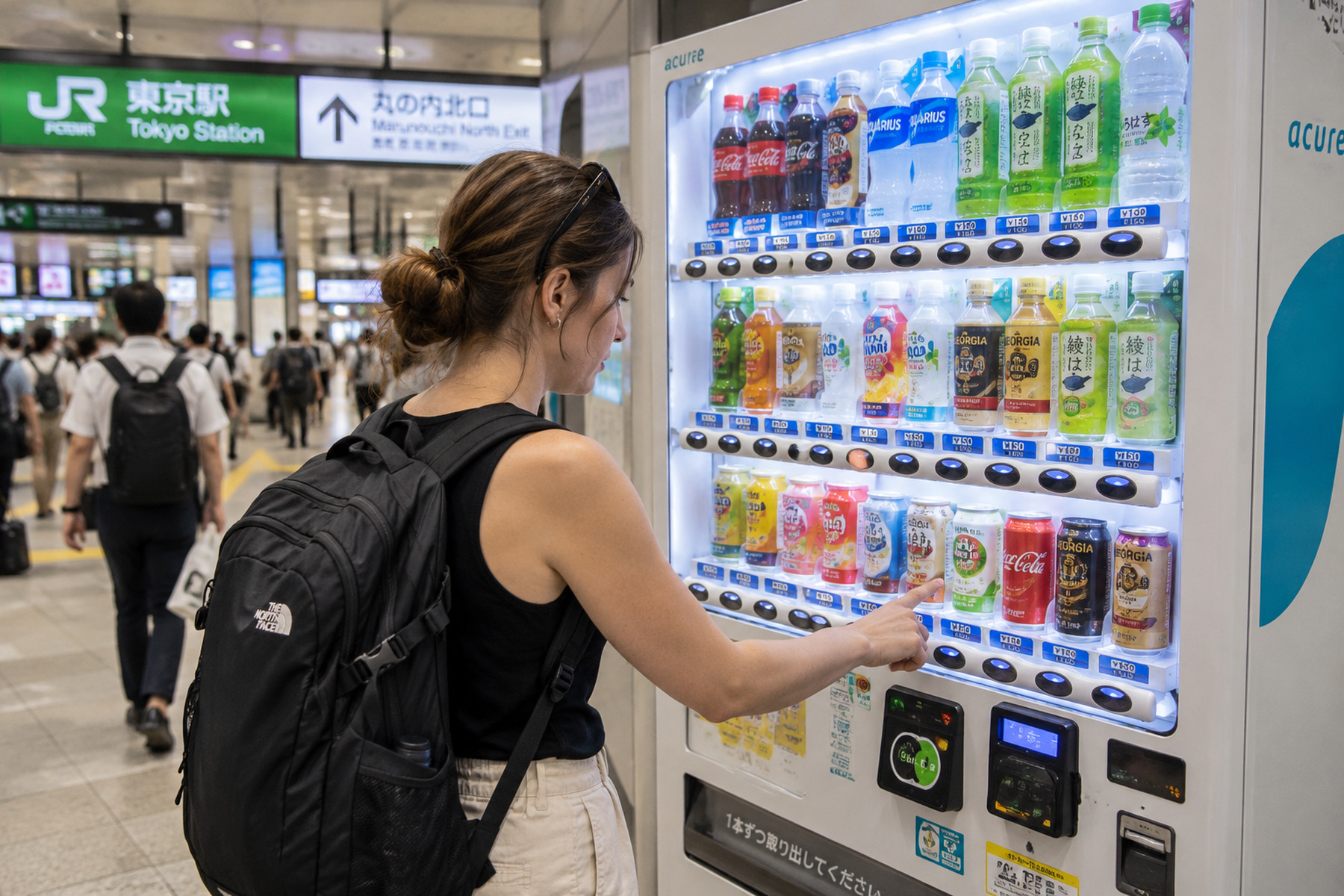
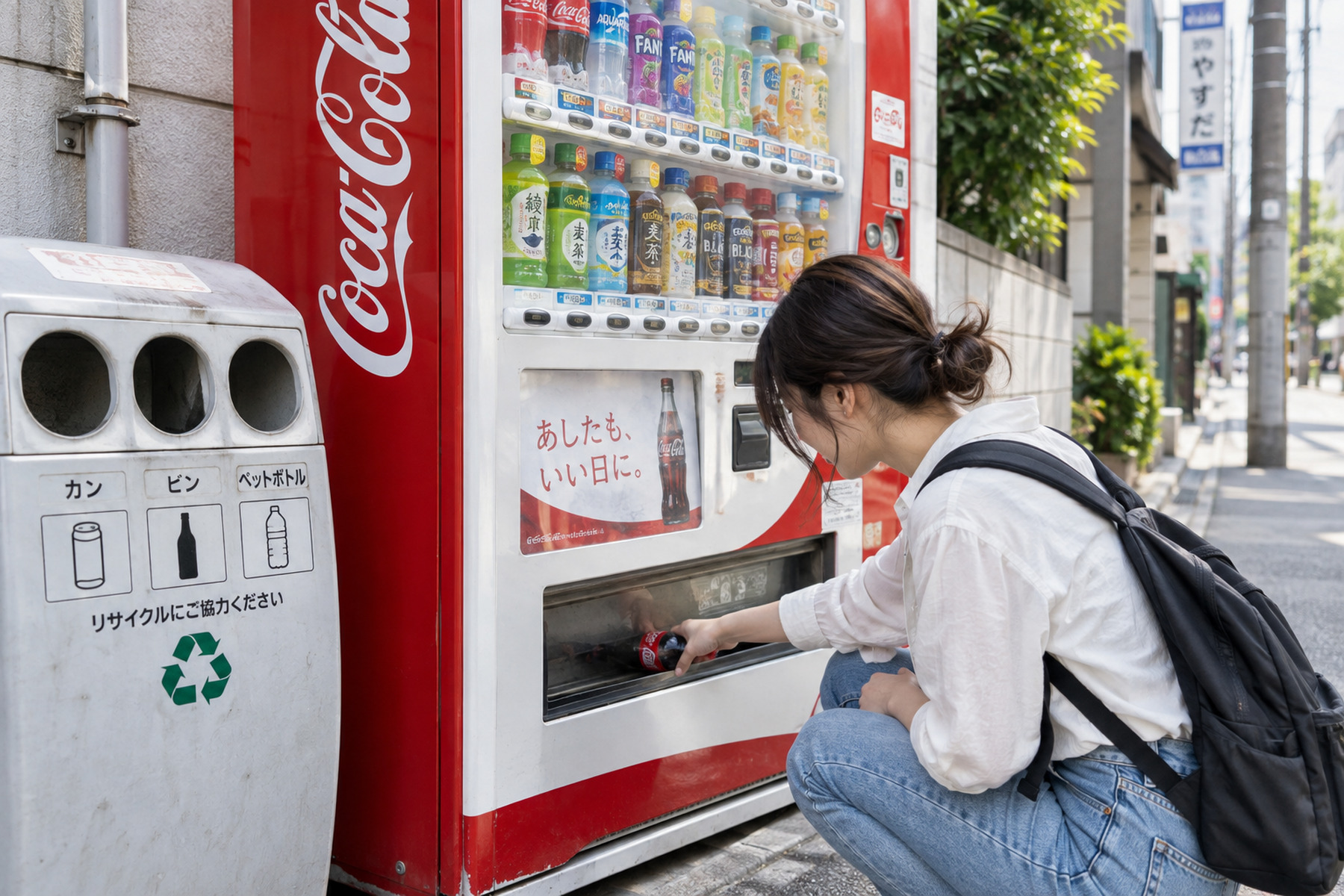
Choose a drink, check the displayed price and hot-or-cold indicator, then use one of the payment methods shown on that machine. Cash is widely useful, and many machines also accept transport IC cards or other cashless methods. After payment, press the product button if required, collect the drink from the lower tray, take any change, and use a nearby beverage-container recycling box only for empty cans, bottles or PET bottles.
What You’ll Learn
- The quickest step-by-step way to buy a drink
- How to tell which cashless payments a machine actually accepts
- How hot and cold drink indicators work
- What to do if payment fails or you need to recycle the container
The 30-Second Way to Buy a Drink
Most drink vending machines are designed to be usable without much Japanese. Start by finding the drink you want and checking the price directly below it. If the selection button is lit and the product is not marked sold out, the item is normally available.
The exact order can vary by machine. On many models you insert cash or tap a supported cashless method, then press the illuminated button. Touchscreen models may ask you to select first and pay afterward. Follow the lights or screen rather than forcing one sequence.
- Choose the drink and confirm the price.
- Check whether it is cold or hot.
- Use a payment method shown on the machine.
- Press the selection button if the machine requires it.
- Take the drink from the lower pickup tray.
- If you used cash, collect any change before leaving.
Cash, Suica and Other Cashless Payments
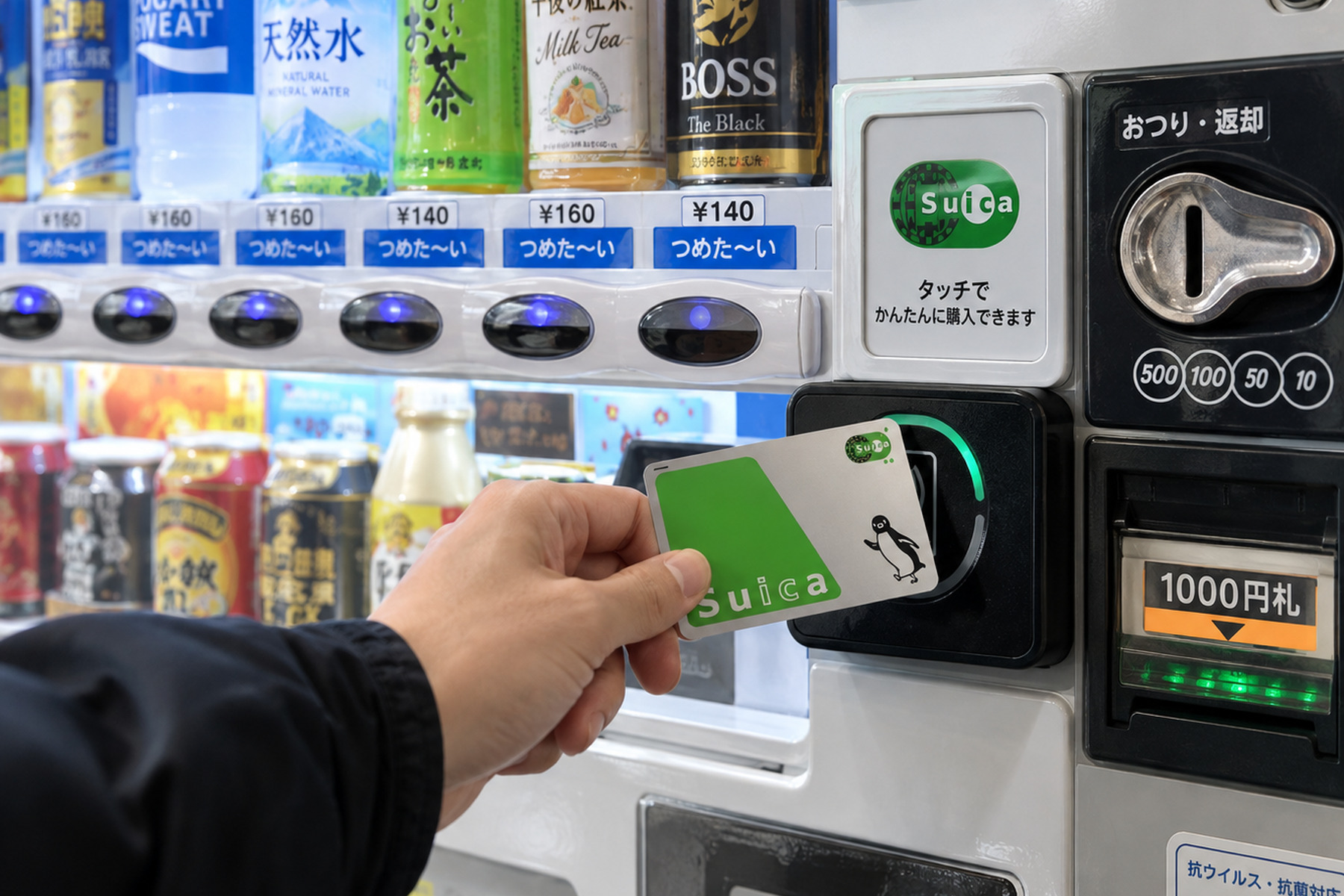
Payment support is machine-specific. Cash remains a reliable fallback, while newer machines may also support transport IC cards, mobile wallets, QR payments or contactless cards. Do not assume a credit card, phone wallet or foreign-issued card will work just because the machine looks new.
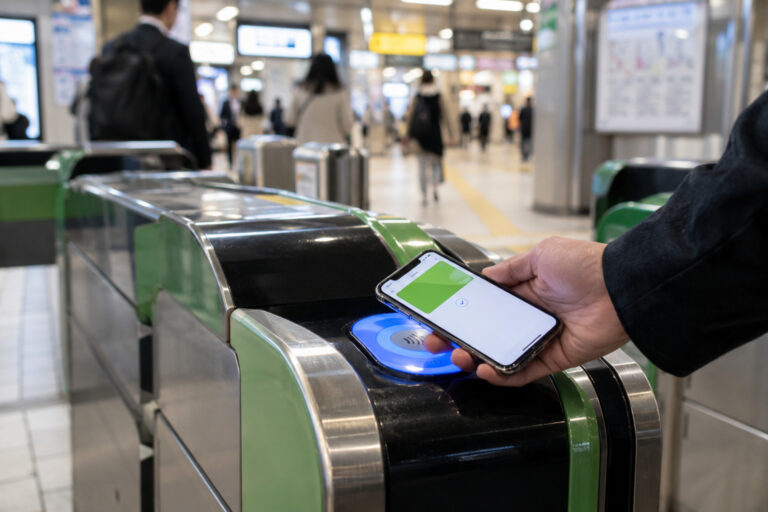
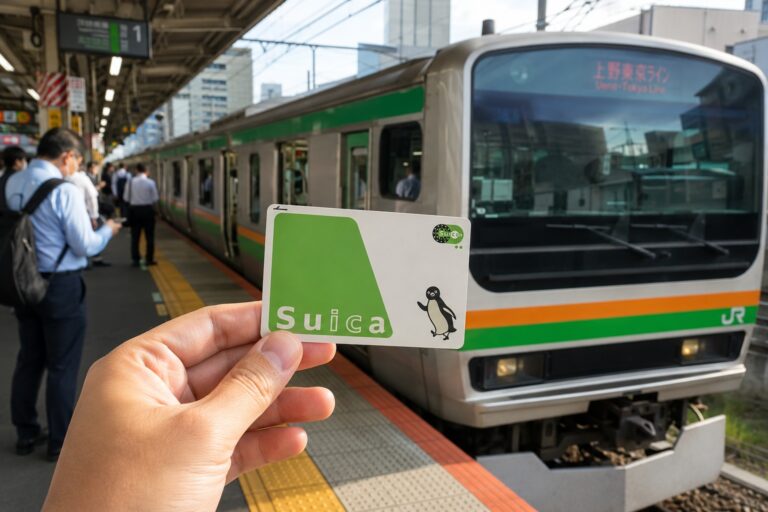
JR East states that Suica can be used for purchases at beverage vending machines that display the Suica acceptance mark. Coca-Cola Japan likewise notes that supported electronic-money and contactless options vary by machine, so the logos or acceptance sticker on the unit are the best guide.
If you use Mobile Suica or another compatible transport IC service, hold the phone or card steadily on the reader until the machine confirms the payment. If nothing happens, check your balance, look for the correct payment logo, and try the payment order shown on the screen.
- Use only payment methods whose logos are displayed on that machine.
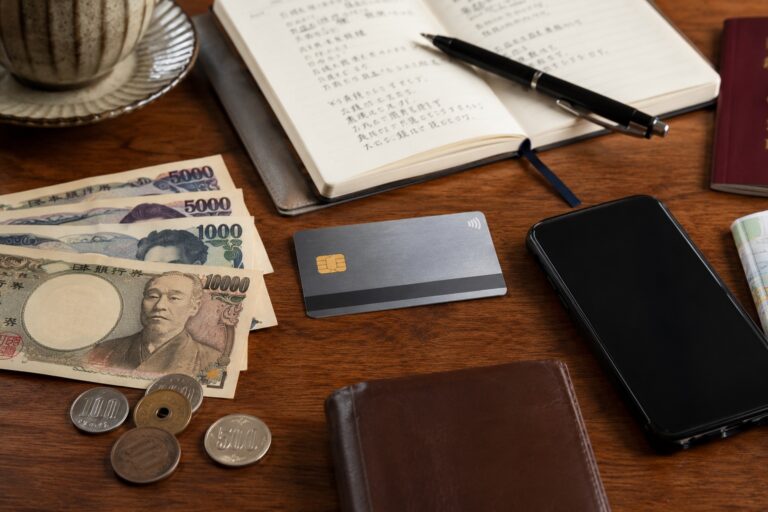
- Coins and a small Japanese-yen note are useful backups.
- A low IC-card balance can cause an otherwise valid tap to fail.
- Do not rely on large-denomination notes or universal credit-card acceptance.
How to Tell Hot Drinks From Cold Drinks
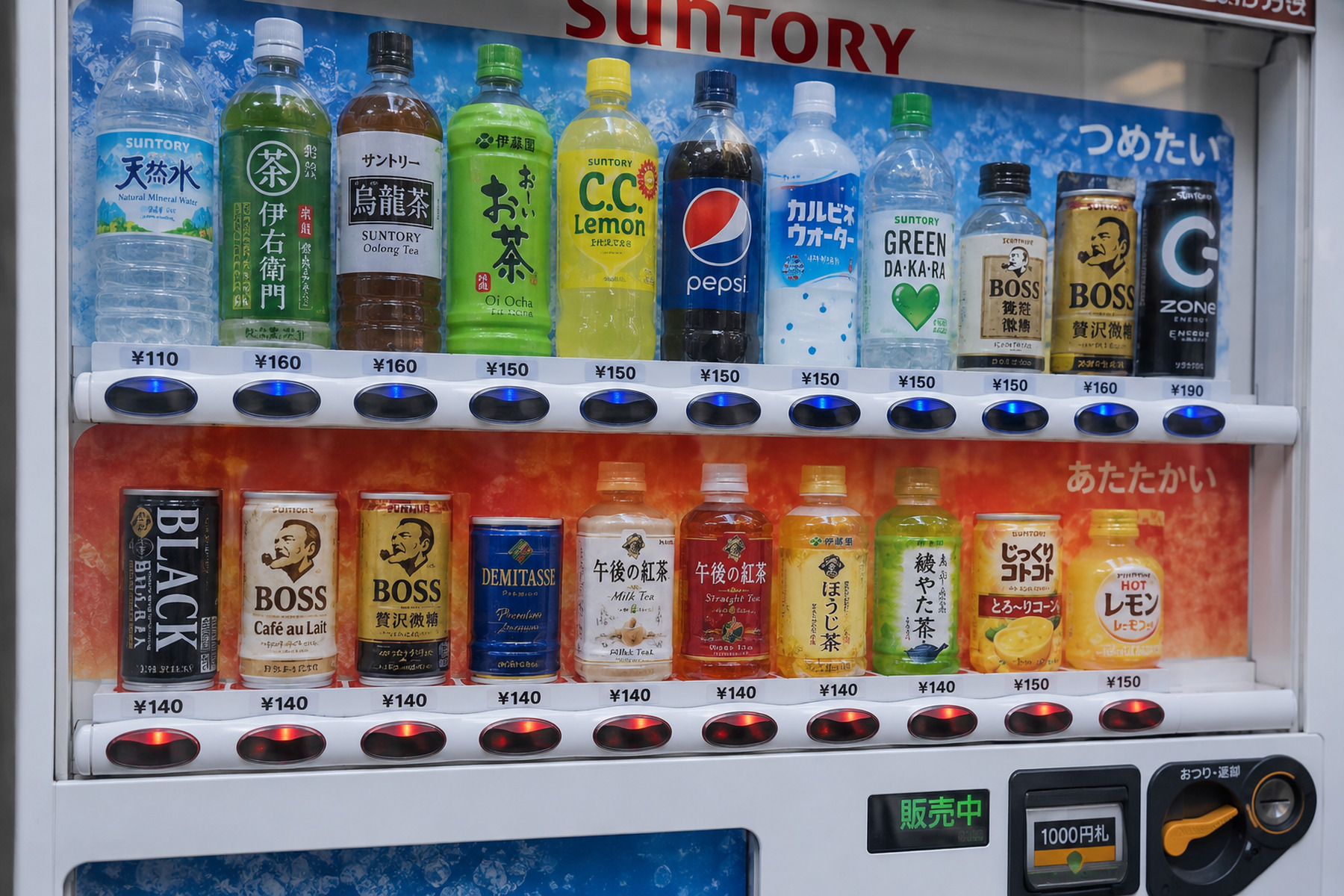
Many Japanese vending machines use blue indicators for cold drinks and red or orange indicators for hot drinks. You may also see Japanese wording such as つめたい for cold and あたたかい for hot. The layout is not identical on every machine, so check the indicator next to the specific product rather than judging from the bottle or can alone.
Hot canned coffee, tea and other warm drinks are more common during cooler periods, while cold water, tea, soft drinks and sports drinks dominate in warm weather. A single machine can carry both temperatures at the same time.
- Blue is commonly used for cold selections.
- Red or orange is commonly used for hot selections.
- Check the indicator beside the exact product you are buying.
What to Buy and What the Displayed Price Means
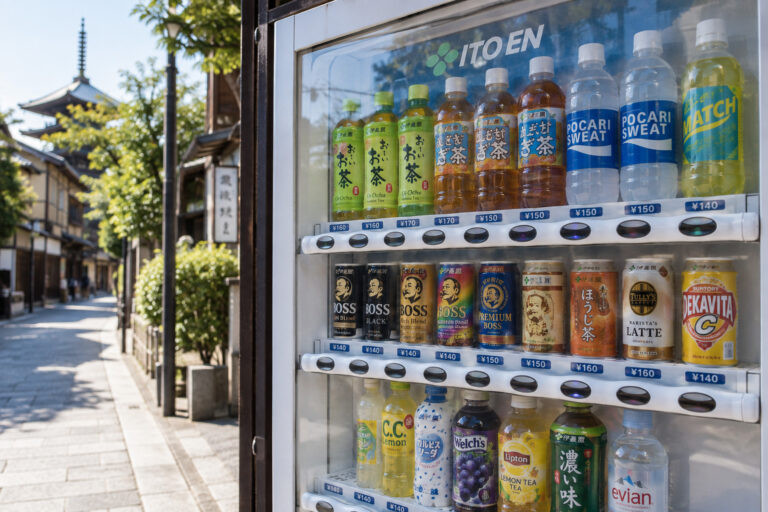
Drink vending machines typically offer water, green tea, barley or oolong tea, canned coffee, milk tea, soft drinks, sports drinks and seasonal items. Product size and selection vary by operator and location.
Treat the displayed price as the source of truth. Prices can differ by product, machine and location, so a fixed nationwide price rule is not useful for travelers. Vending machines charge for convenience; supermarkets may be cheaper when you are buying several drinks, while convenience stores offer a wider range of food and payment options.
- Water or unsweetened tea is a simple first purchase.
- Sports drinks can be useful during long walks in hot weather.
- Canned coffee and tea are easy ways to try common Japanese vending-machine drinks.
- Check sugar, caffeine and allergens on the package if they matter to you.
Where Vending Machines Are Most Useful
You will commonly see drink machines around stations, office districts, residential streets, hotels, parking areas and sightseeing zones. They are especially useful when you want a quick drink without entering a store.
For a full meal, an ATM, travel-size toiletries or broader payment choices, a convenience store is usually more useful. Think of a vending machine as a fast drink stop rather than a replacement for a convenience store.
- Use a vending machine for a fast drink stop.
- Use a convenience store when you also need food or daily items.
- Use a supermarket when price matters more than speed.
Use the Recycling Box Correctly
The collection box beside a beverage vending machine is not a general trash bin. The Japan Soft Drink Association explains that these boxes are for empty beverage containers such as cans, bottles and PET bottles, which are collected for recycling.
Finish the drink before placing the container in the box, and keep food wrappers, cups, batteries, cigarette waste and other general trash out. If there is no suitable collection box, carry the empty container until you find an appropriate disposal point.
- Use the box for empty beverage cans, bottles and PET bottles.
- Do not put general trash or dangerous items into the beverage-container box.
- Do not leave empty containers beside a full box.
If the Machine Rejects Your Payment
First check the acceptance logos, your IC-card balance, whether the note or coin is supported, and whether the product button is available. If cash is returned immediately, try a different supported coin or note rather than repeatedly forcing the same one.
If money is taken but no product appears, look for the operator contact information and machine identification details printed on the unit. Photograph the machine number, location and payment information before leaving so you can explain the problem accurately.
- Try another supported payment method.
- Check for a sold-out indicator.
- Use the coin-return lever if cash is stuck or the purchase is cancelled.
- Record the machine number and operator contact details for a failed purchase.
Small Etiquette and Safety Tips
Do not block a narrow sidewalk or station passage while deciding what to buy. Step aside after collecting your drink so other people can use the machine.
In hot weather, vending machines are useful for hydration, but they are not a substitute for cooling down or seeking help if you feel unwell. Choose drinks based on your needs rather than assuming every sports drink or sweetened tea is equivalent to water.
- Keep station and sidewalk traffic moving.
- Take your change and belongings before walking away.
- Recycle the empty container correctly.
- Use water and rest sensibly during hot-weather sightseeing.
FAQ
Can I use Suica at vending machines in Japan?
Yes, when the vending machine displays the Suica or compatible transport IC acceptance mark. Not every machine supports IC payments, so check the logos on the unit before tapping.
Do Japanese vending machines accept credit cards?
Some do, especially newer multi-payment machines, but acceptance is not universal. Check the payment logos on the machine and keep cash or a supported transport IC card as a backup.
How do I know whether a drink is hot or cold?
Many machines use blue indicators for cold products and red or orange indicators for hot products. You may also see つめたい for cold and あたたかい for hot. Check the indicator beside the exact selection.
What should I do if the machine takes my money but gives me nothing?
Check the pickup tray and change slot first. If the purchase clearly failed, record the machine number, location and operator contact information printed on the unit so you can report the problem.
Is the box beside a vending machine a trash can?
No. Beverage-machine collection boxes are intended for empty drink containers such as cans, bottles and PET bottles. General trash should be disposed of elsewhere.
Related Japan Travel Guides
Official References
Final Thoughts
Japanese vending machines are easy once you use the machine’s own cues: confirm the product, temperature and price, then pay with one of the methods actually displayed. Keep a backup payment option, collect your change, and treat the nearby container box as a recycling point rather than a general bin. For travelers, that is enough to turn vending machines into a reliable everyday convenience.