
Narita Airport to Shinjuku: Best Train, Bus and Transfer Options
Compare the direct Narita Express, Skyliner transfer and airport bus to reach the right part of Shinjuku with less luggage stress.
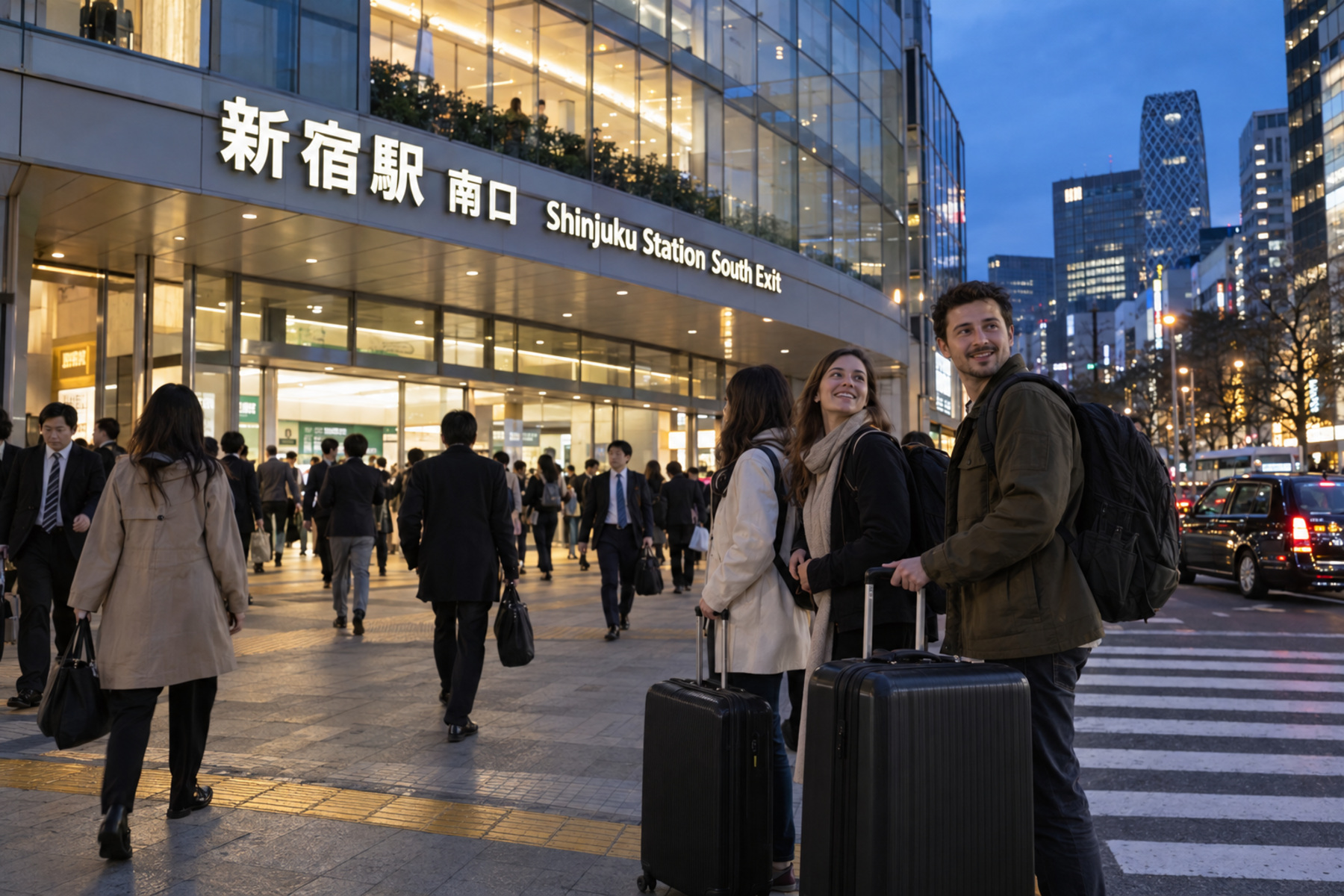
For most first-time visitors staying near JR Shinjuku Station, the Narita Express is the simplest train because selected services run directly to Shinjuku with dedicated luggage space. The Keisei Skyliner can be fast but requires a transfer to JR at Nippori. An Airport Limousine Bus may be easier for hotels or stops near its Shinjuku route when you have large luggage, although road traffic makes the travel time less predictable.
What You’ll Learn
- When the direct Narita Express is the easiest choice
- How the Skyliner-to-JR transfer at Nippori works
- When an airport bus stop is better than Shinjuku Station
- How to match the route to the correct Shinjuku exit, hotel area and luggage load
Choose the Shinjuku arrival point before the vehicle
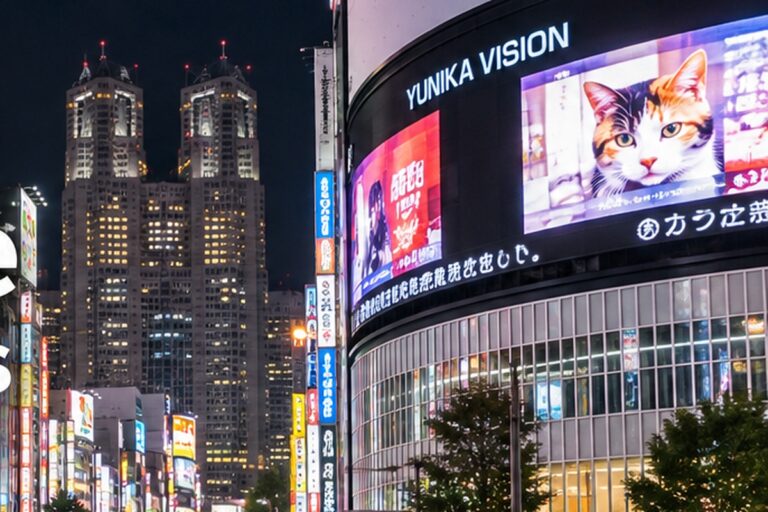
Shinjuku is not a single compact destination. JR Shinjuku Station, Busta Shinjuku, the West Exit hotel district, Nishi-Shinjuku and Kabukicho can require very different final walks. A route is only convenient if its arrival point matches the side of the station where you need to finish.
Pin the hotel entrance first, then compare the full journey from the Narita arrivals hall. Include ticket purchase, transfers, stairs or elevators, the station exit and the final walk. This prevents a fast airport train from turning into a difficult last kilometer with luggage.
- JR Shinjuku Station: begin with the direct Narita Express
- Nippori transfer is acceptable: compare the Keisei Skyliner plus JR
- A hotel or bus stop fits the route: check Airport Limousine Bus
- A group or difficult luggage needs door-to-door travel: price a private vehicle
Find the correct transport area at Narita Airport
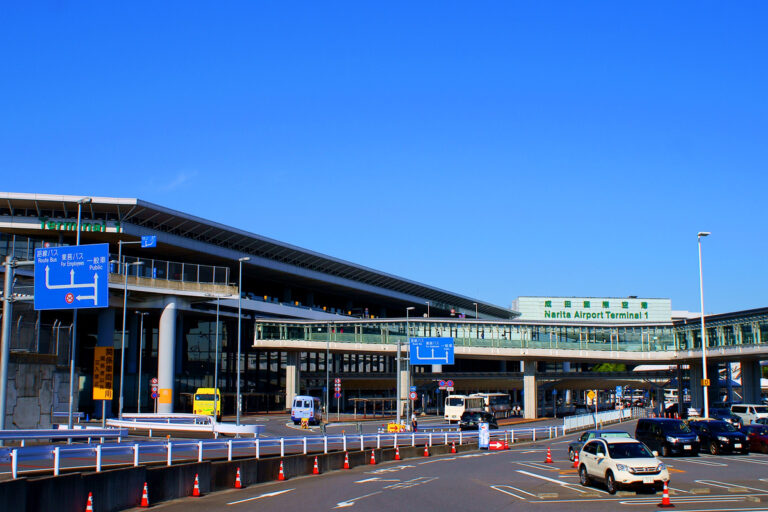
Terminal 1 uses Narita Airport Station. Terminals 2 and 3 share Narita Airport Terminal 2・3 Station, with a longer walk from Terminal 3. Follow signs for the correct terminal transport floor instead of assuming every arrival hall leads to the same gate.
JR East and Keisei have separate railway counters and gates. Airport buses use terminal-specific ticket counters and curbside platforms. Check the operator name, destination and departure time before paying because an airport train may be bound for a different part of Tokyo.
- Terminal 1: Narita Airport Station
- Terminal 2: Narita Airport Terminal 2・3 Station
- Terminal 3: allow extra walking time to the shared station and bus area
- Confirm JR, Keisei or bus before entering a gate or queue
Narita Express: the simplest direct train to Shinjuku
JR East's Narita Express, shown as N’EX, directly serves Shinjuku on selected airport services. It avoids an operator change in central Tokyo and provides dedicated luggage areas, power outlets and airport-oriented passenger information.
Check the live departure board because not every N’EX follows the same destination pattern. Make sure the service you choose is shown for Shinjuku. An ordinary IC card balance is not the complete ticket by itself; obtain the applicable limited-express product or use an eligible pass according to JR East's rules.
- Best for: first-time visitors and direct travel to JR Shinjuku
- Main advantage: no central Tokyo train transfer
- Luggage: dedicated storage areas with security features
- Before boarding: confirm Shinjuku, carriage and ticket conditions
Skyliner via Nippori: fast but transfer-dependent
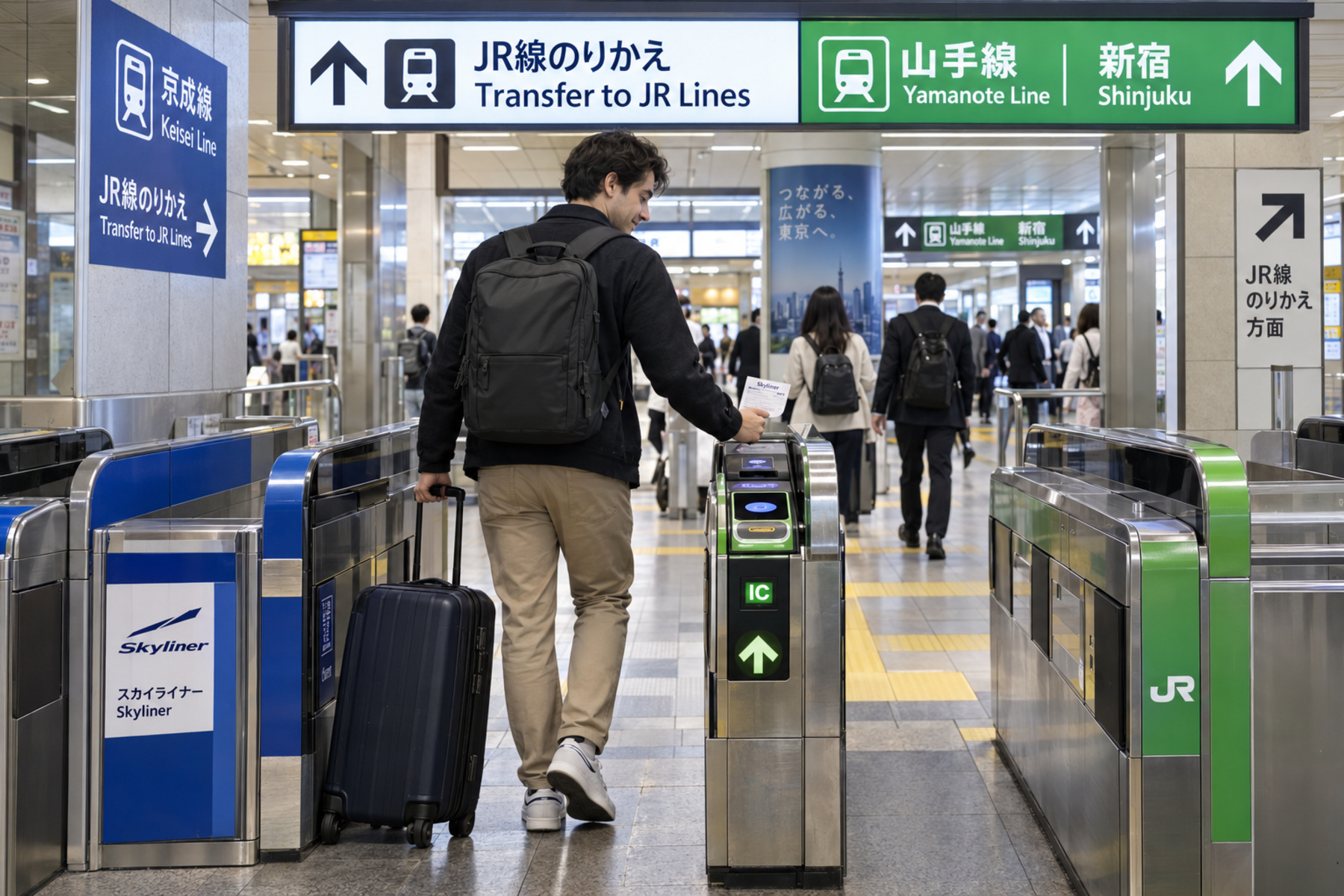
The Keisei Skyliner runs from Narita Airport to Nippori and Keisei-Ueno, not to Shinjuku. For Shinjuku, the usual practical route is to leave the Skyliner at Nippori, follow the dedicated signs to JR and continue on the JR Yamanote Line.
Keisei provides a specific Nippori transfer route. Depending on the tickets you hold, you can pass the transfer gate with the appropriate JR ticket or a funded IC card. The route works well with light luggage and confidence using a busy local line, but it adds a second train and another platform after a flight.
- Transfer: Keisei to JR at Nippori
- Onward line: JR Yamanote Line toward Shinjuku
- Good fit: light luggage and comfort with one busy transfer
- Do not assume: the Skyliner itself never reaches Shinjuku Station
Airport Limousine Bus: useful for luggage and hotel-area stops
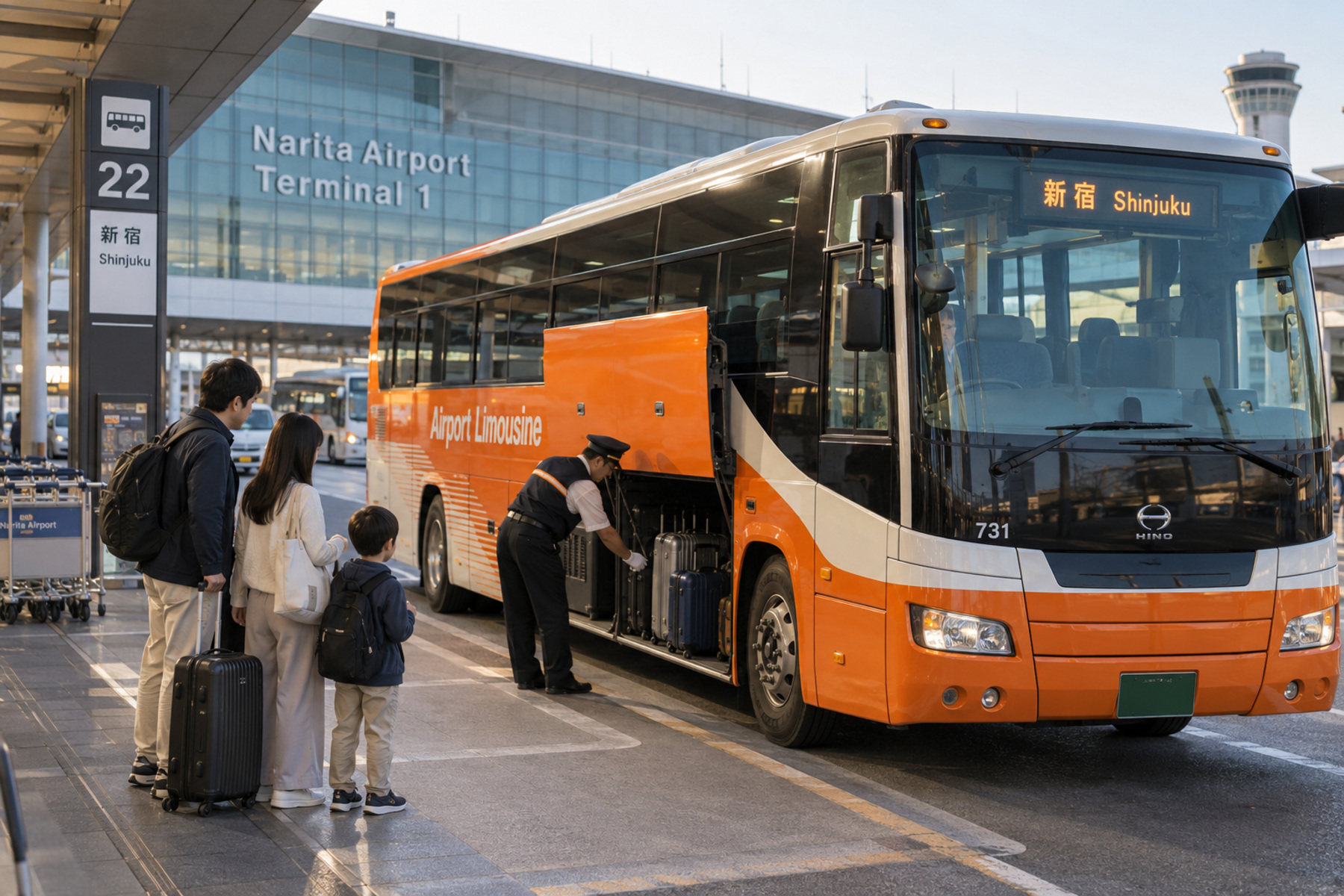
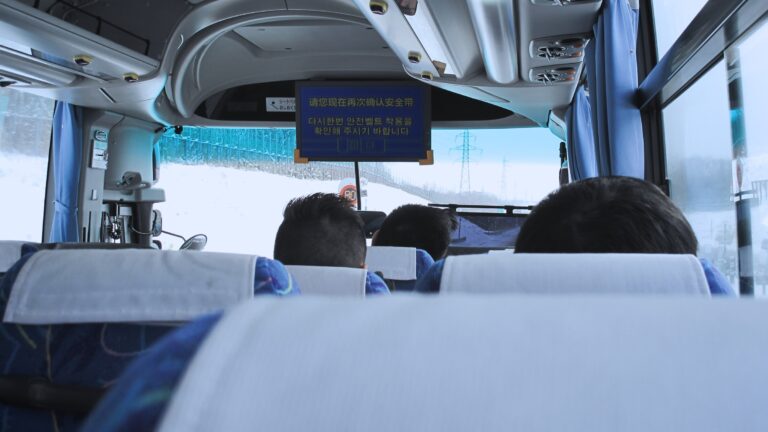
Airport Limousine Bus services connect Narita Airport with Shinjuku-area stops. A bus can be the easiest option when its stop is close to your hotel because staff place large suitcases in the lower compartment and you avoid railway gates, platforms and a local-train transfer.
The weakness is traffic. Official service information can show substantial variation between normal and delayed road conditions. Check the current destination, timetable, terminal platform and Shinjuku stop before buying, and allow extra time if you have a separate reservation after arrival.
- Best for: large luggage, families and a hotel near a listed stop
- Main advantage: fewer station movements with suitcases
- Main risk: road congestion and variable arrival time
- Before boarding: match the exact Shinjuku stop to the hotel
Regular trains trade comfort for a lower cost
Regular JR or Keisei services may lower the transport cost, but they make more stops and require at least one transfer for most Shinjuku journeys. Seating and luggage space are not guaranteed, and the difficult part may occur during a crowded commuter period.
Choose this route only after checking the full itinerary and train category. An airport service with a familiar destination name can still send you toward another Tokyo corridor, so keep the live route result open until you pass the correct transfer gate.
- Good fit: light luggage and confidence with Tokyo trains
- Possible benefit: lower basic transport cost
- Possible drawback: more stops, transfers and standing
- Check carefully: operator, destination and train category
Taxi or private transfer: door-to-door at a premium
A licensed taxi or prearranged private transfer takes you from the terminal to the hotel entrance. It can be sensible for a family, a group sharing the cost, travelers with mobility needs, unusually large baggage or an arrival after practical public transport has finished.
Narita is far from Shinjuku, so a private vehicle is normally much more expensive than shared transport. Confirm the total pricing method, meeting point, flight-delay policy and actual luggage capacity. Passenger capacity does not automatically mean the same number of large suitcases will fit.
- Best for: groups, accessibility needs and difficult luggage
- Main advantage: terminal-to-hotel travel
- Before booking: confirm suitcase and child-seat capacity
- Main drawback: high cost over a long airport journey
Tickets, seats and IC cards
The Narita Express and Skyliner require more than simply touching an IC card at the airport gate. N’EX needs the applicable limited-express ticket or eligible pass arrangement, while the Skyliner is a reserved-seat service. Use official multilingual machines, staffed counters or the operator's approved reservation channel.
For the Nippori-to-Shinjuku section, a funded IC card is convenient for the JR transfer when used according to Keisei's gate instructions. Bus purchase and reservation rules can differ by route and direction, so use the current airport counter and operator guidance instead of assuming the rail procedure applies.
- N’EX: confirm the limited-express product and destination
- Skyliner: obtain the reserved-seat ticket
- Nippori transfer: prepare the onward JR fare or funded IC card
- Bus: follow the route's current purchase and boarding rules
Luggage, children and accessible travel
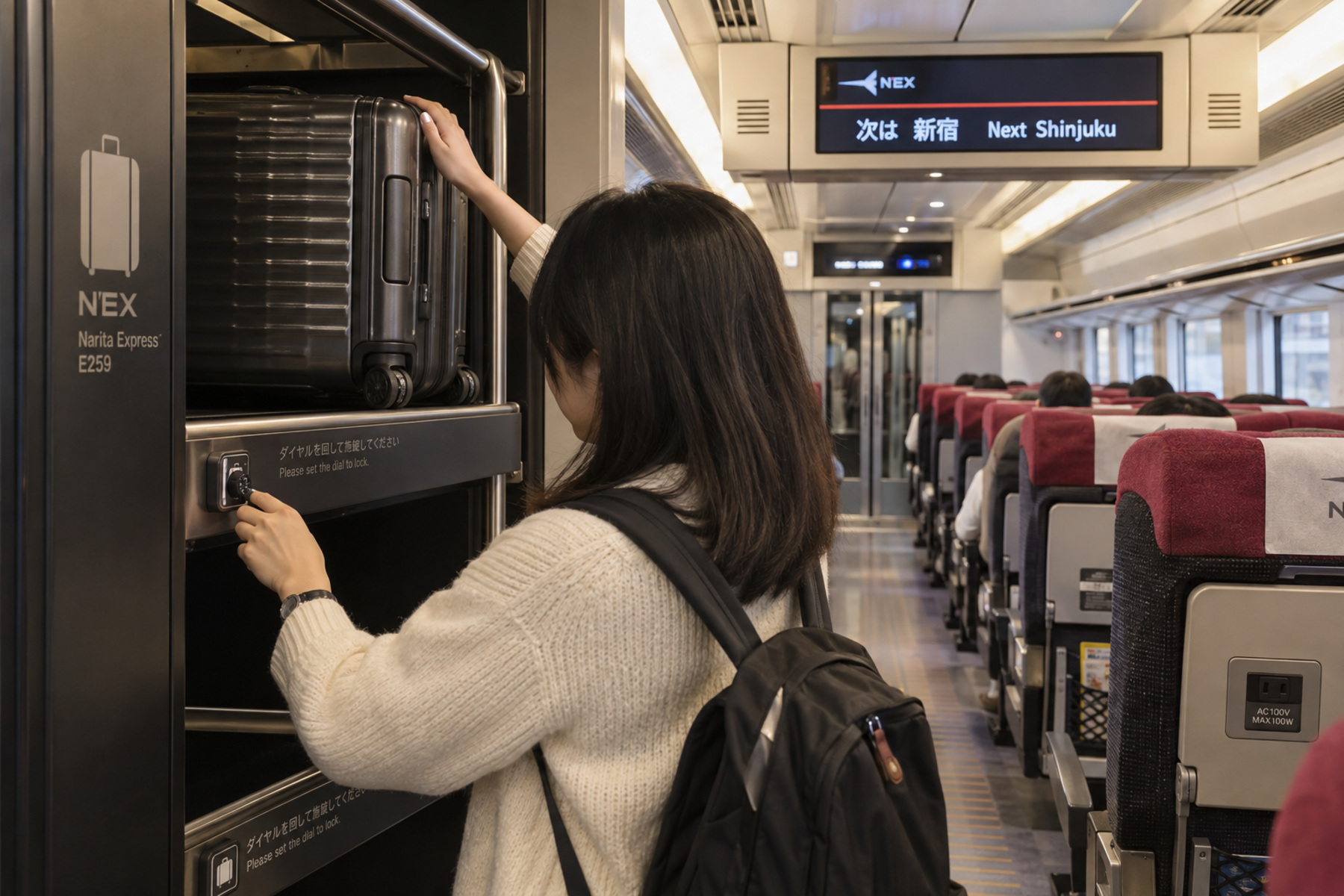
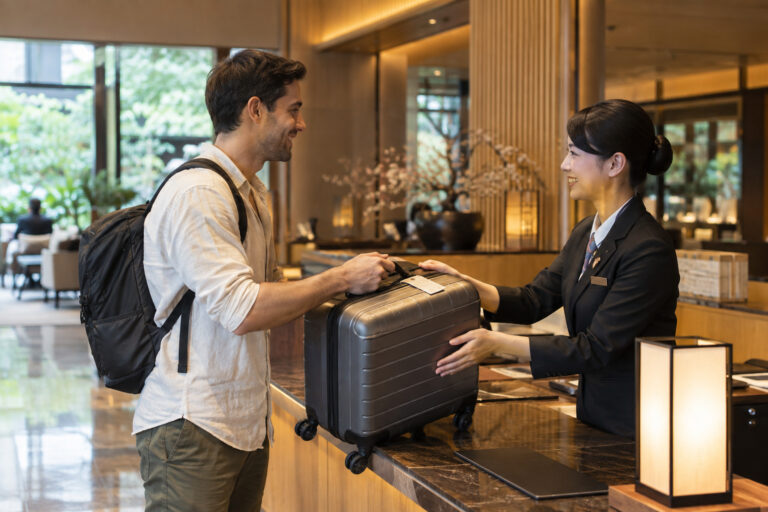
N’EX has dedicated luggage areas, which is a major advantage on a direct Shinjuku service. Secure the bag using the provided mechanism where available, keep valuables with you and avoid blocking the aisle. On the airport bus, retain the claim check for luggage placed below the passenger cabin.
The Skyliner itself handles luggage well, but the JR transfer at Nippori adds a local-train segment. For a family, count free hands as well as bags. If one adult must control a child and two large suitcases, a direct train, a bus near the hotel or a private vehicle may be the safer full journey.
- Direct N’EX: dedicated luggage storage without a central transfer
- Airport bus: staff load larger bags below the cabin
- Skyliner plus JR: luggage must move through the transfer
- Accessibility: check elevators and assistance with the operator in advance
Navigate Shinjuku Station by exit, not just station name
Shinjuku Station has several large exit zones and long passages. The South Exit and Busta Shinjuku suit many southern hotels and highway-bus connections. The West Exit leads toward Nishi-Shinjuku's office towers and major hotels, while the East Exit and Kabukicho side serve different nightlife and shopping areas.
Save the hotel name and address in both English and Japanese, plus the nearest exit. Do not follow the first sign that only says Shinjuku. If the final walk crosses the entire station with heavy luggage, a short taxi from the airport-train or bus arrival point may be more practical.
- South Exit: southern station area and Busta Shinjuku
- West Exit: Nishi-Shinjuku and many large hotels
- East Exit: shopping and the Kabukicho side
- Hotel rule: navigate to the named exit before street level
Late arrivals, flight delays and missed services
Scheduled landing time is not the time you reach the station or bus platform. Immigration, baggage collection, customs and terminal walking can all delay departure. Check live options only after accounting for these steps, especially in the evening.
If you miss a reserved N’EX or Skyliner departure, contact the operator or use the official booking channel before taking a later train because ticket treatment depends on the product. If public transport is ending, compare a licensed taxi, a confirmed private transfer and an airport-area hotel rather than attempting a fragile chain of late connections.
- Check the last usable connection after customs
- Do not build a tight separate booking after airport arrival
- Confirm reservation changes with the issuing operator
- Keep an airport-area overnight option for a severely delayed arrival
The practical decision rule
Choose the Narita Express when a direct Shinjuku service fits your arrival. Choose the Skyliner when the Nippori transfer and JR local segment are comfortable for you. Choose the Airport Limousine Bus when its Shinjuku stop reduces the final walk and traffic uncertainty is acceptable.
Before paying, verify the live destination, ticket conditions, Narita terminal and nearest hotel exit. The winning route is the one that stays manageable all the way to the accommodation door, not merely the one with the fastest airport segment.
FAQ
What is the easiest way from Narita Airport to Shinjuku?
A direct Narita Express service is usually the easiest train because it avoids a central Tokyo transfer and provides dedicated luggage space. Confirm that the departure board shows Shinjuku before buying or boarding.
Does every Narita Express go to Shinjuku?
No. N’EX services can have different destinations and stopping patterns. Check the current JR East timetable and airport departure display for Shinjuku.
Does the Skyliner go directly to Shinjuku?
No. The Skyliner serves Nippori and Keisei-Ueno. For Shinjuku, travelers commonly transfer to the JR Yamanote Line at Nippori.
Is the airport bus better with large luggage?
It can be, especially when the Shinjuku stop is near your hotel. Staff normally place larger suitcases in the lower compartment, but road traffic makes the arrival time less predictable than rail.
Can I use only an IC card on the Narita Express?
No. You need the applicable limited-express ticket or eligible pass arrangement in addition to the basic fare method. Confirm the complete JR East ticket before boarding.
Can I use an IC card when transferring at Nippori?
A funded IC card can be used for the onward JR journey through the appropriate transfer gate, while the Skyliner still requires its reserved-seat ticket. Follow Keisei's instructions for the ticket combination you hold.
Which Shinjuku exit should I use?
Use the exit closest to the exact hotel: South for the southern station area and Busta Shinjuku, West for Nishi-Shinjuku, or East for the shopping and Kabukicho side. Verify the hotel's own directions.
What should I do after a late flight arrival?
Check live departures after customs and allow for the walk from your terminal. If practical public transport has ended, compare a licensed taxi, a prearranged transfer and an airport-area hotel.
Prefer a door-to-door transfer from Narita?
For late arrivals, groups, families or heavy luggage, compare a private airport transfer with the rail and bus options above before booking.
Check Airport Taxi optionsRelated Japan Travel Guides
Official References
- JR East Narita Express route and onboard facilities
- JR East Narita Express ticket guide
- Narita International Airport rail access guide
- Narita International Airport bus access guide
- Airport Limousine Bus official service information
- Keisei Skyliner route and facilities
- Keisei Nippori transfer guide for JR lines
Final Thoughts
For Shinjuku, a direct N’EX is the cleanest train journey, the Skyliner is a fast but transfer-dependent alternative and the airport bus can win when its stop is closer to the hotel. Match the complete route to your terminal, luggage and exact Shinjuku exit, then confirm the live operator information before paying.