
Vegetarian Food in Japan: What to Eat and How to Order
Find vegetarian food in Japan with a practical plan for checking dashi, reading labels, ordering clearly and choosing reliable meals in restaurants and convenience stores.
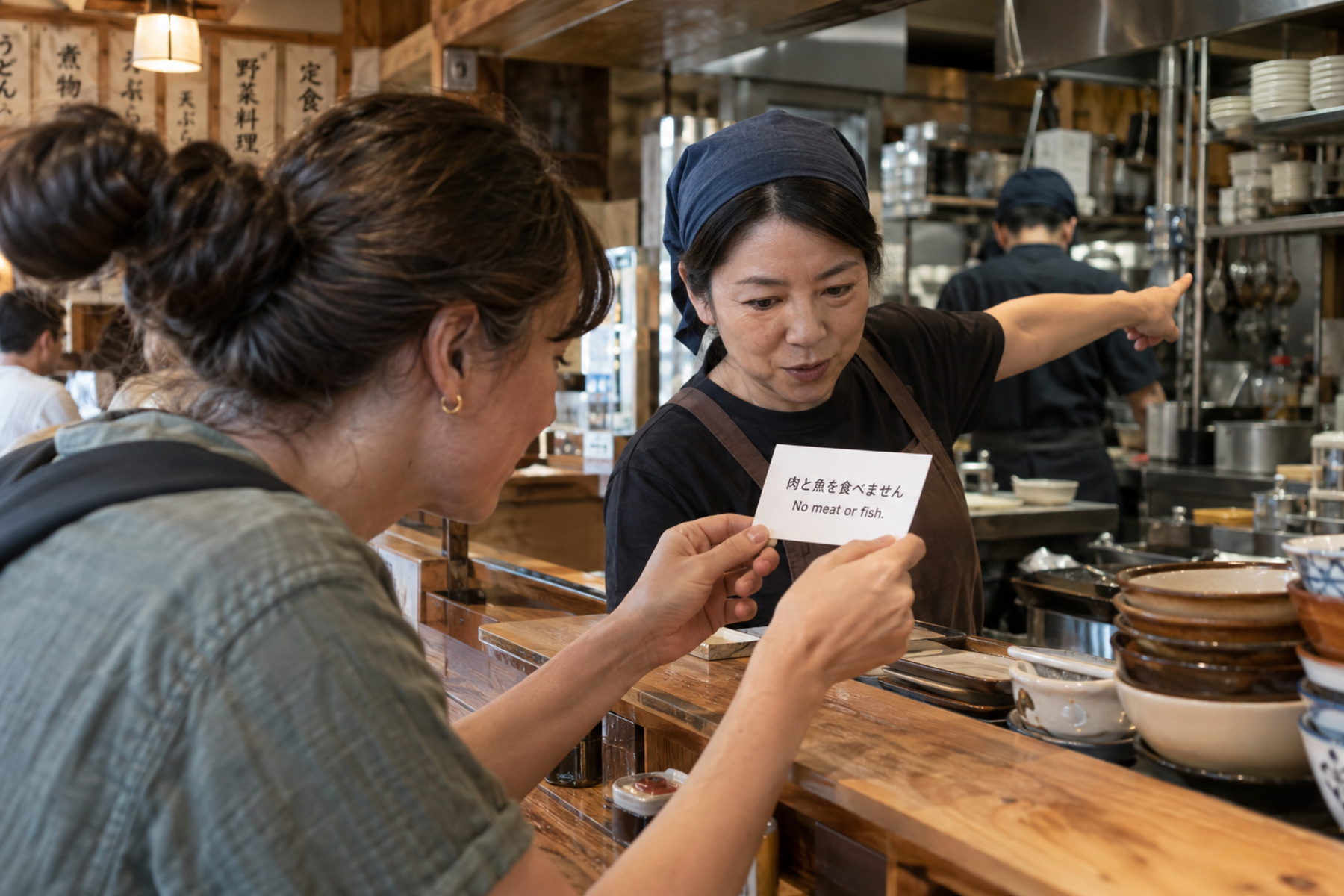
Vegetarian travel in Japan is manageable when you plan meals instead of judging food by appearance. Fish-based dashi, meat extract, gelatin and animal-derived sauces can appear in dishes that look meat-free. Prioritize clearly vegetarian or vegan restaurants, explain exactly what you do not eat, confirm broth and sauce, and carry a backup snack for stations, late arrivals and regional trips.
What You’ll Learn
- Why vegetable dishes can still contain fish or meat ingredients
- Which Japanese foods are useful starting points and what to verify
- How to explain vegetarian requirements clearly at restaurants
- How to inspect packaged-food labels without overtrusting translation
- How to build a reliable meal plan for travel days
Define Your Vegetarian Requirements First
Vegetarian can mean different things to different travelers. Before searching for restaurants, decide whether you eat eggs, dairy, honey, fish-derived stock, food cooked in shared oil, or dishes prepared on shared equipment. A precise list is easier for restaurant staff to understand than one broad label.
In Japan, saying bejitarian desu is a useful opening, but it may not communicate every restriction. Follow it with the ingredients you avoid. Travelers with allergies must explain the allergy separately because a dietary preference and a medical risk require different handling.
- Write down the ingredients and preparation methods you avoid.
- Keep the list in English and Japanese on your phone.
- Treat allergy communication as a separate safety conversation.
- If staff cannot confirm an ingredient, choose another dish.
Watch for Dashi and Other Hidden Ingredients
The main trap is dashi, a stock used in soup, noodle broth, dipping sauce, simmered vegetables, savory egg dishes and many small side dishes. It may be made with kombu seaweed or shiitake mushrooms, but bonito flakes and small dried fish are also common. The presence of tofu or vegetables does not identify which stock was used.
Also check meat extract, chicken or pork stock, lard, gelatin, oyster sauce and toppings such as katsuobushi. Curry roux, ramen broth, salad dressing, rice seasoning and packaged snacks can contain animal-derived ingredients even when no meat is visible.
- だし or 出汁: dashi stock; ask what it is made from.
- かつお or 鰹: bonito; 煮干し: dried small fish.
- 肉エキス: meat extract; チキンエキス: chicken extract.
- ゼラチン: gelatin; ラード: lard.
Choose Foods by Verification, Not Appearance
Plain rice, edamame, fruit and simply prepared vegetables can be useful foundations, but sauces and seasonings still need checking. Vegetable tempura may come with fish-based dipping sauce or be fried in shared oil. Cold soba can use bonito-based dipping sauce. Miso soup commonly contains dashi, and vegetable curry may use meat extract or animal fat.
Shojin ryori, the cuisine associated with Buddhist practice, is one of the most dependable ways to experience plant-focused Japanese cooking. Even then, confirm whether the specific meal meets your dairy, egg and shared-kitchen requirements rather than assuming every restaurant follows an identical rule.
- Good leads: dedicated vegetarian or vegan restaurants and clearly described shojin ryori.
- Verify first: miso soup, soba, udon, ramen, curry and simmered dishes.
- Request sauce separately when that makes the dish easier to assess.
- Do not assume a vegetable icon proves the broth is vegetarian.
Ask the Questions That Change the Answer
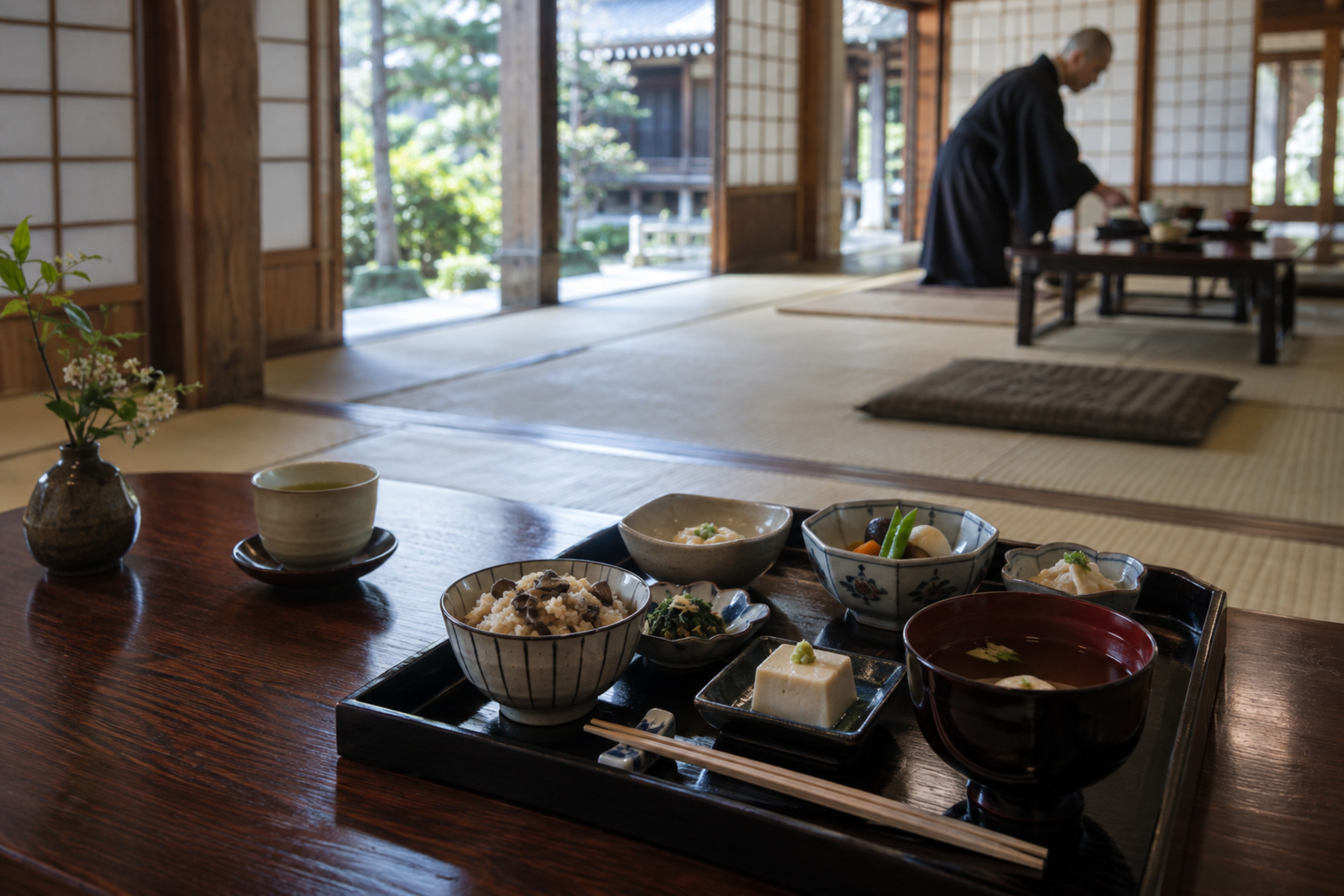
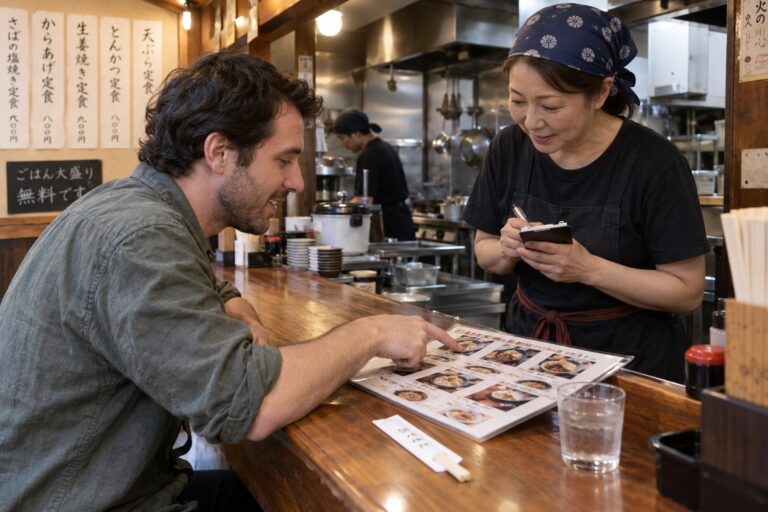
Show staff a short written message before ordering and point to the exact dish. Watashi wa niku to sakana o tabemasen means I do not eat meat or fish. Niku, sakana, dashi wa haitte imasu ka asks whether meat, fish or dashi is included. If you also avoid eggs or dairy, state that separately.
Ask about broth, sauce, toppings and cooking oil rather than only the main ingredient. A polite, specific question gives staff something concrete to check with the kitchen. If the answer is uncertain or the restaurant is too busy to verify, thank them and use your backup option.
- 肉と魚を食べません。I do not eat meat or fish.
- 魚のだしは入っていますか。Does it contain fish-based dashi?
- 肉エキスは入っていますか。Does it contain meat extract?
- 卵と乳製品は大丈夫です。Eggs and dairy are okay. Use only if true for you.
Read Packaged-Food Labels Carefully
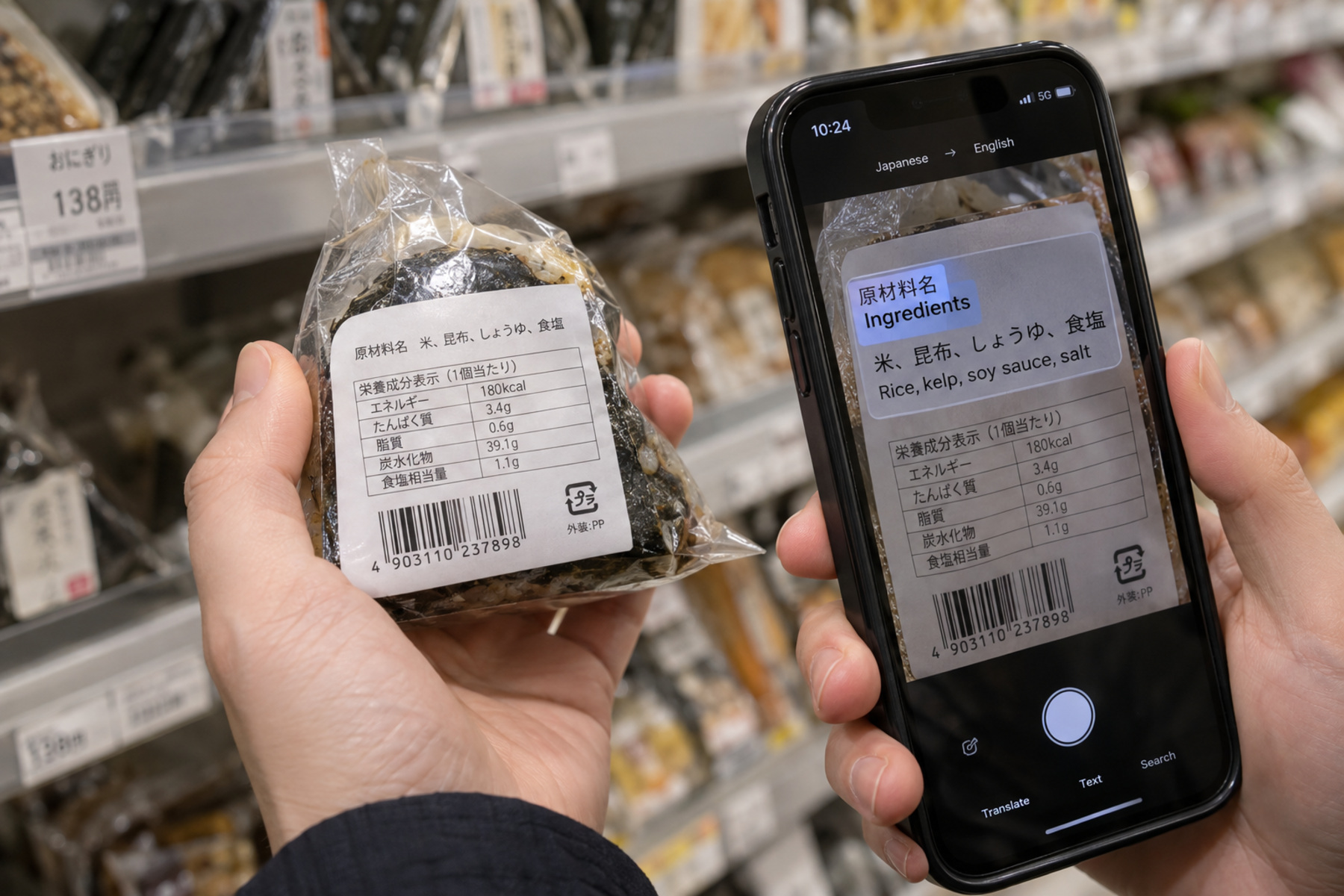
Food sold in Japan is labeled in Japanese, so begin with 原材料名, the ingredient list. Camera translation is helpful for orientation but can miss compound seasonings, abbreviations and context. Scan the full list and any separate notes instead of relying on the product name, front illustration or allergy panel.
Allergen labeling answers a different question from vegetarian suitability. A product can contain fish stock, meat extract or animal-derived processing ingredients without presenting the information as a vegetarian warning. Recipes also change, so recheck the package even if you bought a similar item before.
- 原材料名: ingredients; アレルギー: allergy information.
- Check seasoning blends, soup bases and fillings, not only the first ingredient.
- Use translation as an aid, not proof of suitability.
- When the wording remains unclear, select a simpler sealed product.
Use Convenience Stores as Backup, Not Guesswork
Convenience stores can rescue an early departure or late arrival, but ready-to-eat food varies by chain, branch and recipe. Onigiri fillings may contain fish or animal-derived seasoning; bread can contain dairy, egg or shortening; salads may include meat and fish-based dressing; sweets may contain gelatin.
Build a simple meal from items you can verify individually, such as whole fruit where sold, plainly labeled nuts, drinks and sealed foods with understandable ingredient lists. Availability is not guaranteed, so buy backup food before a long rural route rather than waiting until the final station.
- Inspect the actual package, not a remembered product design.
- Check dressings and sauces separately.
- Keep one shelf-stable snack in your day bag.
- Use dedicated vegetarian venues for your main meals when possible.

Plan Restaurants Before Each Travel Day
Search for vegetarian or vegan restaurants near the neighborhood you will actually visit, then confirm the official menu, address, opening days, last order and reservation policy. Map reviews and old lists are leads only; businesses and menus change. Save the Japanese name and address so you can identify the correct branch.
For each destination, mark one preferred restaurant and one fallback near a station or hotel. Reserve special meals when required. Tell a ryokan or hotel about dietary needs before arrival, because a multi-course dinner is difficult to redesign after preparation has started.
- Check the restaurant’s own current menu or contact channel.
- Confirm whether only selected items are vegetarian.
- Save a second option within practical walking distance.
- Notify accommodation providers well before check-in.
Handle Shared Kitchens According to Your Standard
Some travelers accept vegetable food cooked on shared equipment; others do not. Ask whether the fryer, grill, utensils or stock pot are shared if this matters to you. A restaurant may be able to remove a topping but may not be able to change broth prepared earlier or separate a busy fryer.
There is no universal answer that staff can infer from the word vegetarian. State your standard calmly, listen to the restaurant’s explanation and decide from the actual process. Clear disclosure is more useful than forcing a yes or no answer.
- Shared fryer or cooking oil
- Shared grill, knife or cutting board
- Pre-made broth, sauce or curry base
- Removable topping versus ingredient cooked into the dish
Build a Low-Stress Daily Food Strategy
Anchor each day with one meal you have already verified. Let other meals be flexible, but never depend on finding a suitable option after attractions close or on a remote platform. Breakfast from your hotel, a reserved lunch or a known dinner near your accommodation can serve as the anchor.
Carry your requirement card, saved restaurant details and an emergency snack. This small amount of preparation lets you enjoy Japanese food without treating every meal as a stressful ingredient investigation.
- One verified meal for each day
- One nearby fallback for every important stop
- One clear Japanese requirement card
- One portable backup snack
FAQ
Is Japan easy for vegetarians?
Major cities offer many dedicated vegetarian and vegan restaurants, but hidden dashi and animal-derived seasonings make unplanned ordering less reliable. A verified restaurant plan and a backup snack make travel much easier.
Is miso soup vegetarian in Japan?
Not automatically. Miso itself may be plant-based, but the soup is often made with bonito or other fish-based dashi. Ask what stock is used.
Is vegetable tempura vegetarian?
The vegetables may be suitable, but check the batter, shared frying oil and dipping sauce. Tempura sauce commonly uses dashi.
Can vegetarians rely on convenience-store onigiri?
Only after checking the exact package. Fillings and seasonings can include fish, seafood or meat extract, and recipes can change.
What is the clearest phrase to use at a restaurant?
Start with Watashi wa niku to sakana o tabemasen, then list any additional restrictions and ask specifically about dashi, broth, sauce and shared cooking equipment.
Related Japan Travel Guides

Official References
Final Thoughts
Vegetarian food in Japan becomes far easier when you replace assumptions with a repeatable check: define your requirements, verify the broth and sauce, confirm the current restaurant policy, and keep one backup meal. Plan one dependable food stop each day and leave room to explore only where the ingredients are clear.