
How to Use Buses in Japan: Fares, IC Cards and Boarding Rules
Learn how to ride buses in Japan with confidence, including boarding patterns, IC card taps, cash fares, stop buttons, airport coaches and local variations.
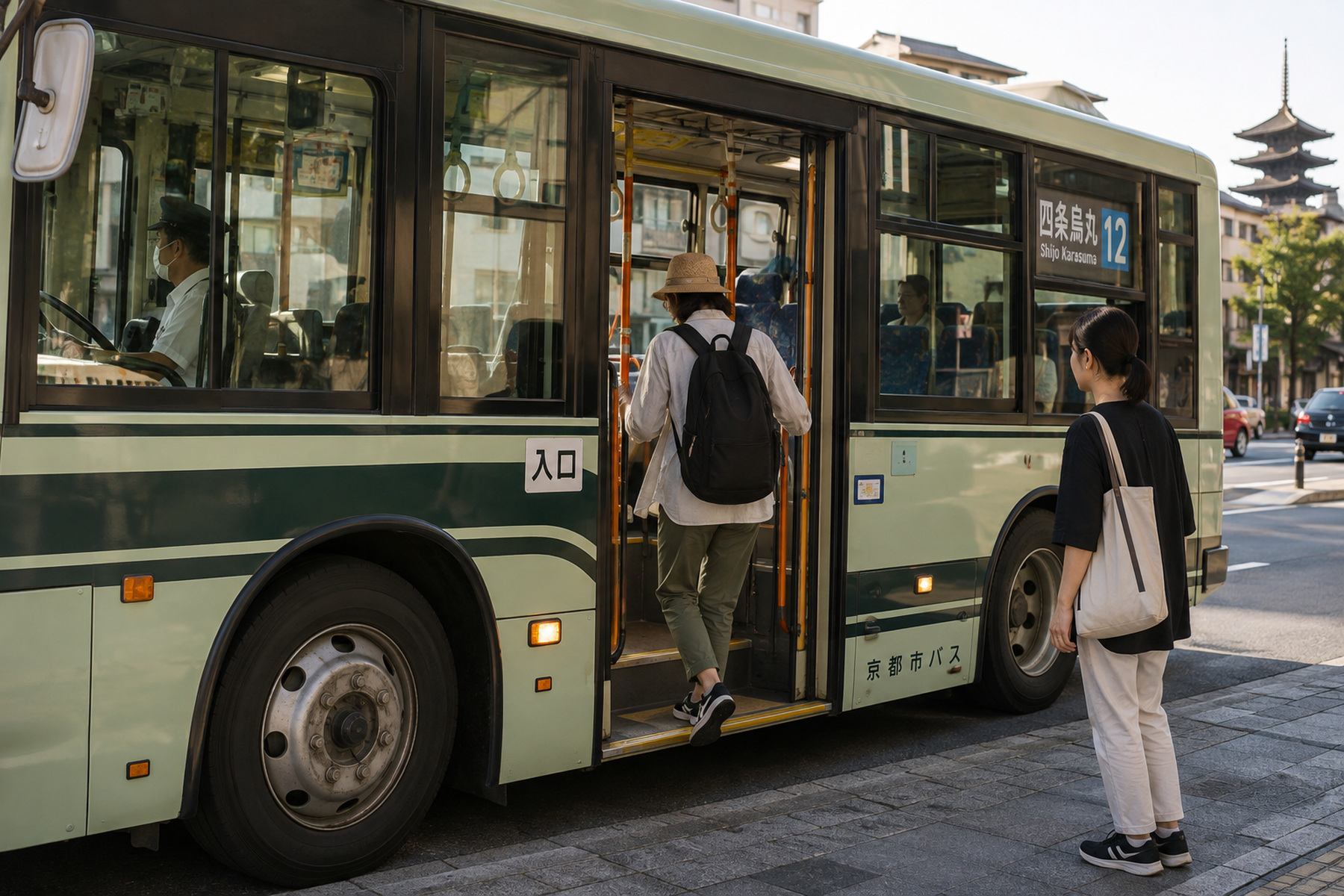
There is no single boarding rule for every bus in Japan. Before you get on, check the route number and destination, then look for the entrance marking and payment equipment. Flat-fare buses may collect payment when you board, while distance-based buses often require an IC-card tap or numbered ticket at boarding and payment when you get off. Press a stop button after your stop is announced, and keep a small amount of cash available in case IC payment is not supported.
What You’ll Learn
- How to identify whether you pay when boarding or when getting off
- When to tap an IC card and when a numbered ticket is needed
- How to confirm the correct bus, stop and direction before boarding
- What changes on city, local, airport and highway buses
- Simple habits that prevent the most common bus mistakes
Start by Identifying the Boarding and Payment Pattern
Japan does not use one nationwide boarding rule. The first thing to check is whether the bus uses a flat fare or a distance-based fare, because that usually determines when you pay and whether your boarding point must be recorded.
A flat-fare urban bus may have you enter through the front and pay immediately. Other city buses use a rear or middle entrance and collect the fare at the front when you leave. On distance-based routes, you commonly tap an IC card or take a numbered ticket when boarding, then pay or tap again when getting off.
Do not assume the door arrangement from the city alone. Look for 入口 (entrance) and 出口 (exit), arrows on the doors, the IC-card reader, and instructions at the stop or on the bus.
- Front boarding plus immediate payment is common on some flat-fare urban networks.
- Rear or middle boarding plus payment at the front is common on many local and distance-based routes.
- If there is a numbered-ticket dispenser beside the entrance, take a ticket unless your IC-card tap replaces that step.
- When unsure, pause at the door and follow the payment equipment rather than copying a passenger who may be using a pass.
The Basic Step-by-Step Ride
Before the bus arrives, confirm the route number, final destination and direction. A single stop may serve several routes, and two buses with similar destinations can take very different paths.
When the bus arrives, let passengers leave first if the same door is being used. Board through the marked entrance. If the system records your boarding point, tap your IC card or take a numbered ticket immediately after entering.
Watch the onboard display and listen for announcements. When your stop is next, press a stop button. At the destination, follow the local payment pattern and leave through the designated exit.
- Confirm route number and destination before stepping on.
- Tap or take a numbered ticket at boarding when the system requires it.
- Keep hold of the numbered ticket until you pay.
- Press the stop button after your stop is announced.
- Have your IC card or fare ready before reaching the driver.
Using Suica, PASMO and Other IC Cards
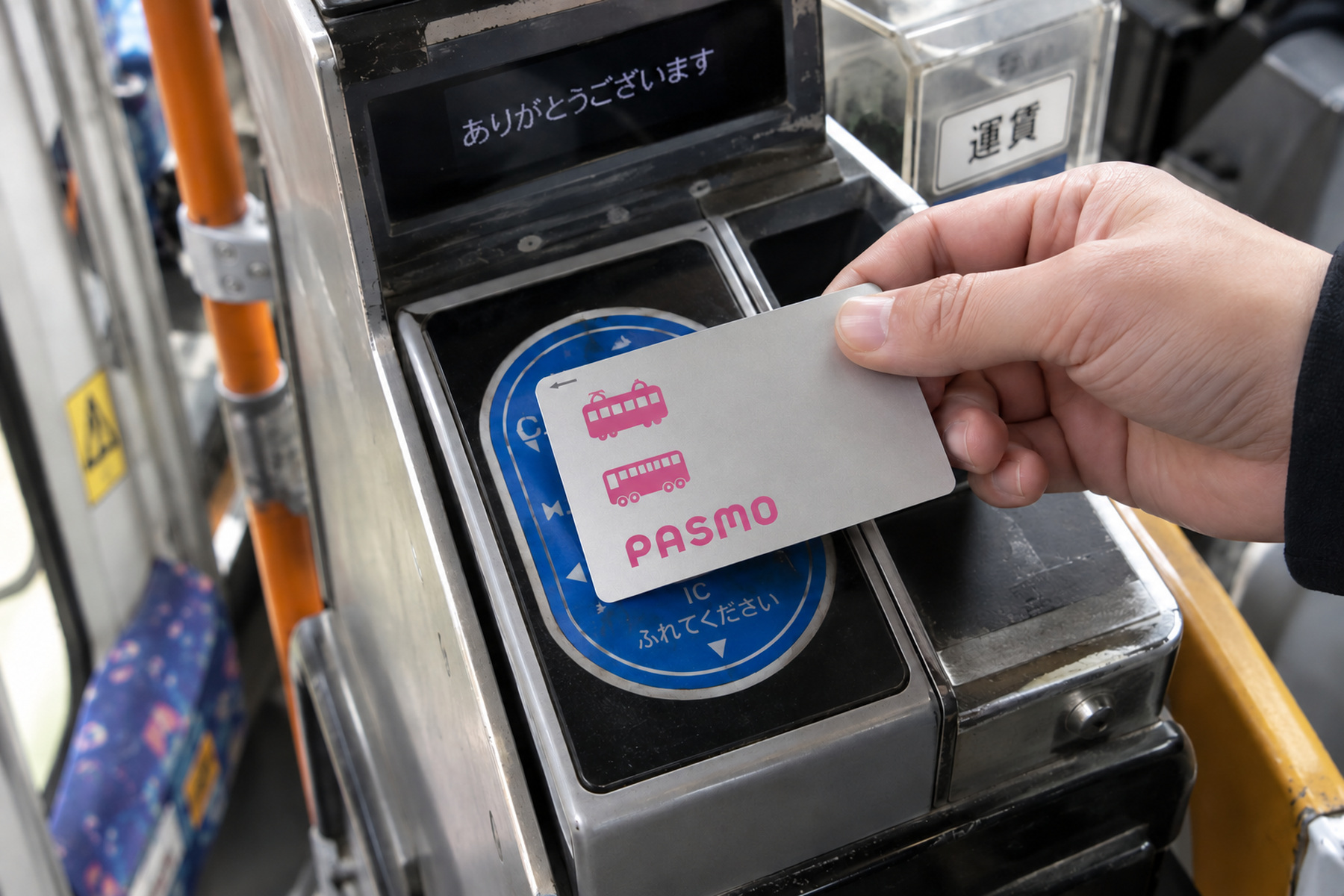
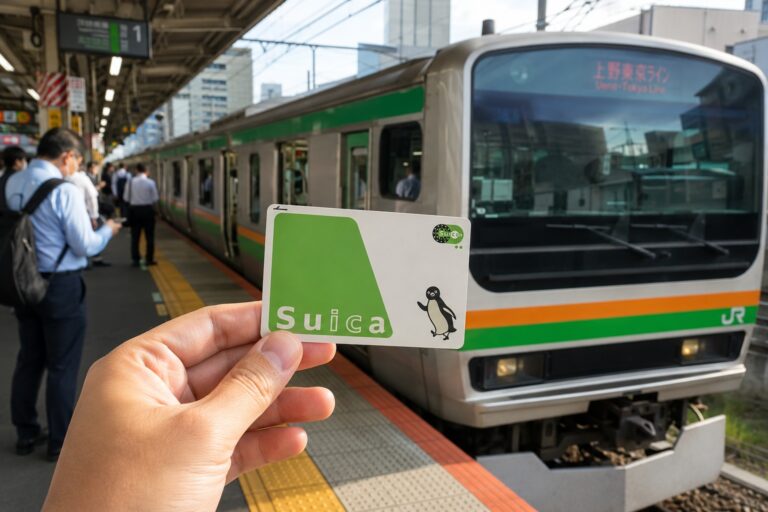
Many buses accept major transport IC cards such as Suica, PASMO and ICOCA, but acceptance is not universal. Look for the IC-card symbol on the bus, reader or operator information before relying on it.
On a flat-fare bus that charges when you board, a single tap may complete the trip payment. On a distance-based bus, the first tap can record where you boarded and the second tap calculates the fare when you get off. The exact sequence is operator-specific, so the position of the readers is the best clue.
If you keep several contactless cards together, remove the one you want to use before tapping. A clean single-card tap reduces reader errors and makes it easier to know which balance was charged.
- Do not assume every local or rural route accepts nationwide IC cards.
- A boarding reader near the rear or middle door usually means you should tap when entering.
- A reader beside the driver is commonly used for payment when boarding or getting off.
- If the reader rejects the card, ask the driver before trying repeated taps.
Paying Cash and Using a Numbered Ticket
Distance-based buses that accept cash may issue a small numbered ticket called a seiriken. The number identifies the fare zone where you boarded. Near your stop, match that number with the fare shown on the onboard display.
Pay at the fare box beside the driver when you get off. Many fare boxes can handle coins and small banknotes, but capabilities differ, and large notes may not be accepted. If a separate change function is provided, changing money does not itself pay the fare.
Prepare cash before the bus reaches your stop. If you are unsure which amount to pay, keep the numbered ticket visible and ask the driver rather than dropping money into the wrong slot.
- Take only one numbered ticket per passenger unless the operator instructs otherwise.
- Keep the ticket until you reach the fare box.
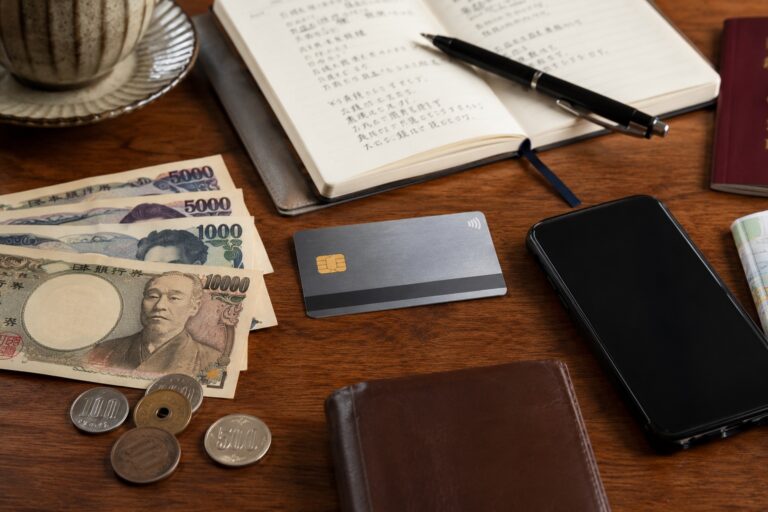
- Carry coins or a small banknote as a backup.
- Avoid waiting until the final second to break a note or find change.
Finding the Right Stop, Route and Direction
Route-planning apps are useful, but the map pin is only the starting point. Major stations can have many bus platforms spread across different exits or streets, so check the stop number or platform letter as well as the stop name.
At the stop, compare the route number and final destination shown on the timetable with the display on the approaching bus. The final destination is especially important when the same route family has short-turn services or branches.
If an app and the physical stop disagree, prioritize the current operator information at the stop and on the bus. Service changes, roadworks and temporary diversions can make cached route data less reliable.
- Save the destination name in Japanese as well as English when possible.
- Check the station exit and bus-platform number before leaving a large rail station.
- Match both route number and destination, not just one of them.
- Allow extra time when a bus connection is critical because road traffic can delay arrival.
Getting Off Without Missing Your Stop
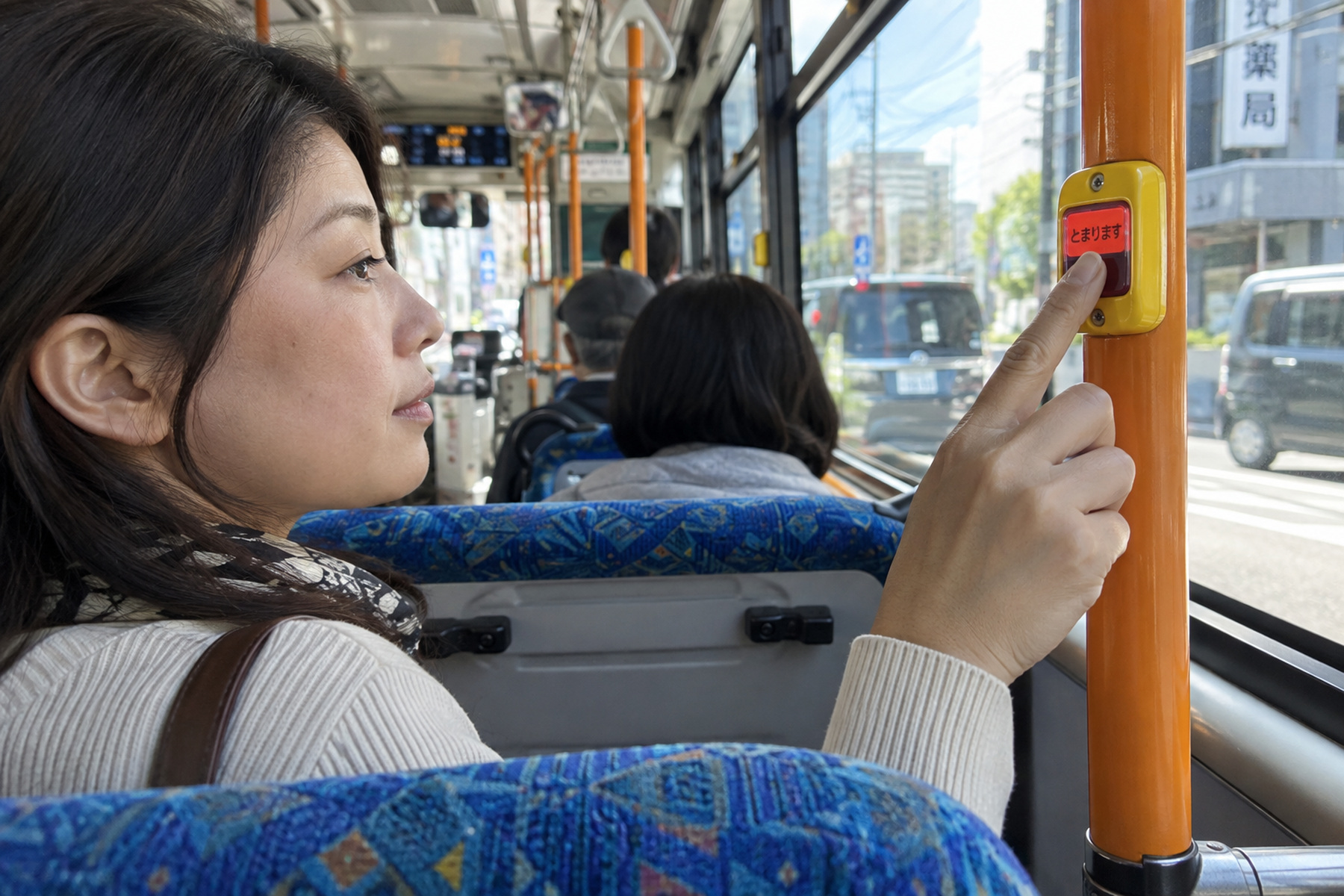
Most buses announce upcoming stops and show them on an interior display. When your stop is announced as next, press one of the stop buttons around the cabin. Do not assume the bus will stop automatically if nobody is waiting outside.
If you are standing, keep a firm grip on a handrail because city buses can brake suddenly. Keep your card, ticket or cash ready, but avoid blocking the exit or moving through a crowded bus before it is safe.
At the front fare box, complete the payment sequence only once. If the fare or card reader behaves unexpectedly, show the driver your ticket or card rather than guessing.
- Press the stop button once when your stop is next.
- Check the display again before leaving if two stops have similar names.
- Keep luggage clear of the aisle and doorway.
- After paying, move away from the fare box promptly so the next passenger can exit.
Tokyo and Kyoto Show Why Local Rules Matter
Tokyo's Toei buses within the 23 wards use front-door boarding and collect the fare when you board, with passengers normally leaving through the rear door. Toei buses in the Tama area use different procedures, so even one operator can have more than one pattern.
Kyoto City Bus regular routes generally use rear-door boarding and front-door exit, with payment when getting off. The Sightseeing Limited Express buses are an important exception: passengers board at the front, pay first and leave through the rear.
These examples are useful because they show the safest rule for visitors: learn the pattern of the specific service you are about to use instead of memorizing one rule for all of Japan.
- Tokyo Toei bus in the 23 wards: front boarding, pay when boarding, rear exit.
- Kyoto City Bus regular routes: rear boarding, pay at the front when getting off.
- Kyoto Sightseeing Limited Express: front boarding and payment first.
- Always check current operator guidance because route-specific exceptions exist.
When a Bus Is Better Than a Train
Buses are especially useful for neighborhoods, hills, temple areas, museums, hotels and rural sights that are inconvenient from a train station. In some cities, a short bus ride can remove a long walk or an awkward rail transfer.
The trade-off is traffic. A bus that is ideal for a relaxed sightseeing day may be a poor choice for a tight airport or rail connection during a busy road period.
Compare the whole journey rather than just the scheduled ride time. A direct bus can still be easier when it eliminates transfers, stairs and a long walk with luggage.
- Choose a bus when it takes you closer to the actual destination.
- Prefer rail when schedule reliability matters more than door-to-door convenience.
- For luggage, compare transfers and walking distance as well as travel time.
- For scenic or rural areas, check the return timetable before leaving the last major hub.
Airport and Highway Buses Need a Different Checklist
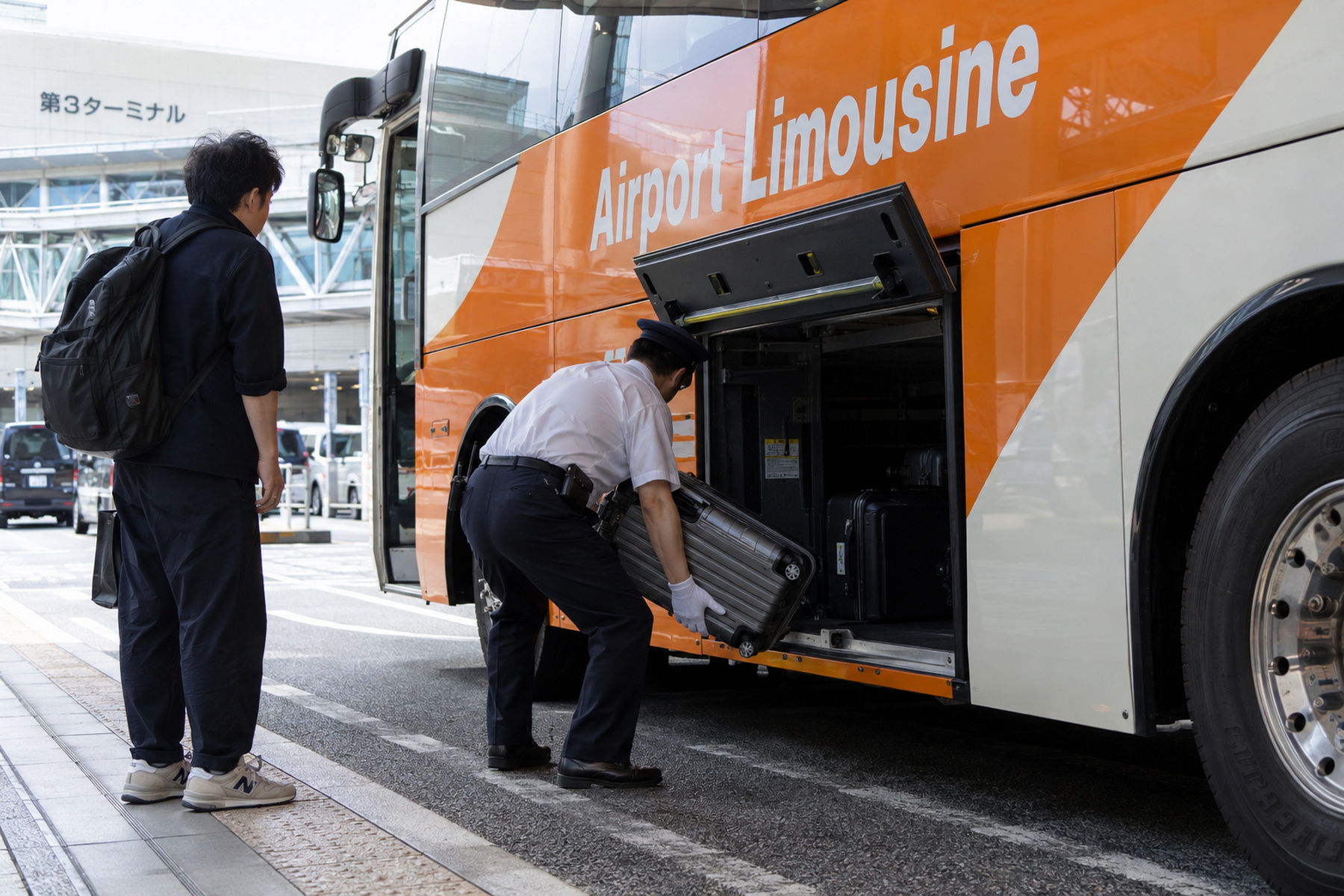
Airport limousine and highway buses behave more like reserved or semi-reserved coaches than ordinary city buses. Check the exact terminal, boarding bay, ticket or reservation requirement, departure time and baggage rules before travel.
Payment methods can differ by route, stop and direction. Even an operator that accepts IC cards on many services may have exceptions, so do not rely on a city-bus habit for an airport coach.
Tokyo Airport Limousine's current baggage guidance allows up to two checked pieces per passenger, subject to its item, size and handling restrictions. Other companies set their own limits, so confirm the operator rule for the specific service you book.
- Confirm the airport terminal as well as the airport name.
- Check whether a seat reservation is required or recommended.
- Arrive early enough to find the correct numbered bus bay.
- Keep valuables and essential documents in your carry-on rather than checked luggage.
Practical Etiquette and Mistakes to Avoid
Bus etiquette in Japan is mostly about keeping boarding smooth and the aisle safe. Queue at the marked stop, let people off before forcing your way in, move away from the doorway after boarding and keep bags under control.
The most common visitor problems are operational rather than cultural: boarding through the wrong door, forgetting to record the boarding point on a distance-based route, assuming every bus takes the same IC card, carrying only a large banknote, or realizing too late that the stop button has not been pressed.
If something goes wrong, the driver sees these situations every day. Show the route or stop name on your phone and ask before making another payment attempt.
- Do not block the doors with suitcases or backpacks.
- Keep calls and loud conversations to a minimum.
- Give priority seating and accessible space to passengers who need it.
- Check the last-bus time on infrequent rural routes.
- Keep a cash backup even if you normally use an IC card.
FAQ
Do buses in Japan accept Suica or PASMO?
Many city and regional buses accept major transport IC cards, but not every route does. Look for the IC symbol on the bus or reader. Some local services remain cash-only or use a separate payment system.
Do I tap my IC card once or twice on a Japanese bus?
It depends on the fare system. A flat-fare bus may require one tap when you board, while a distance-based bus often records your boarding point with one tap and calculates the fare with another tap when you get off. Follow the reader positions and operator instructions.
Which door do I use to board a bus in Japan?
There is no nationwide rule. Some buses board at the front and others at the rear or middle. Check the 入口 entrance marking, arrows and local instructions rather than assuming the same pattern in every city.
What if I only have a large banknote?
Do not assume the fare box can accept it. Many buses are designed for coins and smaller notes. Get change before boarding when possible, or ask the driver before inserting money into the machine.
Can I take a large suitcase on a bus?
Local city buses have limited aisle and storage space, so a large suitcase can be awkward on crowded services. Airport and highway coaches often have luggage compartments, but each operator has its own baggage limits and prohibited-item rules.
Related Japan Travel Guides
Official References
Final Thoughts
Buses become much easier once you stop looking for one universal rule. Check the route and destination, identify the entrance and payment pattern, keep an IC card plus a small cash backup, and press the stop button in time. Those few habits are enough to handle most city and local buses in Japan with confidence.